









• it VO
  • fr Français
  • en English
  • ar العربية
About us
  • In-depth
    • All
    • Features
    • Files
    • World
    They’re 60, 70 and older—so what?

    They’re 60, 70 and older—so what?

    Algeria: Aging policy still relies on the nuclear family and women

    Algeria: Aging policy still relies on the nuclear family and women

    Au Bain des Dames, they’re 70 on the beach. So what ?

    Au Bain des Dames, they’re 70 on the beach. So what ?

    “Stay home, you’re too old” – Egyptian women break stereotypes after 60

    “Stay home, you’re too old” – Egyptian women break stereotypes after 60

    Gaza: When grandmothers are forced back into motherhood

    Gaza: When grandmothers are forced back into motherhood

    Trending Tags

    • Women artists
    • Ecofeminism
    • Women living from and on the streets
    • Women and bodies
    • Women and sports
    • Women and cinema
    • Ramadan series
    • Women and war
    • Women Living at the Margins
    • Press Freedom from the Perspective of Women Journalists
    • Period poverty
    • Gynecological violence
    • Women and prison
    • Safe spaces
    • Abortion and SRHR
    • Transgenderism
    • Women in rural areas
  • On the move
    Spain: CEAR and the fight against human trafficking

    Spain: CEAR and the fight against human trafficking

    Gaza: How many journalists must be killed for the world to react?

    Gaza: How many journalists must be killed for the world to react?

    Moroccan activist Ibtissam Lachgar held in solitary confinement, health in crisis

    Moroccan activist Ibtissam Lachgar held in solitary confinement, health in crisis

    Three women for one man’s pay: The plight of female agricultural workers in Egypt

    Three women for one man’s pay: The plight of female agricultural workers in Egypt

  • Portraits
    Sophie Bessis: “The battle for the intimate will be long, especially in the Global South!”

    Sophie Bessis: “The battle for the intimate will be long, especially in the Global South!”

    “Mom, Dad, Can We Talk About Privacy?”—A Tunisian children’s book on protecting kids from sexual violence

    “Mom, Dad, Can We Talk About Privacy?”—A Tunisian children’s book on protecting kids from sexual violence

    Kurdish journalist killed in Turkish drone strike in northeastern Syria

    Kurdish journalist killed in Turkish drone strike in northeastern Syria

    A Filmmaker’s Journey: Inside the Creative World of Margarita Bareikyte

    A Filmmaker’s Journey: Inside the Creative World of Margarita Bareikyte

  • Creations
    • All
    • Reviews
    • Visual Arts
    “La Malédiction (1)”, a theatrical adaptation of King Kong Theory bursting with Tunisian rage

    “La Malédiction (1)”, a theatrical adaptation of King Kong Theory bursting with Tunisian rage

    “Mom, Dad, Can We Talk About Privacy?”—A Tunisian children’s book on protecting kids from sexual violence

    “Mom, Dad, Can We Talk About Privacy?”—A Tunisian children’s book on protecting kids from sexual violence

    The El’Sardines series, a delicate feminist manifesto centered around an ecological mystery

    The El’Sardines series, a delicate feminist manifesto centered around an ecological mystery

    Atlantics, a film by Mati Diop: Filming the embodied resistance of spirits

    Atlantics, a film by Mati Diop: Filming the embodied resistance of spirits

  • Opinion
    Women in Gaza are living their worst nightmares - “ I want to go back to my life before the war, to my privacy, my home ”

    Women in Gaza are living their worst nightmares - “ I want to go back to my life before the war, to my privacy, my home ”

    Messages from life under bombardment—Can a mother cope with losing her six children at once? (10)

    Messages from life under bombardment—Can a mother cope with losing her six children at once? (10)

    Messages from life under bombardment—No cake for my children on their birthdays (9)

    Messages from life under bombardment—No cake for my children on their birthdays (9)

    Messages from life under bombardment – No food or water in Gaza (8)

    Messages from life under bombardment – No food or water in Gaza (8)

  • Multimedia
    "I hope it doesn’t go viral: Journalism and sexist attacks in digital age". A video investigation by Çiçek Tahaoğlu

    "I hope it doesn’t go viral: Journalism and sexist attacks in digital age". A video investigation by Çiçek Tahaoğlu

    Period poverty in Montenegro

    Period poverty in Montenegro

    Period poverty in France (1)

    Period poverty in France (1)

    Period Poverty in Italy

    Period Poverty in Italy

  • Country context
No Result
View All Result
BLOGS
Medfeminiswiya
  • In-depth
    • All
    • Features
    • Files
    • World
    They’re 60, 70 and older—so what?

    They’re 60, 70 and older—so what?

    Algeria: Aging policy still relies on the nuclear family and women

    Algeria: Aging policy still relies on the nuclear family and women

    Au Bain des Dames, they’re 70 on the beach. So what ?

    Au Bain des Dames, they’re 70 on the beach. So what ?

    “Stay home, you’re too old” – Egyptian women break stereotypes after 60

    “Stay home, you’re too old” – Egyptian women break stereotypes after 60

    Gaza: When grandmothers are forced back into motherhood

    Gaza: When grandmothers are forced back into motherhood

    Trending Tags

    • Women artists
    • Ecofeminism
    • Women living from and on the streets
    • Women and bodies
    • Women and sports
    • Women and cinema
    • Ramadan series
    • Women and war
    • Women Living at the Margins
    • Press Freedom from the Perspective of Women Journalists
    • Period poverty
    • Gynecological violence
    • Women and prison
    • Safe spaces
    • Abortion and SRHR
    • Transgenderism
    • Women in rural areas
  • On the move
    Spain: CEAR and the fight against human trafficking

    Spain: CEAR and the fight against human trafficking

    Gaza: How many journalists must be killed for the world to react?

    Gaza: How many journalists must be killed for the world to react?

    Moroccan activist Ibtissam Lachgar held in solitary confinement, health in crisis

    Moroccan activist Ibtissam Lachgar held in solitary confinement, health in crisis

    Three women for one man’s pay: The plight of female agricultural workers in Egypt

    Three women for one man’s pay: The plight of female agricultural workers in Egypt

  • Portraits
    Sophie Bessis: “The battle for the intimate will be long, especially in the Global South!”

    Sophie Bessis: “The battle for the intimate will be long, especially in the Global South!”

    “Mom, Dad, Can We Talk About Privacy?”—A Tunisian children’s book on protecting kids from sexual violence

    “Mom, Dad, Can We Talk About Privacy?”—A Tunisian children’s book on protecting kids from sexual violence

    Kurdish journalist killed in Turkish drone strike in northeastern Syria

    Kurdish journalist killed in Turkish drone strike in northeastern Syria

    A Filmmaker’s Journey: Inside the Creative World of Margarita Bareikyte

    A Filmmaker’s Journey: Inside the Creative World of Margarita Bareikyte

  • Creations
    • All
    • Reviews
    • Visual Arts
    “La Malédiction (1)”, a theatrical adaptation of King Kong Theory bursting with Tunisian rage

    “La Malédiction (1)”, a theatrical adaptation of King Kong Theory bursting with Tunisian rage

    “Mom, Dad, Can We Talk About Privacy?”—A Tunisian children’s book on protecting kids from sexual violence

    “Mom, Dad, Can We Talk About Privacy?”—A Tunisian children’s book on protecting kids from sexual violence

    The El’Sardines series, a delicate feminist manifesto centered around an ecological mystery

    The El’Sardines series, a delicate feminist manifesto centered around an ecological mystery

    Atlantics, a film by Mati Diop: Filming the embodied resistance of spirits

    Atlantics, a film by Mati Diop: Filming the embodied resistance of spirits

  • Opinion
    Women in Gaza are living their worst nightmares - “ I want to go back to my life before the war, to my privacy, my home ”

    Women in Gaza are living their worst nightmares - “ I want to go back to my life before the war, to my privacy, my home ”

    Messages from life under bombardment—Can a mother cope with losing her six children at once? (10)

    Messages from life under bombardment—Can a mother cope with losing her six children at once? (10)

    Messages from life under bombardment—No cake for my children on their birthdays (9)

    Messages from life under bombardment—No cake for my children on their birthdays (9)

    Messages from life under bombardment – No food or water in Gaza (8)

    Messages from life under bombardment – No food or water in Gaza (8)

  • Multimedia
    "I hope it doesn’t go viral: Journalism and sexist attacks in digital age". A video investigation by Çiçek Tahaoğlu

    "I hope it doesn’t go viral: Journalism and sexist attacks in digital age". A video investigation by Çiçek Tahaoğlu

    Period poverty in Montenegro

    Period poverty in Montenegro

    Period poverty in France (1)

    Period poverty in France (1)

    Period Poverty in Italy

    Period Poverty in Italy

  • Country context
About us
Medfeminiswiya
About us

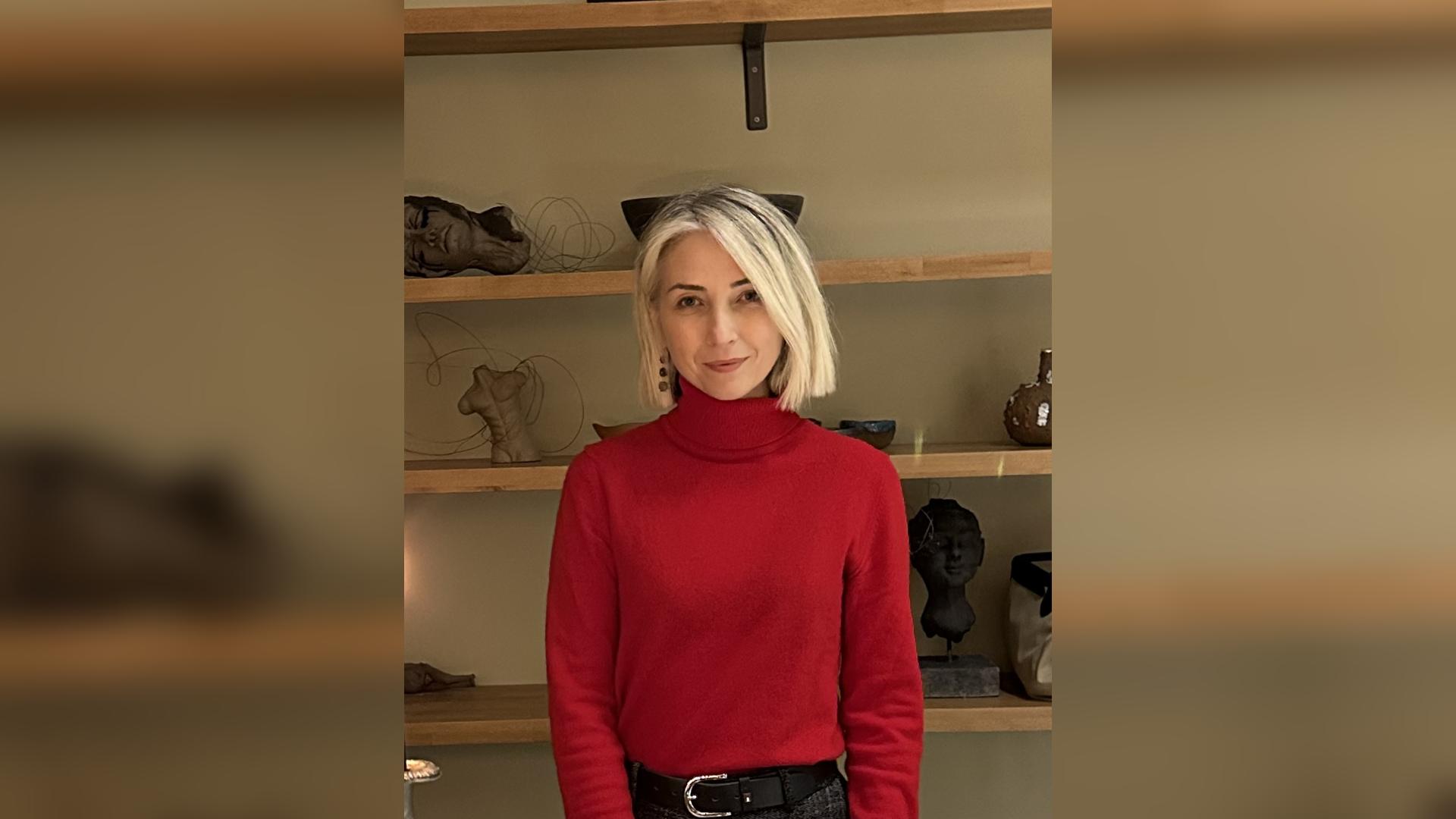
Society’s view of aging women and the stereotypes women are trying to break—An interview with Özgün Biçer

Özgün Biçer is an academic at the Marmara University Faculty of Economics. Her research explores development, gender equality, and questions of diversity and inclusion, with a focus on women’s experiences in the workplace, the care economy, and the intersection of technology and gender. Working across academic and applied research within institutions and civil society, Biçer asks a central question: what can women’s everyday experiences tell us about the inequalities that structure our societies? She highlights how often-overlooked aspects of women’s everyday lives, from the digital divide and care work to body politics, aging, and menopause, reveal deeper structures of social inequality, themes she reflects on in this interview.

Arjin Dilek Öncel by Arjin Dilek Öncel
16 March 2026
in Files
17 1
0
Share on FacebookShare on Twitter

This post is also available in: Français (French) العربية (Arabic) VO

In modern societies, a male-dominated concept of beauty is often imposed on women. But what is ideal beauty?

“Ideal beauty” is a historical illusion. When we look at history, we see that this ideal has constantly changed. At one time, larger bodies symbolizing fertility were considered desirable; later, fragility came to the fore, and today we once again live in an era where thinness and delicacy are aestheticized.

The collective imagination that defines ideal beauty is deeply shaped by masculine codes. It positions the female body as an object to be viewed and a source of pleasure. Modern capitalism has transformed this masculine gaze into a major source of profit. Today, every stage of maintaining the body as young, fit, and beautiful—or, more precisely, within dominant aesthetic standards—has become part of capitalist accumulation. This is a huge industry we are talking about.

The body ceases to be merely a personal space of existence and instead becomes a form of social and economic capital.

Against all these social pressures, there is also the reality of aging. Thinking of aging as a woman in Türkiye: why does growing older amplify women’s vulnerability and highlight gender inequalities in terms of beauty standards?

This is actually a very deep issue. First, we need to understand aging itself, and then the “feminization of old age.”

Aging is a biological reality, but what we call “old age” is not simply a natural process; it is also a powerful social construct. For women in particular, aging exposes them to the harshest consequences of a value system built around the body. In modern society, the female body has long been defined by youth, attractiveness, and productivity. When these qualities fade, women are often rendered invisible. Precisely for this reason, aging for women is not merely a physical change, as it also entails a transformation in social status and perceived value. While men are frequently described as “charismatic,” “experienced,” or “mature” with age, women are often framed as experiencing “loss.”

This is where the phenomenon known as the “feminization of old age” comes into play. Women are living longer, but they are also growing old poorer, more insecure, and lonelier. Workplace inequalities, the disproportionate burden of caregiving, and economic dependence further deepen women’s vulnerability in old age.

Beauty standards make this fragility even more visible. Because society often views the aging female body not with patience, but with expectations of “correction” and concealment. Hair dye, Botox, fillers, facelifts, longevity treatments... erasing signs of age is presented almost as a necessity. As if aging were not a stage of life but a mistake that needs to be corrected. Women are guided toward anti-aging products or cosmetic procedures to maintain their place in society. Research shows that while the motivation to “be healthy” is high among women aged 40-44, nearly half (48%) still emphasize the desire to “feel happier and more cared for with a slim body.” Because staying in the game requires it. An already unequal system becomes a multi-layered site of discrimination when aging is involved. It’s not just that you’re a woman—you’re also an older woman.

Popular figures reinforce these pressures of perpetual youth and push others to measures themselves against impossible standards.

Society perpetuates certain stereotypes about older women. How would you assess these perceptions?

Society’s perception of aging women is actually an extension of its ongoing efforts to fit women into a certain mold and control them at every stage of life. When women step outside the reproductive roles assigned to them by the system, society quickly tries to confine them within a different mold.

There are many stereotypes about aging women in society. One is “the grandmother who has done her duty, hung up her apron, and now only provides care,” while another depicts them as “menopausal, grumpy, and diminished.” These stereotypes strip women of their presence in the public sphere and of their personal desires, reducing them to domestic figures whose role is limited to caregiving—looking after grandchildren, maintaining the household.

In fact, aging can be a period when women are at their strongest, drawing on their life experience and economic resources. This empowered stage, where they make their own decisions and rely less on external approval, can, however, be perceived as a threat.

This empowered stage, where they make their own decisions and rely less on external approval, can, however, be perceived as a threat.

In one of your articles, you write, “Life has never been fair to women. However, menopause is perhaps one of the loneliest and least discussed thresholds of the female experience.” The effects of menopause on women’s health are still often overlooked, yet the same social stereotypes continue to shape perceptions of women who have gone through it. What would you like to say about the prejudices surrounding their social and sexual lives?

Life has never been entirely fair to women. Menopause is one of the most silent thresholds of this inequality. It is not merely a biological process; it is also a stage in which the social meanings attached to the female body are reinforced. What is striking is that when women are young, their bodies are subjected to intense scrutiny—every movement is examined. As they age, however, they are confronted with invisibility. Prejudices surrounding the social and sexual lives of postmenopausal women are part of this very mechanism of erasure. I am not even referring specifically to women’s sexuality. After all, even the desires and pleasures of young women are often treated as areas to be controlled and restricted. This is because the system primarily values the female body for its reproductive capacity. As Michel Foucault observed, the body is a site over which power is exercised. When a woman ages, she falls outside these societal expectations.

Society often assumes that with menopause, womanhood, desire, and the social value of the female body come to an end. As if womanhood were defined solely by fertility. In reality, though, this is far from the case. Women’s social lives, productivity, and intellectual and emotional worlds do not disappear with menopause. For many women, this stage marks a transition into a new and meaningful phase of life.

Today, hormone replacement therapies can address menopause-related symptoms such as hot flashes, insomnia, fatigue, anxiety, brain fog, and decreased sexual desire. Even small amounts of testosterone supplements have been shown to improve sexual desire, arousal, orgasm, and pleasure and reduce gender-related anxiety and distress in postmenopausal women experiencing hypoactive sexual desire disorder (HSDD). Hormone replacement therapy (HRT) is a comprehensive medical approach that supplements the body with synthetic or biologically identical forms of essential hormones that the body can no longer produce naturally or whose production has significantly declined. But the important question here is: who actually has access to these treatments? In a context where information about menopause is limited or outdated, only a small number of women are able to adequately support their own bodies during this stage of life.

Consequently, the issue is not menopause itself, but the silence and stereotypes that surround it. That’s why we need to talk about menopause more: more openly, more loudly.

Tags: old age and women
Arjin Dilek Öncel

Arjin Dilek Öncel

Arjin Dilek Öncel has been a journalist since 2015. She focuses on issues about women and children, especially in Kurdistan. She won the Jury's Special Award at the 27th Musa Anter Journalism and Free Press Martyrs Awards. She was also the winner of the 25th Metin Göktepe Journalism Awards in the category of Written Journalism.

Related posts

“Palestinian Women,” the revived history of women militants for the liberation of Palestine
In-depth

“Palestinian Women,” the revived history of women militants for the liberation of Palestine

by Nathalie Galesne
6 February 2024
1k

The documentary by Lebanese director Jocelyne Saab, screened at the 27/20 Festival in Tunis, shook the public. What do these...

Palestine: With “liberated” sperm, the impossible becomes possible
In-depth

Palestine: With “liberated” sperm, the impossible becomes possible

by Alaa Murrar
9 January 2023
528

When Palestinian women and men first heard the news of the smuggled sperm, they had a lot of questions. It...

Saying NO to violence is a business

Saying NO to violence is a business

19 September 2023
374
Quand les créations de Zehra Doğan voyaient le jour en prison

Quand les créations de Zehra Doğan voyaient le jour en prison

12 December 2022
319

Leave a Reply Cancel reply

Your email address will not be published. Required fields are marked *

J'accepte les termes et conditions et la Politique de confidentialité .

Medfeminiswiya

Medfeminiswiya is a feminist network that brings together women journalists working in the fields of media and content production in the Mediterranean region.

Newsletter


    Follow us

    Browse topics


    • In-depth
    • Files
    • Features
    • On the move
    • Portraits
    • Opinion

    • Creations
    • Visual Arts
    • Reviews
    • Multimedia
    • Country Context
    • Blogs
    • About us
    • Our community
    • Our partners
    • Become a member
    • Editorial charter
    • Disclaimer

    © 2025 Medfeminiswiya - Mediterranean Network for Feminist Information

    • it VO
    • fr Français
    • en English
    • ar العربية
    • In-depth
    • On the move
    • Portraits
    • Creations
    • Opinion
    • Multimedia
    • Country context
    • Blogs
    No Result
    View All Result

    © 2025 Medfeminiswiya - Mediterranean Network for Feminist Information

    Welcome Back!

    Login to your account below

    Forgotten Password?

    Retrieve your password

    Please enter your username or email address to reset your password.

    Log In

    Add New Playlist

    Ce site n'utilise pas de cookies. This website does not use cookies. هذا الموقع لا يستخدم ملفات تعريف الارتباط.