Cette publication est également disponible en : Français (French) العربية (Arabic)
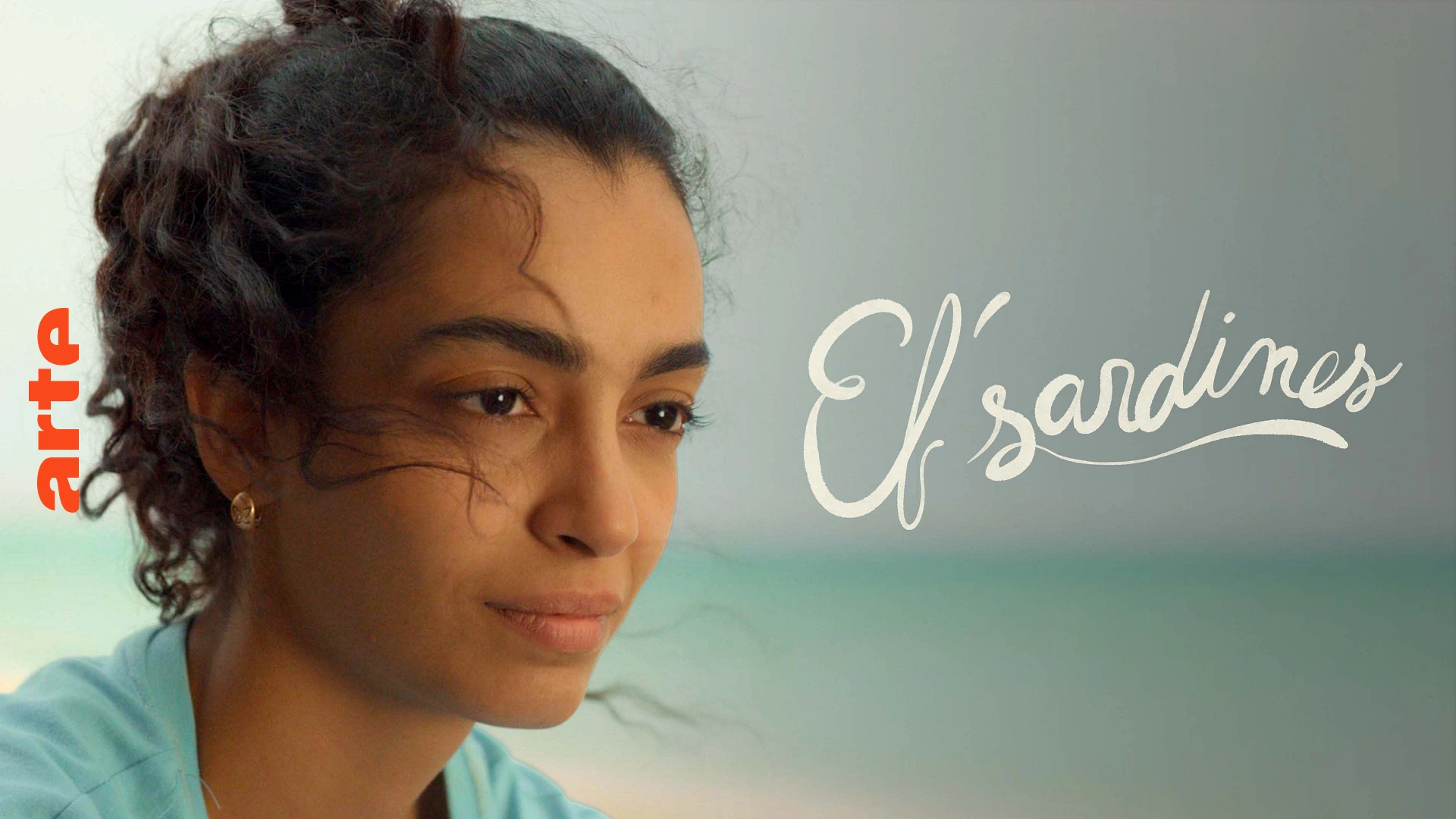
In Algeria, marine biologist Zouzou investigates a disturbing phenomenon: the sudden disappearance of sardines from the bay of Oran. This scientific mystery quickly becomes the starting point for a more intimate—and political—story. In the miniseries El’Sardines, directed by Zoulikha Tahar and co-written with Algerian writer Kaouther Adimi, it is through Zouzou’s research that another disappearance comes to light: that of the opportunities available to women in a rigid society. While sardines migrate freely, Zouzou dreams of leaving but remains stuck waiting for a visa. Between the impossibility of fleeing and the powerlessness of staying, the series, broadcast by the European platform Arte, transforms an ecological crisis into a subtle, tense, poetic story of emancipation, where personal urgency meets political urgency.
“This series,” confides Zoulikha Tahar, “was born during my last week in Algeria. I wasn’t able to tell my family everything I had on my mind before leaving. El’Sardines allowed me to bring to life, through fiction, this moment that I was unable to experience in reality.”
The sardine as a metaphor for a vital escape
Zouzou is 30 years old. She is a marine biologist and is considered strange because unmarried. Because she still lives with her parents. In Algerian society, everything else is overshadowed by this: her degrees, her publications, her passion. She is brilliant, cultured, respectful. But she is single—and that gets people talking. In a society where women must be useful, maternal, neatly packaged into boxes like sardines, Zouzou is an anomaly. A woman’s professional success has no value if it isn’t accompanied by the seal of matrimony.
The disappearance of sardines from the bay of Oran is not just an ecological fact: it’s a parable. As they were doing research for the screenplay, Tahar and Adimi discovered that sardines are the only marine animal that migrates without any food- or reproduction-related reason. They migrate by instinct. Like the women who leave because to stay is to die a slow death.
“From April to July, sardines migrate in a frantic race from the Mediterranean basin to South Africa. And scientists still can’t explain this phenomenon. It was when we learned about this that we came up with the metaphor likening the mystery of the sardine’s disappearance to Zouzou’s need to migrate,” the Algerian director explains to Medfeminiswiya.
In El’Sardines, this silent migration becomes a mirror of Algerian society. What to do when even the fish are leaving? When even the sea becomes barren? For Zouzou, understanding this departure becomes an act of intellectual—but above all existential—survival.
Far from overly graphic narratives, El’Sardines exhibits an intimate feminism. No slogans. No obvious manifesto. But a constant tension: that of a woman too free to be at peace.
The complexity of mother-daughter relationships
Far from overly graphic narratives, El’Sardines exhibits an intimate feminism. No slogans. No obvious manifesto. But a constant tension: that of a woman too free to be at peace. Patriarchy here is not a caricature. It resides in the gentleness of the mother who does not understand, in the paranoia of the father who believes in a maritime conspiracy, in the sister who marries to “do the right thing.”
The series refuses to sensationalize violence. It chooses erosion: that of time, of the body, of the desire to be oneself. It thus reveals another form of diffuse, social, and emotional oppression and makes visible the fatigue of being a woman living in suspension. By studying marine migratory flows, Zouzou is also deciphering the social mechanisms of confinement.
“I wanted the sea to be more than just a backdrop,” the young filmmaker explains. “I wanted it to be a silent interlocutor. A refuge. I grew up by the sea, and it’s changing today because of global warming. There is a real ecological issue behind this fiction. But above all, it’s a show about mental burdens and the very complex mother-daughter relationship in our societies.”
And if El’Sardines avoids caricatures of authoritarian patriarchy, it’s the better to show where the most insidious forms of violence lie. In this series, it’s the mother who, without brutality but with insistence, exerts the most constant pressure on her daughter. She never shouts, but she reminds. She doesn’t hit, but she repeats. Every comment about marriage, every sigh about family shame, every silence, every glance, contributes to an exhausting everyday violence.
“In my circle, I’ve always seen mothers as the unwitting guardians of patriarchy, even those who are educated and financially independent. Zouzou’s father, on the other hand, gives the impression of being more tolerant, but in reality, he is the one who carries forth the weight of patriarchy behind the scenes. When he finds out that she is going on an expedition, his first reaction is, ‘How many women will there be on the boat?’ What I wanted to show is that patriarchy in our societies does not always come in the shape of a violent man. It’s often diffuse, vicious, difficult to pin down. And yet it carries intense weight.”
Her feminism is neither theoretical nor assertive. It is inscribed in gestures, bodies, and silent choices. It does not seek to convince. It shows. It allows contradictions to reveal themselves. Her silence eludes traditional narratives and tells the story of everyday violence in a deeply moving way.
A minimalist narrative, maximal political charge
With El’Sardines, Zoulikha Tahar challenges conventions. She films Algeria from its margins: those of a female body that refuses to be subjugated, those of a family adrift, of a country in turmoil. And she does it without anger, without shouting, but with surgical precision.
One of the most subtly explored tensions is that between science and tradition. Two systems of thought that the series places side by side, like two parallel worlds, without ever having them meet. Zouzou embodies knowledge, method, and investigation. Her father embodies faith, suspicion, and oral narratives. They both talk about the disappearance of the sardines, but in languages that do not reach each other. This mutual incomprehension symbolizes a wider divide: that between educated, modern young women, and a part of society that refuses to listen to them.
This miniseries is a breakthrough of sorts. A place where sardines cease to be a popular product and become a symbol of emancipation. Where the sea is no longer a backdrop but an interlocutor. Where women are no longer extras but complex, powerful, funny subjects.
Zoulikha Tahar never raises her voice. Her feminism is neither theoretical nor assertive. It is inscribed in gestures, bodies, and silent choices. It does not seek to convince. It shows. It allows contradictions to reveal themselves. Her silence eludes traditional narratives and tells the story of everyday violence in a deeply moving way.
“Today, I proudly proclaim my feminism,” says the director. “But when I was in Algeria, it was an interna, silent rebellion. Zouzou is the old me. If we were to meet her again, in the future, she too would be more assertive about her feminism.”
The six episodes, each 11 minutes long, are available here.