Cette publication est également disponible en :
While stacking shelves in a supermarket in the coastal city of Split one frosty December, a 44-year-old shop assistant was attacked by her ex-partner. According to the police report, he first verbally assaulted the victim accusing her of not allowing him to see his child and then attacked her with a sharp weapon. The woman was stabbed 15 times, and although she was immediately transported to hospital, she died shortly after the attack.
Less than a month later and some 300 kilometres to the north of the country, in the port city of Rijeka, a 67-year-old woman was having coffee with a 36-year-old man. Suddenly he slammed her to the ground and ferociously began pouncing on her. The woman died from blows to the head and body.
In mid-February, the small island town of Vela Luka was deeply shaken by the murder of their fellow female citizen. In their family home, a 34-year-old man killed his mother.
The citizens of Croatia, of which there are 4 million according to the latest census, were shocked by these aggravated murders, two of which were committed in public. These are clear examples of femicide, although Croatian legislation does not provide for a legal definition of the term.
WHO defines femicide as the intentional murder of women because they are female, but a broader understanding of the term includes any killings of women or girls. According to WHO, most cases of femicide are committed by men, often persons close to the victim with whom she is or was in an intimate relationship. Femicide usually involves prior domestic violence, intimidation, sexual abuse or other situations where the offender has more power and resources than the woman.
Croatia, like the rest of the EU, does not recognise femicide. Despite the Resolution on femicide adopted by the European Parliament in 2015, the Croatian Criminal Code does not recognise the term femicide, and neither do the criminal codes of other EU Member States. This fact makes it difficult to adequately monitor data and raise awareness about femicide in order to prevent this most severe form of gender-based violence.
According to the Ministry of the Interior, only in January 2022 there were three cases of killings of women recorded in Croatia, one of which was committed by a person close to the victim. The data for 2021 reveal 14 murders of women recorded, of which 11 cases involved a perpetrator close to the victim, including one non-marital partner and one former non-marital partner.
The most recent media-covered case of femicide in Croatia took place in the small town of Vela Luka on the island of Korčula. In this case, a 34-year-old man stabbed his mother to death in their family home. According to locals, the perpetrator was in poor mental and physical condition in the days preceding the murder, and we learn from the Dubrovnik-Neretva Police Department that the mother had previously reported her son to the police several times.
Despite the Resolution on femicide adopted by the European Parliament in 2015, the Croatian Criminal Code does not recognise the term femicide.
The second case happened a few days earlier in the city of Rijeka when a 36-year-old man attacked a 67-year-old woman with whom he was sitting in a café in the city centre. This act of brutal murder was witnessed by a waiter and other guests of the café, and a video recording of the killing was later published in the media, which violates journalistic codes of ethics and unnecessarily exposes the victim.
Another case of femicide occurred in November when an ex-partner attacked a woman at her workplace in the Lidl retail chain. The ex-partner approached the victim, first verbally assaulting her and then attacking her with a sharp weapon. Many buyers who happened to be in the store that afternoon witnessed the event. The offender has not previously been known to the police.
However, what can be done to prevent or at least minimise not only femicide but also other types of gender-based violence? It would probably help to additionally raise public awareness of these issues, to provide for clearer legal definitions, but also to improve the implementation of the laws in order to prevent the long-term violence that most often precedes femicide.
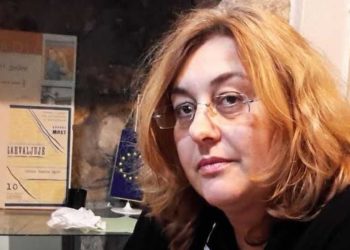
Mirjana Kučer from the NGO Domine, which promotes women’s rights, believes that the public should be more informed about femicide.
“Femicide as such is not sufficiently recognised in Croatia. We have only recently developed some programs to monitor femicide at the national level, and I would say that since the murder of the woman in a shopping centre in Split, the topic has become more present in the media,” Kučer said adding that this is a step forward in understanding the social problem of male violence against women.
Kučer sees another problem in the lack of data on violence resulting from the non-existence of defined standards for monitoring it, but also in the lack of reporting of violence by the victim due to fear, shame, lack of awareness and other reasons.
“We know from experience that femicide was almost always preceded by long-term exposure of the victim to violence,” she added.
Massive protests against violence
In 2018, Croatia signed the Istanbul Convention, a legally binding instrument which “creates a comprehensive legal framework and approach to combat violence against women”. According to government data, 90 % of violence against women and domestic violence in Croatia was qualified as an offence, even though the convention calls for serious sanctioning of such acts and their classification within the Criminal Code.
However, despite the shortcomings in legislation, Croatian citizens are becoming increasingly aware of the problem. In the spring of 2019, Croatian actress and screenwriter Jelena Veljača opened a Facebook group #spasime (#saveme) after a man on the island of Pag had thrown his four children off the balcony. Shortly afterwards, a protest was organized in Croatia’s capital, Zagreb, bringing together almost 50,000 people. Half a year later, protests organized by several CSOs and initiatives were held across the country due to the release of five men suspected of repeated rape, sexual exploitation, blackmail and physical and psychological abuse of a 15-year-old girl during a period of one year. Many citizens and public figures took part in the protest aimed at raising the alarm about the lack of education and poor work of institutions in protecting women against violence.
The Croatian Government then promised the protesters to open women’s safe houses in the six counties that did not have them at the time and set up a 24-hour SOS helpline. The government has honored the promise, but the question arises as to whether it has done so adequately, as some of the open houses are not only for women, but for all victims of violence, and some are also under the jurisdiction of Caritas. They have also opened the SOS helpline but again it is intended for all victims of violence, so it is questionable whether the volunteers are sufficiently educated about problems specific to women victims of violence.
Lorena Zec from the Rijeka association SOS says that from a feminist perspective these actions are not satisfactory because they do not specifically address the issue of gender-based violence against women.
“Cases of violence against women covered by the Istanbul Convention are various, ranging from crime to ‘honor defense’ and female genital mutilation. Volunteers working on these lines have probably not been educated for such cases,” Zec said.