
Cette publication est également disponible en :
On September 28, 2020, transfeminist activist Marta Loi revealed on Facebook that she had discovered at Rome’s Flaminio Cemetery a cross bearing her name and the date of her therapeutic abortion (or medical termination of pregnancy). Next to a photo of the small tombstone, she wrote, “A picture is worth a thousand words.” Indeed, the post, shared more than 10,000 times, prompted many women to contact the capital’s cemetery authorities. What they uncovered was appalling: dozens of other fetuses had been buried there, with the women’s personal data plainly visible, without any prior consent.

“Finding myself on a crucifix was the final stage in the torture a woman must endure in Rome when she undergoes a therapeutic abortion,” said Francesca Tolino some time later. Tolino is one many patients who were never asked at the hospital what they wished to do with the fetus following the medical procedure.
Until then, few people were aware of the existence of these “gardens of angels,” the specific areas in cemeteries reserved for the burial of fetuses over five months old following a therapeutic abortion. Yet, according to investigative journalist Gabriele Barbati’s book (1), around 50 such areas exist across Italy, where between 500 and 600 burials take place each year, most often without the women’s knowledge.
“This moment made us clearly aware of the grave violations this practice entails on multiple levels—above all, by making public an event that is intimate and private, and by attempting to assign a universal meaning to an experience that every woman lives in her own way,” commented Elisa Ercoli, president of Differenza Donna, an association combating gender-based violence and leading a collective legal action in response.
Thanks to this organization and the impressive mobilization of feminist movements, the Data Protection Authority (Garante per la protezione dei dati personali) (2) opened an investigation. As a result, in 2023, the City of Rome was fined 176,000 euros and the municipal waste management company 239,000 euros, and the local health authority ASL 1 received a formal warning for violating confidentiality obligations set out in abortion legislation. Although tombs for fetuses now display coded identifiers or pseudonyms, burials continue without the requirement of informed consent or ethically acceptable traceability concerning sensitive data related to voluntary terminations of pregnancy (VTP).
The lights and shadows of Law 194
Abortion in Italy was decriminalized by Law 194 in 1978, which authorizes abortion within 90 days, after a medical consultation. The law, born of a historic compromise between feminist demands and conservative Catholic parties, has lost much of its original revolutionary scope and still contains several ambiguities today. Starting with its title: “Norms for the Social Protection of Motherhood and on Voluntary Termination of Pregnancy.” Unlike other legal systems, the Italian framework does not conceive of abortion as a right grounded in women’s free choice and self-determination, but rather as a public health measure aimed primarily at protecting human life.
Unlike other legal systems, the Italian framework does not conceive of abortion as a right grounded in women’s free choice and self-determination, but rather as a public health measure aimed primarily at protecting human life.
Law 194 sets no specific limit for therapeutic abortion, which is permitted only when pregnancy or childbirth threatens the pregnant woman’s physical or mental health, or in cases of serious fetal malformation or pathology. However, Article 7 stipulates that if the fetus has reached a stage of development that allows survival outside the uterus (around 22 to 24 weeks), the physician must act to preserve its physical integrity.
The national regulations on funeral services stipulate that after the 28th week of pregnancy, fetuses must be registered with the civil registry as stillborn and buried automatically. In contrast, for abortions performed before the 20th week, the woman has 24 hours to decide whether she wishes to take care of the burial herself (optional) or to entrust the hospital with the task. Most often, hospitals dispose of fetuses along with human organic waste, but they may also delegate this task to non-profit associations.
Over the past several years, traditionalist Catholic groups, which consider the embryo a human life from conception and regard abortion as a crime, have inserted themselves into this poorly explained procedure. In cases where the hospitalized woman does not make a request, these fundamentalist Catholics recover the fetus 24 hours after the abortion and bury it according to their religious rites.

God, homeland, and family
Supported by the Church and the Meloni government, “pro-life” groups have, over time, developed partnerships with local health authorities as well as municipal and regional administrations. In some cities, pro-life groups even manage the so-called “gardens of angels.” The agreement between the volunteer association Difendere la vita con Maria (Defend Life with Mary) and the local health agency (ASL) of Novara dates back to 1999, when the first cemetery for “unborn children” was established in this Piedmont town.
Other active organizations include Papa Giovanni XXIII (Pope John XXIII), Armata Bianca (White Army), Difendiamo i nostri figli (Let’s Defend Our Children), and the non-profit ProVita & Famiglia (Pro-Life & Family), one of the promoters of the World Congress of Families held in Verona in 2019. During that event, the distribution of rubber fetuses, prayers for the “healing” of homosexual people, fascist slogans defending the traditional family, and campaigns against condom use all sparked widespread controversy. The congress’s sponsorship by Family Minister Lorenzo Fontana, a member of the Lega Nord (Northern League) and current President of the Chamber of Deputies, provoked heated debate, as did the participation of Matteo Salvini—then Minister of the Interior and now Deputy Prime Minister and Minister of Infrastructure and Transport.
In 2024, an amendment proposed by Brothers of Italy went so far as to legalize the presence of pro-life activists in hospitals and clinics.
The connection between Italian anti-abortion movements and the far right has long been known, as has their intermediary role linking neo-fascist organizations with the Lega Nord and Fratelli d’Italia (Brothers of Italy) parties. These are the same political forces that, in municipal councils, approve the most reactionary, homophobic, and sexist motions. In 2024, an amendment proposed by Brothers of Italy went so far as to legalize the presence of pro-lifers in hospitals and clinics, also granting them access to regional, public, and national funds from the National Recovery and Resilience Plan (PNRR).
For pro-choice advocates, this represents yet another attempt by Prime Minister Giorgia Meloni to undermine the right to abortion. Her government not only promotes pro-natalist campaigns with bonuses for large families and financial aid for newborns but also continues to weaken the national health system (SSN) in favor of the private sector, just as previous governments have done over the past two decades, regardless of political orientation. This gradual dismantling of public infrastructure harms clinics, which face constant budget cuts and staff reductions. According to SSN statistics, 300 centers have closed in the past ten years, making access to healthcare increasingly difficult for southern residents, the most disadvantaged populations, and migrants.
In Italy, access to abortion is therefore not merely a question of civil rights; it also exposes social inequalities, territorial disparities, cultural pressures, and the ideological instrumentalization of public health—a phenomenon that is becoming ever more common.
A path strewn with obstacles
In addition, the information available on ministerial websites and hospital portals regarding abortion procedures is neither clear nor up to date, and waiting times can be exhausting. Many women also experience physical and psychological violence from healthcare staff: they are forced to listen to the fetus’s heartbeat, are denied requested painkillers, and are hospitalized in the same rooms as women in labor. Mandatory consultations with psychologists or psychiatrists urging them to reconsider their decision are also common.
Moreover, conscientious objection on moral or religious grounds is so widespread in certain regions of Italy that many women are forced to travel outside their area in order to access abortion services: in Caserta, 80% of gynecologists refuse to perform abortions; in Sicily, that figure rises to 85% (3).
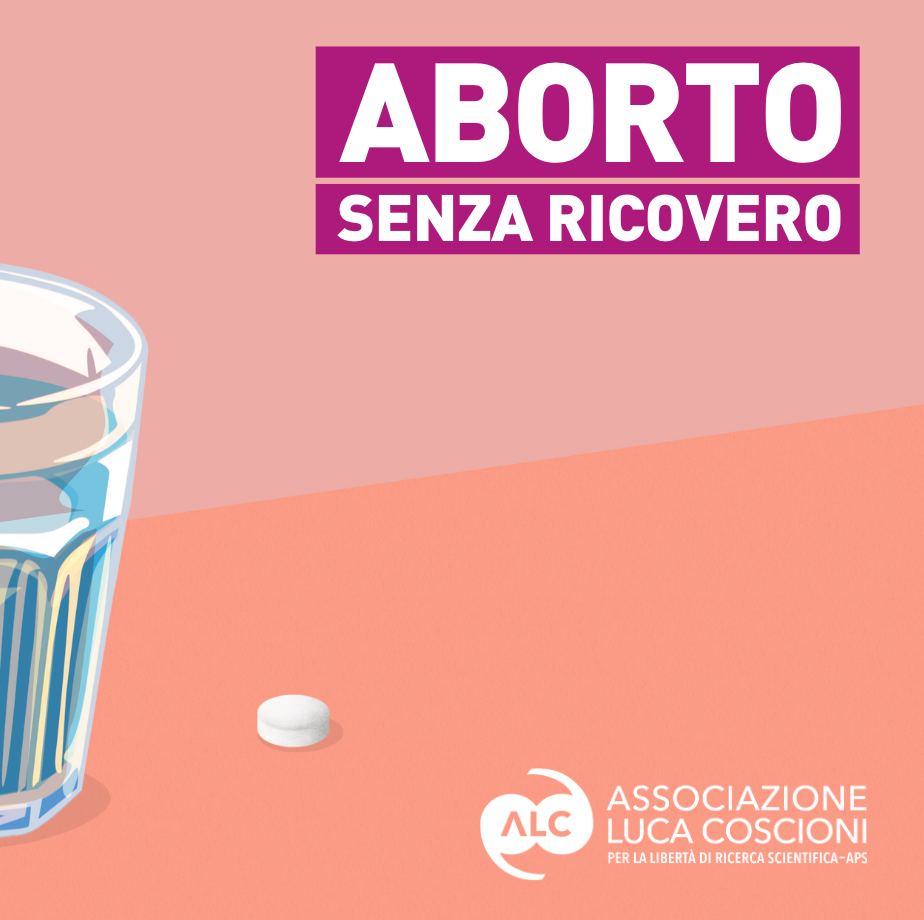
According to Chiara Lalli, a philosopher specializing in bioethics and author of La verità, vi prego, sull’aborto (The Truth, Please, About Abortion), there are 15 hospitals in Italy where 100% of gynecologists are conscientious objectors, and 20 where the percentage exceeds 80%.
“This creates social injustice,” she writes, “since those who have the means and connections eventually manage to have an abortion, even if it means traveling far from home. But what about the others? And when it comes to therapeutic abortions after 12 weeks, it’s even worse. Everyone knows that those who can afford it go abroad.”
In Italy, access to abortion is therefore not merely a question of civil rights; it also exposes social inequalities, territorial disparities, cultural pressures, and the ideological instrumentalization of public health.
Another worrying statistic concerns clandestine abortions: according to estimates from the Ministry of Health, between 10,000 and 13,000 women each year in Italy terminate pregnancies without medical supervision, taking drugs purchased online. This figure, derived from statistical projections, does not account for migrant women, whose number of abortions could exceed 5,000 annually.
An experience that is not necessarily traumatic
Although abortion has now been included in the European Parliament’s Charter of Fundamental Rights of the European Union, it remains a taboo topic in Italy—something discussed rarely and reluctantly. Women who make this choice for personal reasons still face strong social stigma, while those who undergo abortions for medical reasons are met with pity because of the suffering involved.
“We almost never talk about abortion,” explains Chiara Lalli. “When it does come up, people lower their eyes and their voices. Unless it’s in the context of a political debate—then the rhetoric becomes heated and apocalyptic: ‘massacre of the innocents,’ ‘legalized genocide,’ ‘murderous women.’ Even those who support the right to abortion and women’s freedom to choose struggle to feel at ease with the topic. People rush to offer mitigating explanations for why someone chose to abort, before adding, ‘everyone knows it’s a trauma.’”
Meanwhile, Federica Di Martino, a psychotherapist and transfeminist activist, seeks to reverse this catastrophic and guilt-inducing narrative through the platform IVG, ho abortito e sto benissimo (“I Had an Abortion and I Feel Great”), which has collected positive testimonies since 2018. The platform also shares practical information and promotes collective and grassroots forms of mutual aid, offering economic, logistical, and psychological support to those choosing to terminate a pregnancy.
“Pain and guilt are not part of our destiny—let alone shame,” she writes on Instagram. “Our personal choices belong only to us. And let’s remember: demanding adequate services and dignified care worthy of a civilized country is not optional. It’s a fundamental right.”
She adds, “We exist, just like our abortion stories exist, and they deserve the same recognition as all other experiences of self-determination over our bodies.”
Gabriele Barbati, Contro la mia volontà. Aborti impossibili, sepolture di feti e altri scandali (Against My Will: Impossible Abortions, Fetal Burials, and Other Scandals) (Paesi Edizioni, 2024).
The Data Protection Authority is the national body responsible for enforcing the EU’s General Data Protection Regulation (GDPR).
The most recent Ministry of Health report to Parliament on the implementation of Law 194 dates to 2022, based on 2021 data.
Main picture: In 2021, Emma Bonino, senator of the Radical Party, declared, “Today, more than 40 years after the adoption of Law 194, women’s right to choose remains under threat—it is time to fight again.” She supported the campaign Libera di abortire (Free to Abort), which calls for abortion to be recognized as a reproductive right and for free, unobstructed access up to the 14th week of pregnancy. Source: Internet.
This article was carried out with the support of the Tunis Office of the Rosa Luxemburg Foundation.