• it VO
  • fr Français
  • en English
  • ar العربية
About us
  • In-depth
    • All
    • Features
    • Files
    • World
    Morocco: 600 abortions a day—Alarming figures and tragic stories

    Morocco: 600 abortions a day—Alarming figures and tragic stories

    In Spain, the right to abortion is not guaranteed for all

    In Spain, the right to abortion is not guaranteed for all

    Invisible and vulnerable: Migrant women at the frontlines of Spain’s prostitution debate

    Invisible and vulnerable: Migrant women at the frontlines of Spain’s prostitution debate

    Serbia: Is contraception a luxury or a basic human right?

    Serbia: Is contraception a luxury or a basic human right?

    Rebels, witnesses, victims: Women against the mafia (3/3)

    Rebels, witnesses, victims: Women against the mafia (3/3)

    Trending Tags

    • Women artists
    • Ecofeminism
    • Women living from and on the streets
    • Women and bodies
    • Women and sports
    • Women and cinema
    • Ramadan series
    • Women and war
    • Women Living at the Margins
    • Press Freedom from the Perspective of Women Journalists
    • Period poverty
    • Gynecological violence
    • Women and prison
    • Safe spaces
    • Abortion and SRHR
    • Transgenderism
    • Women in rural areas
  • On the move
    Spain: CEAR and the fight against human trafficking

    Spain: CEAR and the fight against human trafficking

    Gaza: How many journalists must be killed for the world to react?

    Gaza: How many journalists must be killed for the world to react?

    Moroccan activist Ibtissam Lachgar held in solitary confinement, health in crisis

    Moroccan activist Ibtissam Lachgar held in solitary confinement, health in crisis

    Three women for one man’s pay: The plight of female agricultural workers in Egypt

    Three women for one man’s pay: The plight of female agricultural workers in Egypt

  • Portraits
    Sophie Bessis: “The battle for the intimate will be long, especially in the Global South!”

    Sophie Bessis: “The battle for the intimate will be long, especially in the Global South!”

    “Mom, Dad, Can We Talk About Privacy?”—A Tunisian children’s book on protecting kids from sexual violence

    “Mom, Dad, Can We Talk About Privacy?”—A Tunisian children’s book on protecting kids from sexual violence

    Kurdish journalist killed in Turkish drone strike in northeastern Syria

    Kurdish journalist killed in Turkish drone strike in northeastern Syria

    A Filmmaker’s Journey: Inside the Creative World of Margarita Bareikyte

    A Filmmaker’s Journey: Inside the Creative World of Margarita Bareikyte

  • Creations
    • All
    • Reviews
    • Visual Arts
    “La Malédiction (1)”, a theatrical adaptation of King Kong Theory bursting with Tunisian rage

    “La Malédiction (1)”, a theatrical adaptation of King Kong Theory bursting with Tunisian rage

    “Mom, Dad, Can We Talk About Privacy?”—A Tunisian children’s book on protecting kids from sexual violence

    “Mom, Dad, Can We Talk About Privacy?”—A Tunisian children’s book on protecting kids from sexual violence

    The El’Sardines series, a delicate feminist manifesto centered around an ecological mystery

    The El’Sardines series, a delicate feminist manifesto centered around an ecological mystery

    Atlantics, a film by Mati Diop: Filming the embodied resistance of spirits

    Atlantics, a film by Mati Diop: Filming the embodied resistance of spirits

  • Opinion
    Women in Gaza are living their worst nightmares - “ I want to go back to my life before the war, to my privacy, my home ”

    Women in Gaza are living their worst nightmares - “ I want to go back to my life before the war, to my privacy, my home ”

    Messages from life under bombardment—Can a mother cope with losing her six children at once? (10)

    Messages from life under bombardment—Can a mother cope with losing her six children at once? (10)

    Messages from life under bombardment—No cake for my children on their birthdays (9)

    Messages from life under bombardment—No cake for my children on their birthdays (9)

    Messages from life under bombardment – No food or water in Gaza (8)

    Messages from life under bombardment – No food or water in Gaza (8)

  • Multimedia
    "I hope it doesn’t go viral: Journalism and sexist attacks in digital age". A video investigation by Çiçek Tahaoğlu

    "I hope it doesn’t go viral: Journalism and sexist attacks in digital age". A video investigation by Çiçek Tahaoğlu

    Period poverty in Montenegro

    Period poverty in Montenegro

    Period poverty in France (1)

    Period poverty in France (1)

    Period Poverty in Italy

    Period Poverty in Italy

  • Country context
No Result
View All Result
BLOGS
Medfeminiswiya
  • In-depth
    • All
    • Features
    • Files
    • World
    Morocco: 600 abortions a day—Alarming figures and tragic stories

    Morocco: 600 abortions a day—Alarming figures and tragic stories

    In Spain, the right to abortion is not guaranteed for all

    In Spain, the right to abortion is not guaranteed for all

    Invisible and vulnerable: Migrant women at the frontlines of Spain’s prostitution debate

    Invisible and vulnerable: Migrant women at the frontlines of Spain’s prostitution debate

    Serbia: Is contraception a luxury or a basic human right?

    Serbia: Is contraception a luxury or a basic human right?

    Rebels, witnesses, victims: Women against the mafia (3/3)

    Rebels, witnesses, victims: Women against the mafia (3/3)

    Trending Tags

    • Women artists
    • Ecofeminism
    • Women living from and on the streets
    • Women and bodies
    • Women and sports
    • Women and cinema
    • Ramadan series
    • Women and war
    • Women Living at the Margins
    • Press Freedom from the Perspective of Women Journalists
    • Period poverty
    • Gynecological violence
    • Women and prison
    • Safe spaces
    • Abortion and SRHR
    • Transgenderism
    • Women in rural areas
  • On the move
    Spain: CEAR and the fight against human trafficking

    Spain: CEAR and the fight against human trafficking

    Gaza: How many journalists must be killed for the world to react?

    Gaza: How many journalists must be killed for the world to react?

    Moroccan activist Ibtissam Lachgar held in solitary confinement, health in crisis

    Moroccan activist Ibtissam Lachgar held in solitary confinement, health in crisis

    Three women for one man’s pay: The plight of female agricultural workers in Egypt

    Three women for one man’s pay: The plight of female agricultural workers in Egypt

  • Portraits
    Sophie Bessis: “The battle for the intimate will be long, especially in the Global South!”

    Sophie Bessis: “The battle for the intimate will be long, especially in the Global South!”

    “Mom, Dad, Can We Talk About Privacy?”—A Tunisian children’s book on protecting kids from sexual violence

    “Mom, Dad, Can We Talk About Privacy?”—A Tunisian children’s book on protecting kids from sexual violence

    Kurdish journalist killed in Turkish drone strike in northeastern Syria

    Kurdish journalist killed in Turkish drone strike in northeastern Syria

    A Filmmaker’s Journey: Inside the Creative World of Margarita Bareikyte

    A Filmmaker’s Journey: Inside the Creative World of Margarita Bareikyte

  • Creations
    • All
    • Reviews
    • Visual Arts
    “La Malédiction (1)”, a theatrical adaptation of King Kong Theory bursting with Tunisian rage

    “La Malédiction (1)”, a theatrical adaptation of King Kong Theory bursting with Tunisian rage

    “Mom, Dad, Can We Talk About Privacy?”—A Tunisian children’s book on protecting kids from sexual violence

    “Mom, Dad, Can We Talk About Privacy?”—A Tunisian children’s book on protecting kids from sexual violence

    The El’Sardines series, a delicate feminist manifesto centered around an ecological mystery

    The El’Sardines series, a delicate feminist manifesto centered around an ecological mystery

    Atlantics, a film by Mati Diop: Filming the embodied resistance of spirits

    Atlantics, a film by Mati Diop: Filming the embodied resistance of spirits

  • Opinion
    Women in Gaza are living their worst nightmares - “ I want to go back to my life before the war, to my privacy, my home ”

    Women in Gaza are living their worst nightmares - “ I want to go back to my life before the war, to my privacy, my home ”

    Messages from life under bombardment—Can a mother cope with losing her six children at once? (10)

    Messages from life under bombardment—Can a mother cope with losing her six children at once? (10)

    Messages from life under bombardment—No cake for my children on their birthdays (9)

    Messages from life under bombardment—No cake for my children on their birthdays (9)

    Messages from life under bombardment – No food or water in Gaza (8)

    Messages from life under bombardment – No food or water in Gaza (8)

  • Multimedia
    "I hope it doesn’t go viral: Journalism and sexist attacks in digital age". A video investigation by Çiçek Tahaoğlu

    "I hope it doesn’t go viral: Journalism and sexist attacks in digital age". A video investigation by Çiçek Tahaoğlu

    Period poverty in Montenegro

    Period poverty in Montenegro

    Period poverty in France (1)

    Period poverty in France (1)

    Period Poverty in Italy

    Period Poverty in Italy

  • Country context
About us
Medfeminiswiya
About us

Fallujah: Superficial treatment of women’s issues - Tunisia

The series Fallujah, Part Two of which was broadcast on Tunisian channel Elhiwar Ettounsi, answers outstanding questions from Part One such as the outcome of the case of the rape of the minor student Rahma.

Sana Adouni by Sana Adouni
6 April 2024
in Creations, Files
56 0
0
Share on FacebookShare on Twitter

This post is also available in: Français (French) العربية (Arabic)

The series Fallujah, Part Two of which was broadcast on Tunisian channel Elhiwar Ettounsi, answers outstanding questions from Part One such as the outcome of the case of the rape of the minor student Rahma. It also raises new issues, which are not, however, dealt with with sufficient legal precision: this reduces them to superficiality and empties the dramatic content of its educational essence, especially when it comes to violence, rape, and the employment of minors.

Many issues poorly addressed
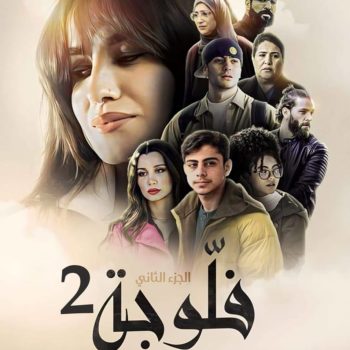
Fallujah is a Tunisian drama series that raises important social and educational issues related to the lives and problems of teenage students in schools. These include rape, sexual harassment, violence, and drugs, but the show lacks comprehensive dramatic treatment of any of these issues. The series was directed and written by Saoussen Jemni and stars Sara Tounsi, Mohamed Ali Ben Jemaa, Rim Riahi, and Fares Abeddayem.

The director touched on sensitive issues but didn’t provide any precise legal references, rendering the story flimsy and failing to alert viewers to the gains that Tunisian law has offered to protect women from violence, such as Law No. 2017-58 regarding the elimination of violence against women.

It seemed clear that Jemni sought, in this version of the show, to escape the criticism that haunts everything on Elhiwar Ettounsi, a channel characterized by sensationalism and drama, which are given more prominence than any educational content. But the weakness of the script meant that the dramatic work produced is devoid of any meaningfulness; it presents reality and its social ramifications without any sort of embellishment and fails to clarify the legal data related to the issue at hand. This ultimately leads to a lack of meaning.

In the first episode, Jemni takes us into the family spheres of students at a high school called Fallujah as these students prepare to go back to school. The school represents the focus of events and climax of the plot as it relates to building relationships among characters and the dramatic turns these take, ultimately revealing the fate of Rahma’s rapist and Nouh, the educator’s abuser.

The first episode answers viewers’ questions, and the student Nouh is shown to be free, liberated after the educator forgives him—even though he had kidnapped and abused her. Events develop later on after Rahma’s rapist escapes punishment and is released from prison because he manages to manipulate the case somehow.

The series, which includes 21 episodes, is slow, drawn out, and weakly addressed in its dramatic treatment, as it does not focus on any main issue but shows many sub-issues, relatively disturbing the dramatic sequence, emptying it of its social essence, and making it restore stereotypical images of women.

Script lacking legal reference

The director touched on sensitive issues but didn’t provide any precise legal references, rendering the story flimsy and failing to alert viewers to the gains that Tunisian law has offered to protect women from violence.

After the scriptwriter and director made a serious legal mistake in Part One of the show when she married Rahma, the rape victim, to her rapist Ibrahim, which is not permissible under Tunisian Law 58 mentioned above, Jemni has yet again made another mistake in punishing the harasser teacher by having him fired from the institution without any other legal accountability.

Firing him and showing solidarity among victims of harassment did not help clarify to viewers the legal paths available in such cases. Law No. 2017-58 regarding the elimination of violence against women requires that crimes of harassment be reported to the school, and the punishment laid out for teachers is more severe than it is for other harassers because in this case, the harasser has power over his victim.

In terms of form, the director managed to highlight the importance of solidarity among victims of harassment, but she failed to pair this with the necessary legal awareness that needs to accompany these stories.

Khadija Souissi

In this context, journalist and researcher in gender and media Khadija Souissi explains in an interview with Medfeminiswiya that the show succeeded in its anti-harassment messaging by showing the victim, Salma, in the schoolyard, shouting and exposing the harasser teacher. Souissi elaborates, “If a woman is dressed up or made up, that’s not an invitation for men to harass her. And the harasser cannot continue teaching. But the way this is presented on the show is still superficial because it does not thoughtfully include the legal background to educate viewers.”

The director touched on sensitive issues but didn’t provide any precise legal references, rendering the story flimsy and failing to alert viewers to the gains that Tunisian law has offered to protect women from violence.

By raising the issue of employing minors through the story of Rihab, whose father forced her to leave school and work as a domestic worker in the capital, the director did not show the dimensions of economic violence that are already criminalized by law, let alone the actual legal paths available in such cases. Souissi adds that such cases require the intervention of a child protection representative (a functional plan for immediate intervention when a child is exposed to any threat) as well as the intervention of the Ministry of Women and Family—not, as portrayed in the show, on-the-side mediation provided by the educator and security center intervention.

The director also over-dramatized the construction of her characters and the relationships among them to push forward event development, but this came at the expense of properly developing important issues and serious crimes in the show, which in turn is a waste of the opportunity to raise legal awareness among viewers. This is especially true since dramatic productions in Tunisia are scarce and limited to the Ramadan season, due to the limited market and lack of resources in comparison to Egypt and Syria.

Jemni sheds light on the suffering of Rahma, the rape victim, who is punished and criminalized by her family first, in a scene where the father kicks Rahma out of the house. Souissi sees in this something somewhat “positive, as this reveals the role of the family when it comes to perpetuating symbolic violence, considering the family to be one of the social institutions that perpetuates women’s inferior status—not to mention the gender discrimination also established within the family through the mother Faryal’s distinction between her son Bilal and daughter Salma, which contributes to socialization based on gender discrimination.”

The stereotype of the woman always making sacrifices

The series was not devoid of stereotypes marketing negative practices as positive: this includes the image of a sacrificial woman, like the educator Nour (played by Sara Tounsi) who waives her right to pursue her abuser, the student Nouh (played by Fares Abeddayem) so he could escape punishment—meanwhile, she is punished by having to change workplaces and go to a school farther away, facing additional suffering.

The show also has another example of a sacrificial woman tolerating marital infidelity in the character of Samah (played by Chekra Rammeh), Amal’s mother. This reproduces the stereotype of women as emotional beings tolerant of violence, marketing it as the highest level of sacrifice that reaps social approval and acceptance—making it seem like something positive.

The series focuses on showing the image of a strong man in the character of Nouh, journalist and gender and media researcher Souissi claims. “It became clear that the show was normalizing the violence perpetrated by Nouh on Rahma (played by Rahma Ben Aissa) when he notices the drugs in her bag. He assaults her instead of giving her advice or seeking to understand why she has them—knowing that she had them because her rapist was blackmailing her into drug trafficking. There is no balance between rejecting harassment and rejecting violence against women.”

On the other hand, amid the many issues that this series attempts to address, the question of single women freezing their eggs is not clearly tackled—the show does nothing to make this issue any less ambiguous. It is dealt with superficially when the school principal Laila (played by Naima El Jeni) expresses her desire to conceive with the help of frozen eggs, but Tunisian legislation does not allow single women to freeze their eggs except in specific cases, such as during treatment for cancerous diseases.
Despite the legal errors and superficial treatment of many issues, Fallujah remains an attempt to interrogate the social dimensions of patriarchal dominance that generate gender discrimination and sexual harassment.
Tags: Ramadan series
Sana Adouni

Sana Adouni

Sana is a Tunisian journalist and political science researcher who majored in public and political communications from the Political Institute in Tunis. She has published tens of articles about women’s and human rights, corruption and social justice, and has experience drafting policy papers. Sana won the “Bachira Murad” prize organized by the “Friedrich Naumann” foundation and the “African Training Center for Journalists and Communications Professionals” for her article on corruption in Tunisia, and the “Lina Ben Mhenni” prize by the European Union for her article investigating the restriction of the right of single Tunisian women to freeze their eggs. Through her work, Sana is invested in defending women’s rights, gender equality, and social justice.

Related posts

“Palestinian Women,” the revived history of women militants for the liberation of Palestine
In-depth

“Palestinian Women,” the revived history of women militants for the liberation of Palestine

by Nathalie Galesne
6 February 2024
844

The documentary by Lebanese director Jocelyne Saab, screened at the 27/20 Festival in Tunis, shook the public. What do these...

Palestine: With “liberated” sperm, the impossible becomes possible
In-depth

Palestine: With “liberated” sperm, the impossible becomes possible

by Alaa Murrar
9 January 2023
516

When Palestinian women and men first heard the news of the smuggled sperm, they had a lot of questions. It...

Amel Zen « Il est temps de dire les choses sans détours »

Amel Zen « Il est temps de dire les choses sans détours »

11 March 2024
395
Saying NO to violence is a business

Saying NO to violence is a business

19 September 2023
366

Leave a Reply Cancel reply

Your email address will not be published. Required fields are marked *

J'accepte les termes et conditions et la Politique de confidentialité .

Medfeminiswiya

Medfeminiswiya is a feminist network that brings together women journalists working in the fields of media and content production in the Mediterranean region.

Newsletter


    Follow us

    Browse topics


    • In-depth
    • Files
    • Features
    • On the move
    • Portraits
    • Opinion

    • Creations
    • Visual Arts
    • Reviews
    • Multimedia
    • Country Context
    • Blogs
    • About us
    • Our community
    • Our partners
    • Become a member
    • Editorial charter
    • Disclaimer

    © 2025 Medfeminiswiya - Mediterranean Network for Feminist Information

    • it VO
    • fr Français
    • en English
    • ar العربية
    • In-depth
    • On the move
    • Portraits
    • Creations
    • Opinion
    • Multimedia
    • Country context
    • Blogs
    No Result
    View All Result

    © 2025 Medfeminiswiya - Mediterranean Network for Feminist Information

    Welcome Back!

    Login to your account below

    Forgotten Password?

    Retrieve your password

    Please enter your username or email address to reset your password.

    Log In

    Add New Playlist

    Ce site n'utilise pas de cookies. This website does not use cookies. هذا الموقع لا يستخدم ملفات تعريف الارتباط.