• it VO
  • fr Français
  • en English
  • ar العربية
About us
  • In-depth
    • All
    • Features
    • Files
    • World
    Morocco: 600 abortions a day—Alarming figures and tragic stories

    Morocco: 600 abortions a day—Alarming figures and tragic stories

    In Spain, the right to abortion is not guaranteed for all

    In Spain, the right to abortion is not guaranteed for all

    Invisible and vulnerable: Migrant women at the frontlines of Spain’s prostitution debate

    Invisible and vulnerable: Migrant women at the frontlines of Spain’s prostitution debate

    Serbia: Is contraception a luxury or a basic human right?

    Serbia: Is contraception a luxury or a basic human right?

    Rebels, witnesses, victims: Women against the mafia (3/3)

    Rebels, witnesses, victims: Women against the mafia (3/3)

    Trending Tags

    • Women artists
    • Ecofeminism
    • Women living from and on the streets
    • Women and bodies
    • Women and sports
    • Women and cinema
    • Ramadan series
    • Women and war
    • Women Living at the Margins
    • Press Freedom from the Perspective of Women Journalists
    • Period poverty
    • Gynecological violence
    • Women and prison
    • Safe spaces
    • Abortion and SRHR
    • Transgenderism
    • Women in rural areas
  • On the move
    Spain: CEAR and the fight against human trafficking

    Spain: CEAR and the fight against human trafficking

    Gaza: How many journalists must be killed for the world to react?

    Gaza: How many journalists must be killed for the world to react?

    Moroccan activist Ibtissam Lachgar held in solitary confinement, health in crisis

    Moroccan activist Ibtissam Lachgar held in solitary confinement, health in crisis

    Three women for one man’s pay: The plight of female agricultural workers in Egypt

    Three women for one man’s pay: The plight of female agricultural workers in Egypt

  • Portraits
    Sophie Bessis: “The battle for the intimate will be long, especially in the Global South!”

    Sophie Bessis: “The battle for the intimate will be long, especially in the Global South!”

    “Mom, Dad, Can We Talk About Privacy?”—A Tunisian children’s book on protecting kids from sexual violence

    “Mom, Dad, Can We Talk About Privacy?”—A Tunisian children’s book on protecting kids from sexual violence

    Kurdish journalist killed in Turkish drone strike in northeastern Syria

    Kurdish journalist killed in Turkish drone strike in northeastern Syria

    A Filmmaker’s Journey: Inside the Creative World of Margarita Bareikyte

    A Filmmaker’s Journey: Inside the Creative World of Margarita Bareikyte

  • Creations
    • All
    • Reviews
    • Visual Arts
    “La Malédiction (1)”, a theatrical adaptation of King Kong Theory bursting with Tunisian rage

    “La Malédiction (1)”, a theatrical adaptation of King Kong Theory bursting with Tunisian rage

    “Mom, Dad, Can We Talk About Privacy?”—A Tunisian children’s book on protecting kids from sexual violence

    “Mom, Dad, Can We Talk About Privacy?”—A Tunisian children’s book on protecting kids from sexual violence

    The El’Sardines series, a delicate feminist manifesto centered around an ecological mystery

    The El’Sardines series, a delicate feminist manifesto centered around an ecological mystery

    Atlantics, a film by Mati Diop: Filming the embodied resistance of spirits

    Atlantics, a film by Mati Diop: Filming the embodied resistance of spirits

  • Opinion
    Women in Gaza are living their worst nightmares - “ I want to go back to my life before the war, to my privacy, my home ”

    Women in Gaza are living their worst nightmares - “ I want to go back to my life before the war, to my privacy, my home ”

    Messages from life under bombardment—Can a mother cope with losing her six children at once? (10)

    Messages from life under bombardment—Can a mother cope with losing her six children at once? (10)

    Messages from life under bombardment—No cake for my children on their birthdays (9)

    Messages from life under bombardment—No cake for my children on their birthdays (9)

    Messages from life under bombardment – No food or water in Gaza (8)

    Messages from life under bombardment – No food or water in Gaza (8)

  • Multimedia
    "I hope it doesn’t go viral: Journalism and sexist attacks in digital age". A video investigation by Çiçek Tahaoğlu

    "I hope it doesn’t go viral: Journalism and sexist attacks in digital age". A video investigation by Çiçek Tahaoğlu

    Period poverty in Montenegro

    Period poverty in Montenegro

    Period poverty in France (1)

    Period poverty in France (1)

    Period Poverty in Italy

    Period Poverty in Italy

  • Country context
No Result
View All Result
BLOGS
Medfeminiswiya
  • In-depth
    • All
    • Features
    • Files
    • World
    Morocco: 600 abortions a day—Alarming figures and tragic stories

    Morocco: 600 abortions a day—Alarming figures and tragic stories

    In Spain, the right to abortion is not guaranteed for all

    In Spain, the right to abortion is not guaranteed for all

    Invisible and vulnerable: Migrant women at the frontlines of Spain’s prostitution debate

    Invisible and vulnerable: Migrant women at the frontlines of Spain’s prostitution debate

    Serbia: Is contraception a luxury or a basic human right?

    Serbia: Is contraception a luxury or a basic human right?

    Rebels, witnesses, victims: Women against the mafia (3/3)

    Rebels, witnesses, victims: Women against the mafia (3/3)

    Trending Tags

    • Women artists
    • Ecofeminism
    • Women living from and on the streets
    • Women and bodies
    • Women and sports
    • Women and cinema
    • Ramadan series
    • Women and war
    • Women Living at the Margins
    • Press Freedom from the Perspective of Women Journalists
    • Period poverty
    • Gynecological violence
    • Women and prison
    • Safe spaces
    • Abortion and SRHR
    • Transgenderism
    • Women in rural areas
  • On the move
    Spain: CEAR and the fight against human trafficking

    Spain: CEAR and the fight against human trafficking

    Gaza: How many journalists must be killed for the world to react?

    Gaza: How many journalists must be killed for the world to react?

    Moroccan activist Ibtissam Lachgar held in solitary confinement, health in crisis

    Moroccan activist Ibtissam Lachgar held in solitary confinement, health in crisis

    Three women for one man’s pay: The plight of female agricultural workers in Egypt

    Three women for one man’s pay: The plight of female agricultural workers in Egypt

  • Portraits
    Sophie Bessis: “The battle for the intimate will be long, especially in the Global South!”

    Sophie Bessis: “The battle for the intimate will be long, especially in the Global South!”

    “Mom, Dad, Can We Talk About Privacy?”—A Tunisian children’s book on protecting kids from sexual violence

    “Mom, Dad, Can We Talk About Privacy?”—A Tunisian children’s book on protecting kids from sexual violence

    Kurdish journalist killed in Turkish drone strike in northeastern Syria

    Kurdish journalist killed in Turkish drone strike in northeastern Syria

    A Filmmaker’s Journey: Inside the Creative World of Margarita Bareikyte

    A Filmmaker’s Journey: Inside the Creative World of Margarita Bareikyte

  • Creations
    • All
    • Reviews
    • Visual Arts
    “La Malédiction (1)”, a theatrical adaptation of King Kong Theory bursting with Tunisian rage

    “La Malédiction (1)”, a theatrical adaptation of King Kong Theory bursting with Tunisian rage

    “Mom, Dad, Can We Talk About Privacy?”—A Tunisian children’s book on protecting kids from sexual violence

    “Mom, Dad, Can We Talk About Privacy?”—A Tunisian children’s book on protecting kids from sexual violence

    The El’Sardines series, a delicate feminist manifesto centered around an ecological mystery

    The El’Sardines series, a delicate feminist manifesto centered around an ecological mystery

    Atlantics, a film by Mati Diop: Filming the embodied resistance of spirits

    Atlantics, a film by Mati Diop: Filming the embodied resistance of spirits

  • Opinion
    Women in Gaza are living their worst nightmares - “ I want to go back to my life before the war, to my privacy, my home ”

    Women in Gaza are living their worst nightmares - “ I want to go back to my life before the war, to my privacy, my home ”

    Messages from life under bombardment—Can a mother cope with losing her six children at once? (10)

    Messages from life under bombardment—Can a mother cope with losing her six children at once? (10)

    Messages from life under bombardment—No cake for my children on their birthdays (9)

    Messages from life under bombardment—No cake for my children on their birthdays (9)

    Messages from life under bombardment – No food or water in Gaza (8)

    Messages from life under bombardment – No food or water in Gaza (8)

  • Multimedia
    "I hope it doesn’t go viral: Journalism and sexist attacks in digital age". A video investigation by Çiçek Tahaoğlu

    "I hope it doesn’t go viral: Journalism and sexist attacks in digital age". A video investigation by Çiçek Tahaoğlu

    Period poverty in Montenegro

    Period poverty in Montenegro

    Period poverty in France (1)

    Period poverty in France (1)

    Period Poverty in Italy

    Period Poverty in Italy

  • Country context
About us
Medfeminiswiya
About us

The Tunisian lockdown or the ninefold increase of violence against women

Assaulted, starved and driven from their homes... the Tunisian lockdown and confinement to the home have brought the fragility of women back to the surface. The legal system, supposed to protect them, has only demonstrated its meagreness.

Olfa Belhassine by Olfa Belhassine
8 January 2021
in Files, In-depth
37 1
0
Share on FacebookShare on Twitter

This post is also available in: Français (French) العربية (Arabic)

Tunisia records its first case of coronavirus infection on March 2, 2020. On March 22, the whole country barricades itself to experience an unprecedented situation of nationawide lockdown, which lasts until May 3.

The country saw a closure of schools, cafes and restaurants, of stadiums, places of worship and culture, courts, borders, a ban on movement between regions, a shutdown of most public institutions and factories. Freedoms have never been so challenged, controlled, checked, or even overlooked.

In this context of restrictions on the right to mobility, Tunisian women have suffered physical violence at the hands of their husbands, fathers and brothers. What these attacks have revealed is the limitation of the legal arsenal supposed to protect their physical integrity, particularly the Law of July 2017 on the eradication of violence against women, which was an avant-garde legislation formulated according to international standards which clearly define domestic violence, support victims and provide for the establishment of specialised reception units within police stations and stations of the National Guard of female victims of violence.

Women victims of attacks have been faced with an uphill battle in an unprecedented situation in Tunisia where all services including social, educational, legal and reproductive health services were suspended for nearly three weeks

On March 29, eight days after the beginning of the general lockdown, and during a broadcast on the private radio Mosaique FM, Asma Shiri, Minister of Women, Children and the Elderly, indicates that the number of attacks against women “has increased fivefold compared to the same period in 2019”.

According to the Minister: “more than 40 women victims of violence were reported between March 23 and March 29 against 7 alerts over the same period in 2019. Most victims are women living in the hinterlands of the country, aged from 30 to 40 years old and have an elementary and secondary school level.”

The assaults are verbal and physical, and some have required hospitalisation. Moreover, according to government figures, during the month of April violence against women increased seven-fold and then nine-fold compared to the same period of the previous year.
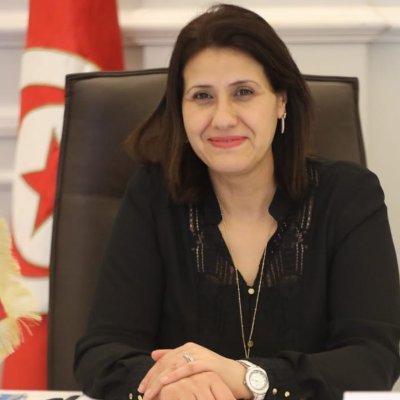
Asma Shiri. Photo from Twitter

An uphill battle

“My mum and I were kicked out of our home by my father. In a fit of anger, he ended up kicking his entire family out. We drove most of the night before staying with relatives. It was only thanks to the support of the Association tunisienne des femmes démocrates (ATFD) (Tunisian Association of Democratic Women) that our complaints were taken seriously by the special units to investigate offenses of violence against women,” recalls Ines, an activist living in a residential area of Tunis.

Violence against women as a way of exercising control over women and girls has in fact turned out to be transversal and can affect all social classes.

“There were tensions even among the upper classes where in some households the wife teleworked during lockdown and the husband did not. A competition then settled in as men were not assuming their full availability inside the house that according to them was very gendered,” says lawyer, activist and feminism expert Hafidha Chekir.

Women victims of attacks have been faced with an uphill battle in an unprecedented situation in Tunisia where all services including social, educational, legal and reproductive health services were suspended for nearly three weeks.

On the other hand, two years after their establishment, the special units established within the national police and national guard stations seem to have been somewhat deficient.

“This is not the moment. We have other fish to fry!” replied several officials of these teams to women victims of domestic violence, testifies Hafidha Chekir.

According to Yosra Frawes, President of the Tunisian Association of Democratic Women, the special units operated according to the pace of the pre-lockdown: “That is, from Monday to Friday, until 4 p.m. They are unable to handle violence peak times. When women are assaulted during the weekend, they are obliged to go to regular police stations.”
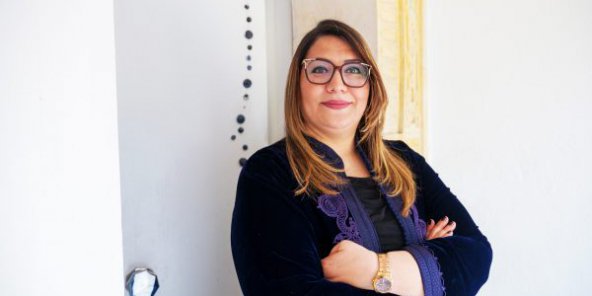
Yosra Frawes. Photo from Twitter

The decision to postpone all civil case hearings including those relating to reconciliation taken on March 29 has disrupted the access of women to justice. With the increasing physical, emotional and economic vulnerability of women, civil society urged on April 20 the Supreme Judicial Council to end impunity of attackers. The Council then promised the gradual return to work of the courts as from May 4, 2020.

Discriminatory stereotypes

Beyond the failure to care for women victims of violence, their access to services are limited to civil society organisations, also under lockdown, and only providing psychological and legal support services by telephone. This frustration is compounded by discriminatory and disqualifying stereotypes of women which apparently are increasing during pandemic times.

Sexist jokes and comments such as "take advantage of this period to train your wife, the courts are closed!" abound on online social networks.

In an article published on the Réalités website on April 22, the media expressly takes sides with the offending husband, justifying, even trivialising and normalising the violence and ignoring the suffering of the victim.

“Since the beginning of the mandatory lockdown in Tunisia, husbands are obliged to stay at home, and in permanent contact with their wives. This is an unprecedented situation that they are not used to and they lose their way too often.”

Rather absent on television -except to talk about health issues- Tunisian women ended up being the subject of a curious government decree issued on May 2, 2020 to mark the start of the targeted end of lockdown.

The text provides for keeping in total lockdown several categories of people, including the elderly aged over 65 and mothers of children under 15, when economic activity resumed as of Monday May 4. Faced with the protests and pressures of civil society expressed through social networks, the government backtracks, cancels the decree and pretends an error in its formulation.

In a report published in June by the feminist NGO Beity (My Home), founded by the lawyer and feminist Sana Ben Achour, entitled: “Covid-19, a revealing and aggravating factor of intersectoral inequalities towards women,” the Association recommends drawing a lesson from the period experienced by Tunisians over the months of 2020.

“It is high time we get out of the “tinkering imposed by emergency” to resolutely address the aftermath of COVID-19,” she advocates. “A feminist public policy based on an intersectional approach to social relations and aimed at empowering women, is what we need.”

Some of the references in this article are taken from a previous article by the author titled “Individual freedoms and social, economic and cultural rights in times of health crisis. Media coverage analysis”. The text was published as part of a collective work on the inseparability of rights and freedoms edited by Prof. Wahid Ferchichi in December 2020, with the support of the Heinrich Boll Stiftung Foundation.
Olfa Belhassine

Olfa Belhassine

Olfa Belhassine is a Tunisian journalist who worked with the Tunisian daily “La Presse” since 1990. After the 2011 protests, her articles started appearing in “Libération”, “Le Monde” and “Courrier International”, a testament to her extensive experience as a journalist reporting from Tunisia during President Ben Ali's rule and after his fall. In 2013, Olfa was awarded the first journalism prize of the “Center of Arab Women” for her investigative work on customary marriage in Tunisia, published in “La Presse.” Olfa has also been corresponding since 2015 for the JusticeInfo.net, a website specializing in transitional justice around the world. Olfa Belhassone and Hedia Barkat have published a book titled 'Ces nouveaux mots qui font la Tunisie' (These new words that make Tunisia), providing an in-depth exploration of the political transition in Tunisia after the revolution.

Related posts

“Palestinian Women,” the revived history of women militants for the liberation of Palestine
In-depth

“Palestinian Women,” the revived history of women militants for the liberation of Palestine

by Nathalie Galesne
6 February 2024
844

The documentary by Lebanese director Jocelyne Saab, screened at the 27/20 Festival in Tunis, shook the public. What do these...

Croatia: Men Kneeling in Main Squares for Women’s Chastity
In-depth

Croatia: Men Kneeling in Main Squares for Women’s Chastity

by Snježana Pavić
25 September 2023
764

On the first Saturday of every month, groups of men kneel in the main squares of many cities across Croatia...

Single moms in Lebanon: We fight alone

Single moms in Lebanon: We fight alone

8 June 2021
651
Tunisia: 10 years after 14 January 2011, women are still in Revolution

Tunisia: 10 years after 14 January 2011, women are still in Revolution

10 May 2021
562

Leave a Reply Cancel reply

Your email address will not be published. Required fields are marked *

J'accepte les termes et conditions et la Politique de confidentialité .

Medfeminiswiya

Medfeminiswiya is a feminist network that brings together women journalists working in the fields of media and content production in the Mediterranean region.

Newsletter


    Follow us

    Browse topics


    • In-depth
    • Files
    • Features
    • On the move
    • Portraits
    • Opinion

    • Creations
    • Visual Arts
    • Reviews
    • Multimedia
    • Country Context
    • Blogs
    • About us
    • Our community
    • Our partners
    • Become a member
    • Editorial charter
    • Disclaimer

    © 2025 Medfeminiswiya - Mediterranean Network for Feminist Information

    • it VO
    • fr Français
    • en English
    • ar العربية
    • In-depth
    • On the move
    • Portraits
    • Creations
    • Opinion
    • Multimedia
    • Country context
    • Blogs
    No Result
    View All Result

    © 2025 Medfeminiswiya - Mediterranean Network for Feminist Information

    Welcome Back!

    Login to your account below

    Forgotten Password?

    Retrieve your password

    Please enter your username or email address to reset your password.

    Log In

    Add New Playlist

    Ce site n'utilise pas de cookies. This website does not use cookies. هذا الموقع لا يستخدم ملفات تعريف الارتباط.