Cette publication est également disponible en :
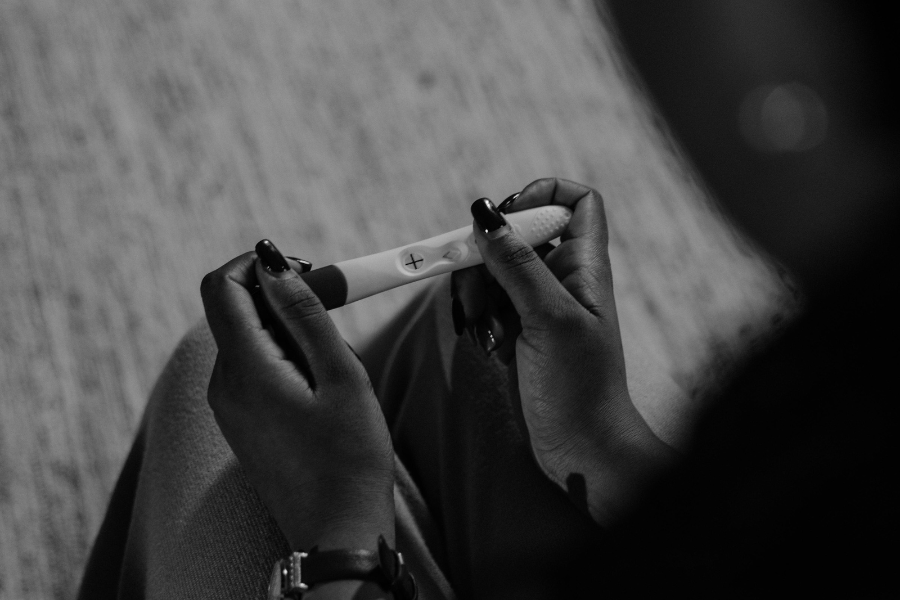
One summer morning, two parallel lines appeared on the home pregnancy test Sanaa* took. Without hesitation, she immediately started looking for private clinics in Spain to terminate her pregnancy voluntarily.
Within less than a week, she had arranged an appointment with a private clinic in a city in southern Spain. She and her husband packed their bags and traveled for two days so she could undergo a medical abortion under full medical supervision, legally and safely. “The procedure cost me around 300 euros,” Sanaa says, “plus a small amount for economy plane tickets and two nights in a hotel.”
Sanaa, 32, holds a high-ranking position at a private company and enjoys a level of socioeconomic privilege that many Moroccan women do not. In a country where abortion is still criminalized, women face compounded risks, including prosecution under laws that criminalize sexual relations outside of marriage.
In Morocco, Article 449 of the Penal Code stipulates, “Anyone who performs or attempts to perform an abortion on a pregnant woman, or a woman suspected of being pregnant, with or without her consent, whether by means of food, drink, drugs, deception, violence, or any other method, shall be punished with imprisonment for one to five years and a fine ranging from 200 to 500 dirhams. If the abortion results in her death, the penalty shall be imprisonment for ten to 20 years.”
Article 450 adds, “If it is proven that the perpetrator of the abortion crime habitually practices the acts referred to in the preceding article, the prison sentence shall be doubled. The prison sentence shall range between 20 and 30 years if these acts result in death.”
Clandestine medical clinics where abortion costs start at 400 euros
Voluntary termination of pregnancy is considered a fundamental reproductive right for women, and many feminist and human rights groups are calling for its decriminalization. These demands are becoming increasingly urgent as Moroccan women are forced to resort to unsafe methods of terminating pregnancies, potentially exposing them to serious health complications such as severe internal bleeding, bacterial infections, permanent infertility, and even death.
According to the results of a confidential study conducted by the Moroccan Association for the Fight against Clandestine Abortion (AMLAC) in 2009, more than 600 clandestine abortions occur every day in Morocco. Doctors, including gynecologists, general practitioners, and surgeons, perform between 500 and 600 of these procedures in secret, while 150 to 200 are carried out daily in unsanitary conditions by nurses or midwives.
A 2016 analytical study conducted by the Moroccan Family Planning Association (AMPF) on unsafe abortion found between five and eight abortions per 1,000 women aged 15 to 44—about 50,000 to 80,000 cases per year. The study indicates that clandestine abortions account for 4.2% of maternal deaths, in addition to 5.5% of deaths resulting from postpartum complications.
Because of the sensitivity and strong stigma surrounding clandestine abortions in Moroccan society, civil society organizations face major challenges in collecting data or conducting accurate studies. Most of these cases occur in secret, and many women avoid sharing their experiences for fear of prosecution or legal repercussions.
Fear of shame and societal stigma drives many women to resort to traditional methods of abortion, such as drinking herbal infusions purchased from herbalists.
Fear of shame and societal stigma drives many women to resort to traditional methods of abortion, such as drinking herbal infusions purchased from herbalists, acquiring illegally imported drugs through social media and using them on their own, or going to clandestine clinics where abortion costs start at 400 euros.
Sara*, a 28-year-old journalist, was one of these women. She chose to go to a clandestine women’s clinic in downtown Rabat. “The path from the building entrance to the apartment door was monitored by surveillance cameras to prevent any police raids,” she tells us. “The doctor, who is actually a gynecologist, performs these procedures in a room with an anesthesiologist and several assistants.”
She adds, “The doctor told me I was eight weeks pregnant and could have the vacuum aspiration procedure done under general anesthesia the following day, provided I hadn’t eaten. I couldn’t keep the baby since I was not married, so I was forced to have the procedure done in a room that lacked even the most basic standards of hygiene and medical care, under immense psychological pressure and fear of mass arrest.”
Such conditions often lead to deaths, like the 14-year-old girl who died near the town of Midelt after undergoing a clandestine abortion performed by a midwife at the home of the young man who had exploited and sexually abused her. This case reignited the debate in 2022 surrounding the criminalization of abortion.
National newspapers recently reported the death of a woman in her thirties after she took smuggled pills intended for arthritis, known to have a side effect of causing abortion. The victim suffered severe bleeding after using the medication without any medical supervision. The doctor who had told her the name of the drug was sentenced to five years in prison.
The right to safe abortion in the face of criminalization and discrimination
Feminist activist Saida Kouzzi asserts that the full responsibility lies with laws that drive women and girls to resort to clandestine abortions. “Many women in Morocco live in socially and economically vulnerable conditions—amid violence, discrimination, widespread illiteracy, inequality, the impunity of rapists or intimate partners… the suffering begins before pregnancy and continues after childbirth,” Kouzzi says.
This description aligns with the case of Jihane*, a 24-year-old woman who is unemployed and whose precarious social situation led her to expose herself to significant risk by resorting to folk remedies and recipes believed to induce labor. In her first few weeks of pregnancy, she consumed large quantities of painkillers mixed with an infusion of aromatic herbs, practices that can cause severe bleeding or serious poisoning.
Before she finished her drink, Jihane began experiencing rapid heart palpitations and rushed to vomit. She was ultimately unable to terminate the pregnancy, as she couldn’t afford a clandestine procedure. Forced to leave her family home and flee to another city, she found refuge with a women’s association that provides shelter for single mothers and helps them care for their children.
Atifa Tamjerdine, Vice President of the Democratic Association of Moroccan Women (ADFM), stresses that “women do not resort to abortion as a fleeting decision, or on a whim. It is a difficult choice imposed by complex constraints—poverty, economic and social vulnerability, deprivation of basic rights like education and dignified living, and patriarchal mindsets that impose societal control over women’s bodies and restrict their freedom of choice.”
“Women do not resort to abortion as a fleeting decision, or on a whim. It is a difficult choice imposed by complex constraints.”
For Fatima*, 33, the situation was even more complicated. An ultrasound revealed two gestational sacs in her uterus, meaning she was pregnant with twins. This was unsustainable for her: she works as a domestic worker for a low salary, her husband has seasonal work, and she is responsible for two young children. Stricken with panic and anxiety, she began exhausting herself physically, stopped eating, and entered a state of severe psychological distress. The pregnancy did not continue due to a partial placental abruption, and she experienced vaginal bleeding that led to a sudden miscarriage in the early weeks.
In this regard, the criminalization of abortion in Moroccan law, as Kouzzi stated, places significant pressure on doctors, both male and female, who often refuse to perform abortions even in cases permitted by law, such as when the mother’s life is in grave danger or when the fetus has serious anomalies that prevent its survival after birth. Criminalization also prevents women’s organizations from providing services and support to women seeking to terminate their pregnancies.
“Decriminalizing all cases of medical abortion chosen by a woman of her own free will is the only solution to guarantee her right to a safe and healthy abortion,” feminist activist Tamjerdine asserts. “This requires a comprehensive reform of the penal code, in line with a philosophy free from discrimination and patriarchy and in line with the Constitution, which stipulates that men and women enjoy equal civil, political, economic, social, cultural, and environmental rights and freedoms, in addition to the international conventions and treaties ratified by Morocco.”
The 2015 Royal initiative on abortion
Ten years ago, King Mohammed VI announced the drafting of a bill to reform abortion laws in Morocco, a move Amnesty International considered a unique opportunity to decriminalize abortion and improve the conditions of women and girls by enabling them to access it safely and effectively.
The Moroccan monarch then ordered the formation of a committee comprising the Minister of Justice and Liberties, the Minister of Endowments and Islamic Affairs, and the President of the National Human Rights Council to launch broad consultations aimed at revising the laws regulating abortion in the Kingdom.
Two months later, the committee concluded that abortion would be permitted in three cases: when the pregnancy poses a risk to the mother’s life, when it results from rape or incest, and in cases where serious birth defects or life-threatening illnesses are discovered in the fetus.
According to Moroccan legislative procedures, the draft law was referred to the government, which approved it in 2016. But it has since remained stalled in the Justice and Legislation Committee in Parliament, the committee responsible for preparing draft laws before they are put to a vote.
Kouzzi notes, “Unfortunately, the 2015 attempt to broaden access to abortion was stalled in Parliament until the draft bill was withdrawn in 2021. Later, the Minister of Justice, Abdellatif Ouahbi, announced plans to introduce comprehensive reforms to the bill, but those statements did not translate into any tangible results.”
The activist recalls attending several meetings, including one with the Minister of Justice after the withdrawal of the draft criminal law, which, she says, did not include any provisions concerning abortion or protection for women facing unwanted pregnancies.
Both Kouzzi and Tamjerdine conclude that nothing has changed since, and that no serious political will exists to find a legal solution to this problem, despite the various forms of violence women face in their attempts to terminate unwanted pregnancies.
When will abortion become a health issue beyond criminal penalties?
For years, human rights groups have pressed for the decriminalization of abortion, demanding protection for women from any mistreatment for seeking to terminate their pregnancies. These organizations argue that criminalization does not prevent abortion; it simply drives women toward unsafe methods or unaffordable alternatives.
Criminalization does not prevent abortion. It drives women toward unsafe methods or unaffordable alternatives.
In this context, Saida Kouzzi emphasizes the need to remove abortion from the penal code entirely and consider it a medical matter under the jurisdiction of the Ministry of Health. Tamjardine agrees with this view, explaining, “Only doctors are qualified to assess cases requiring medical abortion. National laws must be aligned with international obligations, particularly those stipulated by the World Health Organization regarding women’s reproductive health rights.”
Sanaa recalls her journey to Spain two years ago and how fortunate she was to receive private medical care. “All women should have the right to make decisions about their health and their bodies, without interference from anyone else,” she says. “Abortion should be a safe, equal option for everyone. A woman who can afford it shouldn’t have to travel abroad while another is forced to swallow dangerous herbs or resort to dubious methods, left alone to face the fear and pain.”
As for Jihane, thanks to her home-based pastry-making business, she now earns a modest income, benefiting from the workshops offered by the women’s association. Though she loves her son deeply, she still feels a lingering ache for not having been able to terminate her pregnancy in its early stages. “I love my son and I will never abandon him, no matter what,” she says, “but I was never convinced about my pregnancy… It wasn’t my fault that the birth control pills didn’t work. Health authorities must provide us with solutions that guarantee our right to choose.”
She believes that the lack of options forced her to choose between a safe life with her family and a precarious life fraught with vulnerability and social stigma. “Why should we face prison or death simply because we don’t want to continue a pregnancy? Laws that criminalize abortion don’t stop it. They push women to do it in secret.”
* Pseudonym
This article was carried out with the support of the Tunis Office of the Rosa Luxemburg Foundation.