• it VO
  • fr Français
  • en English
  • ar العربية
About us
  • In-depth
    • All
    • Features
    • Files
    • World
    Morocco: 600 abortions a day—Alarming figures and tragic stories

    Morocco: 600 abortions a day—Alarming figures and tragic stories

    In Spain, the right to abortion is not guaranteed for all

    In Spain, the right to abortion is not guaranteed for all

    Invisible and vulnerable: Migrant women at the frontlines of Spain’s prostitution debate

    Invisible and vulnerable: Migrant women at the frontlines of Spain’s prostitution debate

    Serbia: Is contraception a luxury or a basic human right?

    Serbia: Is contraception a luxury or a basic human right?

    Rebels, witnesses, victims: Women against the mafia (3/3)

    Rebels, witnesses, victims: Women against the mafia (3/3)

    Trending Tags

    • Women artists
    • Ecofeminism
    • Women living from and on the streets
    • Women and bodies
    • Women and sports
    • Women and cinema
    • Ramadan series
    • Women and war
    • Women Living at the Margins
    • Press Freedom from the Perspective of Women Journalists
    • Period poverty
    • Gynecological violence
    • Women and prison
    • Safe spaces
    • Abortion and SRHR
    • Transgenderism
    • Women in rural areas
  • On the move
    Spain: CEAR and the fight against human trafficking

    Spain: CEAR and the fight against human trafficking

    Gaza: How many journalists must be killed for the world to react?

    Gaza: How many journalists must be killed for the world to react?

    Moroccan activist Ibtissam Lachgar held in solitary confinement, health in crisis

    Moroccan activist Ibtissam Lachgar held in solitary confinement, health in crisis

    Three women for one man’s pay: The plight of female agricultural workers in Egypt

    Three women for one man’s pay: The plight of female agricultural workers in Egypt

  • Portraits
    Sophie Bessis: “The battle for the intimate will be long, especially in the Global South!”

    Sophie Bessis: “The battle for the intimate will be long, especially in the Global South!”

    “Mom, Dad, Can We Talk About Privacy?”—A Tunisian children’s book on protecting kids from sexual violence

    “Mom, Dad, Can We Talk About Privacy?”—A Tunisian children’s book on protecting kids from sexual violence

    Kurdish journalist killed in Turkish drone strike in northeastern Syria

    Kurdish journalist killed in Turkish drone strike in northeastern Syria

    A Filmmaker’s Journey: Inside the Creative World of Margarita Bareikyte

    A Filmmaker’s Journey: Inside the Creative World of Margarita Bareikyte

  • Creations
    • All
    • Reviews
    • Visual Arts
    “La Malédiction (1)”, a theatrical adaptation of King Kong Theory bursting with Tunisian rage

    “La Malédiction (1)”, a theatrical adaptation of King Kong Theory bursting with Tunisian rage

    “Mom, Dad, Can We Talk About Privacy?”—A Tunisian children’s book on protecting kids from sexual violence

    “Mom, Dad, Can We Talk About Privacy?”—A Tunisian children’s book on protecting kids from sexual violence

    The El’Sardines series, a delicate feminist manifesto centered around an ecological mystery

    The El’Sardines series, a delicate feminist manifesto centered around an ecological mystery

    Atlantics, a film by Mati Diop: Filming the embodied resistance of spirits

    Atlantics, a film by Mati Diop: Filming the embodied resistance of spirits

  • Opinion
    Women in Gaza are living their worst nightmares - “ I want to go back to my life before the war, to my privacy, my home ”

    Women in Gaza are living their worst nightmares - “ I want to go back to my life before the war, to my privacy, my home ”

    Messages from life under bombardment—Can a mother cope with losing her six children at once? (10)

    Messages from life under bombardment—Can a mother cope with losing her six children at once? (10)

    Messages from life under bombardment—No cake for my children on their birthdays (9)

    Messages from life under bombardment—No cake for my children on their birthdays (9)

    Messages from life under bombardment – No food or water in Gaza (8)

    Messages from life under bombardment – No food or water in Gaza (8)

  • Multimedia
    "I hope it doesn’t go viral: Journalism and sexist attacks in digital age". A video investigation by Çiçek Tahaoğlu

    "I hope it doesn’t go viral: Journalism and sexist attacks in digital age". A video investigation by Çiçek Tahaoğlu

    Period poverty in Montenegro

    Period poverty in Montenegro

    Period poverty in France (1)

    Period poverty in France (1)

    Period Poverty in Italy

    Period Poverty in Italy

  • Country context
No Result
View All Result
BLOGS
Medfeminiswiya
  • In-depth
    • All
    • Features
    • Files
    • World
    Morocco: 600 abortions a day—Alarming figures and tragic stories

    Morocco: 600 abortions a day—Alarming figures and tragic stories

    In Spain, the right to abortion is not guaranteed for all

    In Spain, the right to abortion is not guaranteed for all

    Invisible and vulnerable: Migrant women at the frontlines of Spain’s prostitution debate

    Invisible and vulnerable: Migrant women at the frontlines of Spain’s prostitution debate

    Serbia: Is contraception a luxury or a basic human right?

    Serbia: Is contraception a luxury or a basic human right?

    Rebels, witnesses, victims: Women against the mafia (3/3)

    Rebels, witnesses, victims: Women against the mafia (3/3)

    Trending Tags

    • Women artists
    • Ecofeminism
    • Women living from and on the streets
    • Women and bodies
    • Women and sports
    • Women and cinema
    • Ramadan series
    • Women and war
    • Women Living at the Margins
    • Press Freedom from the Perspective of Women Journalists
    • Period poverty
    • Gynecological violence
    • Women and prison
    • Safe spaces
    • Abortion and SRHR
    • Transgenderism
    • Women in rural areas
  • On the move
    Spain: CEAR and the fight against human trafficking

    Spain: CEAR and the fight against human trafficking

    Gaza: How many journalists must be killed for the world to react?

    Gaza: How many journalists must be killed for the world to react?

    Moroccan activist Ibtissam Lachgar held in solitary confinement, health in crisis

    Moroccan activist Ibtissam Lachgar held in solitary confinement, health in crisis

    Three women for one man’s pay: The plight of female agricultural workers in Egypt

    Three women for one man’s pay: The plight of female agricultural workers in Egypt

  • Portraits
    Sophie Bessis: “The battle for the intimate will be long, especially in the Global South!”

    Sophie Bessis: “The battle for the intimate will be long, especially in the Global South!”

    “Mom, Dad, Can We Talk About Privacy?”—A Tunisian children’s book on protecting kids from sexual violence

    “Mom, Dad, Can We Talk About Privacy?”—A Tunisian children’s book on protecting kids from sexual violence

    Kurdish journalist killed in Turkish drone strike in northeastern Syria

    Kurdish journalist killed in Turkish drone strike in northeastern Syria

    A Filmmaker’s Journey: Inside the Creative World of Margarita Bareikyte

    A Filmmaker’s Journey: Inside the Creative World of Margarita Bareikyte

  • Creations
    • All
    • Reviews
    • Visual Arts
    “La Malédiction (1)”, a theatrical adaptation of King Kong Theory bursting with Tunisian rage

    “La Malédiction (1)”, a theatrical adaptation of King Kong Theory bursting with Tunisian rage

    “Mom, Dad, Can We Talk About Privacy?”—A Tunisian children’s book on protecting kids from sexual violence

    “Mom, Dad, Can We Talk About Privacy?”—A Tunisian children’s book on protecting kids from sexual violence

    The El’Sardines series, a delicate feminist manifesto centered around an ecological mystery

    The El’Sardines series, a delicate feminist manifesto centered around an ecological mystery

    Atlantics, a film by Mati Diop: Filming the embodied resistance of spirits

    Atlantics, a film by Mati Diop: Filming the embodied resistance of spirits

  • Opinion
    Women in Gaza are living their worst nightmares - “ I want to go back to my life before the war, to my privacy, my home ”

    Women in Gaza are living their worst nightmares - “ I want to go back to my life before the war, to my privacy, my home ”

    Messages from life under bombardment—Can a mother cope with losing her six children at once? (10)

    Messages from life under bombardment—Can a mother cope with losing her six children at once? (10)

    Messages from life under bombardment—No cake for my children on their birthdays (9)

    Messages from life under bombardment—No cake for my children on their birthdays (9)

    Messages from life under bombardment – No food or water in Gaza (8)

    Messages from life under bombardment – No food or water in Gaza (8)

  • Multimedia
    "I hope it doesn’t go viral: Journalism and sexist attacks in digital age". A video investigation by Çiçek Tahaoğlu

    "I hope it doesn’t go viral: Journalism and sexist attacks in digital age". A video investigation by Çiçek Tahaoğlu

    Period poverty in Montenegro

    Period poverty in Montenegro

    Period poverty in France (1)

    Period poverty in France (1)

    Period Poverty in Italy

    Period Poverty in Italy

  • Country context
About us
Medfeminiswiya
About us

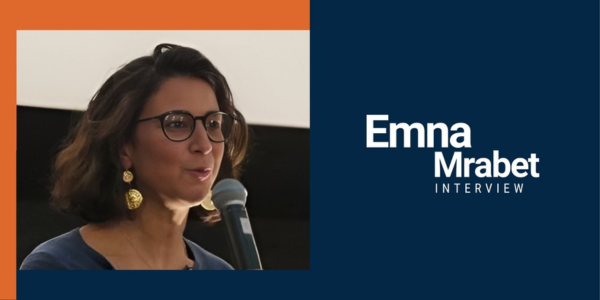
Emna Mrabet: “New Tunisian female directors represent women as fighters”

Emna Mrabet is a lecturer in the cinema department of Paris 8 University, where her teaching focuses on the aesthetics of cinema, documentary production, and film analysis. The emphasis of her research is on the question of identity among filmmakers with a background of immigration from North Africa, particularly in the films of Tunisian female directors. Together with Ons Kammoun, professor and researcher in cinema in Tunis, she is currently organizing a conference in Tunis on June 13-14 on “Gender and emancipation in Arab cinema.”

Olfa Belhassine by Olfa Belhassine
24 May 2024
in Creations, Features
97 2
0
Share on FacebookShare on Twitter

This post is also available in: Français (French) العربية (Arabic)

Interview by Olfa Belhassine

When did your academic interest in Tunisian female directors begin? I’m thinking of your previous work analyzing the careers of filmmakers, both male and female, in the Tunisian diaspora.

The question of the diaspora was at the heart of my thesis, which had both a historical and an aesthetic angle, on French filmmakers of North African descent. I defended my thesis in 2015, and it led to the publication of the book Le cinéma d’Abdellatif Kechiche : prémisses et devenir (The Cinema of Abdellatif Kechiche: Premises and Becoming) (Riveneuve, 2016). In the thesis, I discuss how the character of the immigrant was portrayed in French cinema in the 1970s. Later it was the immigrants themselves, particularly second-generation immigrants, who took the camera and filmed characters from emigrant families.

In 2016 and the years that followed, I shifted my interest in these issues to the cinema of the Maghreb and the Middle East. More specifically, I became interested in female filmmakers from these territories living in France and participated in conferences and seminars on this topic. One of my interventions, presented in 2017, was titled “Female figures of revolt in Tunisian fiction films (2000-2020).” Speaking of cinema and gender, I lengthily observed female cinematographers on set in Tunisia. This field work was supervised by the HESCALE research group, which is specialized in the film industry and brings together French and Tunisian researchers.

Do you notice any differences between how women are represented by first-generation Tunisian female directors, such as Selma Baccar, Kalthoum Bornaz, Moufida Tlatli… and the way they are represented by filmmakers who garnered success after the revolution, such as Leyla Bouzid and Kaouther Ben Hania, who live in the diaspora?

The major difference between the women we call the first-generation filmmakers and the next generation of these filmmakers lies in how they address the question of emancipation and the grasping of power. Women are no longer represented as mere victims as they were in Moufida Tlatli’s The Silences of the Palace (1994), for instance, in which Alia, Khadija’s daughter, tries to free herself from a sad destiny but ultimately ends up suffering the same fate as her mother, with the repeated abortions she undergoes.

Conversely, these characters now take their destiny into their own hands, particularly in Kaouther Ben Hania’s Beauty and the Dogs (2017) and in the final scene of Raja Amari’s Buried Secrets (2009). The women portrayed in these films are fighters, up against an oppressive power, as we can also see in Leyla Bouzid’s As I Open My Eyes (2015), in which Bouzid’s heroine, the young, 18-year-old Farah, coming of age in the time of dictatorship, does not allow herself to be intimidated by police harassment and proves to be a very active character.

From the movie « The Silences of the Palace »

What are the threads of interactivity that female directors living in France weave with post-revolutionary Tunisia?

They very often keep one foot in Tunisia—a very strong link with their country of origin. I am thinking here of Raja Amari, Kaouther Ben Hania, and Leyla Bouzid. So far, their films have dealt with the Tunisian question; we do notice a sort of transference in their films. Take for instance Amari’s Foreign Body (2016), in which the character of an illegal migrant lives between Tunisia and France. Also Bouzid’s latest film A Tale of Love and Desire (2021), which also addresses emigration and in which the protagonist’s entire story—a young student from Tunisia—takes place in Paris. I put forward the following hypothesis: by anchoring themselves more and more in French territory, these directors in the diaspora are also attempting to address the French question. All while remaining very attached to their native country—they continue to deal with Tunisian characters and to be interested in societal developments, especially as relates to women.

As women of the diaspora, what perspectives does their status offer to female directors of the new generation who stand out at international festivals?
There are two levels to these perspectives. First, these directors—compared to those who continue to live in Tunisia—have the opportunity to keep a certain distance between them and the stories they manage to tell. They are able to view what is happening in their country of origin through a different, freer lens, one not bound by self-censorship. They are able to address taboo issues differently.
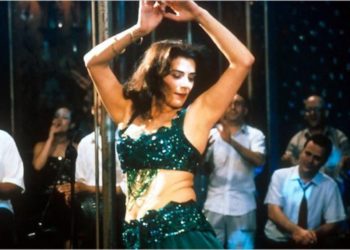
From the movie « Red Satin »

This status also protects them from the wrath of social criticism. I am thinking of Raja Amari’s Red Satin, which caused great controversy in Tunisia when it was released in 2002. The other positive that these directors can benefit from is the opportunities for production and distribution of their films. They can more easily access French funding and aid from the Centre national du cinéma et de l'image (CNC), which in turn promotes the distribution of their films in France.

Are these directors interested in the life and political dynamics of Tunisia post-2011 revolution?

Yes, as we can particularly see in Leyla Bouzid’s first film, As I Open My Eyes, which takes an opposite stance regarding what happened in January 2011. She does not speak directly about the revolution but rather the months preceding this event, the climate of fear and dissidence which at the time reigned over the country. In the film Buried Secrets (2009) by Raja Amari, the director describes the oppression that weighs so heavily on women that the political metaphor imposes itself on the narrative.

Erige Sehiri has had a unique journey, one that unfurled in the opposite direction: born in France, she returned to Tunisia to film. Her way of filming female agricultural workers in Under the Fig Trees (2022) is particularly interesting. Under the guise of mere anecdote, she uses the love affairs of these young agricultural workers to show the strength of character of the women she portrays. Despite their apparent fragility, they are in reality powerful women. The political allusion in this story is clear: the filmmaker refers, among other things, to the tragedies of the death trucks, the makeshift means of transportation in the Tunisian countryside due to which many rural women have died.

Ben Hania subtly evokes the way the revolution of a country influences the “personal revolution.”

In Beauty and the Dogs by Kaouther Ben Hania, the director evokes police impunity. The great strength of this film is its demonstration of the fact that the departure of the dictator did nothing to contribute to the change of a repressive system. Ben Hania had to wait for the revolution to film Challatt Tunes.

Because it was almost impossible before then to obtain authorization to make documentaries. Clearly, one of the major changes after January 14, 2011 is that directors became able to tackle the documentary genre, closer to reality than fiction—hence the difficulty of its being allowed under an authoritarian regime.

Finally, we cannot fail to mention Kaouther Ben Hania’s latest film, Four Daughters (2023). Her point of departure once again being a news story, the filmmaker tells the story of Olfa and her four daughters, but there is also a question, implicitly presented, of the different social and political stages the country has gone through since the revolution. Ben Hania subtly evokes the way the revolution of a country influences the “personal revolution,” in this case, Olfa’s own.

From being of prime importance in cinema, how do the female directors of the 2010s-2020s film women? Are they lensed through the “female gaze” (1), the feminine gaze that Iris Brey speaks of, which presents women as subjects and strives to insert their experiences at the heart of the narrative?

This particular gaze you speak of began with Raja Amari, even before the revolution. Amari is positioned at a pivotal point between the two generations of Tunisian female directors. With her, we experienced a real change in Tunisian cinema. In her first feature film Red Satin (2002), we leave the medina, where most Tunisian films used to take place, for the modern city of Tunis. The way women are represented is also different. And the portrayal of oriental dance, which is at the center of this film, seems totally different from what it would have been under the male gaze—the masculine lens which until now still totally takes over Egyptian films, for example. Oriental dance, which before then had been fully fetishized, here becomes an instrument of power for this widow, a mother who leaves the dullness of her life for an existence that is, quite frankly, subversive—“disturbing public order.”

Movie poster « A Tale of Love and Desire »

In the opening scene of Leyla Bouzid’s As I Open My Eyes, in which a young girl intuitively discovers desire, we sense, in the way the scene is filmed, that there’s a woman behind the camera: we feel closer to the skin; the camera, which brushes against the body, does not exploit it.

In her latest film, A Tale of Love and Desire, I find Bouzid’s way of using the power of literature to translate desire very beautiful. She gives it a poetic coating. The filmmaker thus opts for a fairly unique representation of desire, literally suggested by the words of the work that are superimposed on the phantasmagoria of the film’s main male character, Ahmed, in reference to the platonic and ethereal love that Qays (the character of Majnun) has for Layla (2).
Emna Mrabet has published several articles and interviews in which she discusses the films of the women filmmakers mentioned in this interview on the Culturopoing website.

Notes :
1. Iris Brey, Le regard féminin. Une Révolution à l’écran, Edition de l’Olivier, 2020
2. Majnun and Layla, sometimes Qays and Layla, is a popular love story of Arab origin that tells the adventures of an impossible love between the Bedouin poet Qays Ibn al-Mulawwah and Layla al-Aamiriya. This story has inspired many Muslim writers and artists over the centuries.
Tags: Women and cinema
Olfa Belhassine

Olfa Belhassine

Olfa Belhassine is a Tunisian journalist who worked with the Tunisian daily “La Presse” since 1990. After the 2011 protests, her articles started appearing in “Libération”, “Le Monde” and “Courrier International”, a testament to her extensive experience as a journalist reporting from Tunisia during President Ben Ali's rule and after his fall. In 2013, Olfa was awarded the first journalism prize of the “Center of Arab Women” for her investigative work on customary marriage in Tunisia, published in “La Presse.” Olfa has also been corresponding since 2015 for the JusticeInfo.net, a website specializing in transitional justice around the world. Olfa Belhassone and Hedia Barkat have published a book titled 'Ces nouveaux mots qui font la Tunisie' (These new words that make Tunisia), providing an in-depth exploration of the political transition in Tunisia after the revolution.

Related posts

Croatia: Men Kneeling in Main Squares for Women’s Chastity
In-depth

Croatia: Men Kneeling in Main Squares for Women’s Chastity

by Snježana Pavić
25 September 2023
765

On the first Saturday of every month, groups of men kneel in the main squares of many cities across Croatia...

Single moms in Lebanon: We fight alone
Features

Single moms in Lebanon: We fight alone

by Maya El Ammar
8 June 2021
651

They call them ‘single moms’ usually because they are unmarried mothers. But they are also the mothers who have separated...

Tunisia: 10 years after 14 January 2011, women are still in Revolution

Tunisia: 10 years after 14 January 2011, women are still in Revolution

10 May 2021
562
Amel Zen « Il est temps de dire les choses sans détours »

Amel Zen « Il est temps de dire les choses sans détours »

11 March 2024
395

Leave a Reply Cancel reply

Your email address will not be published. Required fields are marked *

J'accepte les termes et conditions et la Politique de confidentialité .

Medfeminiswiya

Medfeminiswiya is a feminist network that brings together women journalists working in the fields of media and content production in the Mediterranean region.

Newsletter


    Follow us

    Browse topics


    • In-depth
    • Files
    • Features
    • On the move
    • Portraits
    • Opinion

    • Creations
    • Visual Arts
    • Reviews
    • Multimedia
    • Country Context
    • Blogs
    • About us
    • Our community
    • Our partners
    • Become a member
    • Editorial charter
    • Disclaimer

    © 2025 Medfeminiswiya - Mediterranean Network for Feminist Information

    • it VO
    • fr Français
    • en English
    • ar العربية
    • In-depth
    • On the move
    • Portraits
    • Creations
    • Opinion
    • Multimedia
    • Country context
    • Blogs
    No Result
    View All Result

    © 2025 Medfeminiswiya - Mediterranean Network for Feminist Information

    Welcome Back!

    Login to your account below

    Forgotten Password?

    Retrieve your password

    Please enter your username or email address to reset your password.

    Log In

    Add New Playlist

    Ce site n'utilise pas de cookies. This website does not use cookies. هذا الموقع لا يستخدم ملفات تعريف الارتباط.