• it VO
  • fr Français
  • en English
  • ar العربية
About us
  • In-depth
    • All
    • Features
    • Files
    • World
    Over four million girls still at risk of female genital mutilation

    Over four million girls still at risk of female genital mutilation

    Suspicious female deaths are on the rise in Türkiye: What happened to Rojin Kabaiş?

    Suspicious female deaths are on the rise in Türkiye: What happened to Rojin Kabaiş?

    In Mediterranean Region: Sexual and Reproductive Rights Under Pressure

    In Mediterranean Region: Sexual and Reproductive Rights Under Pressure

    Italy backtracks on introducing consent into the definition of rape

    Italy backtracks on introducing consent into the definition of rape

    Morocco: 600 abortions a day—Alarming figures and tragic stories

    Morocco: 600 abortions a day—Alarming figures and tragic stories

    Trending Tags

    • Women artists
    • Ecofeminism
    • Women living from and on the streets
    • Women and bodies
    • Women and sports
    • Women and cinema
    • Ramadan series
    • Women and war
    • Women Living at the Margins
    • Press Freedom from the Perspective of Women Journalists
    • Period poverty
    • Gynecological violence
    • Women and prison
    • Safe spaces
    • Abortion and SRHR
    • Transgenderism
    • Women in rural areas
  • On the move
    Spain: CEAR and the fight against human trafficking

    Spain: CEAR and the fight against human trafficking

    Gaza: How many journalists must be killed for the world to react?

    Gaza: How many journalists must be killed for the world to react?

    Moroccan activist Ibtissam Lachgar held in solitary confinement, health in crisis

    Moroccan activist Ibtissam Lachgar held in solitary confinement, health in crisis

    Three women for one man’s pay: The plight of female agricultural workers in Egypt

    Three women for one man’s pay: The plight of female agricultural workers in Egypt

  • Portraits
    Sophie Bessis: “The battle for the intimate will be long, especially in the Global South!”

    Sophie Bessis: “The battle for the intimate will be long, especially in the Global South!”

    “Mom, Dad, Can We Talk About Privacy?”—A Tunisian children’s book on protecting kids from sexual violence

    “Mom, Dad, Can We Talk About Privacy?”—A Tunisian children’s book on protecting kids from sexual violence

    Kurdish journalist killed in Turkish drone strike in northeastern Syria

    Kurdish journalist killed in Turkish drone strike in northeastern Syria

    A Filmmaker’s Journey: Inside the Creative World of Margarita Bareikyte

    A Filmmaker’s Journey: Inside the Creative World of Margarita Bareikyte

  • Creations
    • All
    • Reviews
    • Visual Arts
    “La Malédiction (1)”, a theatrical adaptation of King Kong Theory bursting with Tunisian rage

    “La Malédiction (1)”, a theatrical adaptation of King Kong Theory bursting with Tunisian rage

    “Mom, Dad, Can We Talk About Privacy?”—A Tunisian children’s book on protecting kids from sexual violence

    “Mom, Dad, Can We Talk About Privacy?”—A Tunisian children’s book on protecting kids from sexual violence

    The El’Sardines series, a delicate feminist manifesto centered around an ecological mystery

    The El’Sardines series, a delicate feminist manifesto centered around an ecological mystery

    Atlantics, a film by Mati Diop: Filming the embodied resistance of spirits

    Atlantics, a film by Mati Diop: Filming the embodied resistance of spirits

  • Opinion
    Women in Gaza are living their worst nightmares - “ I want to go back to my life before the war, to my privacy, my home ”

    Women in Gaza are living their worst nightmares - “ I want to go back to my life before the war, to my privacy, my home ”

    Messages from life under bombardment—Can a mother cope with losing her six children at once? (10)

    Messages from life under bombardment—Can a mother cope with losing her six children at once? (10)

    Messages from life under bombardment—No cake for my children on their birthdays (9)

    Messages from life under bombardment—No cake for my children on their birthdays (9)

    Messages from life under bombardment – No food or water in Gaza (8)

    Messages from life under bombardment – No food or water in Gaza (8)

  • Multimedia
    "I hope it doesn’t go viral: Journalism and sexist attacks in digital age". A video investigation by Çiçek Tahaoğlu

    "I hope it doesn’t go viral: Journalism and sexist attacks in digital age". A video investigation by Çiçek Tahaoğlu

    Period poverty in Montenegro

    Period poverty in Montenegro

    Period poverty in France (1)

    Period poverty in France (1)

    Period Poverty in Italy

    Period Poverty in Italy

  • Country context
No Result
View All Result
BLOGS
Medfeminiswiya
  • In-depth
    • All
    • Features
    • Files
    • World
    Over four million girls still at risk of female genital mutilation

    Over four million girls still at risk of female genital mutilation

    Suspicious female deaths are on the rise in Türkiye: What happened to Rojin Kabaiş?

    Suspicious female deaths are on the rise in Türkiye: What happened to Rojin Kabaiş?

    In Mediterranean Region: Sexual and Reproductive Rights Under Pressure

    In Mediterranean Region: Sexual and Reproductive Rights Under Pressure

    Italy backtracks on introducing consent into the definition of rape

    Italy backtracks on introducing consent into the definition of rape

    Morocco: 600 abortions a day—Alarming figures and tragic stories

    Morocco: 600 abortions a day—Alarming figures and tragic stories

    Trending Tags

    • Women artists
    • Ecofeminism
    • Women living from and on the streets
    • Women and bodies
    • Women and sports
    • Women and cinema
    • Ramadan series
    • Women and war
    • Women Living at the Margins
    • Press Freedom from the Perspective of Women Journalists
    • Period poverty
    • Gynecological violence
    • Women and prison
    • Safe spaces
    • Abortion and SRHR
    • Transgenderism
    • Women in rural areas
  • On the move
    Spain: CEAR and the fight against human trafficking

    Spain: CEAR and the fight against human trafficking

    Gaza: How many journalists must be killed for the world to react?

    Gaza: How many journalists must be killed for the world to react?

    Moroccan activist Ibtissam Lachgar held in solitary confinement, health in crisis

    Moroccan activist Ibtissam Lachgar held in solitary confinement, health in crisis

    Three women for one man’s pay: The plight of female agricultural workers in Egypt

    Three women for one man’s pay: The plight of female agricultural workers in Egypt

  • Portraits
    Sophie Bessis: “The battle for the intimate will be long, especially in the Global South!”

    Sophie Bessis: “The battle for the intimate will be long, especially in the Global South!”

    “Mom, Dad, Can We Talk About Privacy?”—A Tunisian children’s book on protecting kids from sexual violence

    “Mom, Dad, Can We Talk About Privacy?”—A Tunisian children’s book on protecting kids from sexual violence

    Kurdish journalist killed in Turkish drone strike in northeastern Syria

    Kurdish journalist killed in Turkish drone strike in northeastern Syria

    A Filmmaker’s Journey: Inside the Creative World of Margarita Bareikyte

    A Filmmaker’s Journey: Inside the Creative World of Margarita Bareikyte

  • Creations
    • All
    • Reviews
    • Visual Arts
    “La Malédiction (1)”, a theatrical adaptation of King Kong Theory bursting with Tunisian rage

    “La Malédiction (1)”, a theatrical adaptation of King Kong Theory bursting with Tunisian rage

    “Mom, Dad, Can We Talk About Privacy?”—A Tunisian children’s book on protecting kids from sexual violence

    “Mom, Dad, Can We Talk About Privacy?”—A Tunisian children’s book on protecting kids from sexual violence

    The El’Sardines series, a delicate feminist manifesto centered around an ecological mystery

    The El’Sardines series, a delicate feminist manifesto centered around an ecological mystery

    Atlantics, a film by Mati Diop: Filming the embodied resistance of spirits

    Atlantics, a film by Mati Diop: Filming the embodied resistance of spirits

  • Opinion
    Women in Gaza are living their worst nightmares - “ I want to go back to my life before the war, to my privacy, my home ”

    Women in Gaza are living their worst nightmares - “ I want to go back to my life before the war, to my privacy, my home ”

    Messages from life under bombardment—Can a mother cope with losing her six children at once? (10)

    Messages from life under bombardment—Can a mother cope with losing her six children at once? (10)

    Messages from life under bombardment—No cake for my children on their birthdays (9)

    Messages from life under bombardment—No cake for my children on their birthdays (9)

    Messages from life under bombardment – No food or water in Gaza (8)

    Messages from life under bombardment – No food or water in Gaza (8)

  • Multimedia
    "I hope it doesn’t go viral: Journalism and sexist attacks in digital age". A video investigation by Çiçek Tahaoğlu

    "I hope it doesn’t go viral: Journalism and sexist attacks in digital age". A video investigation by Çiçek Tahaoğlu

    Period poverty in Montenegro

    Period poverty in Montenegro

    Period poverty in France (1)

    Period poverty in France (1)

    Period Poverty in Italy

    Period Poverty in Italy

  • Country context
About us
Medfeminiswiya
About us

Wartime rape: a millennial shame

Sexual violence in times of war is an “ancient and habitual evil”, wrote Saint Augustine after the sack of Rome in 410 AD. Numerous studies confirm that abuses and kidnappings were already widespread among Neolithic tribes. Over the centuries, the atrocities committed by the armies have maintained the same ferocity. Today, their dissemination still reveals an identical brutality.

Federica Araco by Federica Araco
25 May 2022
in In-depth
120 6
0
Share on FacebookShare on Twitter

This post is also available in: Français (French)

“Man’s discovery that his genitalia could serve as a weapon to generate fear must rank as one of the most important discoveries of prehistoric times, along with the use of fire and the first crude stone axe,” wrote Susan Brownmiller[1] in 1976. In the same years, the Lithuanian archaeologist Marija Gimbutas documented the brutal incursions of the Kurgan[2], the semi-nomadic proto-Indo-European warriors from the Caucasian steppes, against the populations of Ancient Europe and Anatolia.

Gimbutas defines the pre-existing gilania[3] socio-cultural systems because they guaranteed women and men equal rights and freedom. Moreover, sophisticated arts and architecture were already flourishing in the fifth millennium BC. This is witnessed by over two thousand findings, artefacts, temples and buildings found in present-day Bulgaria, Romania, Moldova, Ukraine, Greece, Italy, Malta and in the territories of central and western Europe. These civilizations, explains Gimbutas, were peaceful and sedentary, egalitarian “matrilineal and matrifocal” and worshiped the Great Goddess, a symbol of life and fertility.

With domesticated horses and weapons, between 4300 and 2800 BC, the Kurgan forcefully imposed the patriarchal, hierarchical, and patrilineal system still in force today.

The sky was populated by powerful and warlike male divinities and the Great Goddess was fragmented into "minor" female figures subjected to them.

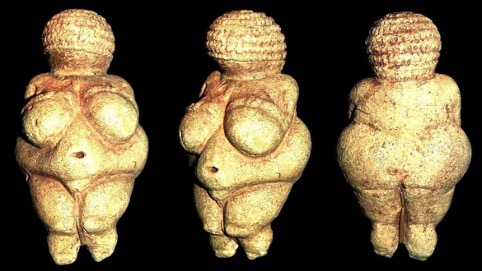
Stone statuettes depicting the Great Goddess. Gimbutas has analysed over 2 thousand artefacts dating back to the Paleolithic and Neolithic times adopting an interdisciplinary approach integrating descriptive archaeology, comparative linguistics, historical ethnology, mythology and folklore, which she herself called “archeo-mythology”.

From the genome analysis of about 270 skeletons found in the Iberian Peninsula dating back to 2500-2000 BC, the geneticist David Reich found that the local chromosome type Y, biologically transmitted from father to son, was supplanted by a completely different one, showing that all men were exterminated, and women were subject to mass rapes.

Historian Gerda Lerner believes that the practice of raping subjugated populations has been an intrinsic feature of war ever since because it is deeply embedded in the patriarchal structure and inseparable from it.

According to Dara Kay Cohen, collective rapes by military and paramilitaries are often aimed at strengthening the sense of cohesion among fighters, especially if they are forcibly recruited.

Sexual violence is also used as a weapon to conquer territories and force locals to succumb or emigrate, thus destroying social and emotional ties.

Epos, mythology and literature have often justified and, at times, “normalized” its systematic use: in the Iliad, Trojan women are exhibited as war trophies on the chariots of the victors and the founding of ancient cities, including Rome, is often linked to abuses and kidnappings[4].

In the late ancient period, Huns and Vikings raided and raped the inhabitants of eastern and northern Europe and in the Middle Ages, rape was considered a well-deserved reward for the armies at the front.

Historians claim that Soviet and US soldiers sexually abused many Germans at the end of World War II: According to estimates, Moscow’s troops raped over 100,000 Berliners shouting “8 to 80” to identify potential victims. In Italy, in the rural areas of Campania and in the south of Lazio, the same fate befell more than 12,000 people between 11 and 86 years old, mostly women. The abuses were mainly committed by the Moroccan troops of the French Expeditionary Corps (FEC), the Goumiers, hence the term "Marocchinate" still used today to commemorate these dramatic events.

A scene from the film La Ciociara directed by Vittorio De Sica in 1960 adapted by him and Zavattini from the novel of the same title written by Alberto Moravia. Every year, on 17 May, the small town of Pontecorvo, in the province of Frosinone, remembers the victims of the marocchinate.

Although rape in wartime was formally prohibited as early as the 14th century, military codes included the first provisions for the protection of civilians in the late 19th century, and only in 1949 did the Fourth Geneva Convention explicitly prohibit wartime rape and forced prostitution.

When, in 1993, the International Criminal Tribunal for the former Yugoslavia discovered that Muslim women in Bosnia and Herzegovina had been locked up in “rape camps” and repeatedly raped by Serbs, crime against humanity was mentioned for the first time. The victims were isolated until the advanced stage of pregnancy to guarantee the birth of Serbian children because in patriarchal cultures, ethnicity is handed down through the patrilineal route. The Tresnjevka Women's Group estimated that more than 35,000 female prisoners would have passed through these places of horror.

The systematic use of sexual violence in ethnic cleansing processes was also revealed in Cambodia, Uganda, Sierra Leone and the Sudanese region of Darfur. According to the UN, in Rwanda it was “the rule, and its absence the exception” being an integral part of the Tutsi genocide project.

In 1998, the Explanatory Memorandum of the Rome Statute, which defines the jurisdiction of the International Criminal Court, recognized sexual violence and slavery, forced prostitution, forced pregnancy and sterilization as crimes against humanity if systematic or part in a widespread policy. Ten years later, the UN Security Council adopted Resolution1820 stipulating that "rape and other forms of sexual violence can constitute a war crime, a crime against humanity or a constitutive act with respect to genocide." In 2013, Resolution 2122 was unanimously approved, establishing the right to abortion for women raped in wartimes.

Despite regulatory advances and continuous complaints from humanitarian organizations in the field, the phenomenon is still dramatically widespread with devastating health, psychological, cultural and social consequences.

In conflict areas, the death rate from childbirth is very high and termination of pregnancy is often impractical due to a lack of facilities and personnel. Where present, the health facilities are destroyed or rendered unusable by the bombing, and this prevents the victims from accessing even basic care. Among the most frequent pathologies there are physical and gynecological injuries, sexually transmitted diseases, depression, anxiety disorders, posttraumatic stress syndrome, chronic insomnia, nightmares, and paranoia.

Furthermore, in patriarchal societies, which link female sexuality to the honor of the males of the clan, the community blames and isolates those who have been abused, triggering a dangerous, and often irreversible, process of "re-victimization".

[1] Brownmiller, S., “Against Our Will.: Men, Women and Rape”, Penguin Books, Middlesex, England 1976.
[2] Russian term that means “burial mound”, indicating the circular burial that offered a funeral home to the most important leaders of the clan.
[3] The term “gilanico” was coined by Riana Eisler in the book “The Chalice and The Blade”, published in 1987. It derives from the fusion of gy-, gynē, woman, and an-, anēr, man, and an “l” in the middle to indicate the balanced link between the sexes.
[4] The legend of the “Rape of the Sabines” tells that having established the settlement on the Palatine with his fellow citizens, mostly males, Romulus went in search of wives with whom to procreate. He tried to negotiate with the neighbouring tribes, including that of the Sabines, without success.  He therefore decided to institute solemn games in honour of the god Consus by inviting all the neighbouring populations. At a predetermined signal, the Romans kidnapped the women with weapons, unleashing a war that lasted several years.
Federica Araco

Federica Araco

Federica Araco is an Italian journalist who has worked as an editor and translator for the Italian version of the online magazine Babelmed for 9 years. She was editor-in-chief of the quarterly "The Trip Magazine" dedicated to travel and photography. Federica has contributions in several other Italian magazines as well, such as: LiMes, Internazionale, and Left. The stories and topics she covers are often related to gender, feminism, multiculturalism, social exclusion, migration issues, the environment and sustainable development. Since 2016, she has started publishing travel photo essays on her personal blog.

Related posts

“Palestinian Women,” the revived history of women militants for the liberation of Palestine
In-depth

“Palestinian Women,” the revived history of women militants for the liberation of Palestine

by Nathalie Galesne
6 February 2024
972

The documentary by Lebanese director Jocelyne Saab, screened at the 27/20 Festival in Tunis, shook the public. What do these...

Croatia: Men Kneeling in Main Squares for Women’s Chastity
In-depth

Croatia: Men Kneeling in Main Squares for Women’s Chastity

by Snježana Pavić
25 September 2023
886

On the first Saturday of every month, groups of men kneel in the main squares of many cities across Croatia...

Single moms in Lebanon: We fight alone

Single moms in Lebanon: We fight alone

8 June 2021
667
Tunisia: 10 years after 14 January 2011, women are still in Revolution

Tunisia: 10 years after 14 January 2011, women are still in Revolution

10 May 2021
579

Leave a Reply Cancel reply

Your email address will not be published. Required fields are marked *

J'accepte les termes et conditions et la Politique de confidentialité .

Medfeminiswiya

Medfeminiswiya is a feminist network that brings together women journalists working in the fields of media and content production in the Mediterranean region.

Newsletter


    Follow us

    Browse topics


    • In-depth
    • Files
    • Features
    • On the move
    • Portraits
    • Opinion

    • Creations
    • Visual Arts
    • Reviews
    • Multimedia
    • Country Context
    • Blogs
    • About us
    • Our community
    • Our partners
    • Become a member
    • Editorial charter
    • Disclaimer

    © 2025 Medfeminiswiya - Mediterranean Network for Feminist Information

    • it VO
    • fr Français
    • en English
    • ar العربية
    • In-depth
    • On the move
    • Portraits
    • Creations
    • Opinion
    • Multimedia
    • Country context
    • Blogs
    No Result
    View All Result

    © 2025 Medfeminiswiya - Mediterranean Network for Feminist Information

    Welcome Back!

    Login to your account below

    Forgotten Password?

    Retrieve your password

    Please enter your username or email address to reset your password.

    Log In

    Add New Playlist

    Ce site n'utilise pas de cookies. This website does not use cookies. هذا الموقع لا يستخدم ملفات تعريف الارتباط.