Cette publication est également disponible en :
By Marianne Roux
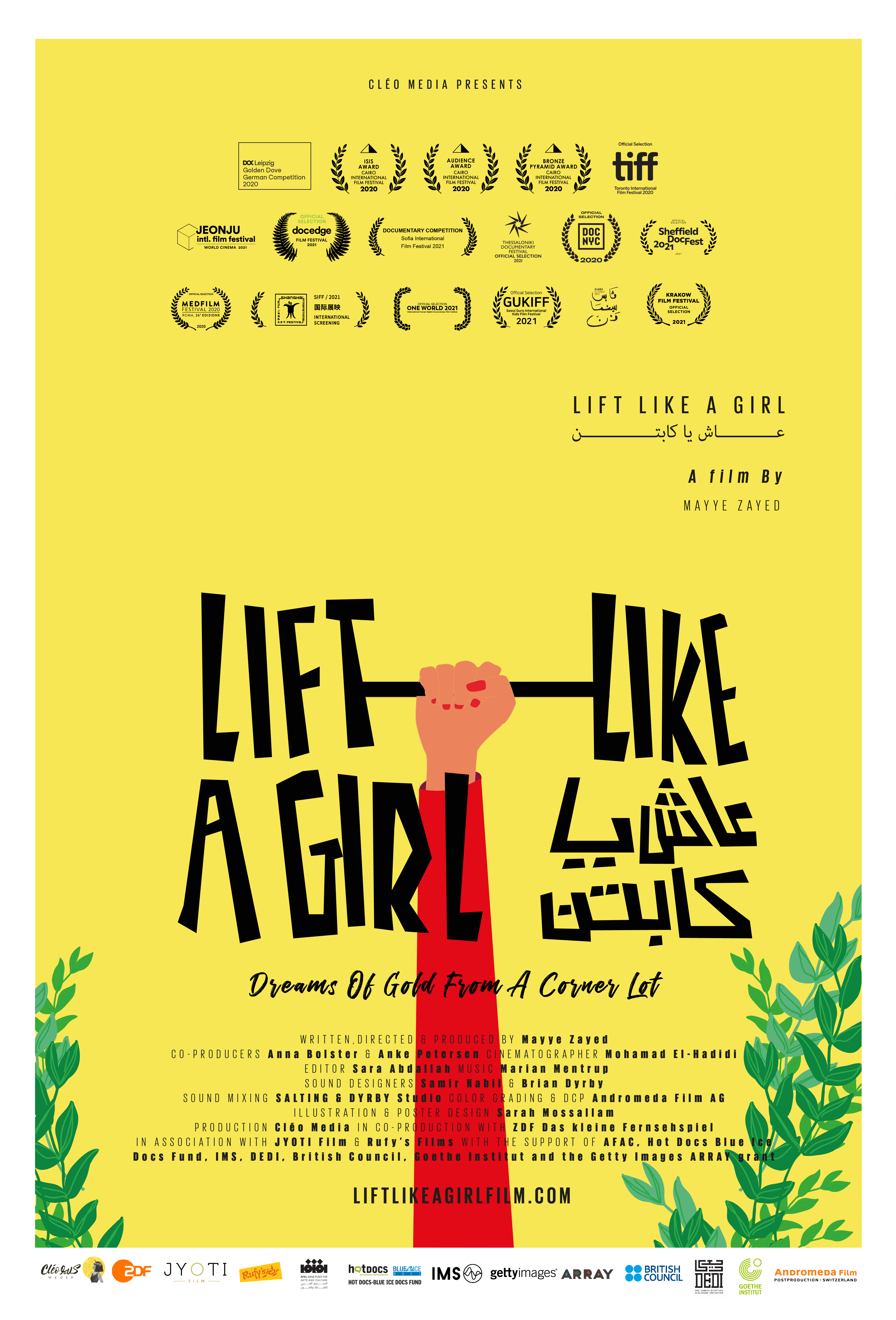
A dusty wasteland in the middle of a working-class neighbourhood of Alexandria with a few odds and ends made thanks to local resourcefulness. This is the setting for the documentary “Lift like a girl” where the film director Mayye Zayed spent four years filming an incubator for female weightlifting champions. Yet, it is difficult to imagine such an enterprise in a country where the practice of sports, especially that of women, is faced with so many obstacles. First, their practice of sports is faced with their ‘destabilizing’ presence in public spaces, and then with predominant social norms which judge what is appropriate of not for a female body.
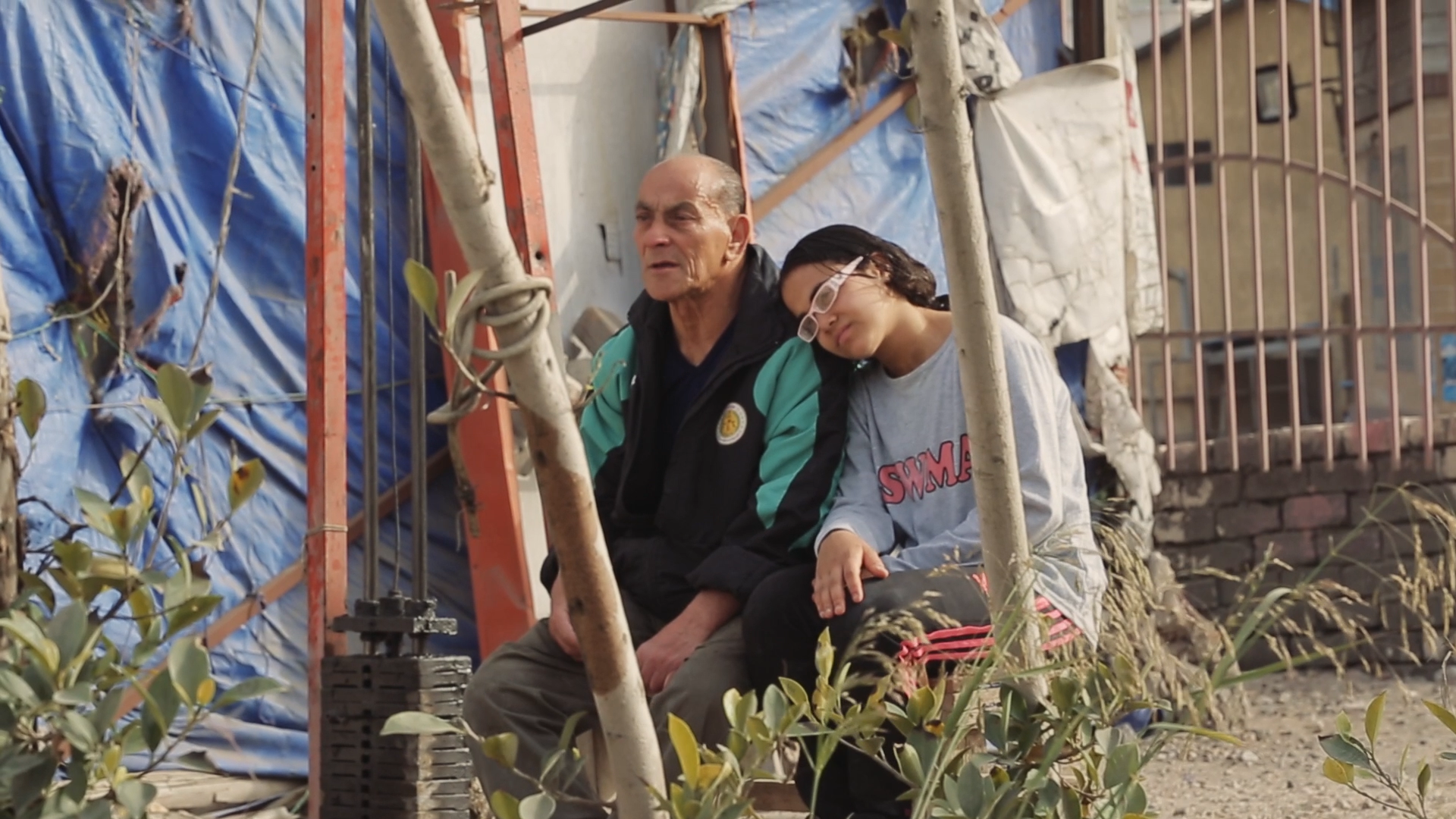
It is also rare to see Egyptian women on bicycles simply because no one has taught them to cycle, deeming the position to be inappropriate. In this apparently hostile environment, the documentary film follows Zebiba, a 14-year-old teenager and her coach Captain Ramadan during her training and competitions. The film is about transition from childhood to adulthood, but also about sport as a vector for emancipation.
Marianne Roux: Mayye Zayed, how did you become a filmmaker? Could you tell us a bit more about your experience?
Mayye Zayed: I am a filmmaker, cinema photographer and film editor. I have basically worked in different fields of the audio-visual industry before mainly working on directing and producing my films. I have a company called “Cléo Media” focusing on projects with women both behind and in front of the camera. Before that, I co-founded a collective company called Rufy’s Films, which produced many short movies and featured documentaries. Actually, my background has nothing to do with cinema! I have studied telecommunication engineering; but after graduating in 2008, I decided to do what had become obvious to me: film. So I participated in a workshop in Cairo, then I followed a filmmaking workshop at the Jesuit Cultural Centre in Alexandria, and I finally got a scholarship to study in the United States.
M.R.: You said that your company “Cléo” focused on women “in front of and behind the camera.” What is the reason behind this choice? Is it related to the context of the film industry in Egypt or rather to your feminist background?
M.Z.: I think it stems from various reasons. I am a feminist myself. I tend to like stories about women not because I am a feminist but because I am a woman. They are stories I can relate more to. As a filmmaker, these are the kinds of films I would like to make. I wanted to create a company to produce my own films and at the same time support other female filmmakers. Films directed by women are much smaller in number and this is not specific to Egypt. It is the case all across the world. This is why I wanted “Cléo Media” to focus on female characters. Of course, I have no problem with movies directed by men but I do not accept the fact that female characters are built and filmed as mere objects of desire, trophies or secondary characters. I want to show 3D female characters and not the binary “pretty women” vs the “evil woman”. I would like to break these stereotypes in cinema. Female characters need to be shown as human so that the audience can identify with them.
M.R.: How did you come up with the idea for this film?
M.Z.: I have known Nahla Ramadan by name for quite a long time. Indeed, in 2003, when I was a teenager myself, I remember the time when Nahla won a gold medal in the world championship. It was a big thing, everyone was so excited. It think she was the first athlete who won the gold medal at this level. I remember having read how she trained with her father in the streets of Alexandria before becoming an icon in Egypt. In 2014, someone introduced me to Captain Ramadan. I was amazed by the fact that he was still training other girls to become professional weightlifters and we don’t know anything about these women. I therefore wanted to follow the journey of these girls and show the world that such a place exists.
M.R.: Was it difficult to convince the protagonists to be filmed?
M.Z.: In the beginning, many of the older girls refused to be filmed and I fully understood and respected their choice. However, Captain Ramadan was very welcoming and the younger girls were very curious about it. The group then started to trust us and they realized we were not journalists. Initially, I was very curious to see what was happening in this place and then after spending a year filming, I felt that the film plot would be much stronger if we followed one girl who would go as far as the World Championship and the 2016 Olympic Games (although it was not the case). I also found it interesting to follow Zebiba during this period of her life as she goes from adolescence to adulthood.
M.R.: The character of Captain Ramadan is fascinating. What can you tell us about him? How come he prefers training girls?
M.Z.: The first time I met her I wondered: why is he doing all this? I got the answer when I saw how passionate he is about it. He was the one who really introduced this sport in Egypt and his two daughters, whom he coached, became champions. He was a weightlifter himself and used to take them with him to local competitions. He managed to convince the officials that girls could compete in this game and that is how it all began. He spent most of his life training women and believed in their abilities. He was convinced that they were better weightlifters. He was very progressive and believed in women’s rights in sports. He lectures parents for hours on why they should let their daughters practice this sport. And honestly, you would not expect it from someone from his background.
M.Z.: I am a filmmaker, cinema photographer and film editor. I have basically worked in different fields of the audio-visual industry before mainly working on directing and producing my films. I have a company called “Cléo Media” focusing on projects with women both behind and in front of the camera. Before that, I co-founded a collective company called Rufy’s Films, which produced many short movies and featured documentaries. Actually, my background has nothing to do with cinema! I have studied telecommunication engineering; but after graduating in 2008, I decided to do what had become obvious to me: film. So I participated in a workshop in Cairo, then I followed a filmmaking workshop at the Jesuit Cultural Centre in Alexandria, and I finally got a scholarship to study in the United States.
M.R.: You said that your company “Cléo” focused on women “in front of and behind the camera.” What is the reason behind this choice? Is it related to the context of the film industry in Egypt or rather to your feminist background?
M.Z.: I think it stems from various reasons. I am a feminist myself. I tend to like stories about women not because I am a feminist but because I am a woman. They are stories I can relate more to. As a filmmaker, these are the kinds of films I would like to make. I wanted to create a company to produce my own films and at the same time support other female filmmakers. Films directed by women are much smaller in number and this is not specific to Egypt. It is the case all across the world. This is why I wanted “Cléo Media” to focus on female characters. Of course, I have no problem with movies directed by men but I do not accept the fact that female characters are built and filmed as mere objects of desire, trophies or secondary characters. I want to show 3D female characters and not the binary “pretty women” vs the “evil woman”. I would like to break these stereotypes in cinema. Female characters need to be shown as human so that the audience can identify with them.
M.R.: How did you come up with the idea for this film?
M.Z.: I have known Nahla Ramadan by name for quite a long time. Indeed, in 2003, when I was a teenager myself, I remember the time when Nahla won a gold medal in the world championship. It was a big thing, everyone was so excited. I think she was the first athlete who won the gold medal at this level. I remember having read how she trained with her father in the streets of Alexandria before becoming an icon in Egypt. In 2014, someone introduced me to Captain Ramadan. I was amazed by the fact that he was still training other girls to become professional weightlifters and we don’t know anything about these women. I therefore wanted to follow the journey of these girls and show the world that such a place exists.
M.R.: Was it difficult to convince the protagonists to be filmed?
M.Z.: In the beginning, many of the older girls refused to be filmed and I fully understood and respected their choice. However, Captain Ramadan was very welcoming and the younger girls were very curious about it. The group then started to trust us and they realized we were not journalists. Initially, I was very curious to see what was happening in this place and then after spending a year filming, I felt that the film plot would be much stronger if we followed one girl who would go as far as the World Championship and the 2016 Olympic Games (although it was not the case). I also found it interesting to follow Zebiba during this period of her life as she goes from adolescence to adulthood.
M.R.: The character of Captain Ramadan is fascinating. What can you tell us about him? How come he prefers training girls?
M.Z.: The first time I met her I wondered: why is he doing all this? I got the answer when I saw how passionate he is about it. He was the one who really introduced this sport in Egypt and his two daughters, whom he coached, became champions. He was a weightlifter himself and used to take them with him to local competitions. He managed to convince the officials that girls could compete in this game and that is how it all began. He spent most of his life training women and believed in their abilities. He was convinced that they were better weightlifters. He was very progressive and believed in women’s rights in sports. He lectures parents for hours on why they should let their daughters practice this sport. And honestly, you would not expect it from someone from his background.
M.R.: Indeed, in the film we notice this very close relationship and the obvious complicity that Captain Ramadan maintains with young sportswomen. For instance, they kiss to greet each other, which in this social environment is quite unprecedented. Moreover, the girls train in this field in plain sight and in a mixed environment. How do they manage to have this accepted?
M.Z.: As an Egyptian myself, I was also surprised! Captain Ramadan and these young girls were breaking social rules that other Egyptians are not able to break and they were doing it in a natural way. Captain Ramadan had made it a very special and safe place and everyone felt at ease. However, he struggled a lot and it took him twenty years to be accepted in the neighborhood. His passion and determination convinced those around him.
M.R.: Weightlifting is dominated by men because it is related to physical power. However, these prejudices do not seem to discourage Zebiba and her comrades to practice this sport. How do you explain this?
M.Z.: I think it is because in this place they could find something that they could not find elsewhere. They found someone who believes in them and their potential. When you are told that you can become a world champion, it is a big thing, especially for someone from a lower social class and a poor neighborhood. Of course, the other thing is that everyone knew about Nahla. She became a role model not only for women but also for men. I think that seeing her training every day, many wanted to join her, and Captain Ramadan also took his champions to schools to demonstrate and promote weightlifting.
M.R.: In Egypt, practicing sport as a woman coming from a working-class background is neither obvious nor easy. Do you think your film can change things?
M.Z.: I do indeed hope that it will help change the reality of many Egyptian women. Girls are faced with many obstacles, the first of which is their family who often does not allow them to practice a sport. Besides, there is also a lack of sports infrastructure. Obviously, young girls practice sports but it is much easier for those who come from the upper middle classes and wealthy backgrounds because it is accepted by their social environment and they have the financial means to join clubs.
In order to multiply the impact of the film, I have created a shortened version for young audiences and we started to organize public screenings. We will do this across the country especially in the Delta and Upper Egypt areas and I cannot wait to see how the film will be received.
Lastly, it is interesting to observe that the only gold medal obtained by Egypt at the Tokyo Olympics this year was that of the karateka Feryal Abdelaziz who trains in a youth center in conditions similar to those of Zebiba. There has been a lot of media coverage of her story and the other medal winning athletes and so I think that we are currently witnessing a turning point in the way these champions are perceived and celebrated by all as role models. Moreover, in light of these victories, some have drawn parallels with my film and I was truly happy!