• it VO
  • fr Français
  • en English
  • ar العربية
About us
  • In-depth
    • All
    • Features
    • Files
    • World
    Morocco: 600 abortions a day—Alarming figures and tragic stories

    Morocco: 600 abortions a day—Alarming figures and tragic stories

    In Spain, the right to abortion is not guaranteed for all

    In Spain, the right to abortion is not guaranteed for all

    Invisible and vulnerable: Migrant women at the frontlines of Spain’s prostitution debate

    Invisible and vulnerable: Migrant women at the frontlines of Spain’s prostitution debate

    Serbia: Is contraception a luxury or a basic human right?

    Serbia: Is contraception a luxury or a basic human right?

    Rebels, witnesses, victims: Women against the mafia (3/3)

    Rebels, witnesses, victims: Women against the mafia (3/3)

    Trending Tags

    • Women artists
    • Ecofeminism
    • Women living from and on the streets
    • Women and bodies
    • Women and sports
    • Women and cinema
    • Ramadan series
    • Women and war
    • Women Living at the Margins
    • Press Freedom from the Perspective of Women Journalists
    • Period poverty
    • Gynecological violence
    • Women and prison
    • Safe spaces
    • Abortion and SRHR
    • Transgenderism
    • Women in rural areas
  • On the move
    Spain: CEAR and the fight against human trafficking

    Spain: CEAR and the fight against human trafficking

    Gaza: How many journalists must be killed for the world to react?

    Gaza: How many journalists must be killed for the world to react?

    Moroccan activist Ibtissam Lachgar held in solitary confinement, health in crisis

    Moroccan activist Ibtissam Lachgar held in solitary confinement, health in crisis

    Three women for one man’s pay: The plight of female agricultural workers in Egypt

    Three women for one man’s pay: The plight of female agricultural workers in Egypt

  • Portraits
    Sophie Bessis: “The battle for the intimate will be long, especially in the Global South!”

    Sophie Bessis: “The battle for the intimate will be long, especially in the Global South!”

    “Mom, Dad, Can We Talk About Privacy?”—A Tunisian children’s book on protecting kids from sexual violence

    “Mom, Dad, Can We Talk About Privacy?”—A Tunisian children’s book on protecting kids from sexual violence

    Kurdish journalist killed in Turkish drone strike in northeastern Syria

    Kurdish journalist killed in Turkish drone strike in northeastern Syria

    A Filmmaker’s Journey: Inside the Creative World of Margarita Bareikyte

    A Filmmaker’s Journey: Inside the Creative World of Margarita Bareikyte

  • Creations
    • All
    • Reviews
    • Visual Arts
    “La Malédiction (1)”, a theatrical adaptation of King Kong Theory bursting with Tunisian rage

    “La Malédiction (1)”, a theatrical adaptation of King Kong Theory bursting with Tunisian rage

    “Mom, Dad, Can We Talk About Privacy?”—A Tunisian children’s book on protecting kids from sexual violence

    “Mom, Dad, Can We Talk About Privacy?”—A Tunisian children’s book on protecting kids from sexual violence

    The El’Sardines series, a delicate feminist manifesto centered around an ecological mystery

    The El’Sardines series, a delicate feminist manifesto centered around an ecological mystery

    Atlantics, a film by Mati Diop: Filming the embodied resistance of spirits

    Atlantics, a film by Mati Diop: Filming the embodied resistance of spirits

  • Opinion
    Women in Gaza are living their worst nightmares - “ I want to go back to my life before the war, to my privacy, my home ”

    Women in Gaza are living their worst nightmares - “ I want to go back to my life before the war, to my privacy, my home ”

    Messages from life under bombardment—Can a mother cope with losing her six children at once? (10)

    Messages from life under bombardment—Can a mother cope with losing her six children at once? (10)

    Messages from life under bombardment—No cake for my children on their birthdays (9)

    Messages from life under bombardment—No cake for my children on their birthdays (9)

    Messages from life under bombardment – No food or water in Gaza (8)

    Messages from life under bombardment – No food or water in Gaza (8)

  • Multimedia
    "I hope it doesn’t go viral: Journalism and sexist attacks in digital age". A video investigation by Çiçek Tahaoğlu

    "I hope it doesn’t go viral: Journalism and sexist attacks in digital age". A video investigation by Çiçek Tahaoğlu

    Period poverty in Montenegro

    Period poverty in Montenegro

    Period poverty in France (1)

    Period poverty in France (1)

    Period Poverty in Italy

    Period Poverty in Italy

  • Country context
No Result
View All Result
BLOGS
Medfeminiswiya
  • In-depth
    • All
    • Features
    • Files
    • World
    Morocco: 600 abortions a day—Alarming figures and tragic stories

    Morocco: 600 abortions a day—Alarming figures and tragic stories

    In Spain, the right to abortion is not guaranteed for all

    In Spain, the right to abortion is not guaranteed for all

    Invisible and vulnerable: Migrant women at the frontlines of Spain’s prostitution debate

    Invisible and vulnerable: Migrant women at the frontlines of Spain’s prostitution debate

    Serbia: Is contraception a luxury or a basic human right?

    Serbia: Is contraception a luxury or a basic human right?

    Rebels, witnesses, victims: Women against the mafia (3/3)

    Rebels, witnesses, victims: Women against the mafia (3/3)

    Trending Tags

    • Women artists
    • Ecofeminism
    • Women living from and on the streets
    • Women and bodies
    • Women and sports
    • Women and cinema
    • Ramadan series
    • Women and war
    • Women Living at the Margins
    • Press Freedom from the Perspective of Women Journalists
    • Period poverty
    • Gynecological violence
    • Women and prison
    • Safe spaces
    • Abortion and SRHR
    • Transgenderism
    • Women in rural areas
  • On the move
    Spain: CEAR and the fight against human trafficking

    Spain: CEAR and the fight against human trafficking

    Gaza: How many journalists must be killed for the world to react?

    Gaza: How many journalists must be killed for the world to react?

    Moroccan activist Ibtissam Lachgar held in solitary confinement, health in crisis

    Moroccan activist Ibtissam Lachgar held in solitary confinement, health in crisis

    Three women for one man’s pay: The plight of female agricultural workers in Egypt

    Three women for one man’s pay: The plight of female agricultural workers in Egypt

  • Portraits
    Sophie Bessis: “The battle for the intimate will be long, especially in the Global South!”

    Sophie Bessis: “The battle for the intimate will be long, especially in the Global South!”

    “Mom, Dad, Can We Talk About Privacy?”—A Tunisian children’s book on protecting kids from sexual violence

    “Mom, Dad, Can We Talk About Privacy?”—A Tunisian children’s book on protecting kids from sexual violence

    Kurdish journalist killed in Turkish drone strike in northeastern Syria

    Kurdish journalist killed in Turkish drone strike in northeastern Syria

    A Filmmaker’s Journey: Inside the Creative World of Margarita Bareikyte

    A Filmmaker’s Journey: Inside the Creative World of Margarita Bareikyte

  • Creations
    • All
    • Reviews
    • Visual Arts
    “La Malédiction (1)”, a theatrical adaptation of King Kong Theory bursting with Tunisian rage

    “La Malédiction (1)”, a theatrical adaptation of King Kong Theory bursting with Tunisian rage

    “Mom, Dad, Can We Talk About Privacy?”—A Tunisian children’s book on protecting kids from sexual violence

    “Mom, Dad, Can We Talk About Privacy?”—A Tunisian children’s book on protecting kids from sexual violence

    The El’Sardines series, a delicate feminist manifesto centered around an ecological mystery

    The El’Sardines series, a delicate feminist manifesto centered around an ecological mystery

    Atlantics, a film by Mati Diop: Filming the embodied resistance of spirits

    Atlantics, a film by Mati Diop: Filming the embodied resistance of spirits

  • Opinion
    Women in Gaza are living their worst nightmares - “ I want to go back to my life before the war, to my privacy, my home ”

    Women in Gaza are living their worst nightmares - “ I want to go back to my life before the war, to my privacy, my home ”

    Messages from life under bombardment—Can a mother cope with losing her six children at once? (10)

    Messages from life under bombardment—Can a mother cope with losing her six children at once? (10)

    Messages from life under bombardment—No cake for my children on their birthdays (9)

    Messages from life under bombardment—No cake for my children on their birthdays (9)

    Messages from life under bombardment – No food or water in Gaza (8)

    Messages from life under bombardment – No food or water in Gaza (8)

  • Multimedia
    "I hope it doesn’t go viral: Journalism and sexist attacks in digital age". A video investigation by Çiçek Tahaoğlu

    "I hope it doesn’t go viral: Journalism and sexist attacks in digital age". A video investigation by Çiçek Tahaoğlu

    Period poverty in Montenegro

    Period poverty in Montenegro

    Period poverty in France (1)

    Period poverty in France (1)

    Period Poverty in Italy

    Period Poverty in Italy

  • Country context
About us
Medfeminiswiya
About us

In Spain, the right to abortion is not guaranteed for all

Gabriela Martínez by Gabriela Martínez
26 November 2025
in Files
14 0
0
Share on FacebookShare on Twitter

This post is also available in: Français (French)

The international press has recently echoed the debate surrounding abortion in Spain with headlines such as “After France, Spain wants to enshrine the right to abortion in the Constitution.” However, according to several feminist organizations, the government’s proposal to enshrine the right to abortion in the Constitution does not solve the real problems: the controversy concerns how the law is applied and whether all women, including migrants, actually have access to this right.

A “diversionary tactic”

“There are more urgent issues to resolve when it comes to abortion than enshrining it in the Constitution,” asserts feminist and former Spanish Socialist Workers’ Party (PSOE) MP Consuelo Catalá, who for years facilitated abortions in Valencia when they were still illegal and participated as an expert in drafting the 2010 law. For this retired nurse, who has been a leading figure in the fight for women’s sexual and reproductive health, the initiative risks becoming “a partisan exploitation of a right and a historic demand of women.”

“I think this is a diversionary tactic. In other words, it avoids addressing the concrete problems associated with the implementation of the abortion law,” she insists.

The proposal by Pedro Sánchez’s Socialist government (following false information spread by the far-right party claiming that women who have abortions suffer from a so-called post-abortion syndrome) is to enshrine the right to abortion in Article 43 of the Constitution, which recognizes the right to health protection. However, although abortion is not explicitly mentioned in the Constitution, it is considered to be part of the content of Article 15, which guarantees the right to life and physical and moral integrity as a fundamental right.

“Since the Constitutional Court ruled on the 2010 law, abortion has been considered a fundamental right under Article 15 of the Constitution. Yet what is being proposed here is to approve it under Article 43, which is not a fundamental right,” explains Catalá. Including the right to abortion in Article 43 would thus reduce its level of protection, she argues.

“Since the Constitutional Court ruled on the 2010 law, abortion has been considered a fundamental right under Article 15 of the Constitution. Yet what is being proposed here is to approve it under Article 43, which is not a fundamental right.”

Years of struggle, a recently won right

In Un aborto, 8,000 pesetas (An Abortion, 8,000 Pesetas), journalist Paula Boira Nacher recounts how, in 1977, as a 23-year-old student, she traveled for several days to have an abortion. After passing through Barcelona, she was finally able to have it done in Paris. Her story is that of hundreds of thousands of Spanish women who crossed the border to have abortions in safe and sanitary conditions. This journey marked a turning point in her life and forever linked her to the struggle for women’s sexual and reproductive freedom.

While the United Kingdom legalized abortion in 1967 and France in 1975, Spain decriminalized it in 1985 in three cases: risk to health, rape, and severe fetal anomalies. It was only in 2010 that women’s right to terminate a pregnancy during the first 14 weeks was recognized. The 2023 law granted autonomy to 16- and 17-year-olds by removing the requirement for parental consent, eliminated the mandatory three-day reflection period, and created a register of conscientious objectors to ensure the availability of abortion services in public healthcare facilities.

Conscientious objection: A major obstacle

Conscientious objection has become one of the main obstacles to abortions in public clinics. It is the right of a healthcare professional to refuse to perform a medical procedure they deem contrary to their beliefs, but exercising this right raises the question of how to reconcile the healthcare provider’s freedom of conscience with the patient’s right to access care.

“We didn’t regulate conscientious objection with conscience in mind, but with the idea that the professional has the final say on what they want to do. Consequently, it ends up being a professional objection. It’s the professional who decides on women’s rights,” points out Francisca García, president of the Association of Accredited Abortion Clinics (ACAI). Added to this is the fact that the practice of abortion remains stigmatized—“It doesn’t look good on your resume.”

The region of Madrid refuses to provide a list of conscientious objectors despite its legal obligation to do so. “Doctors are obligated to offer all healthcare services covered by Social Security, and if someone wants to exercise their right to conscientious objection, they will do so individually, which is why registers of conscientious objectors must be established […] to guarantee service alongside other doctors who do not object,” insists lawyer Gema Fernández of Women’s Link Worldwide (WLW). Fernández also points out that WLW represents Women on Web, an online provider of medical abortions whose website is blocked by the Spanish Agency of Medicines and Medical Devices (AEMPS).

“We didn’t regulate conscientious objection with conscience in mind, but with the idea that the professional has the final say on what they want to do. Consequently, it ends up being a professional objection. It’s the professional who decides on women’s rights.”

Lack of access to abortion in public hospitals

Despite legal advances, free and public access to abortion remains an unresolved issue. More than 80% of voluntary terminations of pregnancy (VTPs) take place in licensed private clinics. It should be noted that healthcare in Spain is managed by each autonomous region. In the Madrid region, 99.6% of VTPs in 2023 were performed in contracted, licensed private clinics.

“Since the 1985 law, abortion in Spain has mainly been regulated in this way: public services enter into agreements with specialized centers to provide the service. Other medical procedures are outsourced too—it’s not just abortion,” explains Francisca García of ACAI.

Catalá clarifies that an accredited clinic is not the same as a “non-accredited private clinic.” “A woman goes to an accredited clinic and doesn’t pay for the procedure: the procedure is paid for by the state, as it is part of the basic healthcare services,” she says.

Health Minister Mónica García emphasized the need to perform abortions within the public healthcare system during the presentation of an October 2025 report on the subject. “First, to avoid double privatization whereby not only do communities pay private clinics to perform abortions but also, when a woman is expelled from our public system, she has to seek this service elsewhere—a service which, I repeat, is part of our basic services. Second, because we want to guarantee women’s freedom of choice,” she stated.

She also asserted that facilitating access to abortion in the public healthcare system ensures continuity of care. Most women discover and monitor their pregnancies within the public system, García explained. When a serious problem is detected (such as a malformation), some choose to terminate the pregnancy, but often they have to leave the public system and go to a private clinic to do so. This breaks the connection with the healthcare professionals who were providing their care.

Undocumented women, overlooked  

Even though the law provides access to abortion for women without a health card or in irregular administrative situations, several regions impose administrative barriers—for example, some require that a woman be registered in the municipal registry to access abortion—which further complicates access for women like María (a pseudonym to protect her identity).

María had to pay 600 euros for an abortion at an approved clinic in Zaragoza in January 2021. “I felt quite abandoned,” admits this Brazilian woman from Salvador de Bahia, who was 32 at the time and in an irregular administrative situation. “Whether it was the treatment I received at the clinic or the attitude of some Spanish people. The country presents itself as very open, but I see a double standard that doesn’t add up,” she says.

She also felt abandoned by the feminist movement. “They are feminists for themselves. There is no support for a feminist immigrant woman,” she criticizes. The organization Comisión Aborto Madrid, however, says it is aware of the discrimination faced by migrant women in irregular administrative situations. “I see young women who haven’t yet spent the three months in Spain to access our public healthcare system and who also can’t get an abortion,” observes Elena Martín, spokesperson for the organization. “Many young women are left out in the cold. They are in a very vulnerable economic situation and don’t know where to turn for help,” she denounces.

This was the case for María. She had just finished her studies in Portuguese philosophy and couldn’t afford an abortion. Her partner at the time paid for it. She chose the surgical method, more expensive than the medical one, because it was the most suitable solution for her situation as an au pair: “I lived in the house. I slept, ate, and worked there. It would have been very difficult with medication.”

“That day, I left feeling completely emotionally destroyed, even though my physical recovery was perfect. It’s very easy in Spain to wave a purple flag [Editor’s note: the symbolic color of the feminist movement in many countries] and say you’re pro-choice, but you don’t really know what goes on inside a clinic,” she points out.

“Whether it was the treatment I received at the clinic or the attitude of some Spanish people. The country presents itself as very open, but I see a double standard that doesn’t add up.”

Harassment and intimidation by ultra-conservatives on the rise

In addition to discrimination, there is harassment from ultra-conservative groups. “In one of the private clinics, which was one of the first to perform abortions in Madrid, the harassment is violent,” denounces Elena Martín. Every year, intimidation and aggression increase. “Even we, as a feminist movement, are being targeted in an increasingly aggressive manner. Last year, we were really scared. They insulted, threatened, and intimidated us,” she explains.

On Monday, November 17, a trial began in Vitoria-Gasteiz against 21 people who participated in anti-abortion rallies outside a clinic in that city in the Basque Country. They are accused of organizing picket lines to coerce and harass all patients entering the clinic. This is the first time a trial of this kind has been held in Europe, making the outcome particularly significant. The demonstrations took place between September 28 and November 4, 2022. The defendants face five months in prison for coercion, a sentence that could be replaced by 100 days of community service.

A right that is not yet fully guaranteed

Furthermore, abortion training is practically nonexistent in medical and nursing schools, which poses a problem in the medium term: the current generation of abortion providers is aging, and there is no new generation of trainees to replace them. “It’s very serious. What’s going to happen? No one will know how to perform abortions,” warns Catalá.

The activists interviewed are convinced that the right to abortion cannot be taken for granted. “Nothing is guaranteed. There are still women who have abortions outside of Spain,” laments Martín. Indeed, women who are more than 22 weeks pregnant and have fetal anomalies—the maximum period allowed by law in these circumstances—are, despite the legal framework, forced to travel to Brussels for an abortion. This is because the “clinical committees” that must give their approval in such cases often refuse.

For Catalá, abortion is under constant threat because it constitutes “absolute defiance of the overriding mandate of patriarchal society. When you have a voluntary abortion, you are opposing the patriarchal injunctions to be a wife and mother. You are saying: look, I know that I am pregnant, and I am saying no!”

This article was carried out with the support of the Tunis Office of the Rosa Luxemburg Foundation.
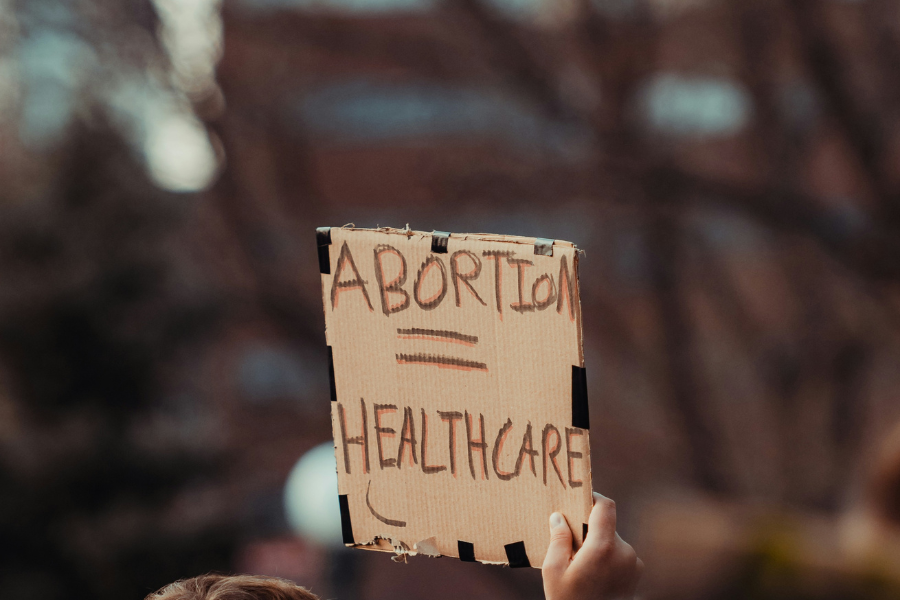
Photo by Colin Lloyd, Unsplash
Gabriela Martínez

Gabriela Martínez

Gabriela Martínez is an independent Mexican journalist based in Madrid. She writes specifically about health-related topics and runs a newsletter on multiple sclerosis (MS). She also hosts a podcast called Lima Limón about Mexican culture in Spain.

Related posts

“Palestinian Women,” the revived history of women militants for the liberation of Palestine
In-depth

“Palestinian Women,” the revived history of women militants for the liberation of Palestine

by Nathalie Galesne
6 February 2024
844

The documentary by Lebanese director Jocelyne Saab, screened at the 27/20 Festival in Tunis, shook the public. What do these...

Palestine: With “liberated” sperm, the impossible becomes possible
In-depth

Palestine: With “liberated” sperm, the impossible becomes possible

by Alaa Murrar
9 January 2023
516

When Palestinian women and men first heard the news of the smuggled sperm, they had a lot of questions. It...

Saying NO to violence is a business

Saying NO to violence is a business

19 September 2023
366
Quand les créations de Zehra Doğan voyaient le jour en prison

Quand les créations de Zehra Doğan voyaient le jour en prison

12 December 2022
313

Leave a Reply Cancel reply

Your email address will not be published. Required fields are marked *

J'accepte les termes et conditions et la Politique de confidentialité .

Medfeminiswiya

Medfeminiswiya is a feminist network that brings together women journalists working in the fields of media and content production in the Mediterranean region.

Newsletter


    Follow us

    Browse topics


    • In-depth
    • Files
    • Features
    • On the move
    • Portraits
    • Opinion

    • Creations
    • Visual Arts
    • Reviews
    • Multimedia
    • Country Context
    • Blogs
    • About us
    • Our community
    • Our partners
    • Become a member
    • Editorial charter
    • Disclaimer

    © 2025 Medfeminiswiya - Mediterranean Network for Feminist Information

    • it VO
    • fr Français
    • en English
    • ar العربية
    • In-depth
    • On the move
    • Portraits
    • Creations
    • Opinion
    • Multimedia
    • Country context
    • Blogs
    No Result
    View All Result

    © 2025 Medfeminiswiya - Mediterranean Network for Feminist Information

    Welcome Back!

    Login to your account below

    Forgotten Password?

    Retrieve your password

    Please enter your username or email address to reset your password.

    Log In

    Add New Playlist

    Ce site n'utilise pas de cookies. This website does not use cookies. هذا الموقع لا يستخدم ملفات تعريف الارتباط.