This post is also available in:
Some of these soap operas had the habitual dose of insulting and stereotyping women, but they also did show some signs of positivity, be it in the issues that were raised or the way in which they were presented and addressed. This article lays out the most prominent women’s issues in this year’s Ramadan dramas seen through a feminist lens.
Surrogacy and the struggle of motherhood
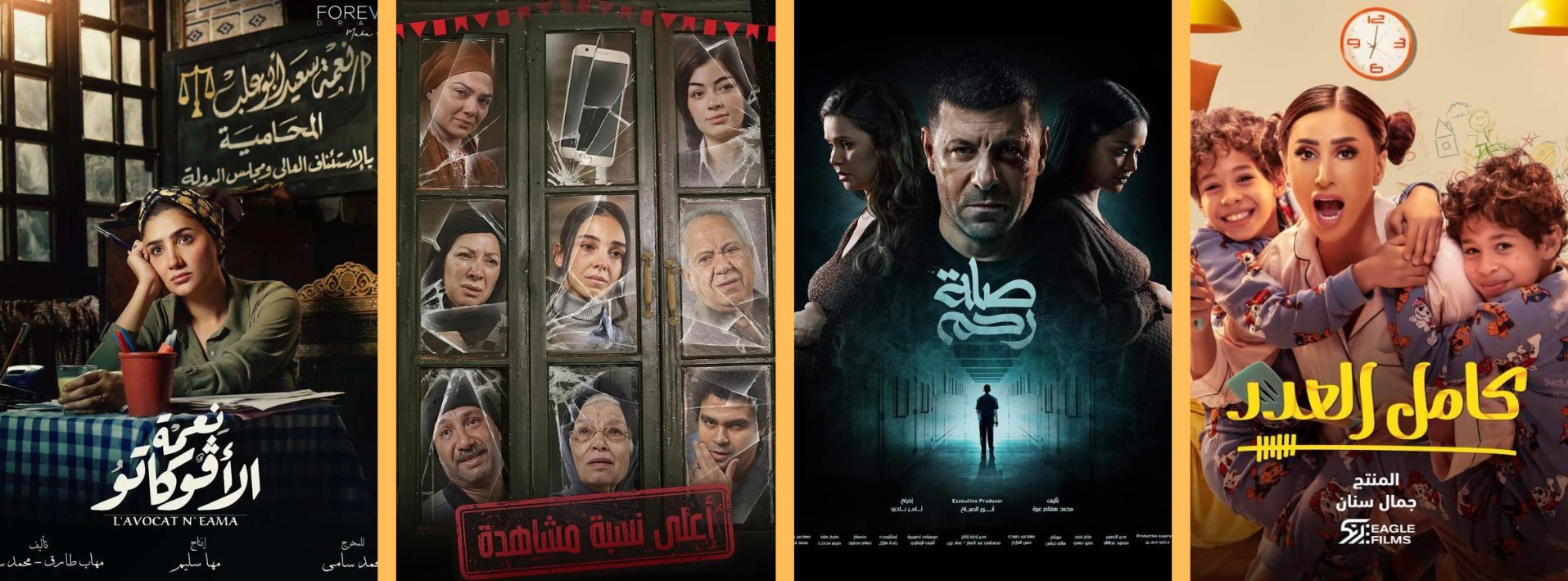
 The show Selat Rahm (Consanguinity) addresses an uncommon and innovative theme for our societies: surrogacy and safe abortion, thus reflecting part of women’s reality without demonizing them and without exaggeration. The show, directed by Tamer Nady, stars Yosra El Lozy, Eyad Nassar, and Asmaa Abulyazeid.
It tells the story of a man whose wife is forced to have her uterus removed after a dangerous operation. But he later starts to dream of becoming a father again, and—without telling his wife—resorts to surrogacy and fertilizes his wife’s eggs that she’d had frozen before her operation. The surrogate goes through a psychological dilemma: she agreed to be a surrogate out of a need for money, but the maternal instincts that set in, particularly after she gives birth to the child and he is taken away, prove difficult to deal with.
The series also raises questions about the concept of surrogacy itself, taking into account all the different religious and legal prohibitions associated with it across Arab countries despite how far our reality is from having to deal with issues like surrogacy.
On the other hand, the show also brings up safe abortion after Egyptian screens only ever used to discuss abortion as something criminal, always taking place somewhere dark and frightening, with women feeling guilty and stigmatized. Women resorting to abortion are also usually portrayed as being financially or sexually exploited by the doctor—but this show is different. The doctor is a man yet he does not stigmatize or exploit women, rather he is fully aware of their right to abortion and defends their right to life. Women are also shown as choosing abortion for various reasons. However, the show has been criticized for only having women who made a mistake and got pregnant outside of marriage be the ones wanting abortions.
TikTok girls back to the forefront
Another series that has been popular this Ramadan is A’la Nesbet Moshahada (Highest Viewing Rate), whose plot goes into the issue of “TikTok girls”—an issue we witnessed on a national scale several years ago and the result of which was the imprisonment of the “TikTok girls,” the most famous of whom were Haneen Hossam and Mawada al-Adham, on charges of “going against Egyptian society’s traditions and morals.”
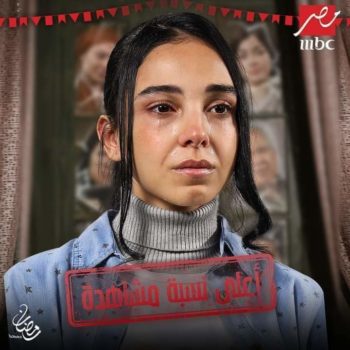 The series revolves around two girls born in a poor milieu who find in the internet a window to the world. The character of Shaima (played by Salma Abu Deif), a simple girl living in a popular area, manages to make a profit from TikTok and reaches great fame. Thus TikTok becomes a sort of compensation for all the ugliness she had to live through with her family in her surroundings, for the love she never found. But as her fame rises, she is exploited in many ways, from blackmail to being implicated in a human trafficking case that ultimately leads to her imprisonment.
This show demonstrates the impact of TikTok on some marginalized groups and how they invested in it to have a better life, only for the ending to be disappointing, neutralizing any victory that the show may have offered these girls. In the end, Shaima goes to prison.
The problem is not only having her go to prison; it’s portraying prison as the only savior, the only solution. There is a scene in which Shaima is filmed inside her cell, and she is shown feeling comfortable, at peace, as if prison had offered her what she needed after everything she suffered through because of using TikTok.
What was even more disappointing was the reaction of Laila Ahmed Zaher, one of the show’s stars: after the series ended, she stated that they didn’t work on this show to get the girls out of prison, for whoever makes a mistake must be punished for it, even if they are victims of their environments. This raises questions about the significance of this show which only recycles the injustice done to these girls who stepped into life and found one single place that could help them improve their living conditions: unsafe use of the internet, and how to profit from it.
Cliches and demonization
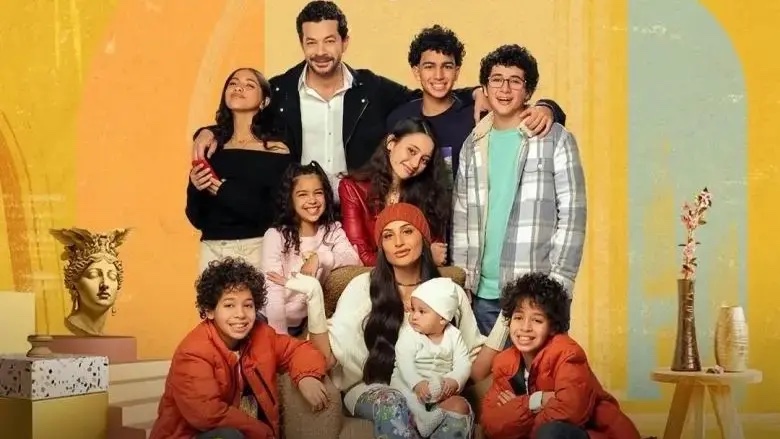
The show Kamel el-Adad +1 (All of Us +1), starring Dina El Sherbiny, Sherif Salama, and Esaad Younes, addresses old and new issues related to family problems. Laila discovers that another woman is attracted to her husband, and her mother-in-law tells her that this is normal and that she should make extra efforts to keep her husband from turning to another.
This series repeats the stereotypical image of Eastern men without introducing any new ideas or addressing the basic notion that Laila’s husband is responsible for his own actions, as he is the one who decides whether or not another woman can approach him. It’s not just on Laila to find solutions to maintain their marriage.
The show also addresses the impact of social media on teenagers: Laila’s daughter loves TikTok and takes her own videos, and when her mother finds out what she’s doing, she reacts well and is proud of her. After the daughter is blackmailed, her mother continues to support her, and the series thus shows a positive example of a mother supporting her daughter who is being blackmailed.
The series Lahzet Ghadab (A Moment of Anger), starring Saba Mubarak and Mohamed Farrag, portrays the story of a narcissistic husband who insults and abuses his wife every chance he gets. In one episode, the wife kills her husband and seeks a women’s rights activist to help her. The activist tells her that what happened is normal and justified, and she tells the wife that she also killed her own husband years ago. This is an unjust and demonizing representation of feminists, as it profiles women who advocate for women’s rights as calling for corruption and even murder. This is an attempt to distort the role that feminist and human rights activists play.
Repetition and renewal
 Despite the fully female lead in the series Neama al-Avocato (Neama the Lawyer), this show is rife with patriarchal ideas. Neama, a likeable and accommodating woman, is portrayed as a patriarchal character who embodies society’s ideas and repeats them despite her surface-level criticism of these notions. She is a “woman worth a hundred men,” reinforcing the idea that standards of goodness are always linked to manhood. She also supports her husband but finds it shameful to do so; she tries not to hurt his manhood and finds a way to give him her money—unbeknownst to him—so he doesn’t feel like less of a man. She insults him by calling him “Sarah’s husband” and “Nawal’s son,” considering it insulting to refer to him in relation to the women around him. The series calls out some aspects of patriarchal reality but ends up recycling them all.
When it comes to representation of reality, we have seen some realistic and real portrayals of women in a few shows this year.
The character of Intisar in A’la Nesbet Moshahada is reminiscent of actual mothers and was totally believable, which is not something common in Egyptian dramas. The character of Zeina in Al-Atawla is also believable: she wears feminine clothes and her hijab normally, with none of the usual exaggerations in how she is portrayed. This is also the case with Neama in Neama al-Avocato, despite the series’ flaws.