
Cette publication est également disponible en :
It’s good to be a girl this summer.
It’s time for the flamboyant return of pink, glitter, and sequins. On TikTok, the girly-girl craze is going viral: the girl who likes typical girl things, who drinks iced coffee and lives on a cotton candy cloud. This new uninhibitedly hyper-feminine aesthetic transports us into a sweet sugar fever, cradled in saturated pinks.
It took a trend to bring it out of our closets. Pink, the tint of our childhoods, has not found its place in our adult lives. Too childish, too girly, too ingenuous. We had to hate it to grow up, trade it for less futile colors. Pink, the color of frivolity and plastic. We’d only wear it in the form of pajama slippers. In a professional setting, it takes away from our seriousness. In society, it takes away from our power. Or it used to, at least.
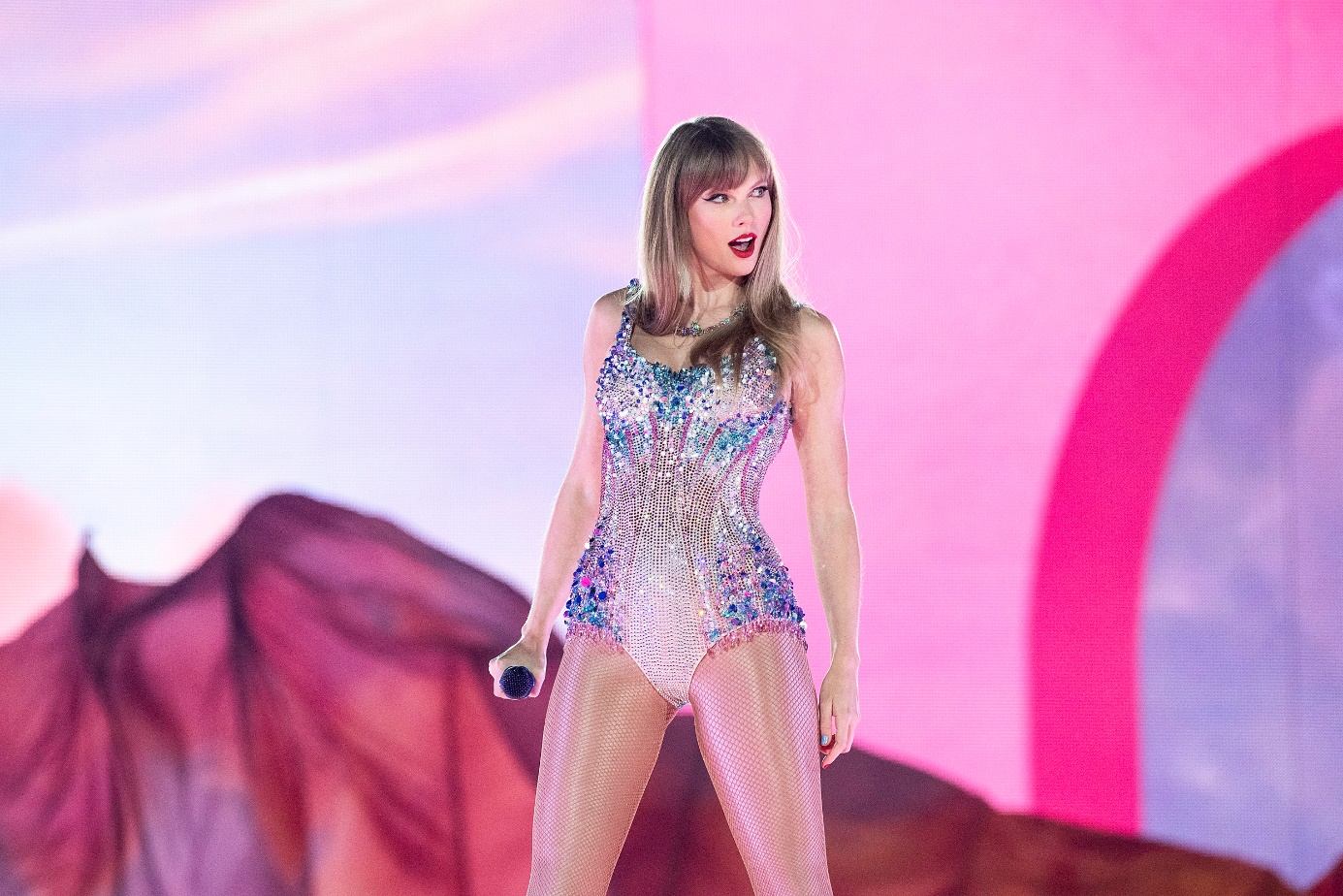
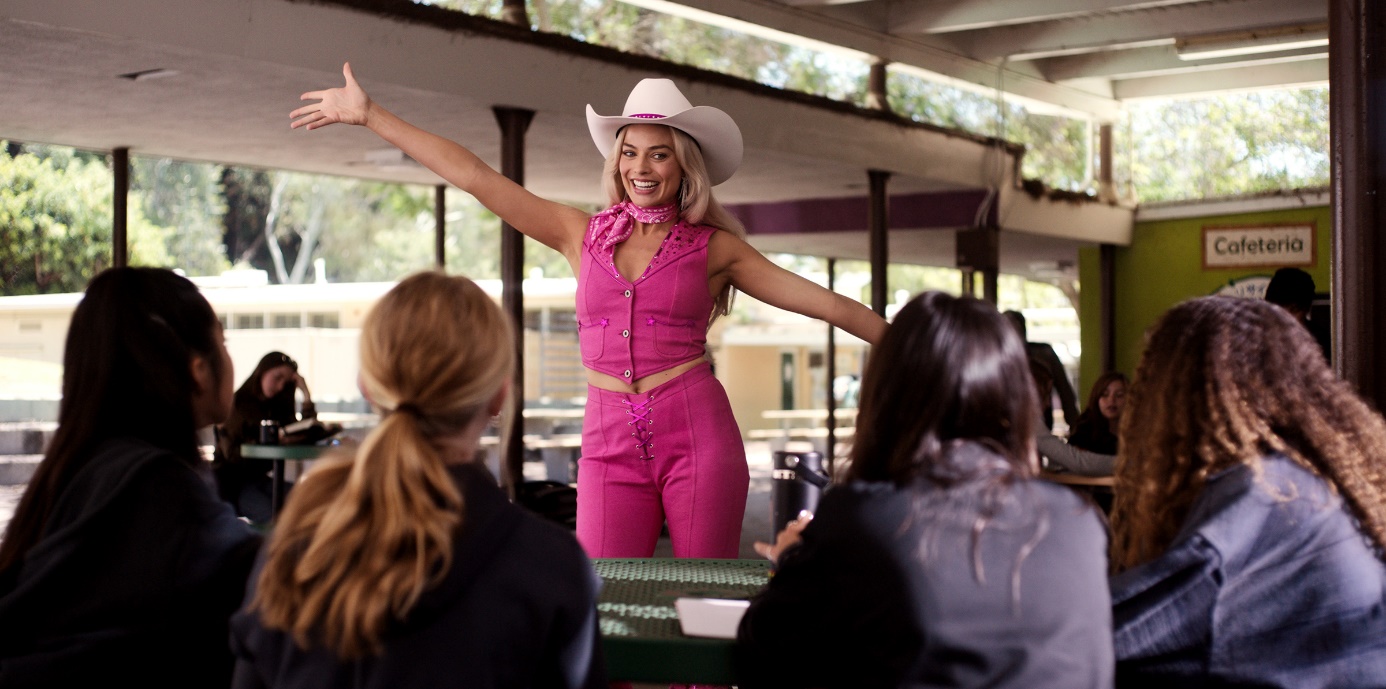
It is in this unexpected surge of pink that the Barbie phenomenon has emerged, triumphing at the box office and making its director Greta Gerwig the first woman director to surpass the one-billion mark. The movie’s success also extends beyond cinemas with the Barbiecore trend, which has become a veritable fashion phenomenon. And the success of Barbie leads us to think of the other pop phenomenon of the summer: Taylor Swift, whose phenomenal tour is the star attraction of the season, as she has managed to fill entire stadiums and break numerous records in the music industry. It’s the revenge of the blondes: Barbie and Taylor Swift have both had a considerable positive impact on the US economy. The women’s football World Cup should also be mentioned here, as it has just been added to the list of decidedly feminine highlights of this summer.
Admittedly, it’s easy to delude ourselves in this regard—aren’t these pop phenomena carefully orchestrated by capitalist and consumerist strategies? Definitely. But what is the work worth, apart from its aggressive marketing? Why has it resonated with such a large audience?
The blonde according to Greta Gerwig and Taylor Swift is not unintelligent: she is no longer the object but the subject who is taking charge of the story.
In Barbie, Greta Gerwig and Margot Robbie brilliantly respond to sexist stereotypes that have long been conveyed in Hollywood and offer multiple nods to an assumed female audience. Through the Barbie doll, a typically feminine toy, they dream up an atypical piece of work that questions sexism, the patriarchy, gender roles, and women’s representation, all while praising the simple joys of femininity. The movie is reminiscent of Legally Blonde, a cult film from the 2000s, which already explored these themes.
Taylor Swift, meanwhile, is known to be a talented lyricist. She manages to capture the female experience in her songs, her sentimentality shining through her touching and disconcertingly sincere lyrics that particularly resonate with women and young girls. Her phenomenal success is comparable to that of the Beatles or Michael Jackson, though she has endured years of mockery and sexism.
The blonde according to Greta Gerwig and Taylor Swift is not unintelligent: she is no longer the object but the subject who is taking charge of the story. Contrary to the blonde embodied by Marilyn Monroe, this blonde strangely does not attract men—her audience is mainly female. This blonde is written by a woman, for a woman.
The female gaze: Greta Gerwig teaches us a lesson
In 1975, filmmaker and feminist activist Laura Mulvey articulated the concept of the Male Gaze: a theory that dominant visual culture imposes a male perspective. This tends to objectify women and reduce them to a mere image. In response, the female gaze offers the alternative female point of view, which conveys the female experience as it is lived, as a subject.
Greta Gerwig, considered one of Hollywood’s most promising directors, is not at her first attempt with Barbie. In her previous films, Lady Bird and Little Women, she already explored the idea of a female point of view through complex and deep female characters dealing with the patriarchy and women’s emancipation. And Barbie is a UFO in the movie world: it is the first blockbuster to assume a female target audience.
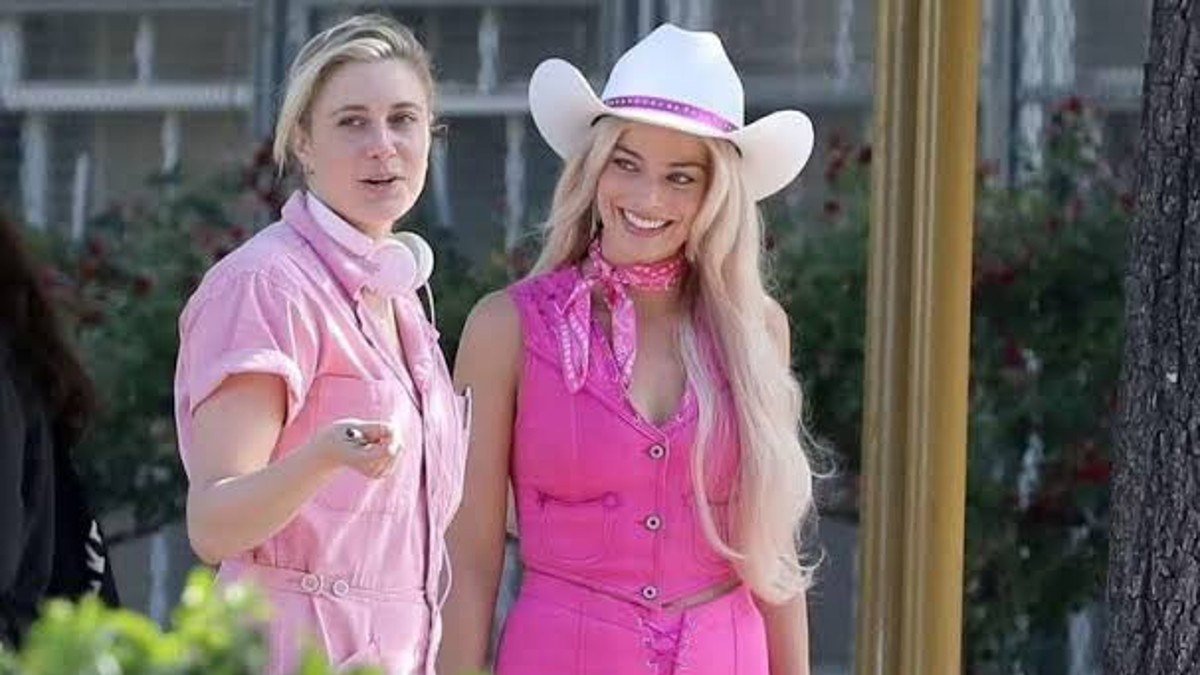
Barbie has fun imagining, with a heavy touch of satire, a world unlike our own, where for once women are in power and can do anything they want to: Barbieland. In this magical world, men are handsome and kind but useless and powerless. But this caricatural and provocative representation is only a repartee based on classic movie images: the brainless blonde, the woman who’s just an accessory.
By confronting Barbieland with the real world, the movie immerses us in Barbie’s own gaze, that of a young girl who grows up and discovers a world that belongs to men, where gazes on the street weigh heavy and femininity is an obstacle. As she continues on her quest, her existential crisis intensifies when she discovers the complexity of human feeling and the daily difficulty of being a woman. As America Ferrera says so well in the film: “It is literally impossible to be a woman. It’s too contradictory.” Even a simple doll, supposed to represent her, is not spared.
Moreover, the character of Ken, who represents men, is far from superficial: he also questions the excesses of patriarchy and the injunctions of manhood and virility, finally concluding that the ideal solution is neither patriarchy nor matriarchy—each gender must instead free itself of all societal expectation.
Finally, through her female gaze, Barbie takes pleasure in sweeping away cliches from everyday life and offers nods to her female audience: the damsel in distress, the girl who becomes beautiful as soon as Ken takes off her glasses, mansplaining the Godfather, even the depressed girl who takes refuge in Jane Austen movies… and it’s a treat!
In short: Barbie is the first blockbuster imagined from a female point of view. And it is a resounding success.
Feminism just for show?
Ever since Barbie came out, reactions have gone off in all directions. Between the bans for “attacking morality” in several countries such as Algeria, propaganda denunciations, and endless marketing, the phenomenal success the film has garnered has been viewed as frightening and suspicious.
Because yes, for a mainstream movie, Barbie does juggle thorny topics: feminism and patriarchy. On one hand, there are those who cry wokeism and demonize the feminist agenda by calling it an “anti-man” film, and on the other, there are feminists who reject the subject of the movie and see it as disguised advertising, turning feminism into a marketing tool—too light, too elementary.
Is Barbie a feminist? She doesn’t claim to: she doesn’t solve issues of feminism and gender equality, as she puts it so well.
But it remains a film that was written and produced by women, one that invites us to reflect on gender roles and that simply recounts the experience, the daily difficulty and lightness of being a woman (pink as a favorite color obviously remains debatable).
Are, or should, all female productions be feminist? Can we address the subject of women without claiming a feminist angle?
One thing is certain, given the success of the movie and of pop stars such as Taylor Swift—the conclusion is obvious: we need more women writers, directors, producers, composers, etc. who are able to take charge of storytelling and recount the world and human experience from a female point of view.