About us
  • it VO
  • fr Français
  • en English
  • ar العربية
No Result
View All Result
Medfeminiswiya - Mediterranean feminist media
  • On the move
  • In-depth
  • Files
  • Artistic Creations
  • Interviews
  • Opinions
  • World
Medfeminiswiya - Mediterranean feminist media
  • On the move
  • In-depth
  • Files
  • Artistic Creations
  • Interviews
  • Opinions
  • World
No Result
View All Result
Medfeminiswiya - Mediterranean feminist media
Home Artistic Creations

Literary journeys through the new female mythology… Portrait I: Cassandra

Federica Aracoby Federica Araco
9 January 2023
Literary journeys through the new female mythology…  Portrait I: Cassandra

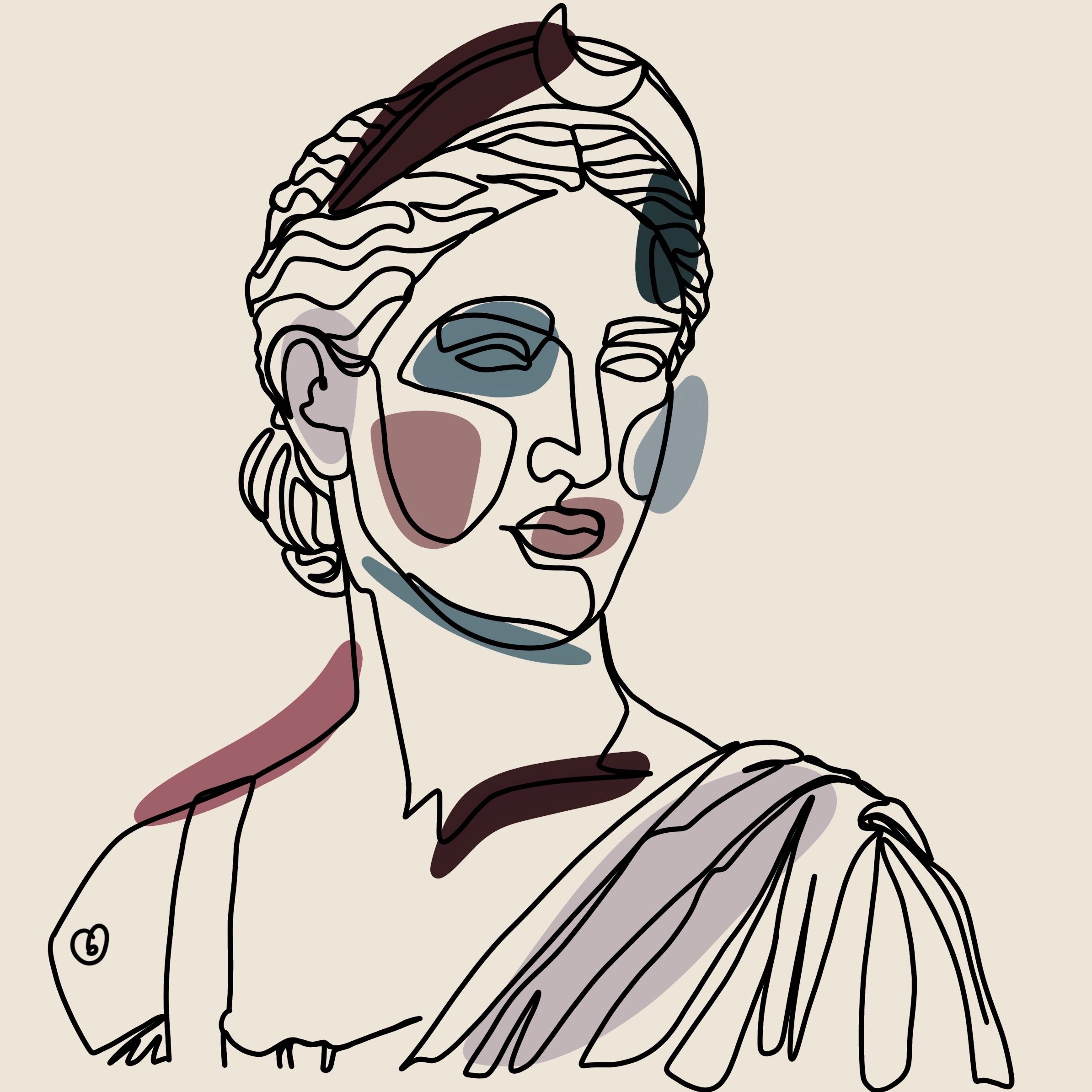
Some contemporary authors now rewrite great Latin and Greek classic from the point of view of Dido, Circe, Penelope, Calypso, Medea, Cassandra, finally promoted to the rank of protagonists. Irreverent, ironic and profoundly daring, their novels reverse the patriarchal perspective, providing us with a “new antiquity”.

This post is also available in: Français (French) العربية (Arabic)

The women depicted in the great Latin and Greek classics are secondary characters who evolve silently in the background of the heroic deeds of valiant warriors and powerful and capricious gods. Both marginal and submissive, their beauty can nonetheless trigger bloody wars and they are constantly victims of kidnappings and male violence.

Some contemporary authors now rewrite these stories from the point of view of Dido, Circe, Penelope, Calypso, Medea, Cassandra, finally promoted to the rank of protagonists. Irreverent, ironic and profoundly daring, their novels reverse the patriarchal perspective, providing us with a “new antiquity”.

The Trojan Seer

The first to try this successful literary experiment was the German writer Christa Wolf who published Cassandra (1) in 1983, now translated into many languages. In monologue form, this courageous novel gives voice to the famous Trojan seer, daughter of the rulers Hecuba and Priam and priestess of Apollo.  Having refused to unite with him, she is given the gift of predicting the future, but at the same time is condemned to be disbelieved.

Having become Agamemnon’s slave after the fall of his city, she finds herself in Mycenae, waiting silently in front of the imposing Lion’s Gate with her son and her old nurse, surrounded by a crowd of passers-by. As the Achaean king dies at the hands of his wife Clytemnestra, intent on avenging her daughter’s sacrifice, the beautiful and unhappy priestess gives a long account, laced with repentance, anguish and torment.

Proceeding backwards through associations, she retraces her ten years of siege, her romantic and impossible love with Aeneas, her erotic encounters with the priest Pantoo, up to her carefree youth in her father’s palace. Her words reveal a complex and deeply human character who constantly questions the position of women in a misogynistic and patriarchal society.

This is how the young Trojan woman becomes a metaphor for what happens to many women in the world: mindful and visionary, she is unheard and is often mocked, and eventually marginalized. Yet she remains true to herself by courageously opposing the intrigues of the royal palace that leads to her imprisonment.

Once free, she becomes a dissident by joining the women of the “Scamander community” who live in caves dug along the river and secretly celebrate the cult of the ancient and mysterious goddess Cybele, the great Mother. The only man admitted to this “revolutionary gynoecium” is the wise Anchises, Aeneas’ old father, with whom the officiating women discuss with each other, dreaming of a peaceful and egalitarian society where everyone could finally be free.

[1] Christa Wolf, Cassandre, Stock, Paris, 2003.
Tags: Literary journeysPériples littéraires
Federica Araco

Federica Araco

Federica Araco is an Italian journalist who has worked as an editor and translator for the Italian version of the online magazine Babelmed for 9 years. She was editor-in-chief of the quarterly "The Trip Magazine" dedicated to travel and photography. Federica has contributions in several other Italian magazines as well, such as: LiMes, Internazionale, and Left. The stories and topics she covers are often related to gender, feminism, multiculturalism, social exclusion, migration issues, the environment and sustainable development. Since 2016, she has started publishing travel photo essays on her personal blog.

Leave a Reply Cancel reply

Your email address will not be published. Required fields are marked *

J'accepte les termes et conditions et la Politique de confidentialité .

Related articles

Related posts

“La Malédiction (1)”, a theatrical adaptation of King Kong Theory bursting with Tunisian rage
Artistic Creations

“La Malédiction (1)”, a theatrical adaptation of King Kong Theory bursting with Tunisian rage

by Olfa Belhassine
3 October 2025

Related posts

Ramadan series – Sukkar and Yassar: The unforgivable mistakes women make – Syria
Artistic Creations

Ramadan series – Soap operas: A late introduction to addressing women’s issues – Lebanon

by Nourhanne Sharaf Eddiene
7 April 2024

JOIN OUR NEWSLETTER

Original content. Feminist journalism. Straight to your inbox.

    Related posts

    The “Qardoun”: an ode to the resilience of women and sisterhood
    Artistic Creations

    The “Qardoun”: an ode to the resilience of women and sisterhood

    by Lina M.
    28 April 2021

    Related posts

    The “Qardoun”: an ode to the resilience of women and sisterhood
    Artistic Creations

    The “Qardoun”: an ode to the resilience of women and sisterhood

    by Lina M.
    28 April 2021

    Popular articles

    Thirty and single… so what?
    On the move

    Thirty and single… so what?

    by Pascale Sawma
    1 March 2022
    Israel to Palestinian journalists: Be silent… or else!
    In-depth

    Israel to Palestinian journalists: Be silent… or else!

    by Alaa Murrar
    29 November 2023
    Giving birth with an open womb or when Caesarean section becomes the norm in Egypt
    Abortion and SRHR

    Giving birth with an open womb or when Caesarean section becomes the norm in Egypt

    by Contributor with Medfeminiswiya
    27 September 2021
    On the move
    In-depth
    Files
    Artistic Creations
    Interviews
    Opinions
    World
    On the move
    In-depth
    Files
    Artistic Creations
    Interviews
    Opinions
    World

    Medfeminiswiya is a feminist network that brings together women journalists working in the fields of media and content production in the Mediterranean region.

    • About us
    • Country Context
    • Our community
    • Become a member
    • Our partners
    • Editorial charter
    • Disclaimer

    Follow us :

    JOIN OUR NEWSLETTER

    Original content. Feminist journalism. Straight to your inbox.

      © 2026 Medfeminiswiya – Mediterranean Network for Feminist Information

      Back to top

      Welcome Back!

      Login to your account below

      Forgotten Password?

      Retrieve your password

      Please enter your username or email address to reset your password.

      Log In

      Add New Playlist

      No Result
      View All Result
      • On the move
      • In-depth
      • Files
      • Artistic Creations
      • Interviews
      • Opinions
      • World
      • it VO
      • fr Français
      • en English
      • ar العربية

      © 2026 Medfeminiswiya - Mediterranean Network for Feminist Information

      Ce site n'utilise pas de cookies. This website does not use cookies. هذا الموقع لا يستخدم ملفات تعريف الارتباط.