Cette publication est également disponible en : Français (French) العربية (Arabic)
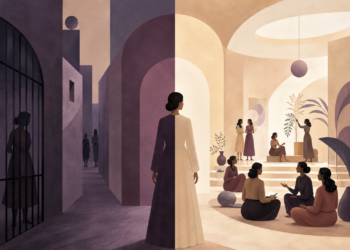
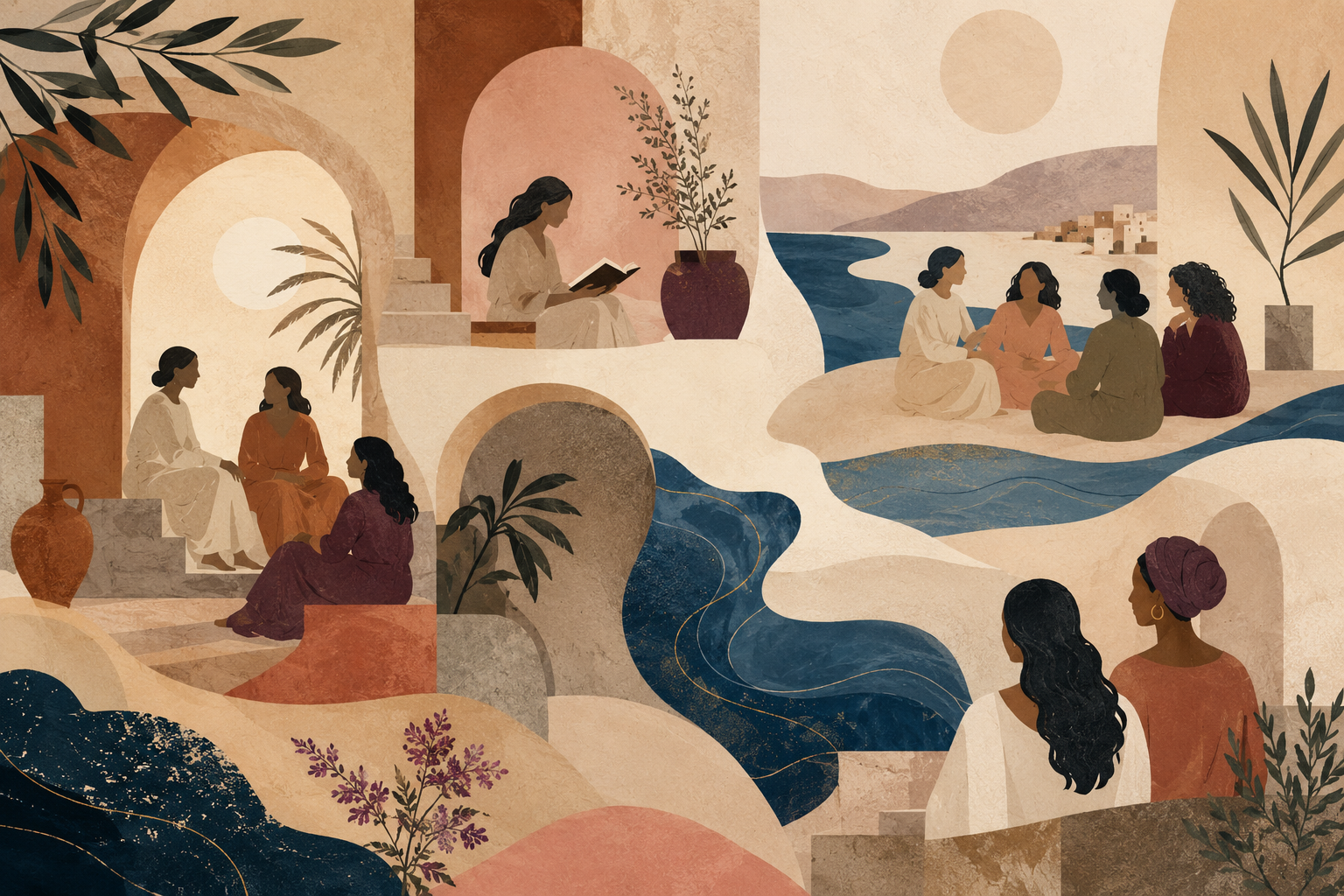
For the past decade, women-only spaces have been multiplying around the world, including around the Mediterranean, a trend particularly driven by the #MeToo movement. It continues to broaden its horizons and expand into increasingly diverse areas, offering women the opportunity to reclaim spaces traditionally occupied by men or to create spaces of their own where they are able to express themselves freely.
Sheltered from judgment and gender or body-related pressures, they find in these spaces an environment conducive to confidence, solidarity, and self-affirmation. These spaces also allow them to escape, for the short time they are together, from sexist remarks, intrusive behavior, and the male gaze—the masculine perspective that continues to shape how women are perceived and even how they perceive themselves.
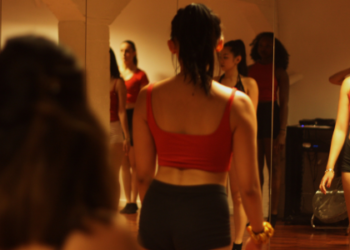
As these articles by Medfeminiswiya’s correspondents show, the ways that single-sex spaces come to emerge are largely dependent on the different social, political, and cultural contexts involved. They range from women-only parties in Italy and sporting activities in France and Gaza, to a book club in Algeria, a home-based solidarity space for Alawite women in a Syria still plagued by ethnic conflicts, and a women-only café in Egypt. Despite their differences, all these initiatives share the same goal: to create spaces of freedom, mutual support, and empowerment.
But the practice of opting for single-sex spaces also continues to spark heated debates that have been widely communicated on social media. Those in opposition, often men but also some feminists, see them as a form of exclusion or an attack on the principle of equality. According to them, women-only spaces risk reproducing the very divisions that they claim to combat. Conversely, those who are for women-only spaces point out that these spaces are most often temporary and respond to a specific need: to allow women to speak freely, to strengthen their self-confidence, to share common experiences, and to build forms of self-empowerment. For them, single-sex spaces are not an end in themselves, but a tool in the service of equality.
Chosen single-sex spaces are not intended to exclude, but to create the necessary conditions for women, long socialized to silence or self-censorship, to regain confidence in their voices and fully enjoy their right to occupy public space.
The testimony of Algerian feminist journalist Amel Hadjadj powerfully illustrates this reality. Recalling her experience within the feminist collective Sawt Nssa (Voices of Women), which she joined in 2013, she writes:
“Above all, I understood why, until then, my voice trembled when I spoke in film clubs, student debates, or mixed activist spaces. For a long time, I had believed I lacked the ability. In hindsight, I understood that there is a difference between lacking confidence and having grown up in a society where some voices are considered more legitimate than others.”
Her testimony reminds us that chosen single-sex spaces are not intended to exclude, but to create the necessary conditions for women, long socialized to silence or self-censorship, to regain confidence in their voices and fully enjoy their right to occupy public space.