Cette publication est également disponible en : Français (French) العربية (Arabic)
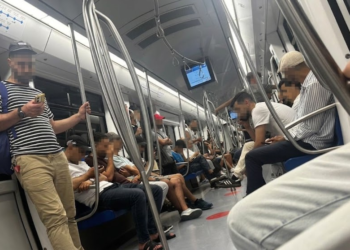
Hundreds of popular cafés, frequented almost exclusively by men, line the streets of Matareya, one of Cairo’s most densely populated neighborhoods. Around 650,000 people live within an inhabited area of just 4.14 square kilometers.
These cafés occupy street corners and squares and have become fixed gathering places for men who sit in every nook, sipping tea, watching football matches, or simply passing the time in conversations that stretch until midnight. Women, on the other hand, have always been mere passersby, allowed to move past, not linger. While sitting in mixed-gender cafés has become commonplace in neighborhoods only a few kilometers from Matareya, like Heliopolis, finding a women-only café here was virtually impossible until Sarah Essam decided to break that rule five years ago.
The first—and only—women’s café in Matareya
When 33-year-old Sarah Essam opened a café on Ezzat Pasha Street five years ago, it was more than a small business called Perfecto.
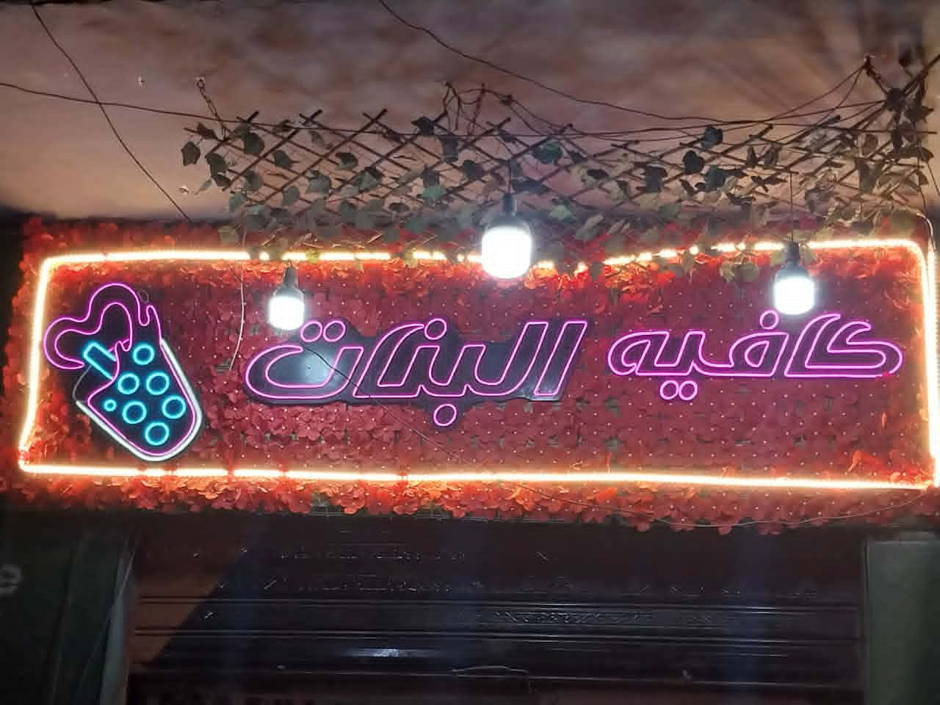
This place felt like a window had finally been cracked open in a wall that had been closed off for a long time. It was not long before the commercial name faded into the background and locals simply began calling it the “Girls’ Café,” the first popular café dedicated exclusively to women in Matareya.
The idea was born spontaneously from Sarah’s own personal experience, without any market research or prior economic planning. Like many women, Sarah felt that sitting in popular cafés was not a right available to women, and that a woman’s presence there always required justification. When she decided to challenge this norm, people didn’t question the quality of her coffee or the café’s prospects for success; they questioned women’s right to have a space of their own. Speaking to Medfeminiswiya, she recalls, “When I first opened the café, I was attacked and ridiculed online. One man wrote to me: ‘So now you want to be equal to us?’”
Social customs in working-class neighborhoods have reinforced the perception among men that public spaces are a male privilege, not a shared human right.
Dr. Reda Khallaf, Professor of Contemporary Philosophy and head of the Department of Philosophy at the Faculty of Arts, Menofia University, describes popular cafés as “male kingdoms” where men monopolize public space while women are confined to other spaces deemed more socially appropriate for them. “If a woman sits in a café, men see her as rebellious, as if they alone have the authority to grant women the freedom to exist in public,” she says.
Khallaf argues that for many years society has linked a woman’s respectability to her withdrawal from the public sphere while associating a man’s masculinity to his constant presence in public spaces.
A space where women can speak freely
Perfecto Café was the first place where 22-year-old Rana Mohamed, a vocational diploma graduate, felt safe after a mental health crisis that had driven her into isolation and depression.
“I was depressed and didn’t know where to go to just sit and cry, who I could talk to about my problems, who could advise and comfort me,” Rana shares with Medfeminiswiya. “When I came into the café, I could cry freely, and the girls were incredibly supportive.” She adds that what she found there was more than just somewhere to sit, but a sense of acceptance and care she had long been missing.
The café offers women a high degree of privacy and freedom, especially for those who smoke.
Zainab Mohammed, a 35-year-old shipping company manager, recounts how she had previously tried sitting in mixed-gender cafés but was often met with looks of disgust and inappropriate comments from men whenever she smoked. Here, she says, she feels comfortable for the first time, not being watched. “Here, I can smoke freely. Even my own family is against the idea of women smoking; they see it as moral depravity,” she says.
The café has its own rules regarding smoking. It does not serve shisha (hookah) to girls under the age of 18. The café is open daily, from 9:00 AM until midnight. During the daytime, it becomes a refuge for schoolgirls who study there or wait for private tutoring sessions, away from the street and the harassment they might encounter.
It also provides a comfortable waiting space for mothers waiting for their children to finish school, offering affordable services and recreational activities including dominoes, card games, Uno, PlayStation consoles, and even a children’s corner.
A woman sitting either in a mixed café or a women-only café strengthens her sense of belonging and her right to occupy public space. It affirms her right to converse with others and to relieve the pressures of life away from social surveillance.
“This place is a secret women’s club”
“I’ve been working here for four years,” says Rana Sayed, 24. “I think of this place as a secret women’s club. Women can talk freely, cry freely. Anything as long as they feel safe.”
Her testimony aligns with the observations of Dr. Gihan El-Nemrisi, a professor of psychology at Al-Azhar University, who explains to Medfeminiswiya that many women feel uneasy in mixed cafés because of constant social scrutiny, fears of harassment, and the perception that popular cafés are predominantly male spaces, making women feel unwelcome. “Some opposition to these cafés stems, in part, from fears of women’s growing independence, which is perceived as a threat to male dominance,” she says.
Figures cited in reports attributed to Egypt’s Central Agency for Public Mobilization and Statistics (CAPMAS) illustrate the immense scale of café culture in Egypt. According to these reports, the country has more than two million cafés, with approximately 150,000 located in Cairo alone. The reports also estimate that Egyptians spend around 40 billion Egyptian pounds (approximately USD 815 million) annually on cigarettes and shisha. While men make up the overwhelming majority of patrons in these establishments, women-only cafés represent an attempt to restore balance by providing women with a social space where they can exercise the same rights that men have enjoyed for decades.