About us
  • it VO
  • fr Français
  • en English
  • ar العربية
No Result
View All Result
Medfeminiswiya - Mediterranean feminist media
  • On the move
  • In-depth
  • Files
  • Artistic Creations
  • Interviews
  • Opinion
  • World
Medfeminiswiya - Mediterranean feminist media
  • On the move
  • In-depth
  • Files
  • Artistic Creations
  • Interviews
  • Opinion
  • World
No Result
View All Result
Medfeminiswiya - Mediterranean feminist media
Home Files Voluntarily women-only spaces

Voluntarily women-only spaces for women’s emancipation

Olfa Belhassineby Olfa Belhassine
15 July 2026
Voluntarily women-only spaces for women’s emancipation

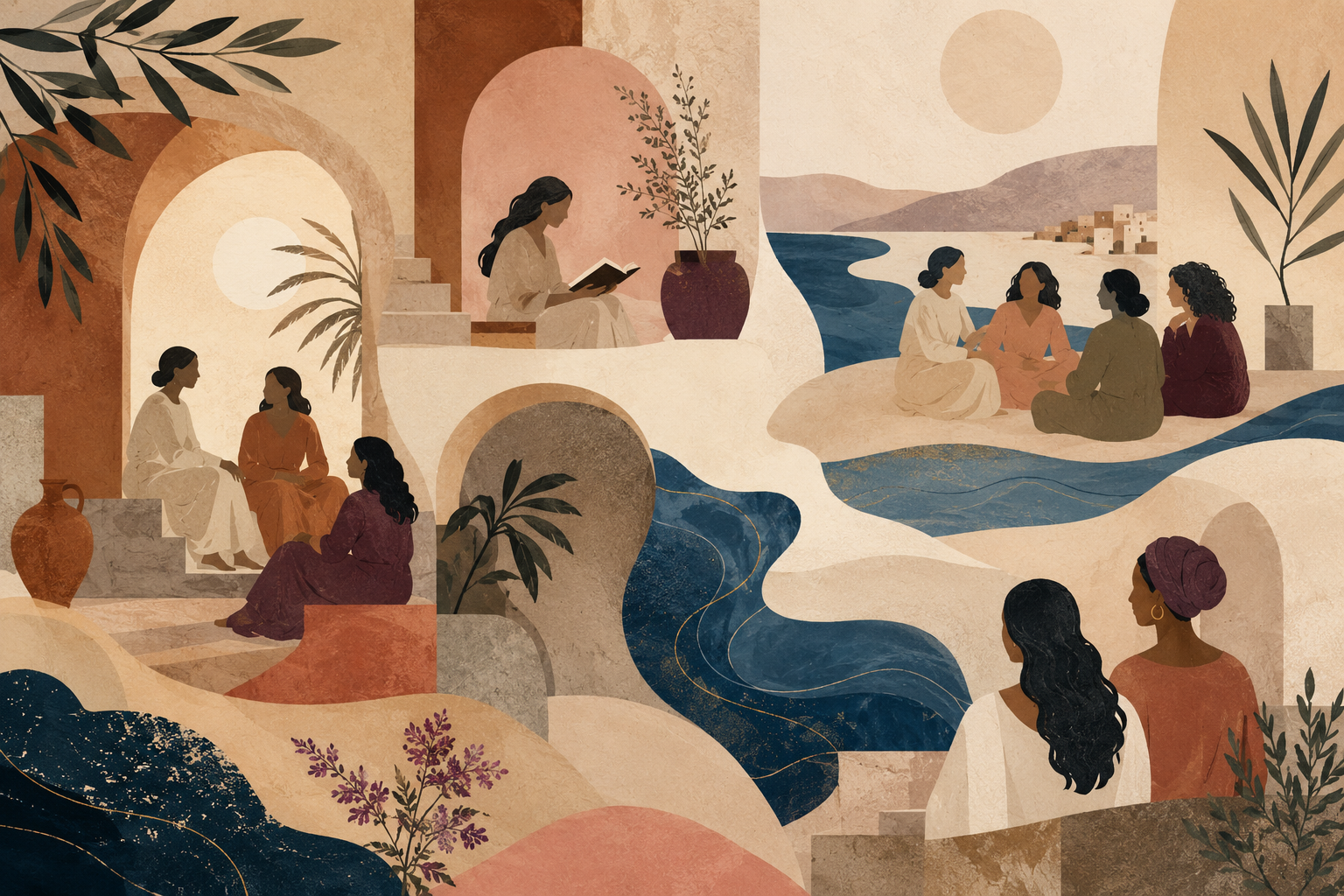
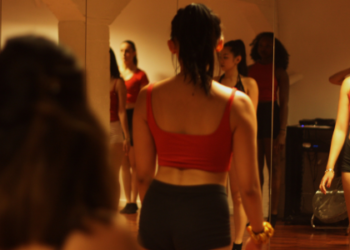
This illustration was created with the assistance of AI.

For the past decade, women-only spaces have been multiplying around the world, including around the Mediterranean, a trend particularly driven by the #MeToo movement. It continues to broaden its horizons and expand into increasingly diverse areas, offering women the opportunity to reclaim spaces traditionally occupied by men or to create spaces of their own where they are able to express themselves freely.

This post is also available in: Français (French) العربية (Arabic)

Sheltered from judgment and gender or body-related pressures, they find in these spaces an environment conducive to confidence, solidarity, and self-affirmation. These spaces also allow them to escape, for the short time they are together, from sexist remarks, intrusive behavior, and the male gaze—the masculine perspective that continues to shape how women are perceived and even how they perceive themselves.

As these articles by Medfeminiswiya’s correspondents show, the ways that single-sex spaces come to emerge are largely dependent on the different social, political, and cultural contexts involved. They range from women-only parties in Italy and sporting activities in France and Gaza, to a book club in Algeria, a home-based solidarity space for Alawite women in a Syria still plagued by ethnic conflicts, and a women-only café in Egypt. Despite their differences, all these initiatives share the same goal: to create spaces of freedom, mutual support, and empowerment.

But the practice of opting for single-sex spaces also continues to spark heated debates that have been widely communicated on social media. Those in opposition, often men but also some feminists, see them as a form of exclusion or an attack on the principle of equality. According to them, women-only spaces risk reproducing the very divisions that they claim to combat. Conversely, those who are for women-only spaces point out that these spaces are most often temporary and respond to a specific need: to allow women to speak freely, to strengthen their self-confidence, to share common experiences, and to build forms of self-empowerment. For them, single-sex spaces are not an end in themselves, but a tool in the service of equality.

Chosen single-sex spaces are not intended to exclude, but to create the necessary conditions for women, long socialized to silence or self-censorship, to regain confidence in their voices and fully enjoy their right to occupy public space.
The testimony of Algerian feminist journalist Amel Hadjadj powerfully illustrates this reality. Recalling her experience within the feminist collective Sawt Nssa (Voices of Women), which she joined in 2013, she writes:

“Above all, I understood why, until then, my voice trembled when I spoke in film clubs, student debates, or mixed activist spaces. For a long time, I had believed I lacked the ability. In hindsight, I understood that there is a difference between lacking confidence and having grown up in a society where some voices are considered more legitimate than others.”

Her testimony reminds us that chosen single-sex spaces are not intended to exclude, but to create the necessary conditions for women, long socialized to silence or self-censorship, to regain confidence in their voices and fully enjoy their right to occupy public space.

Tags: Voluntarily women-only spaces
Olfa Belhassine

Olfa Belhassine

Olfa Belhassine is a Tunisian journalist who worked with the Tunisian daily “La Presse” since 1990. After the 2011 protests, her articles started appearing in “Libération”, “Le Monde” and “Courrier International”, a testament to her extensive experience as a journalist reporting from Tunisia during President Ben Ali's rule and after his fall. In 2013, Olfa was awarded the first journalism prize of the “Center of Arab Women” for her investigative work on customary marriage in Tunisia, published in “La Presse.” Olfa has also been corresponding since 2015 for the JusticeInfo.net, a website specializing in transitional justice around the world. Olfa Belhassone and Hedia Barkat have published a book titled 'Ces nouveaux mots qui font la Tunisie' (These new words that make Tunisia), providing an in-depth exploration of the political transition in Tunisia after the revolution.

Leave a Reply Cancel reply

Your email address will not be published. Required fields are marked *

J'accepte les termes et conditions et la Politique de confidentialité .

Related articles

Related posts

A group of female students in Paris launches women-only sports activities
Files

A group of female students in Paris launches women-only sports activities

by Salma Matri
15 July 2026

Related posts

Tunisian women journalists face harassment by Ennahdha members
In-depth

Tunisian women journalists face harassment by Ennahdha members

by Olfa Belhassine
3 May 2022

JOIN OUR NEWSLETTER

Original content. Feminist journalism. Straight to your inbox.

    Related posts

    Show me how you care: Birth control, is it (a) right?
    Files

    Show me how you care: Birth control, is it (a) right?

    by Caline Nasrallah
    27 September 2021

    Related posts

    Giving birth with an open womb or when Caesarean section becomes the norm in Egypt
    Abortion and SRHR

    Giving birth with an open womb or when Caesarean section becomes the norm in Egypt

    by Contributor with Medfeminiswiya
    27 September 2021

    Popular articles

    Thirty and single… so what?
    On the move

    Thirty and single… so what?

    by Pascale Sawma
    1 March 2022
    Israel to Palestinian journalists: Be silent… or else!
    In-depth

    Israel to Palestinian journalists: Be silent… or else!

    by Alaa Murrar
    29 November 2023
    Giving birth with an open womb or when Caesarean section becomes the norm in Egypt
    Abortion and SRHR

    Giving birth with an open womb or when Caesarean section becomes the norm in Egypt

    by Contributor with Medfeminiswiya
    27 September 2021
    On the move
    In-depth
    Files
    Artistic Creations
    Interviews
    Opinions
    World
    On the move
    In-depth
    Files
    Artistic Creations
    Interviews
    Opinions
    World

    Medfeminiswiya is a feminist network that brings together women journalists working in the fields of media and content production in the Mediterranean region.

    • About us
    • Country context
    • Our community
    • Become a member
    • Our partners
    • Editorial charter
    • Disclaimer

    Follow us :

    JOIN OUR NEWSLETTER

    Original content. Feminist journalism. Straight to your inbox.

      © 2026 Medfeminiswiya – Mediterranean Network for Feminist Information

      Back to top

      Welcome Back!

      Login to your account below

      Forgotten Password?

      Retrieve your password

      Please enter your username or email address to reset your password.

      Log In

      Add New Playlist

      No Result
      View All Result
      • On the move
      • In-depth
      • Files
      • Artistic Creations
      • Interviews
      • Opinion
      • World
      • it VO
      • fr Français
      • en English
      • ar العربية

      © 2026 Medfeminiswiya - Mediterranean Network for Feminist Information

      Ce site n'utilise pas de cookies. This website does not use cookies. هذا الموقع لا يستخدم ملفات تعريف الارتباط.