Cette publication est également disponible en : Français (French) العربية (Arabic)
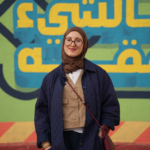
Saturday evening, June 6. Only a few minutes left. Aya Delleci sits nervously in front of her laptop, checking the meeting link one last time. For two hours, she has adjusted slides, replied to messages, and wondered whether anyone would show up to the first session of her latest project: The Saturday Club.
Launched on Instagram in late May, the online women-only English-speaking club brings together Algerian women from across the country each week. With eight to 12 active members per session, it offers women a space to discuss personal and social issues while practicing English.
“I’ve really been searching for something like this, a space that is both female and educational. I couldn’t find it, so I decided to make one myself,” a 23-year-old self-taught illustrator, artist, and graphic designer based in Oran.
The need for a women-only space
The project grew out of Delleci’s own experiences in mixed gender speaking clubs. She traces the idea back to a character design workshop at the French Institute of Oran in the winter of 2025, where men dominated the discussion while many of the women remained silent.
“Men don’t have social anxiety in those settings, not like women do,” she emphasizes. “And they don’t even give women the chance to get a word in, they’re so busy taking up all the space. That’s why I thought a women-only club could be a good place to start for women who do have social anxiety, who aren’t used to speaking in public.”
For Chaima H., a 25-year-old speech-language pathologist living in Constantine, this was her first experience with a speaking club. The women-only format is what convinced her to sign up. “There are a lot of things that I wouldn’t share if there were men in the club,” she says. “I already felt more comfortable, safer expressing myself.”
Chaima works as a community manager on a team of women with one male colleague, and she knows from experience that interruptions often shape who gets heard. “[My male colleague] already talks way more than we do,” she explains. “He interrupts us a lot […] it’s like he doesn’t respect the fact that we’re talking. I don’t think that would create a very healthy dynamic in a club like this.”
What both women describe echoes what has become known as manterrupting, a term popularized by The New York Times editor Jessica Bennett in 2015 to describe “the unnecessary interruption of women by men,” leading women like Delleci to create their own spaces.
More than a speaking club
While The Saturday Club is growing more and more into a close-knit community, its first session got off to a hesitant start. Eight women joined after discovering the project on Instagram. Technical issues forced the group to switch platforms before they could even introduce themselves. And then silence followed, because no one wanted to go first. Delleci broke the ice with a game of two truths and a lie before gently inviting each participant to introduce herself. “I try my best to encourage even the shy ones,” she says.
Cameras have remained off ever since, allowing participants to remain anonymous.
The turning point came a week later. On June 13, Algerian actress Meriem Amiar joined the club for what was meant to be a discussion of her show, El’Sardines. Instead, the conversation drifted toward friendships, family expectations, and the uncertainty of early adulthood. “I thought we were going to talk mostly about the series,” Delleci remembers. “But I loved how it went and how Meriem shared her perspectives on life. It was perfect.”
“I have really high expectations now. I think this is going to turn into a very supportive environment for us, somewhere we can really discuss the issues we face as women.”
For Chaima, that evening reshaped how she thinks of the group. “I have really high expectations now. I think this is going to turn into a very supportive environment for us, somewhere we can really discuss the issues we face as women.”
Subsequent sessions on Surviving Your Twenties, Volunteering Abroad 101, and the latest Therapy Session gradually transformed the club, making English practice secondary to mutual support.
“When Aya told me we’d be talking about philosophy, society, and women’s issues, I was sold,” Chaima says. “We don’t really get to talk about those topics very often.”
Between sessions, a group chat keeps the conversation going as members choose future topics, share resources, and check in on one another. More than a practical tool, the chat has become an extension of the club itself, a space where relationships continue to grow beyond the weekly meetings.
The rise of women-only spaces in Algeria
Beyond The Saturday Club, women-only spaces have become increasingly visible across Algeria, from gyms and swimming pools to cafés.
Khadidja Boussaïd, an urban sociologist and permanent researcher at the Centre for Research in Applied Economics for Development (CREAD), University of Algiers 2, specialized in gender inequalities in public spaces, states that the emergence of women-only spaces in Algeria is more reflective of economic and urban transformations than it is indicative of political demands for women’s empowerment: as urban women gained financial independence, she explains, they became a key consumer group, while decades of privatization shifted leisure spaces toward private operators.
“Like everywhere else in the world, women in Algeria face harassment […] and so, when it comes to spaces of leisure, there is a demand from women to be separated from men.”
Yet economics alone does not explain why these spaces resonate with women.
“Public space in Algeria, as in many places around the world, has largely been built by and for men,” Boussaïd continues. “Like everywhere else in the world, women in Algeria face harassment […] and so, when it comes to spaces of leisure, there is a demand from women to be separated from men.”
However, according to Boussaïd, these spaces remain “limited and occasional,” while access to them is still shaped by geography, class, and gender. Women living in large urban centers are more likely to find and be able to afford women-only cafés, gyms, or pools, while those from smaller cities or working-class backgrounds often have fewer, if any, options. “To access a women-only space, women often have to pay,” Boussaïd elaborates, pointing to the cost of gyms, private beaches, and pools. “Men, on the other hand, can transform a public space into a male-only space for free.”
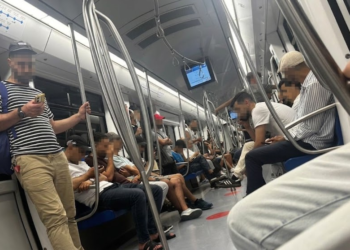
She uses traditional cafés as an example. Although women are not legally prohibited from entering them, many cafés remain socially and symbolically perceived as male spaces.
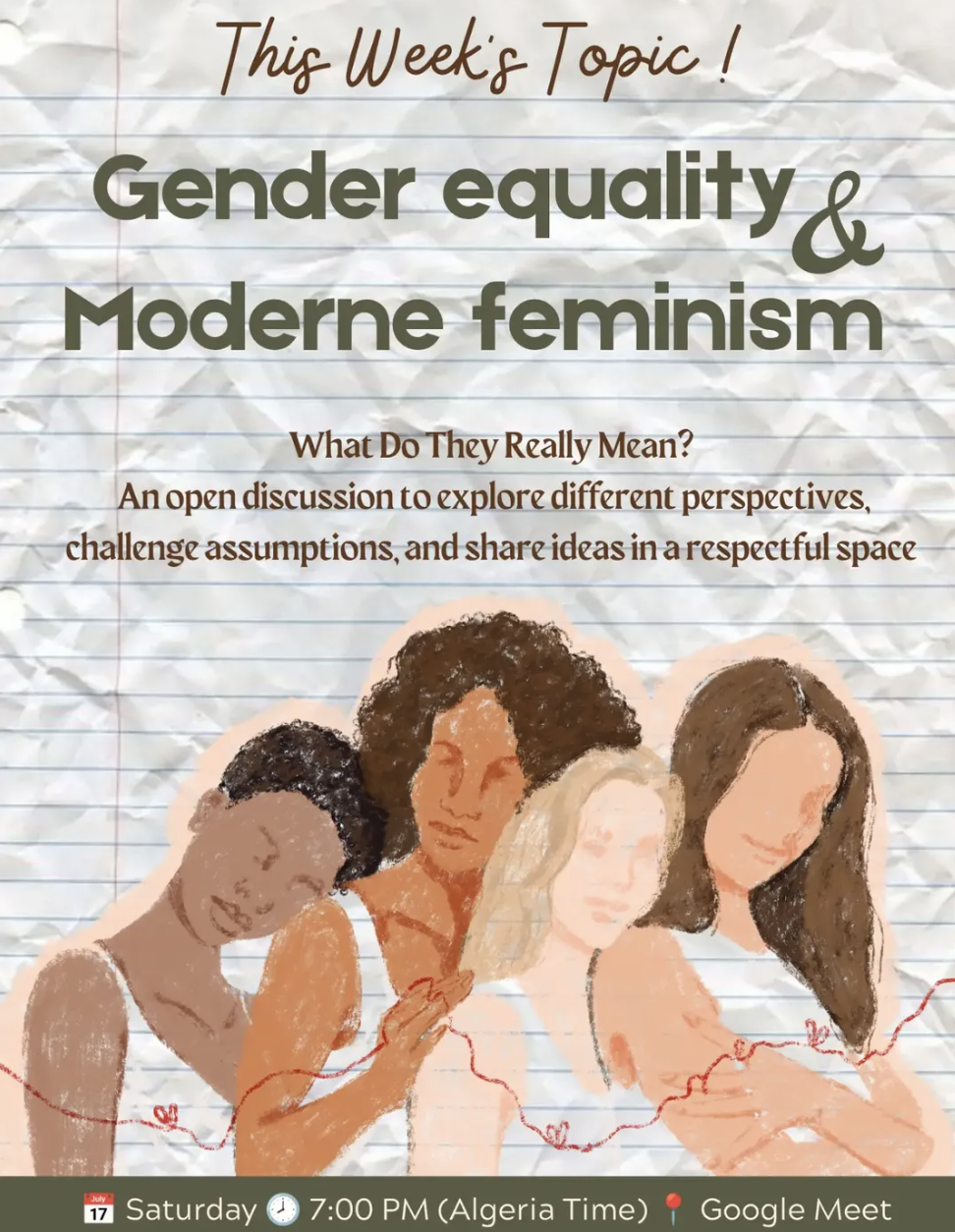
“For women to feel comfortable, they often have to go to restaurants where they pay 250 dinars (around €0.90) for a coffee,” she states. “A man, on the other hand, can buy the same coffee for 30 dinars (around €0.10) and sit wherever he wants—on a bench or on a step.”
And language clubs are no exception. Algiers-based Her Lingua, which has organized in-person English discussion groups since September 2025 around topics related to womanhood, charges around 500 dinars (about €1.80) per session. The Saturday Club, operating entirely online, reaches women beyond the capital for 800 dinars (about €2.80) a month, bringing together participants from Oran, Constantine, Laghouat, Tipaza, and other cities.
For Delleci, however, the fee has never been a condition for belonging. “Many girls have told me they didn’t have the money but would still like to join,” she shares. “And they’re all still with us. The fee isn’t meant to be restrictive; it’s just a way to support the project and keep it running.”