
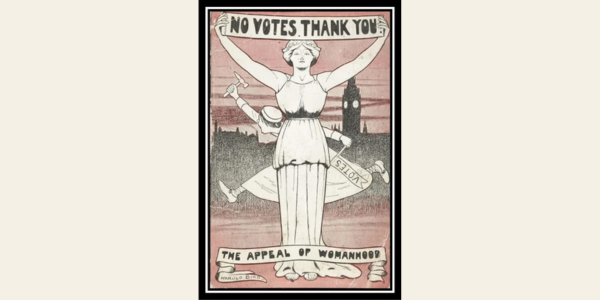
My mom has been telling me the story of Clara Campoamor and Victoria Kent for as long as I can remember: two of Spain’s first female deputies arguing in 1931 over whether women should be allowed to vote. I grew up hearing it as a story about democratic progress, but lately it has begun to sound more like a warning. In the past year, the idea that women cannot be trusted with the ballot because they vote the “wrong” way has become more visible in US political discourse. The logic is strikingly familiar. In 1931, the fear was that women would vote too conservative. Today, in some corners of the American right, the complaint is that they vote too liberal.
A debate from 1931
The setting was October 1, 1931, during the Second Spanish Republic. The heated debate that day was between Campoamor and Kent, who fiercely disagreed on when women should be allowed to vote. At a time when women could be elected as representatives to las Cortes, the Spanish parliament, they still could not vote themselves. A contradiction strange enough to make the point on its own.
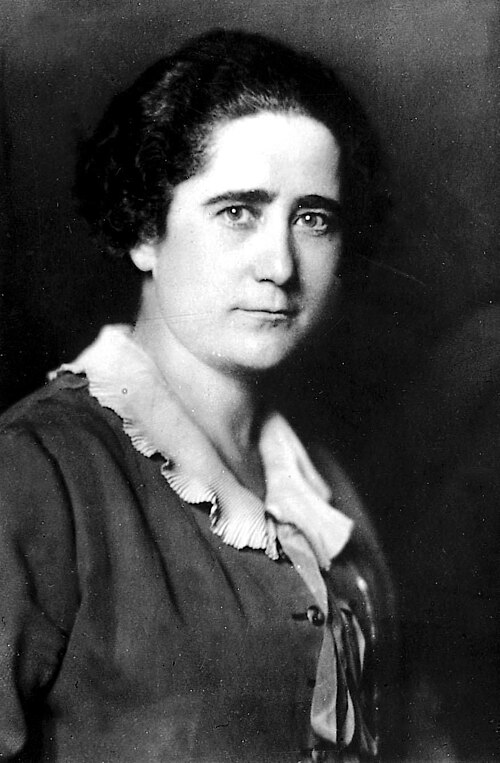
Campoamor, a lawyer who had worked her way from a seamstress’s bench to parliament, argued that giving women the vote was an ethical obligation, not a privilege to be handed out gradually. Spanish women had already earned full political citizenship through their role in building the Republic; to her, there was no justification for making them wait.
Kent, also a lawyer, argued that Spanish women were not yet ready. In her view, low literacy, the influence of the Catholic Church, and a lack of political education meant that many women’s votes would be shaped by their husbands and priests rather than their own judgment. She feared immediate enfranchisement would strengthen conservative and anti-Republican forces and wanted the vote delayed until women had had time to absorb the Republic’s secular values.
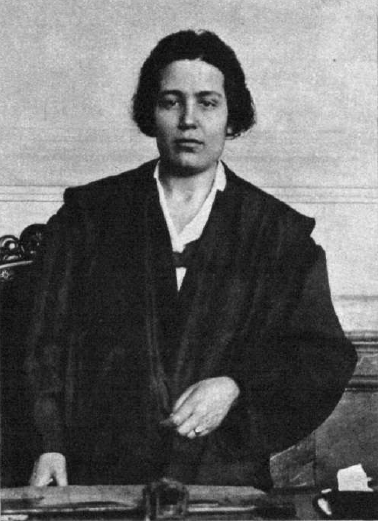
Strip away the specifics and the gist was this: women would vote too conservative.
It was a story with a happy ending, at least for a while. The vote passed 161 to 121, and women voted in a national election for the first time in 1933. But the Republic’s conservative coalition won that election, and, almost immediately, the result was pinned on women: their votes, critics argued, were the reason conservative parties had gained ground – proof that Kent had been right all along.
But that is a tidier story than the historical record allows. The left went into the 1933 election divided, and historians have challenged the idea that women’s votes can explain the conservative victory on their own. In 1936, with the left reunited in the Popular Front, women remained enfranchised and the left returned to power. It turned out to be politics as usual.
Campoamor herself made much the same argument afterward. Changes in government, she maintained, had to do with factors such as the unity or disunity of political parties, not with some inherent political disposition, conservative or liberal, belonging to women as a class. Women, like anyone else, responded to political circumstances rather than voting out of some fixed naivety, irrationality, or susceptibility to brainwashing.
Changes in government, she maintained, had to do with factors such as the unity or disunity of political parties, not with some inherent political disposition, conservative or liberal, belonging to women as a class.
The same argument, reversed
So imagine my surprise, scrolling through Instagram nearly a century later and finding that what would seem obvious still is not obvious at all. Influencers sell submission as a lifestyle, dressing up deference to a husband as a choice. Then there’s “repeal the 19th,” a slogan in the United States calling for the repeal of the constitutional amendment that, since 1920, bars denying the right to vote on the basis of sex.
Its justification often centers precisely on how women vote. After young women backed Democratic candidates by wide margins in November 2025, part of the online response was to blame their votes and revive calls to take the franchise away. Some women are joining in, though Kent would have recognized the impulse.
At Turning Point USA’s Women’s Leadership Summit in San Antonio, Texas, in June 2026, keynote speaker Savanna Stone advocated a “one vote per household” system in which, in a married heterosexual household, the husband would typically cast the ballot. Several women in the audience said they would be willing to give up their own vote in pursuit of a more conservative country.
What worries me is how easily an idea like this can spread on social media, where a provocative claim can travel far beyond the room in which it was made. The old anxiety resurfaces in a new outfit: different decade, different platform, opposite political direction, but the same underlying complaint: the way women vote.
Swap “conservative” for “liberal” and you have the 1931 Spanish debate all over again. The accusation has not changed, only the direction in which it is aimed. Whichever way women’s votes lean, someone is ready to declare that women, as a class, have voted wrong: too naive, too emotional, too easily led.
The old anxiety resurfaces in a new outfit: different decade, different platform, opposite political direction, but the same underlying complaint: the way women vote.
When the voter becomes the problem
This is happening at a time when a political gender divide among younger voters has become increasingly visible across several democracies, with young men tending to move further right than young women. Before the pandemic, the political trajectories of young men and women were often much closer.
Spain has its own version of this divide. The CIS (Centro de Investigaciones Sociológicas) barometer of March 2026 shows substantially stronger support for national conservative party Vox among young men aged 18 to 34 than among young women. At the same time, that gap appears to be narrowing, as more young women move toward the far right as well, including around issues such as immigration.
What is revealing is how these differences get discussed. Housing, precarious work, algorithms, and the pull of the manosphere are all offered as explanations for young men’s political choices, albeit with varying degrees of sympathy. Yet those explanations do not produce proposals to take men’s votes away.
That asymmetry points to something deeper about systemic sexism. The issue is not ultimately whether women vote left or right. It is whether women’s choices are recognized as political choices at all.
Disagreeing with how women vote is legitimate, just as it is legitimate to disagree with how men vote. But explaining women’s choices away as the products of emotional fragility, manipulation, or political immaturity refuses to recognize them as rational actors capable of making up their own minds. Men’s votes are criticized, mocked, and analyzed, but they are rarely treated as evidence that men, as a class, are not ready to vote or should have their ballots supervised. Women’s votes can still be treated as proof that women cannot be trusted to reason at all.
In 1931, the fear was that women would vote too far to the right. Nearly a century later, the complaint in some corners is that they vote too far to the left. The direction of the vote changes. The suspicion of the voter remains.