Cette publication est également disponible en : VO
A feminism without false choices
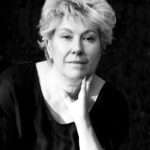
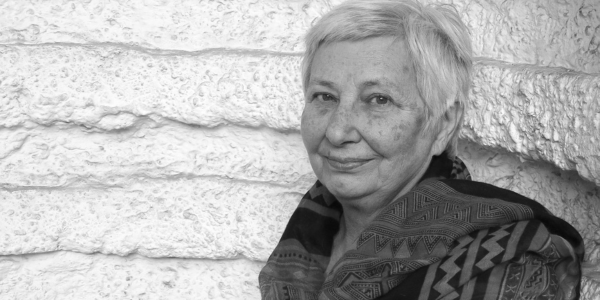
On August 9, Marieme Helie Lucas, Algerian sociologist, feminist, and activist for women’s rights and secularism, died after a long illness. She had held leadership positions in human rights groups since the 1980s. Together with Maryam Namazie, she co-sponsored the Centre for Secular Space and the Secular Conference, and was an authoritative reference point and guide for analyzing the risks posed by the left’s fascination with Islamist fundamentalism. She founded Women Living Under Muslim Laws and later Secularism Is a Women’s Issue.
Marieme refused to accept that fundamentalist movements could be defended simply because they opposed imperialism or Western powers. She challenged the left to oppose colonialism and imperialism while also confronting the religious right. She never accepted the false alternative of having to fight either racism or fundamentalism, instead of both at once.
She helped build an international feminist politics capable of confronting religious fundamentalism without capitulating to racism, and of defending universal rights without forgetting colonial history. She insisted that women could not be sacrificed on the altar of culture, community, religion, nationalism, or anti-imperialism. She challenged the assumption that anyone born into a Muslim family belonged to a homogeneous “Muslim community.”
Even the name “Women Living Under Muslim Laws,” rather than “Muslim women,” expressed a fundamental principle of her politics: place of birth and imposed laws do not determine what one believes, who one is, or who has the right to speak in one’s own name. The work of many of us, and of countless others, was inspired by her clarity of vision, her incisive analysis, her internationalism, and her fearless spirit.
Place of birth and imposed laws do not determine what one believes, who one is, or who has the right to speak in one’s own name.
Secularism as a feminist struggle
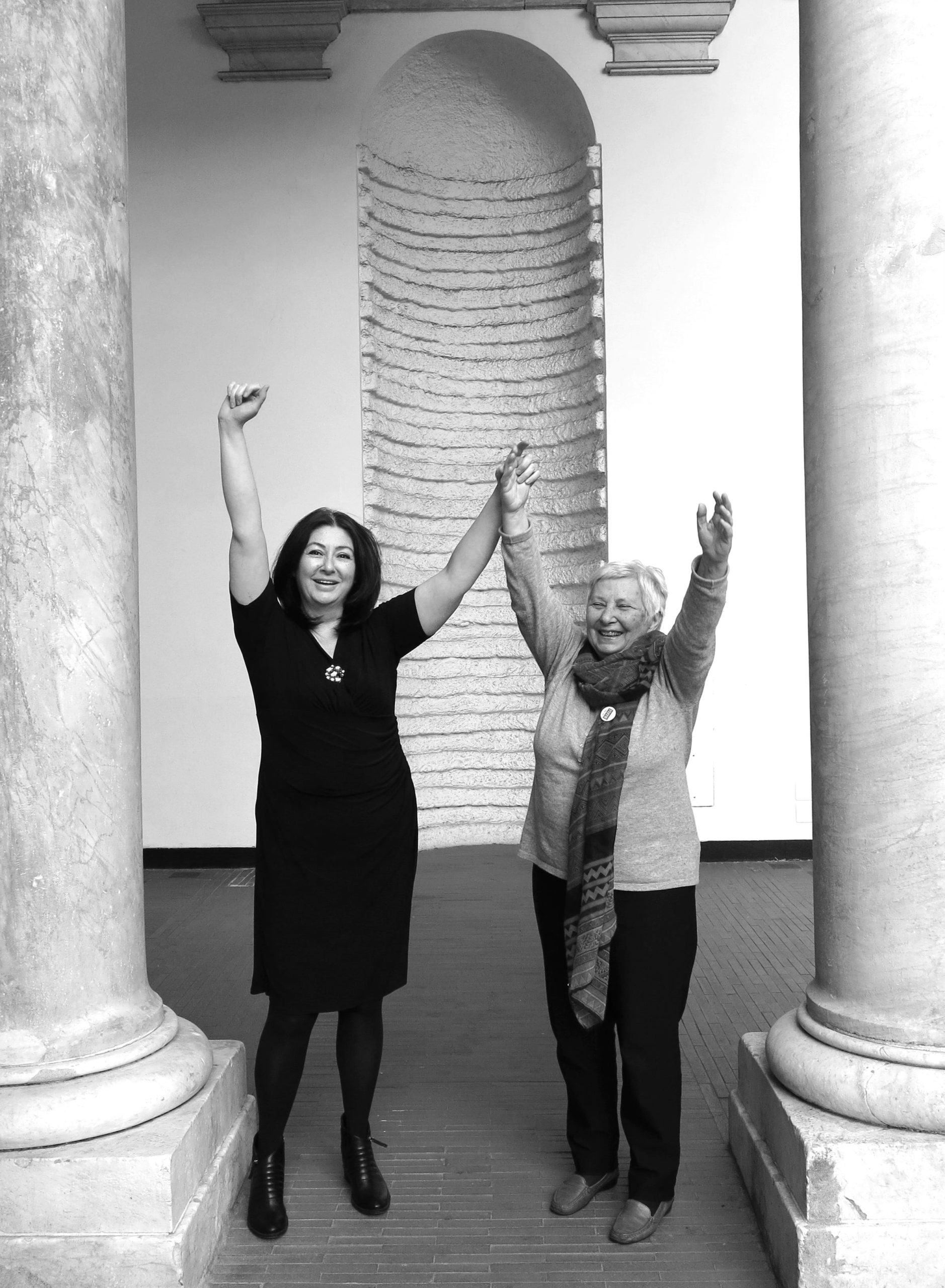
MAREA, a quarterly feminist magazine, was the only space in Italy that translated many of her rigorous interventions. We invited her to Genoa for the magazine’s 20th anniversary, and she was the central figure in the closing debate that concluded the week of meetings.
One of her contributions, which we published in Marea in 2016, has remained for me an essential map for finding one’s bearings and for defending and expanding secularism as an indispensable pillar of democracy, particularly for safeguarding women’s rights.
In the article, entitled “What Is Your Tribe?”, Marieme Helie Lucas wrote:
“In 1962, after seven years of bloody war that caused two million victims, Algeria won its independence from French colonization. Shortly after independence, some of us were introduced as Algerians to some left-wing intellectuals in Paris. who had supported our liberation movement.
To my great surprise, they insisted on knowing not only our religion (despite the fact that we were all atheists), but even, literally, our tribe of origin. It was impossible to accept that we did not identify with any religion. It was a shock and a revelation for me to see that, for those intellectuals, the citizenship of people from the ‘Third World’ was not enough: we had to bear signs of exoticism.
Many well-intentioned people, in some Muslim and non-Muslim contexts, in good faith go along with fundamentalists and their identity politics. Fundamentalism exists in various forms and varieties, which is why I prefer to speak of fundamentalisms (plural). They nevertheless have certain characteristics in common. In particular, a key element of their politics is the control of women.
This is the case with all religious fundamentalisms: we can see it with the Christian right in the United States, which spreads its vision of morality by murdering medical personnel who perform abortions. It is the case with Muslim fundamentalists, who promote apartheid between men and women in Iran, Sudan, Algeria, and Afghanistan. It is the case with the BJP (Bharatiya Janata Party) and the RSS (Rashtriya Swayamsevak Sangh), Hindu parties that promote sati (burning women alive on the funeral pyres of their deceased husbands). The list of religious fundamentalisms with anti-feminist positions and of their hatred toward women is long.
It was a shock and a revelation for me to see that, for those intellectuals, the citizenship of people from the ‘Third World’ was not enough: we had to bear signs of exoticism.
Moreover, we cannot isolate religious fundamentalisms from other forms of fundamentalism that do not focus on religion, but that together create ideological and political alliances, such as fundamentalisms based on ethnicity and culture—since fundamentalism is not a religious movement, as it claims to be.
By way of example, here is what the two principal Algerian fundamentalist leaders and founders of the FIS party declared, before the cancelled elections of December 1991 in Algeria, regarding their program and democracy: ‘I respect neither laws nor political parties that do not have the Quran. I throw them under my feet and trample them. These parties must leave the country; I will have them suppressed. We must be wary of those who claim that the concept of democracy exists in Islam. There is no democracy, since the sole source of power is Allah, through the Quran, and not the people. If the people vote against the law of God, it is nothing but blasphemy. In this case we must kill these unbelievers for the simple reason that they want to substitute their own authority for the authority of God.’”
Maryam Namazie and Pragna Patel, friends and collaborators of Marieme Helie Lucas, wrote of her as “our heroine, mentor, friend, and companion: we consider ourselves lucky to have been touched by her life.”