Cette publication est également disponible en : Français (French) العربية (Arabic)
The year was 2003. Amid the sound of gunfire in the village of Dishna, located north of Qena Governorate in southern Egypt, ten-year-old Safaa Asran trembled as she clutched her infant sister. Nearby, their mother ran barefoot over the dirt and gravel, frantically searching for her two daughters. Eventually, just as hope was fading, the mother finally found them, even as the bodies of those killed lay scattered on the roads.
Safaa Asran, born in 1993, eventually grew up, but that painful memory continued to haunt her whenever tribal fighting flared up again in the south.
Customary reconciliation sessions led by a woman, for the first time in Egypt
Customary reconciliation is a traditional mechanism for resolving disputes and feuds outside the formal court system. These reconciliation processes are based on the prevailing customs and traditions of a particular community and are overseen by figures who command considerable social respect and acceptance, known as “customary arbitrators” or “family elders.” They are particularly common in tribal societies and rural villages, and their continued use stems from their compatibility with the social structures of these communities and the relative speed with which settlements can be reached.
It is worth noting that Egypt’s official security authorities recognize these customary reconciliation sessions, coordinate with those organizing them, and provide security for the proceedings.
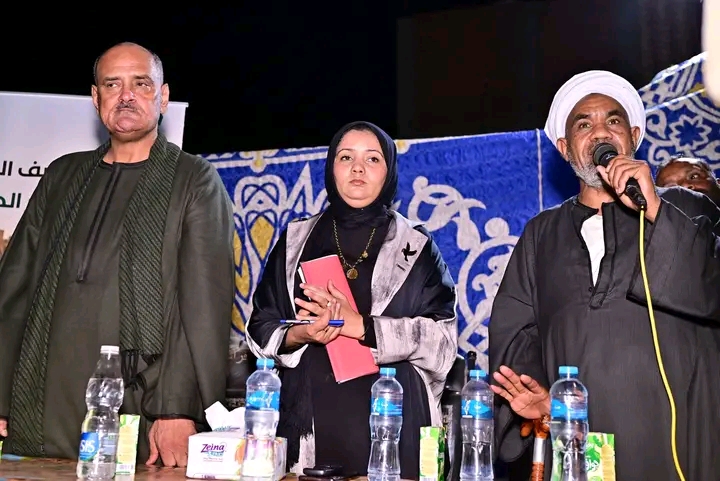
People in the villages of Upper Egypt had therefore long been accustomed to seeing elder family men, sheikhs, village mayors, and security officials gather in an attempt to resolve ongoing disputes. So they were taken aback when a young woman in her early twenties entered their assembly and stepped in to mediate, drawing looks of astonishment and disbelief.
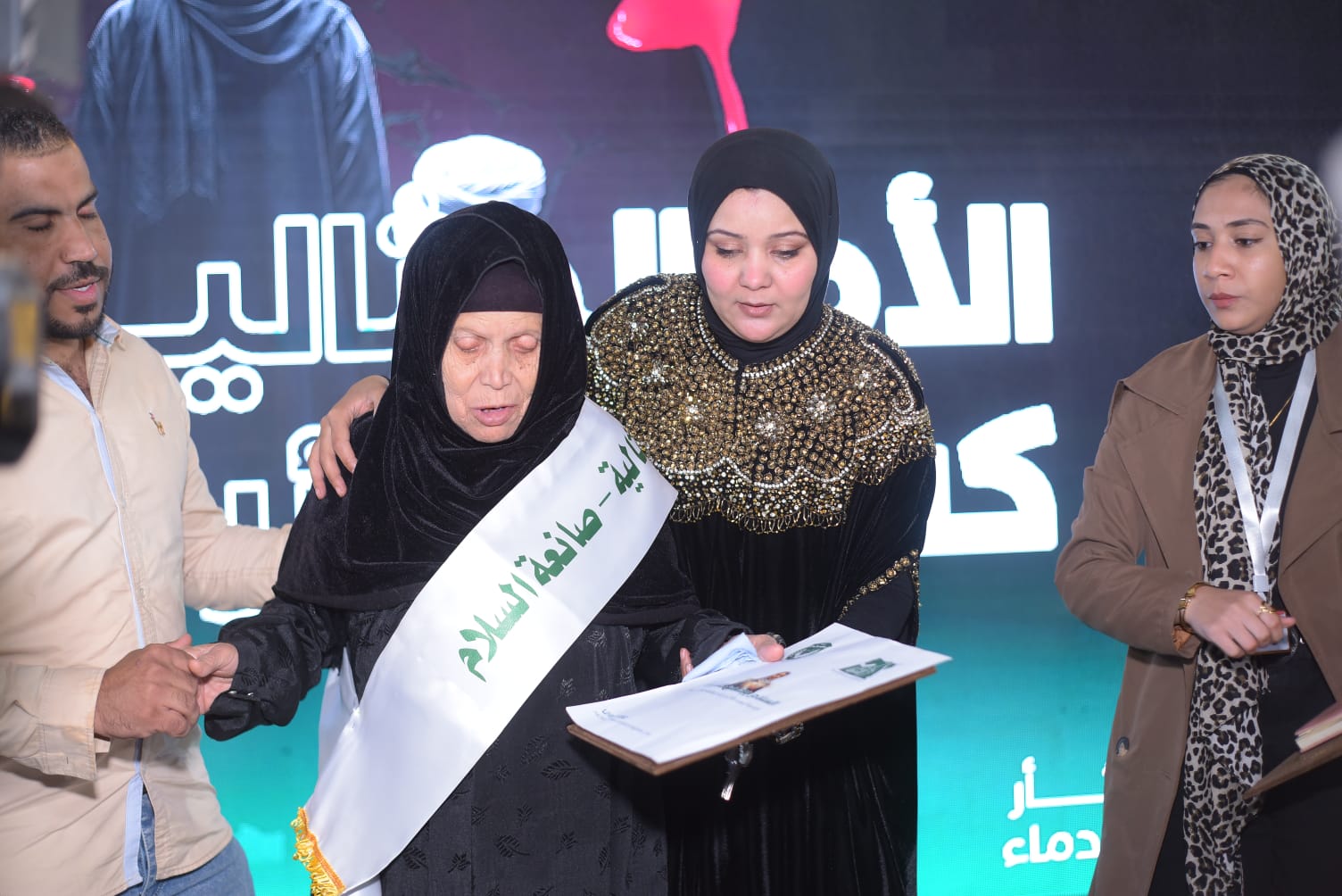
At first, many of those in attendance did not welcome Safaa’s presence in what they considered a male space. She nevertheless insisted on staying and succeeded in securing a reconciliation between the two families. She also proposed that a “Shield of Tolerance” be presented to the families of victims who agreed to reconciliation as a formal symbol and guarantee of the settlement, replacing the traditional presentation of a burial shroud. Under that traditional practice, the killer or a member of his family carries a burial shroud to the victim’s family. Customarily, this gesture symbolizes an acknowledgment of guilt and an act of humility intended to extinguish the desire for revenge.
Safaa developed the idea of the shield as a symbolic alternative to the traditional presentation of the shroud, which she perceived to carry a harsh, distressing connotation, particularly in feuds where the number of people killed was equal on both sides. The shield bears the slogan “Shield of Tolerance: Upper Egypt Without Vendettas” and features symbols representing the Ministry of Youth and Sports and security authorities, as well as religious phrases encouraging forgiveness and tolerance. The name of the family accepting the reconciliation is also inscribed on it.
Safaa tells Medfeminiswiya, “When many people fought against me and mocked me because I am a woman, my mother believed in me, supported me, and encouraged me to remain committed to my mission.”
Asran began her humanitarian project through journalism. For eight years, she worked as a field reporter covering blood feud conflicts. This brought her into contact with community leaders, and she gradually began taking part in customary arbitration sessions. In 2013, she founded Upper Egypt Without Vendettas, which was formally registered by the Ministry of Social Solidarity in 2018. According to Asran, the organization operates through self-funded efforts and community contributions, including support from charitable organizations, customary reconciliation committees, and the Ministry of Youth and Sports, without receiving any foreign funding.
Asran notes that the organization faced opposition and attempts to shut it down because of its involvement in customary reconciliation councils. There was also resistance to the idea of the “Shield of Tolerance,” with some insisting on maintaining the traditions of blood revenge and the presentation of the burial shroud.
At first, many of those in attendance did not welcome Safaa’s presence in what they considered a male space. She nevertheless insisted on staying and succeeded in securing reconciliation.
Asran holds a university degree in Media Studies from Aswan University’s Faculty of Arts and is a researcher specializing in cultural issues and inheritance traditions. Through her work in customary reconciliation, she has built a broad network of relationships with activists involved in reconciliation sessions across the southern Egyptian governorates of Qena, Luxor, Aswan, Sohag, Assiut, Minya, and Beni Suef.
The phenomenon of blood feuds persists in the governorates of Upper Egypt. A field study conducted by the National Center for Social and Criminological Research in Qena, Assiut, Sohag, and Minya found that 29.5% of participants believed that taking revenge was a duty, while more than 18% considered failing to avenge a killing a source of shame. Approximately 55% of cases relied on customary reconciliation councils as a means of resolving disputes.
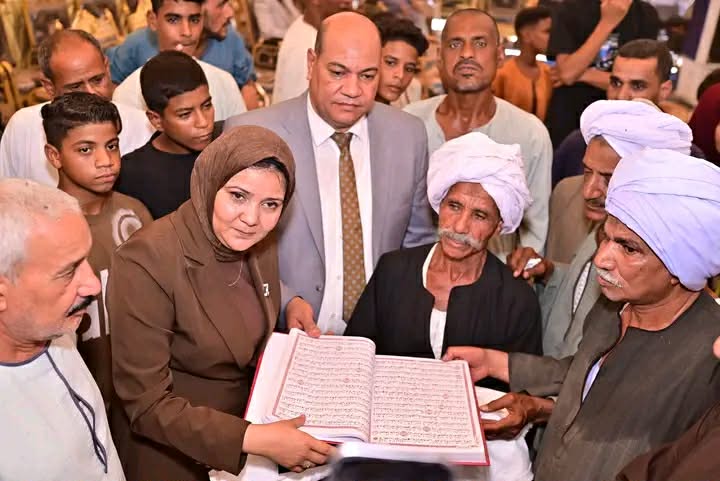
From rejection and ridicule to recognition
Asran has relied on her composure and calm demeanor to manage negotiations between conflicting parties, guiding them toward a comprehensive reconciliation, even when cases require months of coordination and travel across governorates, from north to south.
In this way, Safaa secured a permanent seat at the reconciliation table, on an equal footing with senior dignitaries, sheikhs, and security officials.
She says, “I faced constant skepticism and rejection, but I did not concern myself with responding to those who opposed me. I worked on the ground until my presence in resolving disputes became indispensable, and the skeptics turned into supporters.”
Asran employs various methods to bring reconciliation sessions to a successful conclusion. The process begins with persuading all parties of the importance of forgiveness and tolerance and examining the conditions put forward by each side in order to achieve a lasting peace.
This may involve organizing a reconciliation banquet and a religious ceremony attended by senior sheikhs from the governorate, with security forces present out of concern that the agreement might collapse and that the attempt at reconciliation could turn into another confrontation.
A committee oversees the proceedings, closely monitoring the wali al-dam—the victim’s closest relatives—right up to the final moments before the reconciliation pact is sealed, to ensure that they do not change their minds or withdraw from the agreement.
Asran adds, “The final moments are the most sensitive. They require a great deal of effort and time from me to persuade the victim’s family of the importance of forgiveness, so that they are not incited to violence once again.”
Safaa Asran, a young woman from Upper Egypt who has dedicated her life to curbing killings driven by blood revenge, has thus emerged as the first Arab woman active in the field of customary conflict resolution.
“I worked on the ground until my presence became indispensable, and the skeptics turned into supporters.”
Such blood feuds are not confined to Egypt. They also occur in Arab countries with strong tribal and clan-based structures, including Yemen, southern Iraq, and the Middle Euphrates region, as well as in rural and Bedouin areas of Jordan, Syria, Libya, and Lebanon.
The phenomenon of blood feuds flourished during periods of weak law enforcement, coinciding with the growing influence of tribal customs and the proliferation of illegal weapons. The practice has deep roots in pre-Islamic Arab history. Among its most famous representations in Arab cultural memory is the Basus War between the Bakr and Taghlib tribes in Najd on the Arabian Peninsula, which is said to have begun in the year 496 and, according to traditional accounts, lasted for nearly 40 years.
Women are not to blame for inciting blood feuds
It has long been rumored that women from Upper Egypt are the ones who most strongly incite their sons to exact blood revenge. Television and film dramas have reinforced this stereotype, frequently depicting Upper Egyptian women as the primary instigators of bloodshed. One example is the 1973 film Song of Death, in which actress Faten Hamama played Asaker, an Upper Egyptian woman who spends years waiting for her son Alwan to return from Cairo so that he can avenge his father’s death. When he refuses, she ultimately asks her brother to kill her own son because he has failed to avenge his father’s blood.
Beyond her tireless efforts to broker reconciliation between conflicting parties, Asran has worked to challenge this inherited misconception: she highlights the stories of mothers devastated by these killings who are now actively striving to put an end to the bloodshed. “One woman told me,” Asran recalls, “‘I do not want another mother to be burned by the same fire that burned my heart.’”
The Upper Egypt Without Vendettas organization also provides psychological and community support to families and helps facilitate reconciliation sessions, while remaining uninvolved in political projects outside its humanitarian and service-oriented mission.
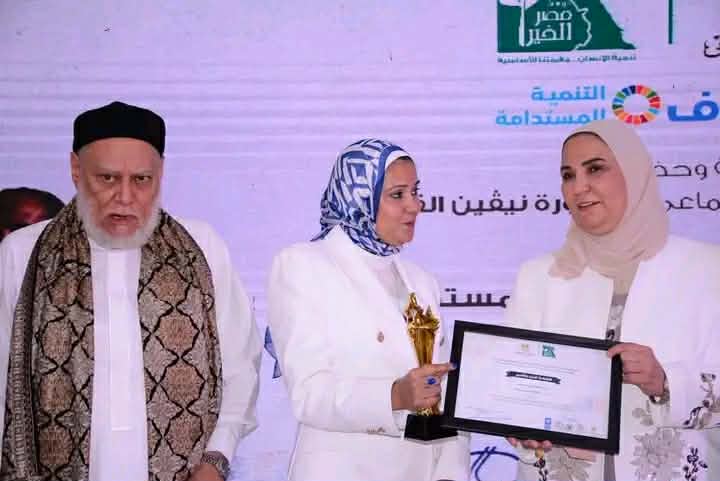
Asran has been honored by the League of Arab States for the humanitarian and ethical work carried out by her organization. She received the Distinguished Arab Youth Award, organized by the Arab Youth Council for Integrated Development. She had previously been honored in September 2023 by then-Minister of Youth and Sports Ashraf Sobhy.