About us
  • it VO
  • fr Français
  • en English
  • ar العربية
No Result
View All Result
Medfeminiswiya - Mediterranean feminist media
  • On the move
  • In-depth
  • Files
  • Artistic Creations
  • Interviews
  • Opinions
  • World
Medfeminiswiya - Mediterranean feminist media
  • On the move
  • In-depth
  • Files
  • Artistic Creations
  • Interviews
  • Opinions
  • World
No Result
View All Result
Medfeminiswiya - Mediterranean feminist media
Home In-depth

Women, bodies and freedom

Olfa Belhassineby Olfa Belhassine
25 March 2026
Women, bodies and freedom

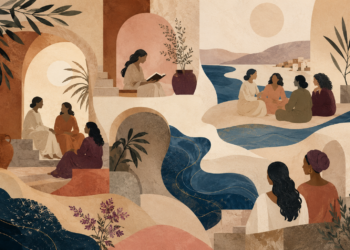
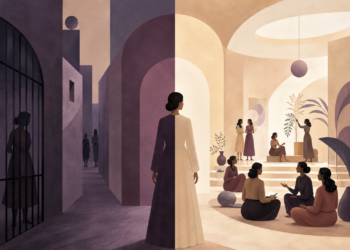
On both shores of the Mediterranean, one constant emerges: women's bodies are a social, political, aesthetic, ethical, and economic issue. Caught between social control, submission, and emancipation, how do women navigate this tyranny of appearance? Here's an in-depth exploration of a topic that has deeply inspired our editorial team.

This post is also available in: Français (French) العربية (Arabic)

Main photo by Dalel Tangour, Tunisian photographer

Have women always had to bear the burden of their bodies? “In part, yes,” says historian and feminist Michelle Perrot. In ‘Mon histoire des femmes’ (Points, 2006), she writes, “A woman is, first and foremost, an image. A face, a body, dressed or naked. Women are appearances.” This holds even truer in Judeo-Christian culture, where women have often been consigned to silence in the public sphere. Perrot adds, “The first commandment for women is beauty. ‘Be beautiful and keep quiet’ is what they’ve been told since time immemorial.” The Renaissance further underscored this gender divide, with an emphasis on feminine beauty versus masculine strength.

Every era has its own standards of beauty. Until the nineteenth century, attention was focused on the “top”—the face and breasts—while in the twentieth century, it shifted to the “bottom”—legs— especially as sheer stockings became popular.

In the southern Mediterranean, women’s bodies are a matter of honour for the family, the tribe, and society as a whole. Codes and laws, particularly in Syria, as explored by Rahada Abdouch, as well as practices—such as female genital mutilation described by Sheima Al Youssef—are among the measures implemented to control, lock down, and objectify them.

Arab feminists, like Egyptian writer Nawal Saadawi, have explored the condition of silenced bodies. Through her writing, Saadawi deconstructs the power dynamics and societal expectations surrounding the body, challenging the pact of silence.

“A woman is, first and foremost, an image. A face, a body, dressed or naked. Women are appearances.”

Arab feminists, like Egyptian writer Nawal Saadawi, have explored the condition of silenced bodies. Through her writing, Saadawi deconstructs the power dynamics and societal expectations surrounding the body, challenging the pact of silence.

The individualization of society in the West has amplified the focus on appearance. Simultaneously, the rise of social media is contributing to the globalization of beauty standards.

Younger women are increasingly turning to cosmetic surgery to reshape their bodies and faces. But isn’t it contradictory, asks Anaïs Delmas in her piece on aesthetic medicine, to use marketing and media to pressure women into artificially altering their appearance while simultaneously condemning them for doing so?

The sanctity of virginity, hypersexualization, and pornography, along with societal pressure to be beautiful and thin starting in adolescence— leave women’s bodies trapped—subject to both patriarchal control (see Rania Hadjar’s report) and the tyranny of beauty stereotypes..
Tags: Women and bodies
Olfa Belhassine

Olfa Belhassine

Olfa Belhassine is a Tunisian journalist who worked with the Tunisian daily “La Presse” since 1990. After the 2011 protests, her articles started appearing in “Libération”, “Le Monde” and “Courrier International”, a testament to her extensive experience as a journalist reporting from Tunisia during President Ben Ali's rule and after his fall. In 2013, Olfa was awarded the first journalism prize of the “Center of Arab Women” for her investigative work on customary marriage in Tunisia, published in “La Presse.” Olfa has also been corresponding since 2015 for the JusticeInfo.net, a website specializing in transitional justice around the world. Olfa Belhassone and Hedia Barkat have published a book titled 'Ces nouveaux mots qui font la Tunisie' (These new words that make Tunisia), providing an in-depth exploration of the political transition in Tunisia after the revolution.

Leave a Reply Cancel reply

Your email address will not be published. Required fields are marked *

J'accepte les termes et conditions et la Politique de confidentialité .

Related articles

Related posts

They’re 60, 70 and older—so what?
Old age and women

They’re 60, 70 and older—so what?

by Olfa Belhassine
26 March 2026

Related posts

The right to livable life: On the right to abortion in Montenegro
In-depth

The right to livable life: On the right to abortion in Montenegro

by Katarina Vujović
27 March 2026

JOIN OUR NEWSLETTER

Original content. Feminist journalism. Straight to your inbox.

    Related posts

    Croatia: Men Kneeling in Main Squares for Women’s Chastity
    In-depth

    Croatia: Men Kneeling in Main Squares for Women’s Chastity

    by Snježana Pavić
    10 March 2026

    Related posts

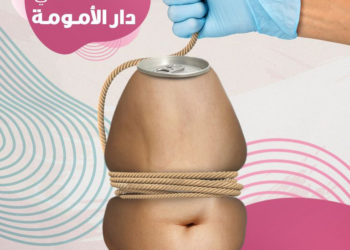
    Giving birth with an open womb or when Caesarean section becomes the norm in Egypt
    Abortion and SRHR

    Giving birth with an open womb or when Caesarean section becomes the norm in Egypt

    by Contributor with Medfeminiswiya
    25 March 2026

    Popular articles

    Thirty and single… so what?
    On the move

    Thirty and single… so what?

    by Pascale Sawma
    17 February 2026
    All We Imagine as Light : three intertwined female stories
    Artistic Creations

    All We Imagine as Light : three intertwined female stories

    by Rabab El Mouadden
    9 May 2025
    Israel to Palestinian journalists: Be silent… or else!
    In-depth

    Israel to Palestinian journalists: Be silent… or else!

    by Alaa Murrar
    29 November 2023
    On the move
    In-depth
    Files
    Artistic Creations
    Interviews
    Opinions
    World
    On the move
    In-depth
    Files
    Artistic Creations
    Interviews
    Opinions
    World

    Medfeminiswiya is a feminist network that brings together women journalists working in the fields of media and content production in the Mediterranean region.

    • About us
    • Country Context
    • Our community
    • Become a member
    • Our partners
    • Editorial charter
    • Disclaimer

    Follow us :

    JOIN OUR NEWSLETTER

    Original content. Feminist journalism. Straight to your inbox.

      © 2026 Medfeminiswiya – Mediterranean Network for Feminist Information

      Back to top

      Welcome Back!

      Login to your account below

      Forgotten Password?

      Retrieve your password

      Please enter your username or email address to reset your password.

      Log In

      Add New Playlist

      No Result
      View All Result
      • On the move
      • In-depth
      • Files
      • Artistic Creations
      • Interviews
      • Opinions
      • World
      • it VO
      • fr Français
      • en English
      • ar العربية

      © 2026 Medfeminiswiya - Mediterranean Network for Feminist Information

      Ce site n'utilise pas de cookies. This website does not use cookies. هذا الموقع لا يستخدم ملفات تعريف الارتباط.