Cette publication est également disponible en : Français (French) العربية (Arabic)
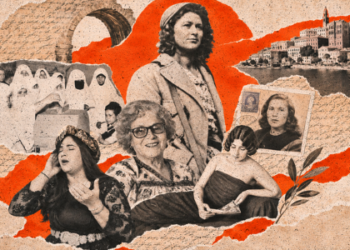
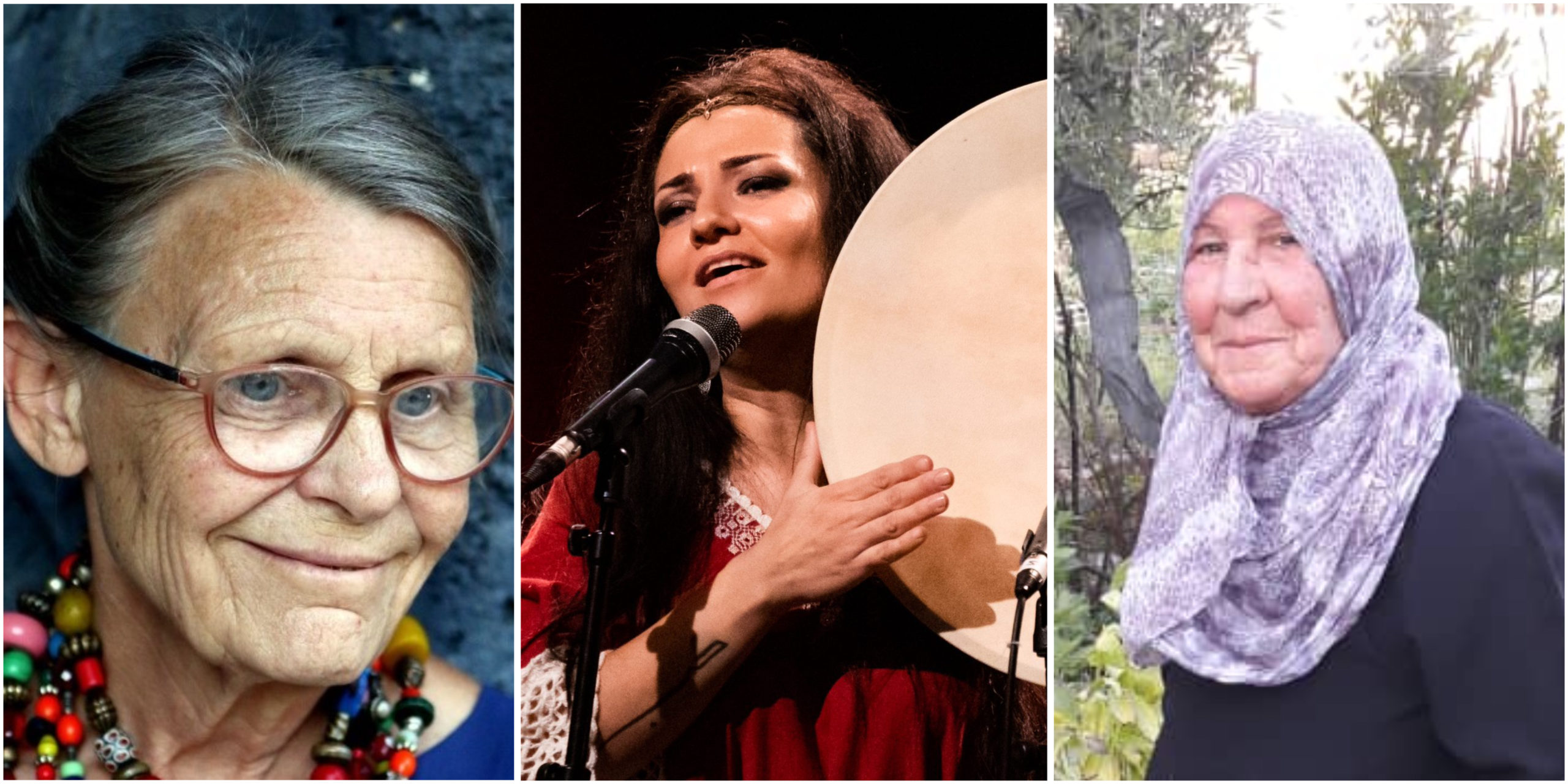
Auntie Fatima, Basma Jabr, and Heike Weber are three women who have documented Syrian history through orality, song, and the work of their hands. They may differ in age, educational background, and place of origin, but they share a common goal: to recover forgotten history and find a place for it in the present. Weber demonstrates how embroidery symbols used in ancient civilizations remain alive today, Jabr connects past and present by giving the songs of forgotten women singers new musical arrangements, and Fatima preserves the flavors of bygone days through her stories and traditional dishes.
Auntie Fatima: A living archive of village memory
In the presence of Auntie Umm Ahmad (Fatima AlSayed Ahmad), now in her eighties, conversation begins with a gentle narration that draws listeners into a past that lives on within her, though we ourselves have never experienced it. She says, “May God water the days gone by, so that they might bloom again, or, at least, begin to bud.”
She recounts the stages of weddings in the old days, when celebrations lasted more than one night—“Seven nights: one day for gathering firewood, another for inviting the guests, one for carrying the bride’s trousseau on foot, another for kneading the flour, the henna day, the wedding night, and a day for nuqut.” Nuqut is a widespread social custom in Syria whereby money is given as a gift on social occasions, as an expression of joy and support.
My aunt knows poetry and ataba, a form of traditional folk singing whose origins are attributed, in some popular accounts, to a Syrian woman who shared her name: Fatim of the Jabbour tribe (1767–1857), known as the Khansa of the Jabbour. Some oral traditions credit her with the beginnings of the art of ataba, through which she devised a distinctive form of mournful folk poetry to lament her husband, children, brothers, and nephews.
Auntie Fatima remembers wedding songs, the names of garments and household utensils no longer in use, and the names of wildflowers and herbs and the seasons in which they grow. She preserves folk sayings that mark the seasons and months of the year, as well as events from the history of her hometown, al-Ruhaybah, a town in the eastern Qalamoun region of the Damascus countryside.
She recalls the details of a flood that swept away village houses after three nights of rain, and tells of a 40-day snowfall she heard about from her grandfather but never witnessed herself. In this way, Auntie Fatima resembles a living, wandering history embodied in a woman who recounts it again and again.
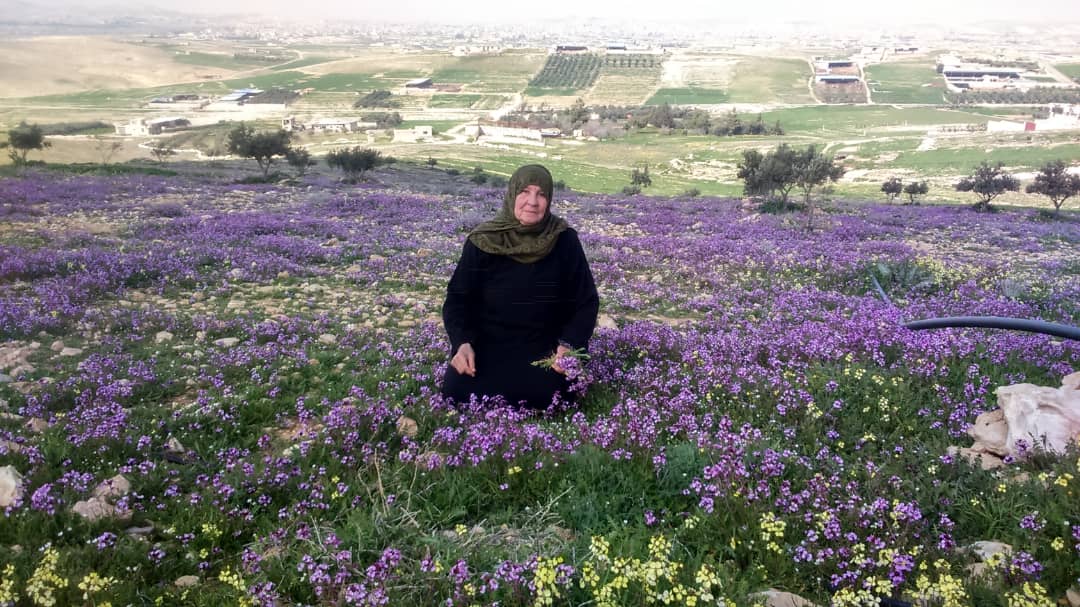
She recites to me songs she learned as a child, sung during the wheat harvest. The lyrics reproach the season’s abundance for the additional labor it brings. These verses were sung collectively to raise the spirits of the men and women harvesting the ears of wheat by hand:
Oh, my strip of wheat (1), if only you lay fallow,
If only you were pasture for the starlings.
And the starling would eat a lump,
And the lump would go to the ox’s horns.
How lovely the harvest,
And the gathering that follows (2).
She passes down folktales to her grandchildren: stories of the jealous cat and the peaceful fly, and of lazy Hadidan, who eats his provisions instead of plowing the field. These are traditional stories intended both to entertain children and impart wisdom. The first teaches contentment, while the second encourages hard work.
Her stories expand as she recalls the narrow vineyard paths that once wound around the outskirts of the village. She describes precisely where the walnut and pear trees stood, and speaks with exaggerated nostalgia of mud-brick houses that needed repairs every winter. She tells how her grandfather arranged the stones of an arch without mortar, and how he carved stone basins. She remembers foods preserved for winter that have since disappeared, including sath al-zabib, the drying of grapes into raisins, and dried fingers of kishk, a mixture of yogurt and bulgur, which accompanied long winter evenings.
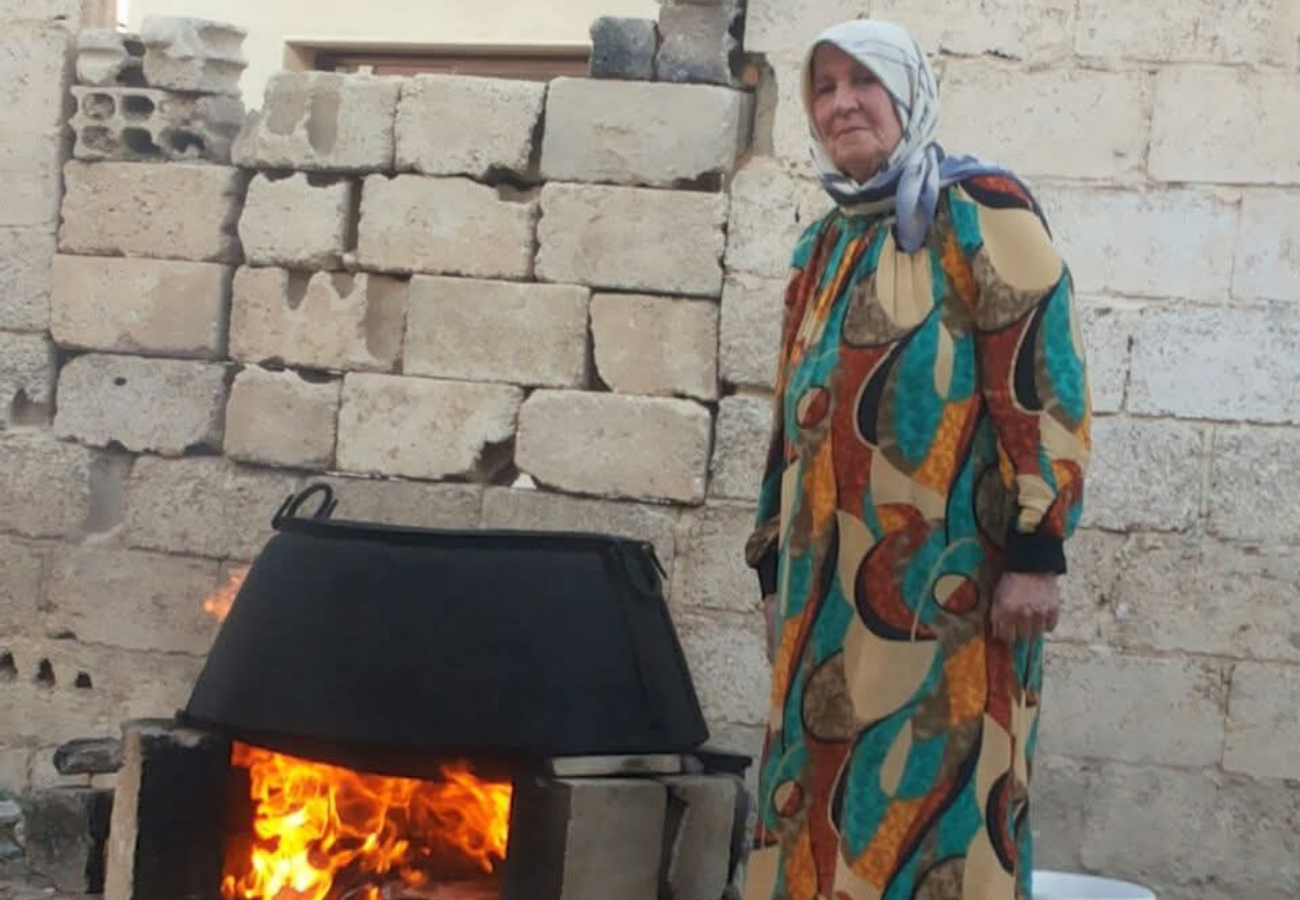
My aunt, Umm Ahmad, has passed the age of 80, but her determination to prepare labor-intensive traditional provisions has not diminished. Every summer, she can still be seen boiling wheat in a large cauldron known as a dist, spreading it out under the sun to dry, then coarsely grinding it and storing it in large earthenware jars. There are traditional dishes I can find nowhere but in her home. “Here you go, my dear, this is bsiseh: hot bread from the tannour oven with grape molasses.”
Each season has its own recipes. When pomegranates are pressed, Auntie Fatima prepares taqtuq, a traditional dish made with grains and leafy greens, just as her mother used to do. During the season of pressing raisins, she makes ghalwa, a sweet dish prepared with molasses. The dried grapes are pressed to produce a syrup with a consistency resembling honey.
My aunt’s memory extends beyond traditional songs and foods to become an archive of genealogy without written records. As soon as she hears the name of someone who has died, she can recount their family lineage. After a long sigh, she says, “The old days were full of blessings. People were kinder to one another, and everything was different!”
My aunt’s memory extends beyond traditional songs and foods to become an archive of genealogy without written records.
Basma Jabr: The voice that returned the Euphrates to its course
Though she left from Syria to Austria, Basma Jabr could not outrun her memories, so she carried them with her. Born in Kuwait in 1983 to a Syrian family, Jabr studied architecture in Syria in 2007. Today, she studies world music, specializing in singing, at the University of Music and Performing Arts Vienna in Austria.
In Vienna, she has participated in several projects, including Vienna Acoustic Diaries and Voices of Vienna. In 2019, as part of the duo Basma and Orwa, she released an album titled Songs We Still Remember, followed by her solo project, Furat (Euphrates). Speaking about Furat, Jabr explains, “The album includes eight songs by Arab women singers who influenced the music scene between 1920 and 1960. I worked on introducing new musical arrangements without compromising the identity of the original songs. The album is the result of extensive research into the lives these women led, with all their moments of joy and sorrow.”
Jabr documented their careers through short stories, from that of Sahar al-Maqli, the Syrian singer who met a tragic fate after an audience member detonated a bomb during one of her performances, to the story of Zakiyya Hamdan (1920–1987), known as the “Umm Kulthum of the Levant.”
The album also revisits the story of “In the Darkness,” a song by Badia Masabni, who founded the Badia Masabni Troupe, a theatrical revue company that became a training ground for numerous artists, including Farid al-Atrash, Samia Gamal, and Muhammad Abdel Muttalib, among others.
Jabr also included an original composition in the album, conceived as a continuation of these women’s musical journeys—as though the Euphrates had sprung from the places where they first began to sing and completed its journey with her.
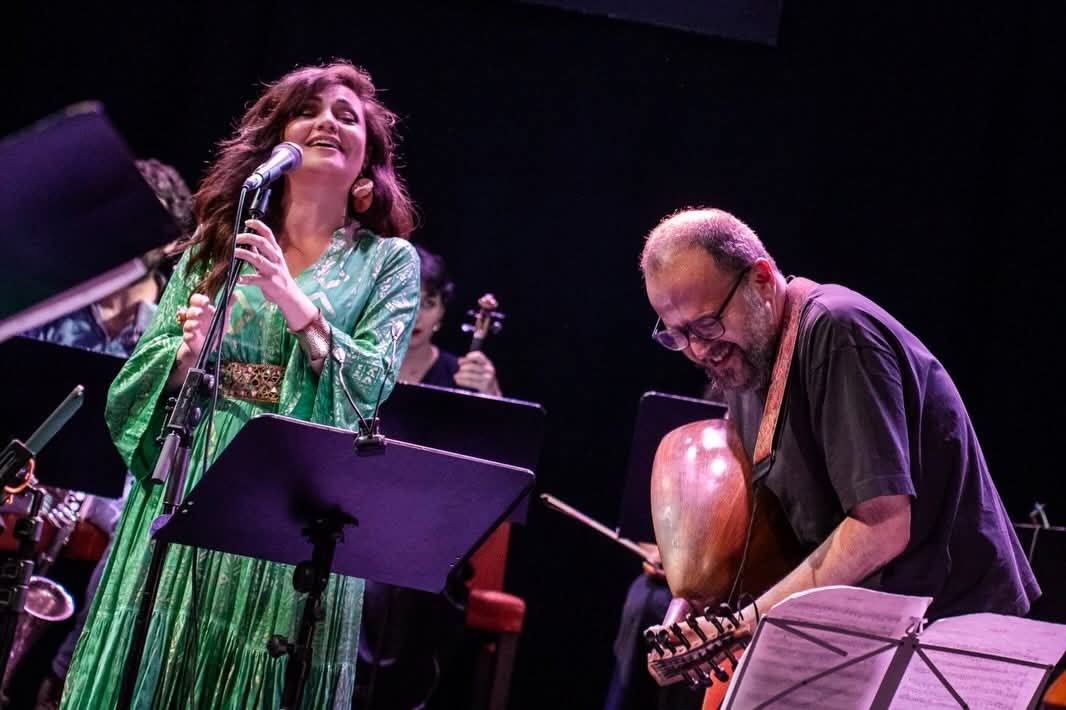
“I am careful to preserve the identity of the original work,” the artist explains. “Today, we see many successful experiments that have reinterpreted musical heritage through bold artistic visions while maintaining the essence of the original material. Some musical projects have presented Arabic songs in their traditional form, while others have approached them from a contemporary perspective by blending them with different musical genres. Personally, I have worked with both approaches.”
Jabr emphasizes that living in Europe and collaborating with musicians from different backgrounds, alongside her studies in folk music, have enriched her artistic experience. The young Syrian artist is currently working on a new album titled Loumi (3), which documents her artistic journey across different places and experiences.
Anyone who follows Basma’s career knows that she is more than a professional singer. She is an artist with a distinctive vision, guided by thoughtful passion and a refined artistic sensibility that privileges quality over quantity.

Heike Weber: A German woman who fell in love with Syria at first stitch
Born in 1951, Heike Weber first visited Syria in 1982. She made Damascus her home, and Damascus made its home in her. She, too, remained faithful to the city, refusing to leave during the war. “I was with you during times of prosperity,” Weber says. “How could I abandon you in times of hardship?”
A thread passed through the eye of a sewing needle bound the German researcher’s heart even more closely to this place. Captivated by the embroidery traditions of Syria’s various provinces, she began tracing them, one stitch after another. With a researcher’s eye, Weber immersed herself in the details of Syrian cultural heritage and documented her findings as a writer in a book titled Anat and Her Hero Baal: Embroidery Patterns as the Language of the Levant, published by the Lebanese publishing house Dar Kotob in 2025.
The book is the culmination of many years of observation and academic research, through which Weber draws connections between past and present. Through conversations with grandmothers, she came to associate embroidery stitches with Canaanite history. Weber sought to recover the mythological memory embedded in the human symbols and decorative motifs of embroidery in the ancient civilizations of the Levant.
For example, cross-stitches represent the duality of life and death, which, in her words, “enhances the spiritual value of the garment.” The triangle symbolizes the mountain from which the god Baal emerges to water the tree of life. Other motifs represent the deities of the moon and sun. The palm tree, meanwhile, symbolizes the succession of generations: each time a frond withers and falls, the trunk grows to bear new fronds representing the grandchildren.
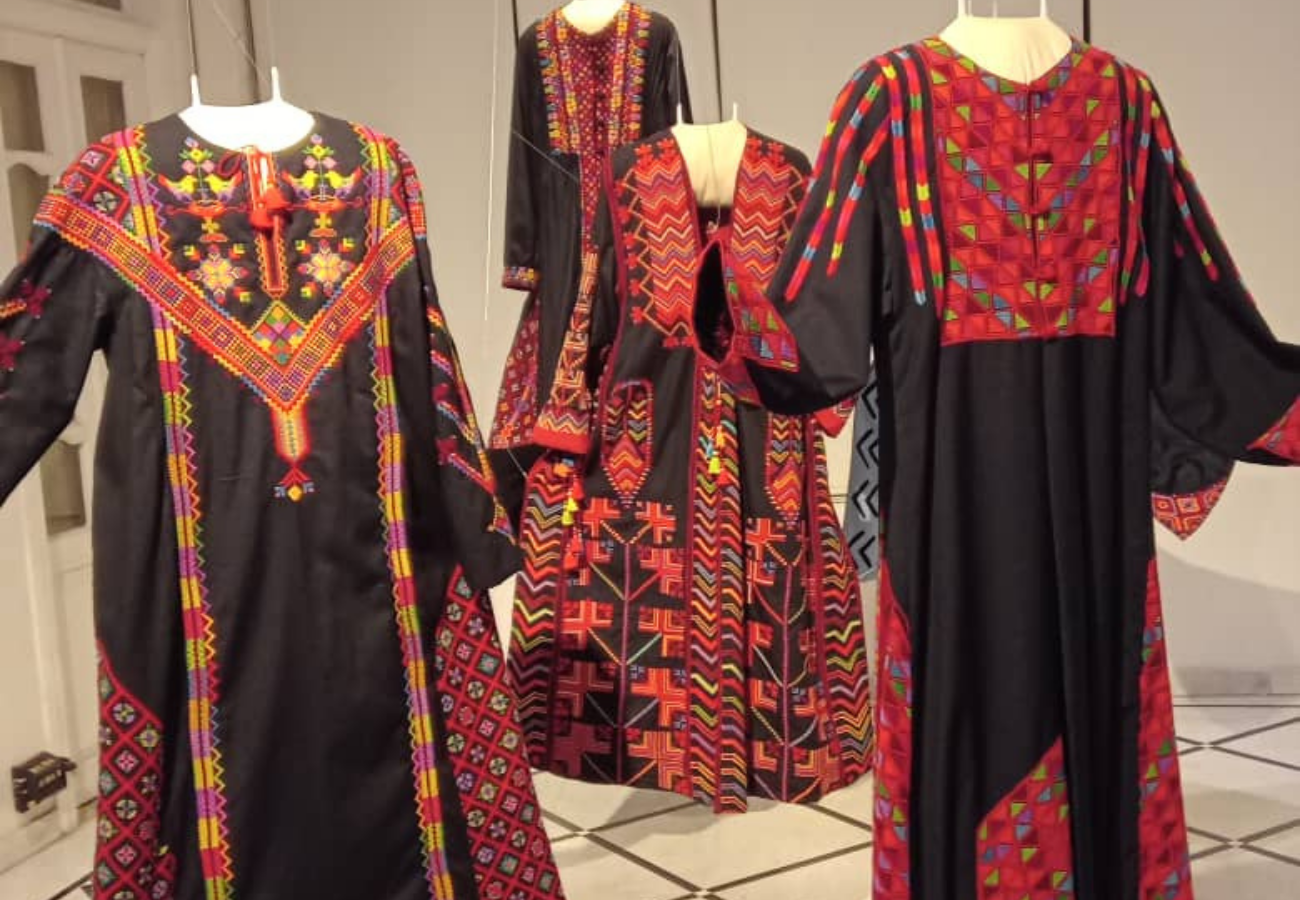
In the well-known Palestinian staircase stitch, Weber draws on historical symbolism to connect the motif to the Canaanite myth of Anat, the moon goddess, and Baal, the sun god, and the story of their ascent. In her book, Weber points to similarities between certain inherited embroidery motifs and symbols found in the civilizations of the ancient Near East, arguing that some of these patterns have survived for thousands of years into the present.
The book also explores the philosophy of colors, their significance in these civilizations, and their connections to the seasons of the year. White represents spring, red symbolizes summer, and black is the color of winter and wisdom. Blue, meanwhile, was considered to possess a divine quality—something beyond human possession—because it is the color of the sky and sea. It was also used to ward off envy and evil.
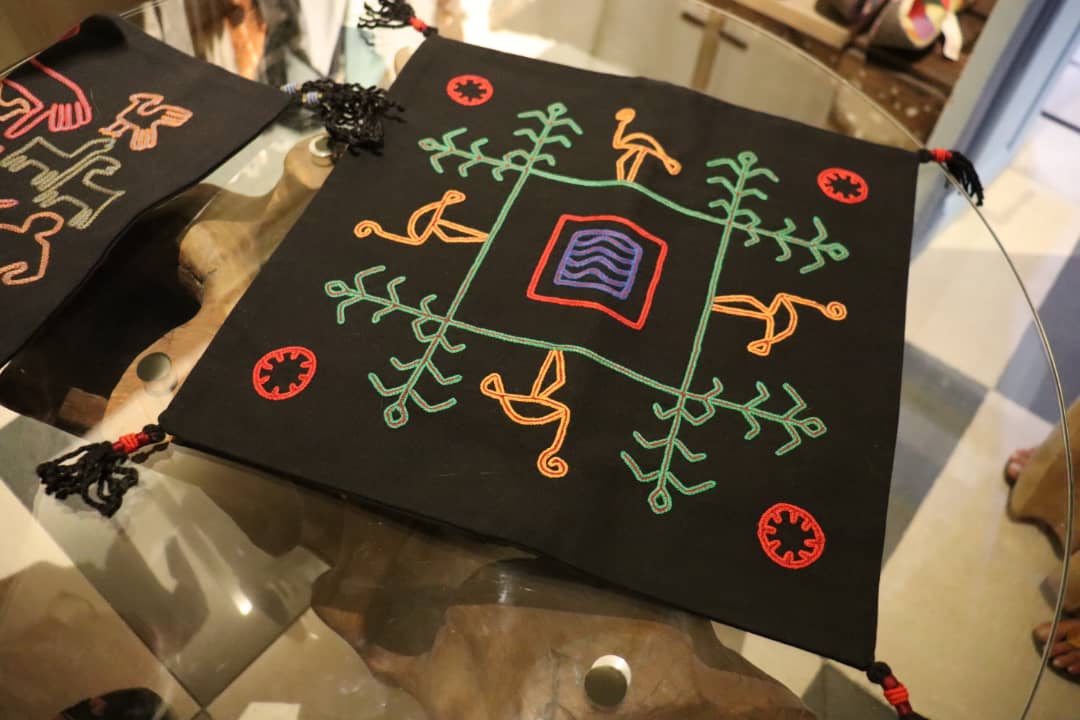
Weber established the Anat, Goddess of the Moon embroidery workshop in the Bab Sharqi neighborhood of Damascus, next to the Armenian church. The workshop seeks to preserve cultural heritage while also empowering women by providing them with employment opportunities.
“My goal is to preserve the heritage of the Levant,” Weber explains. “This region possesses a rich heritage filled with wisdom. It tells of the harmony between human beings and their environment, and of their pride in their origins. It would be a tragedy for this heritage to disappear.”
Despite the difficulties she encountered in her research, particularly the scarcity of references, Weber was able to investigate the meanings of embroidery symbols through archaeology and social research. She discovered that each Syrian province possesses its own distinctive identity. She also came to see the practice of women embroidering their children’s names onto garments as a form of diary-keeping.
“When I wear an embroidered garment, I feel ready to face the world,” Weber says. “It strengthens my sense of self.”
Weber has organized several exhibitions, the most recent of which was Threads of Memory, held at Zawaya Gallery in Damascus in April of this year. The exhibition featured more than 100 embroidered pieces, including dresses, bags, and heritage-inspired artworks that presented Syria’s traditional clothing in a contemporary form. She also regularly organizes fashion shows in Europe featuring traditional garments of her own design.
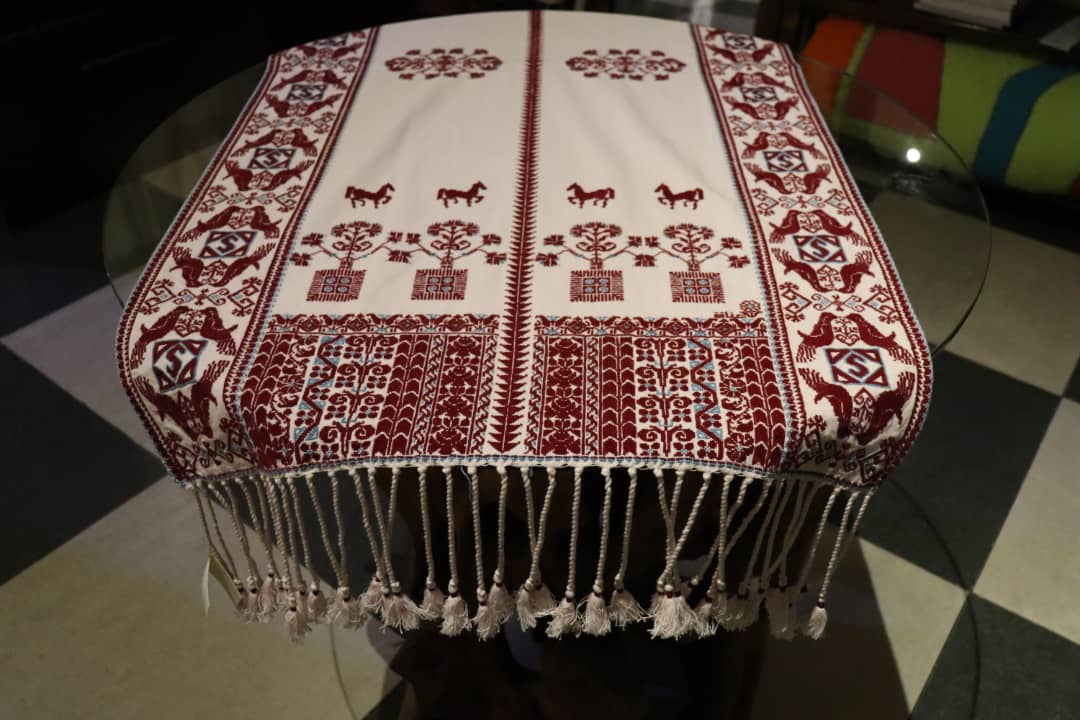
The researcher sees her primary mission as building bridges between East and West. “I was born to German parents, but I consider myself Syrian because I have lived here for more than 40 years,” she says. “As a German citizen, I have a negative relationship with German heritage, because it emerged as a ‘Hitlerian’ heritage associated with the idea of a superior people. For that reason, I initially rejected it. Later, however, I came to realize that heritage is important for resistance, national unity, and the protection of peoples.”
“I encountered tremendous richness in Syrian heritage,” she continues, “particularly in its textiles and embroidery. I therefore felt it was my human responsibility to protect it, because it is part of a universal human heritage that does not belong exclusively to Syrian men and women. I must also admit that I feel Syrians do not care for their heritage as much as they should. I came here to research and care for this heritage because I have myself experienced the bitterness of losing it.”
(1) A designated strip or row of cultivated wheat that a harvester works through until it is fully harvested.
(2) A stage following the harvest in which the collected crop is transported to the threshing floor as part of the process of obtaining wheat grains.
(3) A type of spice with a complex combination of flavors, ranging from sour to pungent or spicy. Jabr chose the name to describe the diversity of her artistic experiences.
This article was produced with the support of the Tunis Office of the Rosa Luxemburg Foundation.