Cette publication est également disponible en : Français (French) العربية (Arabic)
In a cell at Damon Prison, Fatma and Mouna sat beside their 70-year-old grandmother as she told them stories from the past. She spoke of travel, restrictions imposed by the Israeli army, and raids on family homes, trying to ease the cold of the cell and the weight of passing time. Meanwhile, the two sisters were living through an experience that would itself become part of the history of Palestinian women prisoners.
Taken from their home to a prison cell
Fatma had just completed high school and was preparing to attend university, while her younger sister Mouna, then 15, was still in school. Their lives were interrupted when they, along with 17 members of their family, including children and elderly relatives, were trapped inside their family home in the Zeitoun neighborhood, southeast of Gaza City. The siege lasted five days, during which they had no access to food or water.
On December 8, 2023, Israeli soldiers stormed the house and killed the sisters’ grandfather. They then separated the men from the women and forced their grandmother to crawl over broken glass and rubble. The two sisters were interrogated and threatened before being taken away alongside their grandmother, blindfolded and handcuffed, with no knowledge of where they were being taken or what had happened to their father and brother.
The sisters were transported in a truck carrying other detainees, in which they were subjected to harsh and humiliating treatment. Fatma recounts how soldiers confiscated their jewelry, money, and phones, claiming these belongings would be returned upon their release. They also took their grandmother’s bag, which contained valuables entrusted to her by relatives, worth approximately 9,000 shekels (around USD 2,900). None of these belongings were subsequently returned.
Fear in detention, and their grandmother’s memories
Inside the detention truck, the two girls were thrown around, colliding with the vehicle’s metal interior and the other detainees. They eventually arrived at the Anatot detention facility in Jerusalem, sleep- and food-deprived, their hands still restrained.
There, they found themselves inside a cage with open sides, covered only by a sheet-metal roof. “We were forbidden from speaking to one another, and they kept each woman prisoner a meter apart from the others,” Fatma recalls.
According to Amani Sarahneh, Media Officer at the Palestinian Prisoners’ Club, who spoke to Medfeminiswiya, the number of Palestinian women held in the occupation’s prisons stood at 89 at the time of reporting, including two minors and two pregnant women. Most were being held under administrative detention or on allegations of what the Israeli army calls “incitement.”
Mouna recalls her first moments at the detention facility. “When they asked me how old I was, I felt relieved for a moment. I thought they would leave me alone because I was a child. But I later discovered that my information did not appear in their records because, as a minor, I did not have an identity card. Then they ordered me to change into grey prison clothes.”
During this time, she was subjected to various forms of intimidation. Soldiers were firing shots into the air to frighten the women detainees, and they left the women exposed to the bitter cold.
When Mouna entered the detention facility, she saw her sister Fatma. “My sister broke down in tears and hugged me because the soldiers had told her I had been executed,” Mouna says.
The two sisters and their grandmother tried to reassure one another through hurried whispers. Initially, Mouna and her grandmother were separated from Fatma. Other women detainees tried to offer her support. They remained in that facility for approximately a week.
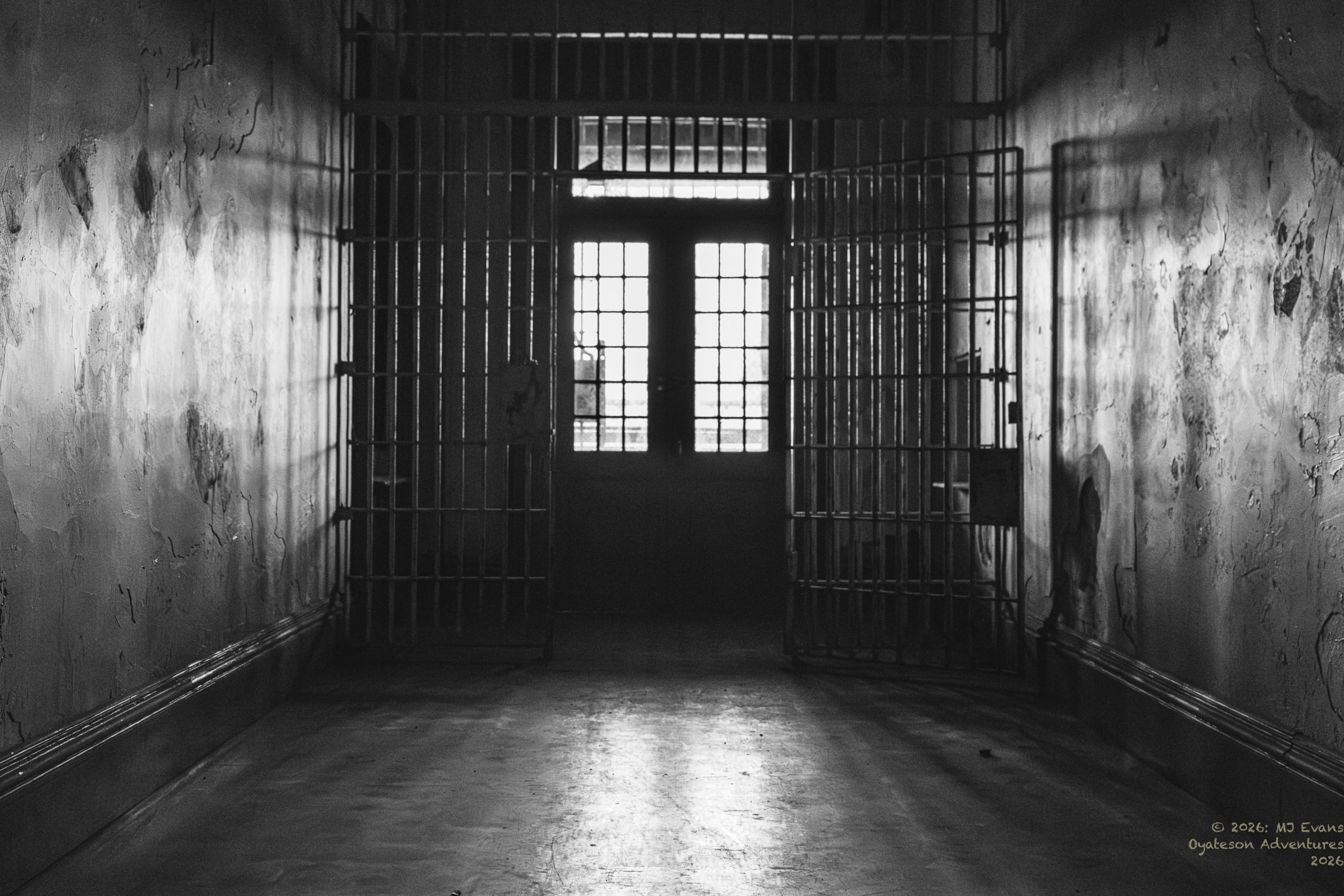
The sisters and their grandmother were then transferred to Damon Prison in Haifa, where they spent around 45 days under harsh conditions.
The soldiers once again separated the sisters from their grandmother, before eventually agreeing to their request to keep her in the same cell so they could help her walk. There, in the cold, on a floor covered by nothing more than a thin blanket, their grandmother would recount stories from the past, trying to comfort her granddaughters and the other women prisoners.
A new chapter of history was unfolding for the sisters inside the prison, filled with details that would remain etched in their memories but might never enter the written historical record, much like the stories of countless other women.
As she recalled earlier encounters with the Israeli army, a new chapter of history was unfolding for the sisters inside the prison, filled with details that would remain etched in their memories but might never enter the written historical record, much like the stories of countless other women.
Beyond the duration and conditions of their detention, Fatma and Mouna’s testimony reveals the intimate realities of women’s experiences behind bars: from bodily needs that go unaddressed to the fear of losing family members and the struggle to protect their elderly grandmother.
These are precisely the kinds of details that Sarahneh believes can help write a history of imprisonment from women’s perspectives, one that goes beyond statistics and official accounts.
“Women prisoners have different experiences,” Sarahneh explains. “Some entered prison with a political consciousness, while others had no previous involvement in activism. But imprisonment transformed their awareness and the course of their lives.”
On the threshold of freedom
When the first signs of their release appeared, Mouna allowed herself some hope, but it was shattered for a moment when a female soldier called out her name but not those of her sister or grandmother. Only later were their names also called.
But even this relief was short-lived: they were not being released but transferred to the Sde Teiman detention facility in the Negev Desert, where they spent another four days in harsh conditions, exposed to the cold and threatened with weapons.
“Whenever we found a soldier who spoke Arabic or English and whom we could communicate with, we tried to explain that we were supposed to be released,” Mouna recalls. “But they would tell us that this was only the beginning – that we were going to be formally detained.”
Fear continued to haunt the sisters until the very last moments before their release. Fatma remembers the screams of detainees being tortured and the sound of dogs echoing throughout the facility, while their anxiety over the fate of their father and brother continued to grow. They were finally released after four days.
But leaving prison brought none of the joy the sisters and their grandmother had imagined. They believed the war had ended, or at least subsided, and that they would be reunited with their entire family, safe and unharmed. Instead, Israeli soldiers left them at the Kerem Shalom crossing, near the junction of the borders between Gaza, Egypt, and Israel, and instructed them to walk towards the Rafah crossing. No one was waiting for them there.
But they did meet someone who knew their father and brother. He helped them reach them.
The sisters embraced their brother, but they could barely recognize their father. His appearance had changed so drastically during detention that he looked like a different person. Choking back tears, they asked about their mother and sisters, only to learn that they were still in northern Gaza.
The family wept for a long time. Then they lay down to sleep on the ground, having no shelter to go to.
“I entered prison a child, but I came out a woman, strong, aware. I found myself forced to rely on myself, and I learned how to confront the occupation and its psychological tactics.”
Life after detention: starting from scratch
“I entered prison a child, but I came out a woman, strong, aware. I found myself forced to rely on myself, and I learned how to confront the occupation and its psychological tactics. This experience changed the way I see life and the world that failed to stand by us,” Mouna says.
She explains that one of the images she could never forget is that of her grandfather being killed before her eyes. Her grandfather was disabled and had Alzheimer’s disease. When he heard the explosions, he thought someone was knocking at the door and began asking who was outside.
To keep him calm, the family told him it was time for the noon prayer. He began praying in his bed, shortly before Israeli soldiers stormed the house and killed him.
After the sisters and their grandmother were released, their brother Mohamed was also killed in an Israeli airstrike.
“Because of my detention, I missed the beginning of university. I fell more than a year and a half behind in my studies because of everything I went through,” Fatma says. For her, the losses did not end at the prison gates. They extended into her future.
With a smile that conceals years of exhaustion, Mouna recalls, “During that period, when we were displaced eight times, I chose to take my books rather than my personal belongings. I sat for my exams in the street, surrounded by rubble, because it was so difficult to access an internet connection. I achieved an average of 85% in the science branch.”
Sarahneh explains that the effects of imprisonment extend far beyond release, shaping women’s lives, family relationships, and personal trajectories. This is evident in the experiences of the two sisters, who are trying to continue their education amid displacement and successive losses, despite the immense difficulties they face every day.
Testimonies on the margins of history
Fatma and Mouna were two ordinary girls. Neither belonged to any political organization or party before their detention, and their grandmother was an elderly woman. The sisters had simply wanted to lead normal lives, but their lives took a devastating turn.
The history of Palestinian women in Israeli prisons has often been associated with prominent figures, like Fatima Bernawi, who was arrested in 1967 and is considered the first woman prisoner of the Palestinian revolution, and Aisha Odeh, who was arrested in 1969 and later documented her experience in her book Dreams of Freedom.
“The official archives relating to detention are largely controlled by the detaining power, while testimony is our counter-archive. If a woman passes away without her story being heard, something irreplaceable disappears with her.”
Sarahneh reflects on the contrast between these widely recognized accounts and the experiences that remain absent from history: “While these experiences found their way into historical and literary narratives, other women prisoners’ experiences remained outside the writing of history. The focus was on women prisoners who were political activists, while other women were detained despite having no history of activism or political involvement. There are many experiences that were buried with the women who lived them.”
Sarahneh attributes the marginalization of Palestinian women prisoners’ stories in historical memory to inadequate documentation, the absence of institutions dedicated to collecting testimonies, and the emphasis of national discourse on the image of the “woman prisoner as resistance fighter,” which has left other women’s experiences outside the dominant narrative.
She concludes, “The absence of testimony can indeed lead to the loss of part of Palestinian women’s collective memory, because some of that memory exists nowhere else. The official archives relating to detention are largely controlled by the detaining power, while testimony is our counter-archive. If a woman passes away without her story being heard, something irreplaceable disappears with her.”