Cette publication est également disponible en : Français (French) العربية (Arabic) VO
“Women were everywhere in the Resistance: on the battlefield and in the workplace, behind prison walls and in public squares, and in the privacy of their homes. There was no activity, no struggle, no organization, no collaboration in which they did not take part. […] They tirelessly sustained the clandestine network of partisan warfare.”
These are the words of Ada Prospero Marchesini Gobetti (1902–1968), a resistance fighter from Piedmont, in her Diario partigiano (Partisan Diary) (1). They perfectly capture the spirit in which thousands of women fought alongside their comrades to liberate Italy from Nazism and Fascism between 1943 and 1945. And Gobetti was far from alone.
In a country torn apart by war, occupied by German forces, and oppressed by Benito Mussolini’s (1883–1945) regime, countless women spontaneously joined what historian and journalist Benedetta Tobagi describes as “the largest collective rescue operation in the country’s history” (2).
Between September 8, 1943, and April 25, 1945—the period between the armistice with the Allies (3) and Italy’s liberation—clandestine sewing workshops sprang up across the country, where grain sacks and old parachutes were turned into civilian clothes for deserters on the run. Many young women became staffette (partisan couriers), concealing weapons, explosives, and food in their bicycle baskets and weaving coded messages into their hair.
“We had to act to avoid making the situation worse, to avoid feeling complicit in the massacres,” Tina Anselmi (1927–2016), a former partisan, politician, and the first woman to serve as a minister in the Italian Republic, would recall years later. “We hated death, but we were ready to take up arms so that we could live.” (4)
“We had to act to avoid making the situation worse, to avoid feeling complicit in the massacres. We hated death, but we were ready to take up arms so that we could live.”
“Mass mothering”
Historian Anna Bravo describes this phenomenon as “mass mothering”: when war came knocking on the doors of the homes to which Fascism had confined women, they threw those doors wide open to welcome anyone in need of help. With extraordinary courage and determination, they left boot prints in the mud, bicycle tracks along country roads, and deep footprints in the snow. Yet official historical accounts have largely failed to acknowledge them.
The number of partisans grew steadily between 1943 and 1945, reaching approximately 250,000 fighters on the eve of Liberation in April 1945. According to the National Association of Italian Partisans (ANPI), around 105,000 women took part in the Resistance. Of these, 35,000 were combatants, while another 70,000 contributed to logistics, propaganda, assistance, and the supply of essential goods through the Women’s Defense Groups.
A total of 4,653 women were arrested and tortured by Nazi-Fascist forces, 2,750 were deported to concentration camps in Germany, and more than 2,800 were killed by firing squad, hanged, or died on the battlefield. Yet only 19 women received the Gold Medal of Military Valor from the Italian state.
“From the very beginning, there were attempts to downplay the importance of their involvement, and even some male partisans struggled to acknowledge it,” explains Agnese Palma, who is responsible for ANPI’s women’s coordination and serves on the leadership of its provincial chapter in Rome.
She welcomes us into her office with a warm smile, describing the various initiatives organized to commemorate the women partisans and antifascists of the capital.
“This [dismissive] attitude was partly rooted in a misguided sense of protection. In the 1940s, cultural conditioning was very strong, as Fascism had relegated women to the roles of mothers and homemakers.”
A particularly telling example of this widespread paternalism, Palma recalls, is that of Carla Capponi (1918–2000). “Her group carried out numerous urban guerrilla operations in Rome, but they refused to give her a weapon. So she stole a pistol from a police officer and warned everyone not to try to take it away from her.”
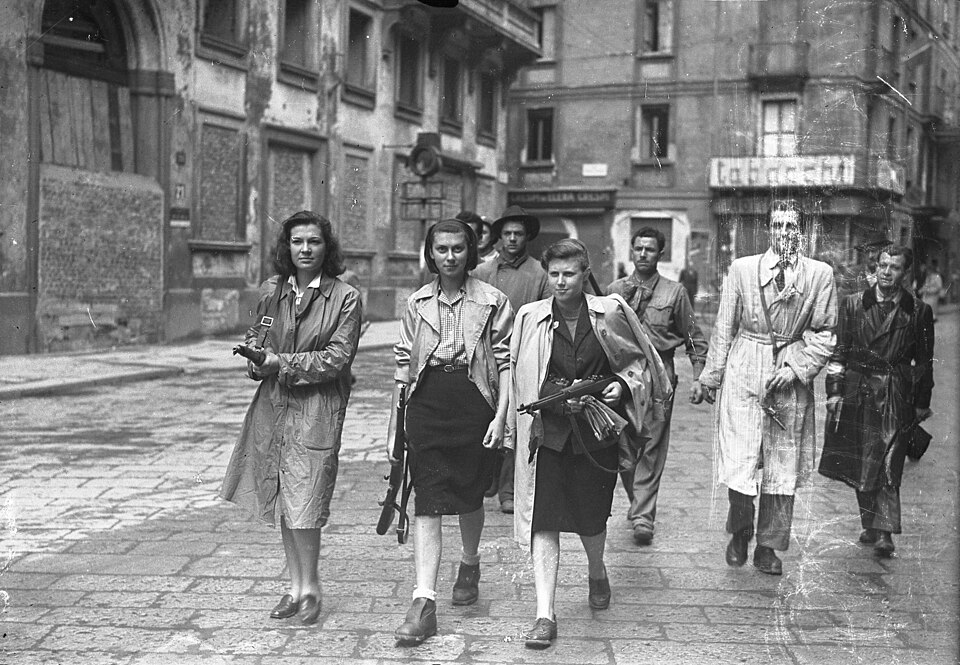
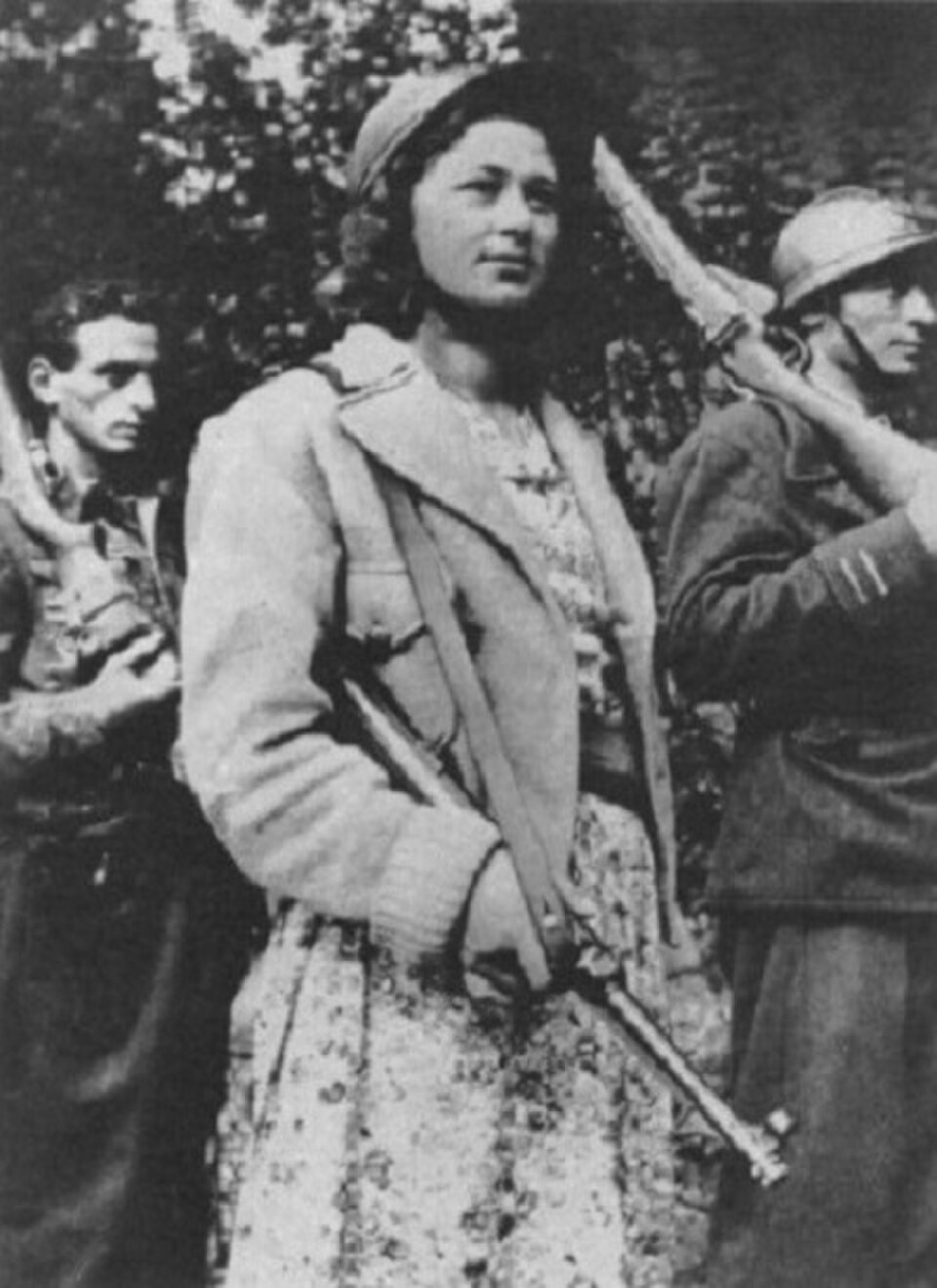
Many male fighters also forbade their female comrades from joining the parades celebrating liberation on April 25, 1945—now a national holiday—fearing that they would be judged harshly for wearing trousers and having spent time in mixed-gender groups. “But many women rebelled, as photographs show them marching through the streets, weapons in hand, heads held high,” Palma continues.
“Their aim was not only to drive out the Germans and overthrow the regime, but above all to free themselves from the yoke of patriarchy. This collective experience strengthened their political consciousness, encouraging them to secure immediate historic victories, such as the right to vote, granted in 1945 and exercised the following year.”
“This collective experience strengthened their political consciousness, encouraging them to secure immediate historic victories, such as the right to vote, granted in 1945 and exercised the following year.”
Moreover, 21 women, known as the “Mothers of the Constitution,” were elected to the Constituent Assembly tasked with drafting Italy’s Constitution. “Despite their different political affiliations, they achieved significant results,” Palma adds. “The Union of Italian Women (UDI) was also founded. It later changed its name to the Union of Women in Italy to include foreign women living in the country. It became a beacon in the struggle for children’s rights, the right to work, abortion and divorce laws, and the fight against violence against women.”
Women from all walks of life
It is a warm, late summer afternoon, and golden light bathes the majestic Roman aqueduct running through Quadraro, a neighborhood on the southeastern outskirts of Rome that became one of the city’s symbols of Resistance.
In a small café, we meet Maria Lucia Schito and Silvia Scognamiglio, two literature enthusiasts and audiovisual professionals who, together with their colleague Giulia Morelli, produced Mis(S)conosciute – Staffetta partigiana, a special episode of their podcast of the same name, created to “bring out of the shadows the stories of women writers who have been read—but not enough—over the past 60 years.”
“The idea came about on April 25, 2020. Since we couldn’t take to the streets because of the pandemic, we asked our Instagram followers to share stories of women who had fought against Nazism and Fascism,” Schito explains. “The testimonies we collected became a podcast, which we released the following year as a collective narrative in which enthusiasts and specialists of the period symbolically pass the baton to one another, just like a staffetta partigiana.”
The women featured include Joyce Lussu, Marisa Ombra, Maria Teresa Regard, Ada Gobetti, Giovanna Zangrandi, Elena Bono, Jenide Russo, Fausta Cialente, and Alba de Céspedes.
“They all led extraordinarily interesting lives,” Schito continues. “And one of the most striking aspects is their incredible diversity. They were peasants, factory workers, middle-class women, aristocrats, intellectuals, and homemakers who stepped into roles left vacant by men serving at the front or held in prison.”
“This was a pivotal moment in the history of women in Italy. Within the partisan brigades, they stood on an equal footing with men, even though they were often denied the right to carry weapons or take part in the most dangerous operations. Giovanna Zangrandi’s comrades, for example, did not want her to join them in the mountains, even though she knew those trails better than anyone. A chemistry graduate, she was an experienced climber, taught skiing, and drew highly detailed maps of the area near the Austrian border where she lived, marking the best locations for planting explosives.”
“They were peasants, factory workers, middle-class women, aristocrats, intellectuals, and homemakers who stepped into roles left vacant by men serving at the front or held in prison.”
After the war, when men sought to restore the old order, women were no longer willing to accept it.
“Nara Marconi, a textile worker born in Prato, near Florence, into a highly educated anarchist peasant family, joined the Resistance at a very young age to bring food to her father, who was hiding in the mountains,” Scognamiglio explains. “Years later, looking back on that experience, she came to understand that she was more than just a worker, a peasant, or a daughter.” After the war, Marconi went on to establish feminist circles and the first self-managed counseling center in her city.
They did more than take up arms

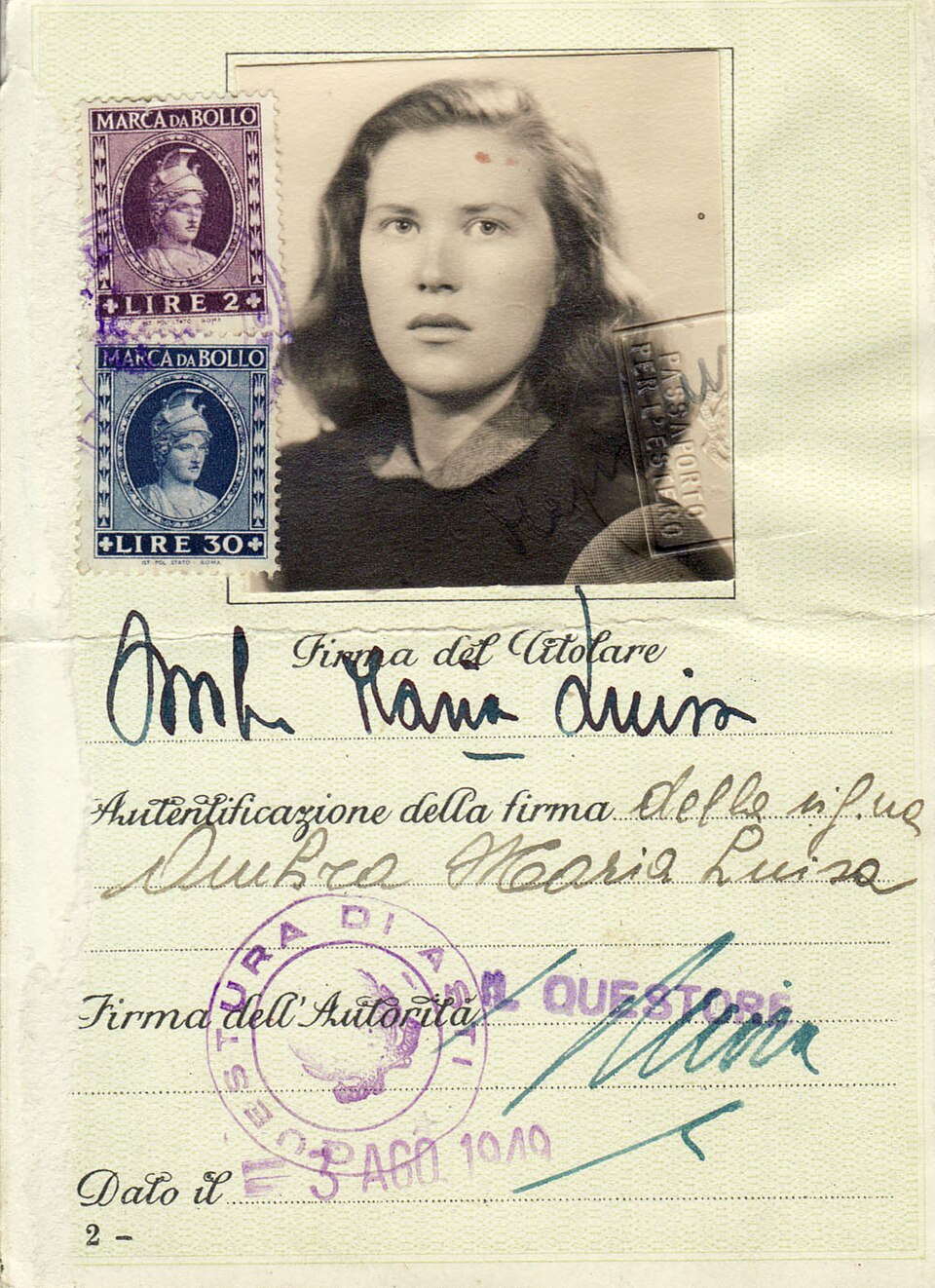
Many women resisted the regime through the clandestine press, including Marisa Ombra (1925–2019), who worked with her family to produce the communist magazine Il lavoro (Work) and rudimentary antiwar leaflets from their home.
“Another interesting example is Fausta Cialente, one of the leading Italian writers of the 20th century,” Scognamiglio continues. “Living in Egypt with her husband, this sophisticated intellectual became involved in the antifascist Resistance by actively contributing to British counterpropaganda through a program broadcast on Radio Cairo.”
Indeed, it would be a mistake to reduce the partisan struggle to armed resistance alone, women’s historian and journalist Valeria Palumbo tells Medfeminiswiya. “I would also like to highlight the ‘Monument Women,’ who saved our artistic and cultural heritage. I am thinking particularly of Palma Bucarelli, then director of Rome’s National Gallery of Modern Art, who not only hid artworks but also actively carried out propaganda against the Nazi-Fascists.”
“Fernanda Wittgens, meanwhile, directed the Pinacoteca di Brera in Milan. She saved Leonardo da Vinci’s The Last Supper and the Ospedale Maggiore’s collection of paintings, while also sheltering Jews during the roundups. She ended up in prison, where she wrote a beautiful letter to her mother asking: ‘If not at times like these, when should intellectuals take a stand?’”
The Women’s Resistance also left behind an extraordinary literary and intellectual legacy, Palumbo adds.
“Some women partisans wrote magnificent novels, such as Renata Viganò’s L’Agnese va a morire (Agnese Is Going to Die). The protagonist is an antiheroine: middle-aged, overweight, and unable to shoot. Yet she takes part in the struggle and even goes so far as to kill a German soldier to avenge her husband. Another major writer is Giovanna Zangrandi, although her work remains little read today. Maddalena Rossi, meanwhile, was one of the ‘Mothers of the Constitution’ who fought to defend the women raped in Ciociaria in 1944 by troops serving under French command. Laura Conti was also one of our country’s most important environmental advocates and ecologists.”