
About us
  • it VO
  • fr Français
  • en English
  • ar العربية
No Result
View All Result
Medfeminiswiya - Mediterranean feminist media
  • On the move
  • In-depth
  • Files
  • Artistic Creations
  • Interviews
  • Opinion
  • World
Medfeminiswiya - Mediterranean feminist media
  • On the move
  • In-depth
  • Files
  • Artistic Creations
  • Interviews
  • Opinion
  • World
No Result
View All Result
Medfeminiswiya - Mediterranean feminist media
Home Artistic Creations

Mauvaises filles, a valuable documentary on former religious reform schools in France

Franceska Gilardiby Franceska Gilardi
20 August 2026
Mauvaises filles, a valuable documentary on former religious reform schools in France

There are some uncomfortable truths, such as this one: women have the power to abuse other women in the name of God and the morality imposed by society. This was still the case in France well into the 1970s, with the support of the state, which for centuries entrusted the care of “bad girls” (mauvaises filles) to Catholic nuns. This is the subject of a documentary film of the same name, directed by Emerance Dubas.

Cette publication est également disponible en : Français (French)

To make Mauvaises filles (2022), Emerance Dubas met with around 100 women who had been placed in one or another of the Bon Pasteur institutions before reaching the age of majority (then set at 21) because they were considered disobedient, rebellious, misunderstood, or simply unloved. This practice continued in France until the late 1970s. The director spent seven years completing this invaluable documentary. It was screened in June in Lyon by Femmes Cinéma Égalité, an organization dedicated to showcasing hidden gems: films made by female directors from around the world, films that will never see the light of day in the box office.
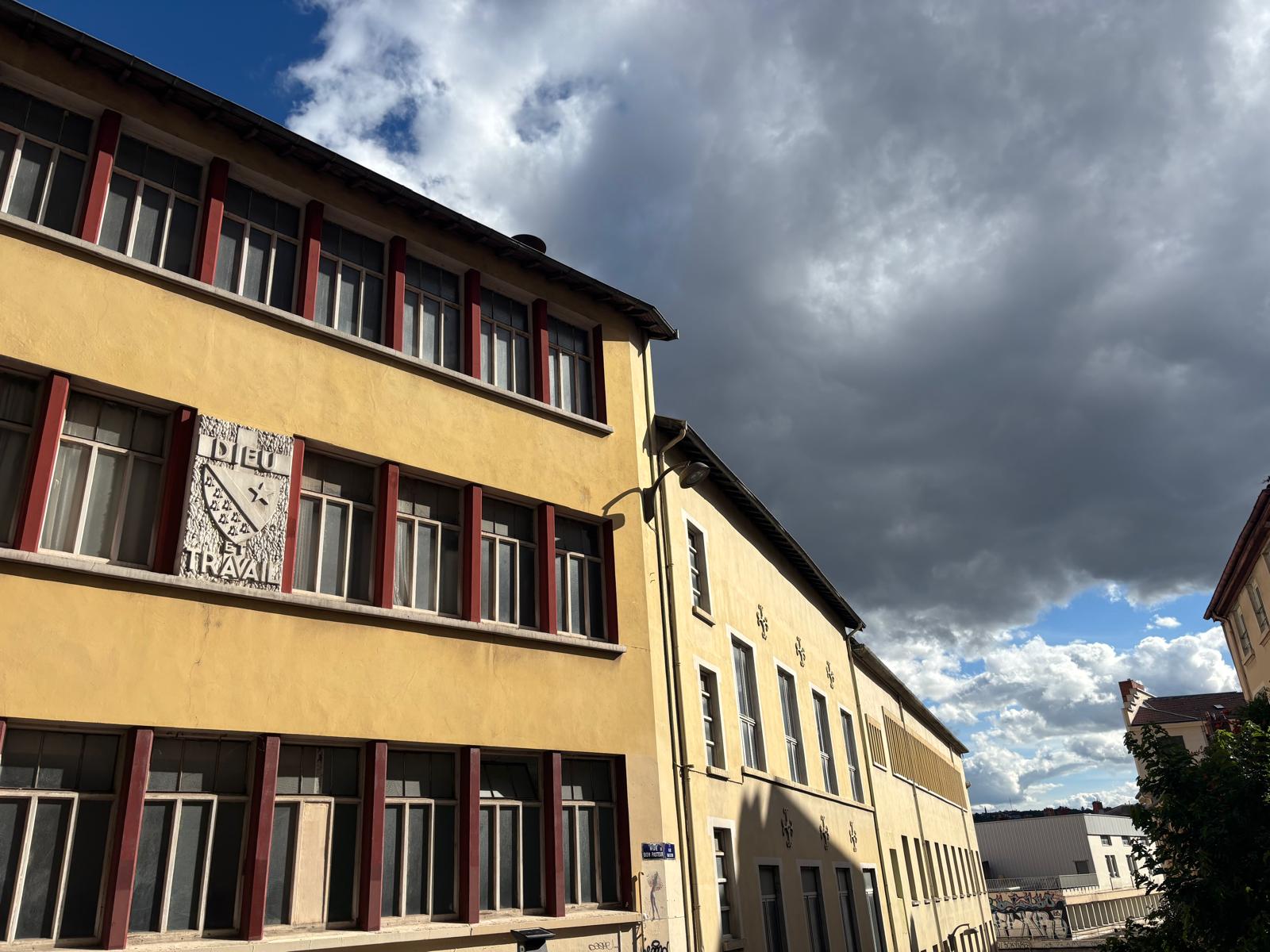
The Bon Pasteur institution no longer exists today in this form. It once housed very young girls, including many single mothers, who were stigmatized at the time by the derogatory label “unwed mothers.” Their children, meanwhile, were placed in the care of public welfare services. Photo credits: Lou-Iana Ksatarova for Medfeminiswiya

Many of the survivors from that era did not want to speak; others were too deeply scarred, both physically and mentally, to relive such painful memories. However, the director never seeks to elicit pity. She takes us on an inner journey by giving voice to three women, Éveline, Cristelle, and Fabienne, who open up simply and frankly for the first time in their lives. This is what moves us so deeply, for this simplicity lends remarkable power to the three interwoven narratives, interspersed with archival footage and views of the sinister institutions where they stayed.


Éveline, 75, returns for the first time to the building in Angers where she spent part of her youth. The institution no longer exists as such, but for centuries, it spread far and wide… there were as many as 400 girls’ boarding schools around the world during the era of French colonial rule. “Just think about it… that means thousands of victims,” comments Éveline, who is now dedicated to finding traces and archives of those who passed through the hands of the “good sisters.”


That’s what they were often called: the “good sisters.” In reality, “they were damned liars,” Cristelle denounces. At a very young age, Éveline was raped by a family member; no one knew about it except the predator. Fabienne, after being raped by her grandfather, tried her best to protect herself from men: when a boy managed to corner her, he forced himself on her, yet she was the one deemed “promiscuous” and sent to the Bon Pasteur.

“Véronique Blanchard convinced me that my testimony was not just a personal story, but a collective truth. A necessity.”
More than half a century later, their words offer a glimpse into a prison-like world where physical violence was a daily occurrence: beatings, being forced to climb stairs on one’s knees, arms outstretched in a cross-like position—all imposed on the entire group of girls who refused to denounce the one who had “misbehaved” according to the religious code of the “good sisters.”

And “that was nothing compared to the psychological violence,” says Fabienne, 70. “We were treated like objects,” remarks Cristelle as she reads the administrative letters from that time, in front of her stunned granddaughter. “Prayer, work, prayer, work… we received no education, and at age 21, we were thrown out onto the street. The first man who made eyes at us was ‘the one.’” The one, or more often, the future pimp.

Testimonies that still resonate today

Fabienne Bichet was present at the screening in Lyon. She recently published a book [1] in which she describes her own journey, one that is chaotic, unique, and inspiring all at once. How does one go from a troubled childhood—her mother abandoned her at birth—to a fairytale? She became a casting director, well-known in the film industry. Her face is reminiscent of Renaissance paintings of the Madonna, framed by a halo of tousled blonde hair. During the discussion that followed the screening, she wore a smile that was at once reserved and radiant, masking the wounds of her turbulent life.

She endured incest, repeated rapes, gang rapes; she was nearly sold as a commodity to Tangier; she underwent an abortion “with needles on a kitchen table”; and in Paris, she nearly died. But her desire to learn and the vigilance with which she observes the world “after having lived in that environment [Le Bon Pasteur] where everything fostered mistrust” have made her an exceptional person. She also readily acknowledges that there were “kind and selfless people who enabled me to become who I am today.”

“The humiliations, the confinement, the guilt—all these invisible forms of violence reflect the plight of these women who are rendered invisible, even today in other countries around the world,” observed one participant during the debate. Fabienne’s words echo this sentiment: “Véronique Blanchard [editor’s note: a historian researching reform schools] convinced me that my testimony was not just a personal story, but a collective truth. A necessity.”
Notes:
1. Moi, Fabienne B., mauvaise fille, éditions Textuel (2025).
Franceska Gilardi

Franceska Gilardi

FrancesKa is a French independent journalist who has expansive experience working in print media, traveling, for decades now, between pages layout, reporting, freelancing, management and the production of news from the smallest of stories to the biggest of investigations. She has participated in the creation of both passing and memorable headlines and editorials in national and regional newspapers. Franceska has authored several books on the development of cultural actions. As a passionate journalist who keeps falling over and over again for this profession, Franceska decided to dedicate time to teach the basics of journalism and train the younger generation on how to become great journalists. 
She firmly believes that when artists and women step in and take action, the world becomes a better place.

Leave a Reply Cancel reply

Your email address will not be published. Required fields are marked *

J'accepte les termes et conditions et la Politique de confidentialité .

Related articles

Related posts

ميرفت الجسري في الأمسية – تصوير شيماء اليوسف
Artistic Creations

Mervat El-Gesry’s voice revives the stories of forgotten female singers in Egypt, Syria, and Lebanon

by Shaimaa El Youssef
3 August 2026
TighriUzar, the voice of the roots: How the Ammour sisters are safeguarding Kabyle women’s cultural heritage
Artistic Creations

TighriUzar, the voice of the roots: How the Ammour sisters are safeguarding Kabyle women’s cultural heritage

by Rania Hadjer
15 June 2026
“Inner Reflections” by Adèle Berthelin, a photographic narrative exploring breast cancer
Artistic Creations

“Inner Reflections” by Adèle Berthelin, a photographic narrative exploring breast cancer

by Adèle Berthelin
2 June 2026
“La Malédiction (1)”, a theatrical adaptation of King Kong Theory bursting with Tunisian rage
Artistic Creations

“La Malédiction (1)”, a theatrical adaptation of King Kong Theory bursting with Tunisian rage

by Olfa Belhassine
3 October 2025

JOIN OUR NEWSLETTER

Original content. Feminist journalism. Straight to your inbox.

    Popular articles

    Thirty and single… so what?
    On the move

    Thirty and single… so what?

    by Pascale Sawma
    1 March 2022
    All We Imagine as Light : three intertwined female stories
    Artistic Creations

    All We Imagine as Light : three intertwined female stories

    by Rabab El Mouadden
    7 May 2025
    Israel to Palestinian journalists: Be silent… or else!
    In-depth

    Israel to Palestinian journalists: Be silent… or else!

    by Alaa Murrar
    29 November 2023
    On the move
    In-depth
    Files
    Artistic Creations
    Interviews
    Opinions
    World
    On the move
    In-depth
    Files
    Artistic Creations
    Interviews
    Opinions
    World

    Medfeminiswiya is a feminist network that brings together women journalists working in the fields of media and content production in the Mediterranean region.

    • About us
    • Country context
    • Our community
    • Become a member
    • Our partners
    • Editorial charter
    • Disclaimer

    Follow us :

    JOIN OUR NEWSLETTER

    Original content. Feminist journalism. Straight to your inbox.

      © 2026 Medfeminiswiya – Mediterranean Network for Feminist Information

      Back to top

      Welcome Back!

      Login to your account below

      Forgotten Password?

      Retrieve your password

      Please enter your username or email address to reset your password.

      Log In

      Add New Playlist

      No Result
      View All Result
      • On the move
      • In-depth
      • Files
      • Artistic Creations
      • Interviews
      • Opinion
      • World
      • it VO
      • fr Français
      • en English
      • ar العربية

      © 2026 Medfeminiswiya - Mediterranean Network for Feminist Information

      Ce site n'utilise pas de cookies. This website does not use cookies. هذا الموقع لا يستخدم ملفات تعريف الارتباط.