Cette publication est également disponible en : Français (French) العربية (Arabic)
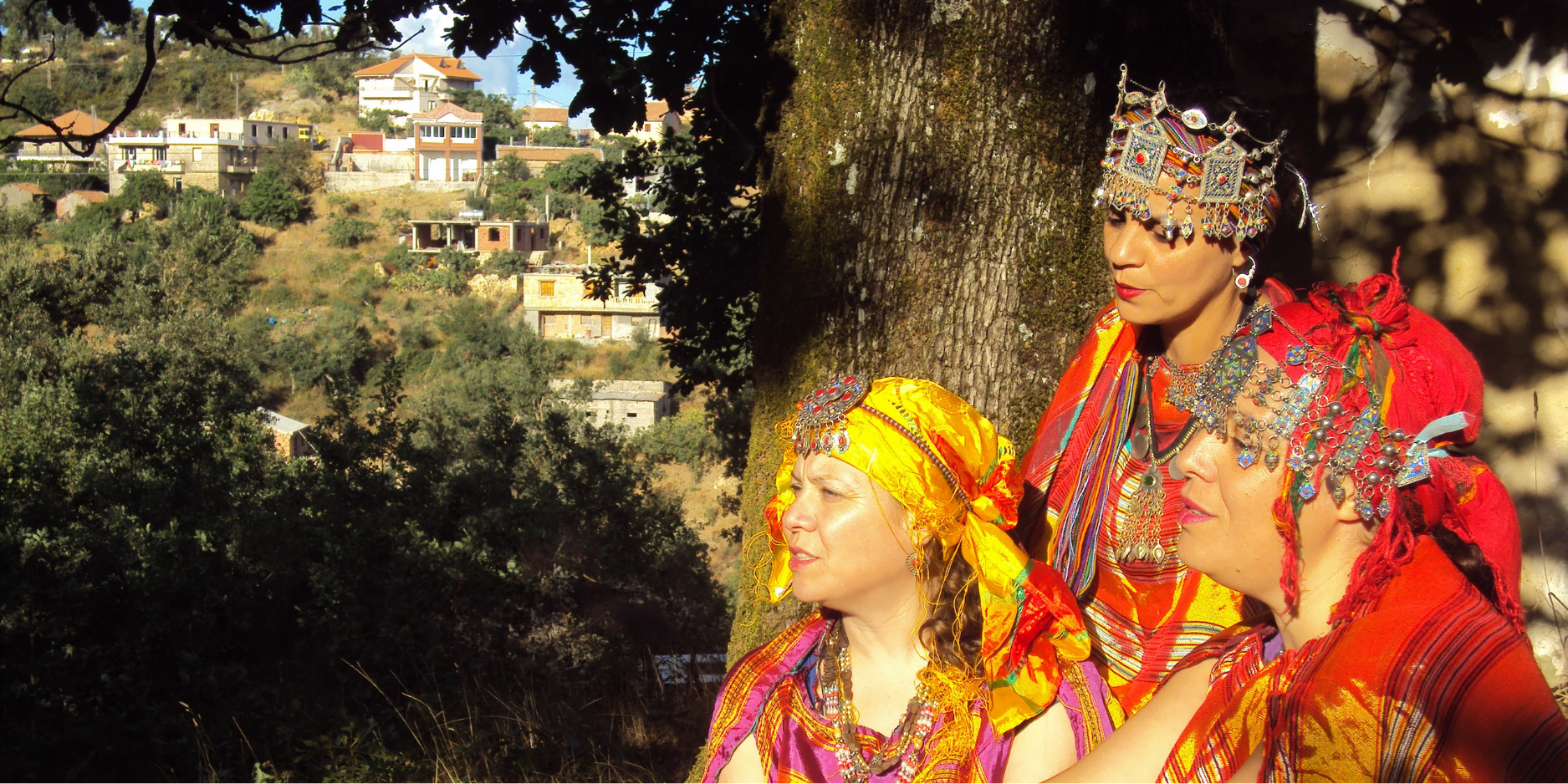
The name they chose says it all: TighriUzar, or the voice of the roots. The trio was formed in France in 2009, far from their native Kabylia and the Azazga region, the ancestral home of the Ammour sisters: Samia (52), Naïma (56), and Nadia (55).
Their story begins long before their first performance, in a home where music was everywhere. “Song has always been part of our lives, ever since we were little,” Nadia recalls. Their parents played a significant role in this: their father was a poet, and their mother knew a vast repertoire of ritual songs by heart. “Every ritual in everyday life was accompanied by a song,” continues Samia, the youngest of the sisters. “The henna ceremony, the bride’s arrival, women fetching water from the river, childbirth, mourning… and our mother knew this entire repertoire.”
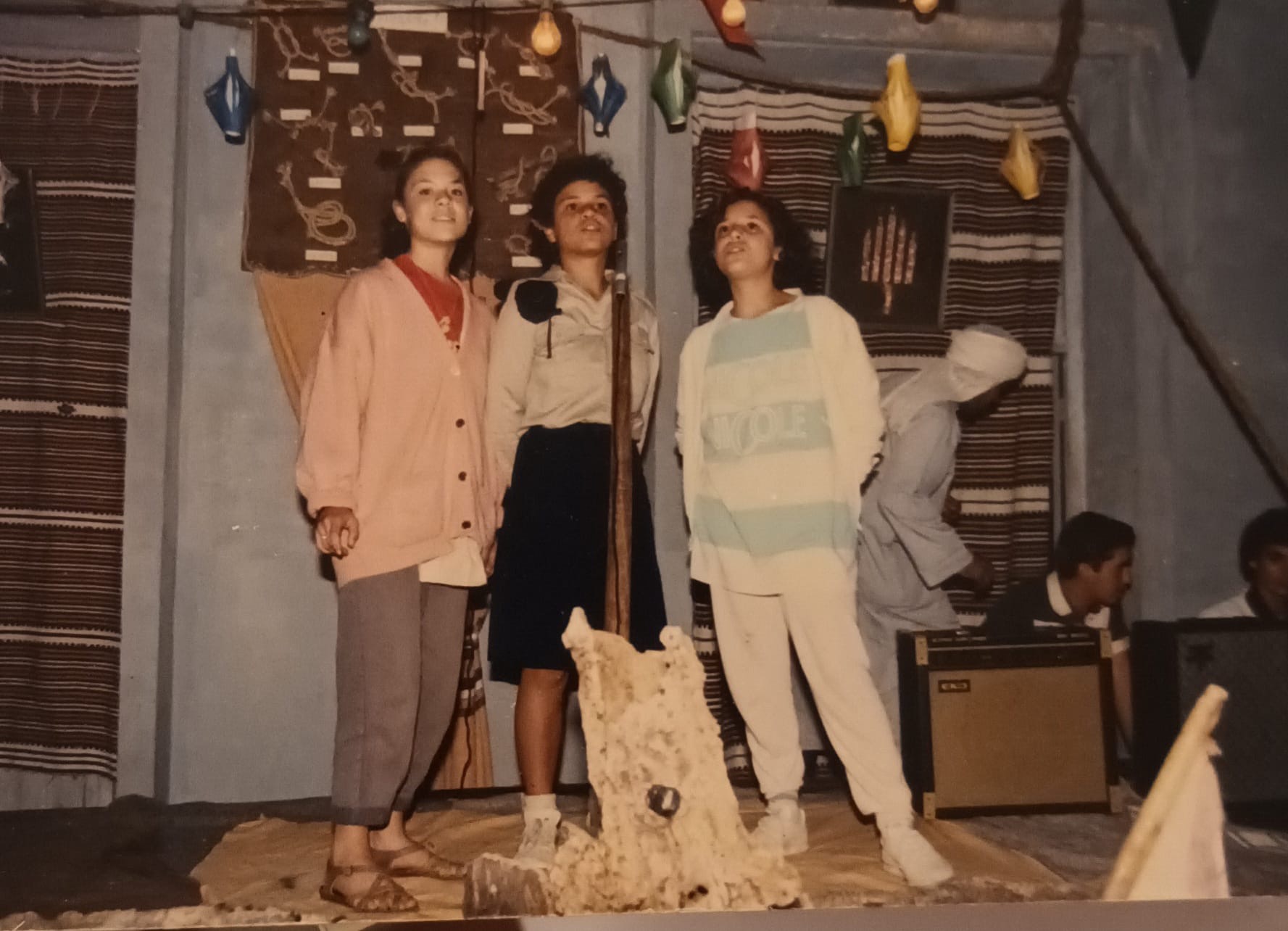
From a very young age, the three sisters loved to perform. “For every school show, we were always the first to sign up,” says Naïma, the eldest. “Our parents always encouraged us. There were girls at our school whose parents wouldn’t let them sing because it was frowned upon. But my sisters and I never had that problem.”
Without realizing it, the three sisters grew up immersed in a matrilineal heritage. These songs belonged primarily to women. They were passed down from one generation to the next, in kitchens, at celebrations, in women’s spaces.
“We may have been the last generation to witness these traditions,” Naïma laments. And it is precisely this realization that changed everything.
“Listening is vital for passing on traditions. But today, television, phones, and modern life have changed things. Young people no longer take the time to listen.”
A fragile inheritance
The TighriUzar artistic project was born out of concern when the three sisters found themselves in France, far from their roots: the last women who knew these ancestral songs were disappearing, and with them, entire fragments of Kabyle culture, a culture based primarily on oral transmission.
“Listening is vital for passing on traditions,” Samia asserts. “But today, television, phones, and modern life have changed things. Young people no longer take the time to listen.”
At village celebrations, the songs of the older women are sometimes dismissed as old-fashioned: “Young people are just waiting for the DJ to start so they can dance!”
So the Ammour sisters decided to do what memory keepers have always done: collect, preserve, and transmit. Their approach is both artistic and documentary.
The songs they perform come from their mother, but also from the elders of the village whose memories they carefully record. “It was a sacred mission for me,” Nadia confides. “When I started, I wanted to understand what I was singing, to know exactly what I was passing on. I wanted to become fully conscious of my art.”
This desire to pass on their heritage is also part of a broader commitment. “As activists in Algeria, we took part in many cultural activities, particularly those aimed at preserving Amazigh identity,” Nadia explains. “At one point I also joined the feminist association Tharwa, founded by Fadhma Nsoumer, through which I participated in workshops on drafting egalitarian laws in Tizi Ouzou and Algiers.”
Exile: Between loss and transmission
It’s no coincidence that the group was born in France. All three sisters have experienced exile.
For Nadia, who arrived in 2008 on a student visa, the stage became a way to transform nostalgia into something shared. For Naïma, the eldest, leaving was a choice: “I wanted a life as an artist, a free life.”
But for Samia, exile is a wound: “It’s a forced exile. I still carry the pain of living far from my roots.” Music then becomes a refuge. “It’s these songs we perform that have allowed me to hold on to and give form to all the nostalgia that overwhelmed me.”
“Music and art are the most powerful ways to preserve a culture, keep an ancestral language alive, and create continuity between generations.”
As for Naïma, exile isn’t simply a matter of geographical distance. “There’s another kind of exile that I feel: the inner exile of women,” she observes. “It’s everything a woman might experience within herself, burdened by societal pressures, without being able to express it. I’ve met many women, particularly through joining the Femmes Solidaires association, who suffer and can’t speak of their pain. They’re trapped in this inner exile, forced to smile to put on a brave face for others.”
When memory finds its voice again
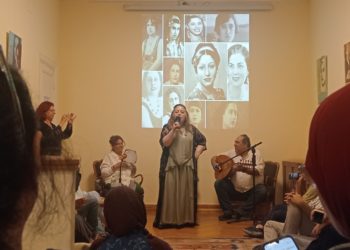
Today, the Ammour sisters continue to carry these ancestral voices on stage and in workshops. And sometimes, something precious happens. “We’ve met families who told us that our songs have created a bond between grandparents and grandchildren,” says Naïma, visibly moved. “Music and art are the most powerful ways to preserve a culture, keep an ancestral language alive, and create continuity between generations.”
Perhaps this is their greatest source of pride. For them, these songs are more than just music. “They are connections,” Samia says. “A human connection. A connection to the land, to history.”
In a world where minority cultures are disappearing at an alarming rate, the work of these three sisters reminds us of a simple truth: memory is never abstract. It has a voice. And very often, that voice is that of women. Because it is they who, for centuries, have carried the stories that no one else has written.