This post is also available in: العربية (Arabic)
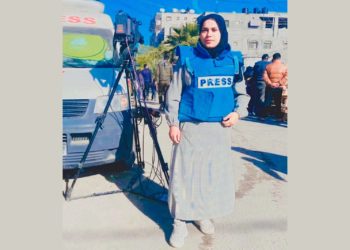
On June 15, Dr. Omnia Sweidan, a 2020 medical school graduate, posted a testimony on her Facebook page that quickly gained widespread attention. She recounted repeated incidents of obstetric violence she witnessed during her two-month residency at El‑Shatby Hospital, affiliated with Alexandria University, describing that period as “the worst time of my life.”
The incidents she described included verbal and sexual abuse, sexual harassment carried out under the pretext of gynecological examinations, and the performance of episiotomies and so-called “husband stitches”* without patients’ consent.
Among the incidents she recounted was the following: “A woman came in during the night shift after surviving an attempted rape. She had vaginal bleeding and a torn uterine wall. She arrived with an official police report and was accompanied by a police officer. The respected doctors refused to provide her with any medical assistance, neither prescribing emergency contraception nor referring her to a health center for HIV prevention. When I argued with them, they told me to forget about her, saying she was a whore and asking if I could see what she was wearing and the cigarettes she had on her. They then calmly went back to eating their sandwiches.”
Sweidan also described numerous cases of violence and harassment experienced by women during routine gynecological examinations and childbirth. “I saw a woman whose life was at risk, but they refused to admit her to intensive care because she was pregnant and they wouldn’t do anything before obtaining written consent from her husband, who was abroad in the Gulf, or from his father or brothers in Upper Egypt. They refused to accept her mother’s consent because, according to them, a woman can’t make that decision.”
The day after publishing her testimony, Egyptian authorities arrested Sweidan, following a complaint filed against her by hospital officials. She was charged with several offenses, including spreading false information and misusing social media platforms.
After hearing the defense’s arguments, the Bab Sharq Economic Misdemeanor Court issued its ruling on July 4th, acquitting her of the charge of violating Egyptian family values but convicting her on spreading false information within the country, under Articles 102 bis/1 and 188 of the Penal Code, and creating an online account with the intent to commit a crime, under Article 27 of the Cybercrime Law. The court sentence her to six months in prison, a three-year suspension, and a 20,000 Egyptian pound fine.
Meanwhile, the hospital administration issued a decision prohibiting male and female resident doctors from entering operating rooms. Those who conceal the truth contribute to the continued violence and harassment committed by some doctors and members of nursing staff.
Those who conceal the truth contribute to the continued violence and harassment committed by some doctors and members of nursing staff.
Testimonies revealed after Omnia broke the silence
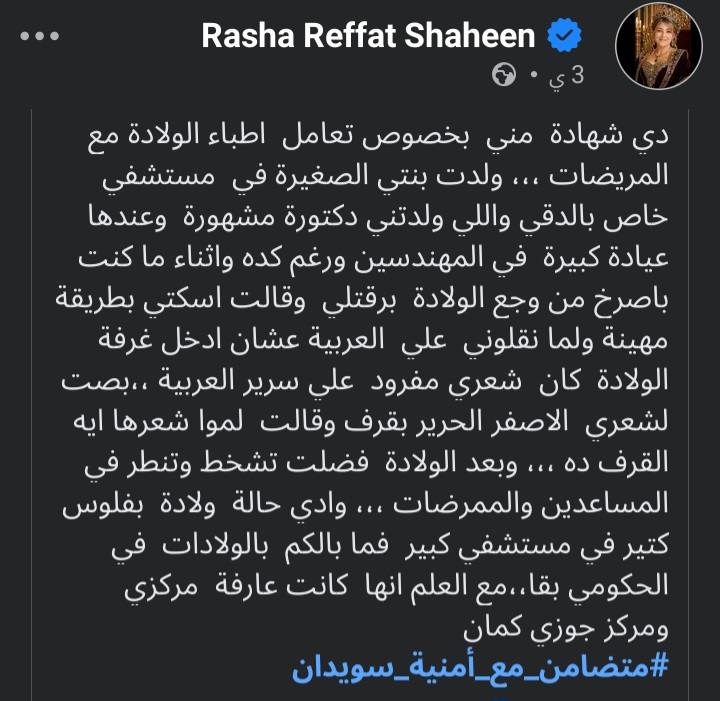
Basma Mahmoud, a 33-year-old housewife, was verbally abused by an obstetrics and gynecology consultant while giving birth at a low-cost public hospital, in front of several female relatives.
She says the incident occurred after she unexpectedly went into labor and had to rush to the emergency room unprepared. The doctor berated her for not removing her pubic hair. “I went into premature labor and wasn’t expecting it or prepared to give birth,” she says. “The doctor started yelling at me, calling me ‘filthy’ and ‘disgusting’ because my pubic hair wasn’t shaved.”
Economic circumstances are a major reason many women rely on low-cost public hospitals. While the cost of a caesarean section at a government hospital typically ranges from 3,000 to 6,000 Egyptian pounds (approximately 60 to 120 USD), it rises to between 15,000 and 30,000 Egyptian pounds (approximately 300 to 600 USD) at a private hospital or clinic.
Nourhan Sayed, a 28-year-old housewife, recounts how, after a natural birth, she underwent several stitches without anesthesia. She says the doctor reacted angrily to her cries of pain and showered her with insults and verbal abuse. She also recalls the stark disparity in how patients were treated inside the hospital, saying, “There was a woman admitted through powerful connections. They were treating her like royalty. Every nurse made sure she was taken care of.”
Violence that can lead to death
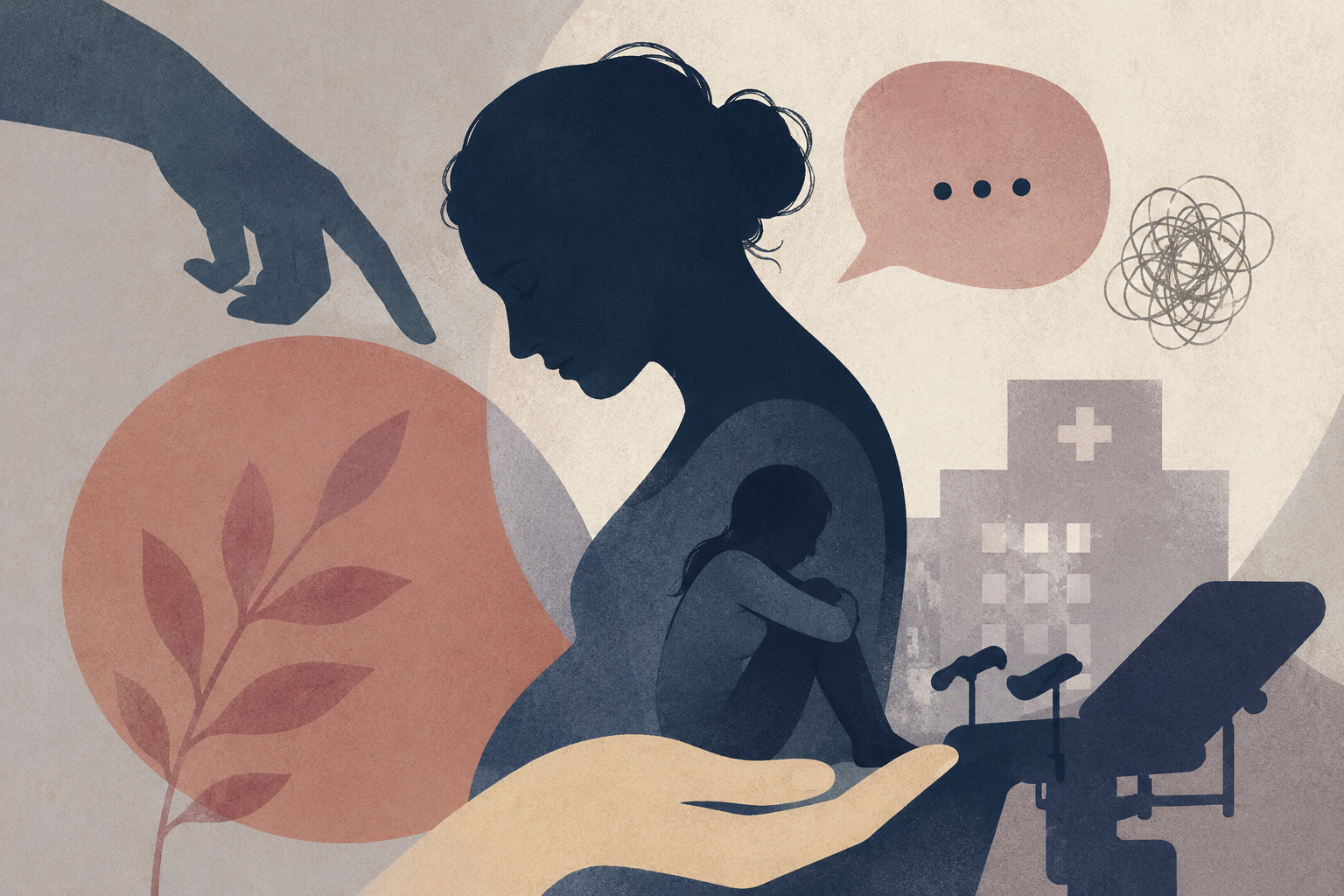
According to the World Health Organization (WHO), obstetric violence, or mistreatment during childbirth, includes a range of abuses committed against mothers, and in some cases fetuses, before, during, or after childbirth. These abuses take many forms, including physical, verbal, and sexual violence, and subjecting mothers to coercive medical procedures without their informed consent. They also include neglect and mismanagement, such as refusing pain relief, violating patients’ privacy, or denying women hospital admission. In the most severe cases, women are left to endure life-threatening complications that could have been prevented, or they and their newborns are detained in healthcare facilities because they cannot afford to pay medical fees.
Women’s rights advocates argue that obstetric violence is not simply the result of isolated misconduct or individual mistakes. It is rooted in the unequal power dynamic between doctors and patients. Many women’s lack of awareness of their medical rights, coupled with the broad authority wielded by healthcare providers, can lead to medical interventions being made without the woman’s active participation or informed consent. This reflects a problem that extends beyond individual practitioners to the very structure of the healthcare system.
In some cases, the consequences of obstetric violence and medical negligence extend far beyond immediate physical or psychological suffering, leaving women with long-term harm. According to her family, this is what happened to Madiha Ibrahim following her caesarean delivery at a private clinic in the town of Deir Mawas in Egypt’s Minya Governorate.
According to her sister, Madiha was undergoing a caesarean section when another emergency delivery case arrived at the clinic. The family says the doctor left Madiha before finishing suturing her incision to attend to the new patient, returning to complete the stitches only after the anesthesia had worn off. Her sister says that Madiha subsequently suffered severe physical and psychological complications that left her unable to carry on with her daily life.
The WHO and international human rights reports affirm that obstetric violence is not merely a violation of dignity or a form of psychological abuse but a leading cause of death and a major obstacle to global efforts to reduce maternal mortality.
Obstetric violence is widespread, but given the various forms of violence women face both inside and outside the home, many do not recognize it as a form of violence that warrants immediate intervention or psychological treatment to address its effects and long-term consequences.
Obstetric violence is not merely a violation of dignity or a form of psychological abuse but a leading cause of death and a major obstacle to global efforts to reduce maternal mortality.
Silenced testimonies of obstetric violence and lasting psychological harm
A study conducted by Dr. Farida Mahgoub, published on June 16th following Dr. Sweidan’s testimony, found a strong association between exposure to obstetric violence and deteriorating maternal mental health after childbirth. Mahgoub, a researcher specializing in obstetric violence and maternal and child health, surveyed women in Greater Cairo (Cairo and Giza). According to the study, 90% of participants had experienced at least one form of obstetric violence, while 87% reported symptoms of postpartum depression and approximately 13% experienced mental health symptoms.
Mahgoub also conducted field research at Qasr El-Aini Hospital in 2018, where she found that some women had been subjected to anywhere between one and 11 different forms of obstetric violence. She says she faced pressure and threats because of her research findings, which prompted her to launch an initiative to eliminate obstetric violence through the Kayan Foundation in 2022.
Ibrahim Magdy, a senior consultant in neurology and psychiatry at Ain Shams University Specialized Hospital, says that around ten women visiting his clinic each month suffer from postpartum depression, noting that some of them had experienced forms of obstetric violence.
Magdy explains that obstetric violence can leave long-term psychological scars, including trauma, chronic anxiety, and recurring nightmares. According to him, these effects may impair a mother’s ability to care for and bond with her child, and may also interfere with breastfeeding as a result of severe anxiety and the prolonged release of stress hormones.
Feminists speak up for Sweidan
Although there is no specific legal text in Egypt criminalizing obstetric violence as a separate offense, many practices that fall under this category, such as physical assault, verbal abuse, coercive medical interventions without consent, and violations of patient privacy, may constitute criminal offenses under the Egyptian Penal Code and the Medical Malpractice Law. According to Article 242 of the Penal Code, assault resulting in bodily injury is punishable by imprisonment for up to three years, with harsher penalties when the perpetrator is someone entrusted with the victim’s care.
Today, Sweidan is paying the price for exposing one of the country’s most sensitive and disturbing issues. Her arrest was followed by a smear campaign led by several Egyptian media outlets.
Yet discussions of legal accountability cannot be separated from the personal cost borne by women and female healthcare workers who choose to break their silence and expose these abuses.
In this context, feminist writer Iman Ismail believes that what Omnia Sweidan did was an extraordinary act of courage deserving of recognition, as she opened a deeply sensitive file in her capacity as both a physician and a witness to acts of abuse. Ismail believes that Sweidan’s testimony will help raise public awareness about the obstetric violence experienced by women. “Many women, across all social classes, do not know what their rights are or where the boundaries lie between acceptable and unacceptable treatment. By opening this issue up for serious discussion, I believe we will witness a greater awareness of these violations,” she says.