• it VO
  • fr Français
  • en English
  • ar العربية
About us
  • In-depth
    • All
    • Features
    • Files
    • World
    In Mediterranean Region: Sexual and Reproductive Rights Under Pressure

    In Mediterranean Region: Sexual and Reproductive Rights Under Pressure

    Morocco: 600 abortions a day—Alarming figures and tragic stories

    Morocco: 600 abortions a day—Alarming figures and tragic stories

    In Spain, the right to abortion is not guaranteed for all

    In Spain, the right to abortion is not guaranteed for all

    Invisible and vulnerable: Migrant women at the frontlines of Spain’s prostitution debate

    Invisible and vulnerable: Migrant women at the frontlines of Spain’s prostitution debate

    Serbia: Is contraception a luxury or a basic human right?

    Serbia: Is contraception a luxury or a basic human right?

    Trending Tags

    • Women artists
    • Ecofeminism
    • Women living from and on the streets
    • Women and bodies
    • Women and sports
    • Women and cinema
    • Ramadan series
    • Women and war
    • Women Living at the Margins
    • Press Freedom from the Perspective of Women Journalists
    • Period poverty
    • Gynecological violence
    • Women and prison
    • Safe spaces
    • Abortion and SRHR
    • Transgenderism
    • Women in rural areas
  • On the move
    Spain: CEAR and the fight against human trafficking

    Spain: CEAR and the fight against human trafficking

    Gaza: How many journalists must be killed for the world to react?

    Gaza: How many journalists must be killed for the world to react?

    Moroccan activist Ibtissam Lachgar held in solitary confinement, health in crisis

    Moroccan activist Ibtissam Lachgar held in solitary confinement, health in crisis

    Three women for one man’s pay: The plight of female agricultural workers in Egypt

    Three women for one man’s pay: The plight of female agricultural workers in Egypt

  • Portraits
    Sophie Bessis: “The battle for the intimate will be long, especially in the Global South!”

    Sophie Bessis: “The battle for the intimate will be long, especially in the Global South!”

    “Mom, Dad, Can We Talk About Privacy?”—A Tunisian children’s book on protecting kids from sexual violence

    “Mom, Dad, Can We Talk About Privacy?”—A Tunisian children’s book on protecting kids from sexual violence

    Kurdish journalist killed in Turkish drone strike in northeastern Syria

    Kurdish journalist killed in Turkish drone strike in northeastern Syria

    A Filmmaker’s Journey: Inside the Creative World of Margarita Bareikyte

    A Filmmaker’s Journey: Inside the Creative World of Margarita Bareikyte

  • Creations
    • All
    • Reviews
    • Visual Arts
    “La Malédiction (1)”, a theatrical adaptation of King Kong Theory bursting with Tunisian rage

    “La Malédiction (1)”, a theatrical adaptation of King Kong Theory bursting with Tunisian rage

    “Mom, Dad, Can We Talk About Privacy?”—A Tunisian children’s book on protecting kids from sexual violence

    “Mom, Dad, Can We Talk About Privacy?”—A Tunisian children’s book on protecting kids from sexual violence

    The El’Sardines series, a delicate feminist manifesto centered around an ecological mystery

    The El’Sardines series, a delicate feminist manifesto centered around an ecological mystery

    Atlantics, a film by Mati Diop: Filming the embodied resistance of spirits

    Atlantics, a film by Mati Diop: Filming the embodied resistance of spirits

  • Opinion
    Women in Gaza are living their worst nightmares - “ I want to go back to my life before the war, to my privacy, my home ”

    Women in Gaza are living their worst nightmares - “ I want to go back to my life before the war, to my privacy, my home ”

    Messages from life under bombardment—Can a mother cope with losing her six children at once? (10)

    Messages from life under bombardment—Can a mother cope with losing her six children at once? (10)

    Messages from life under bombardment—No cake for my children on their birthdays (9)

    Messages from life under bombardment—No cake for my children on their birthdays (9)

    Messages from life under bombardment – No food or water in Gaza (8)

    Messages from life under bombardment – No food or water in Gaza (8)

  • Multimedia
    "I hope it doesn’t go viral: Journalism and sexist attacks in digital age". A video investigation by Çiçek Tahaoğlu

    "I hope it doesn’t go viral: Journalism and sexist attacks in digital age". A video investigation by Çiçek Tahaoğlu

    Period poverty in Montenegro

    Period poverty in Montenegro

    Period poverty in France (1)

    Period poverty in France (1)

    Period Poverty in Italy

    Period Poverty in Italy

  • Country context
No Result
View All Result
BLOGS
Medfeminiswiya
  • In-depth
    • All
    • Features
    • Files
    • World
    In Mediterranean Region: Sexual and Reproductive Rights Under Pressure

    In Mediterranean Region: Sexual and Reproductive Rights Under Pressure

    Morocco: 600 abortions a day—Alarming figures and tragic stories

    Morocco: 600 abortions a day—Alarming figures and tragic stories

    In Spain, the right to abortion is not guaranteed for all

    In Spain, the right to abortion is not guaranteed for all

    Invisible and vulnerable: Migrant women at the frontlines of Spain’s prostitution debate

    Invisible and vulnerable: Migrant women at the frontlines of Spain’s prostitution debate

    Serbia: Is contraception a luxury or a basic human right?

    Serbia: Is contraception a luxury or a basic human right?

    Trending Tags

    • Women artists
    • Ecofeminism
    • Women living from and on the streets
    • Women and bodies
    • Women and sports
    • Women and cinema
    • Ramadan series
    • Women and war
    • Women Living at the Margins
    • Press Freedom from the Perspective of Women Journalists
    • Period poverty
    • Gynecological violence
    • Women and prison
    • Safe spaces
    • Abortion and SRHR
    • Transgenderism
    • Women in rural areas
  • On the move
    Spain: CEAR and the fight against human trafficking

    Spain: CEAR and the fight against human trafficking

    Gaza: How many journalists must be killed for the world to react?

    Gaza: How many journalists must be killed for the world to react?

    Moroccan activist Ibtissam Lachgar held in solitary confinement, health in crisis

    Moroccan activist Ibtissam Lachgar held in solitary confinement, health in crisis

    Three women for one man’s pay: The plight of female agricultural workers in Egypt

    Three women for one man’s pay: The plight of female agricultural workers in Egypt

  • Portraits
    Sophie Bessis: “The battle for the intimate will be long, especially in the Global South!”

    Sophie Bessis: “The battle for the intimate will be long, especially in the Global South!”

    “Mom, Dad, Can We Talk About Privacy?”—A Tunisian children’s book on protecting kids from sexual violence

    “Mom, Dad, Can We Talk About Privacy?”—A Tunisian children’s book on protecting kids from sexual violence

    Kurdish journalist killed in Turkish drone strike in northeastern Syria

    Kurdish journalist killed in Turkish drone strike in northeastern Syria

    A Filmmaker’s Journey: Inside the Creative World of Margarita Bareikyte

    A Filmmaker’s Journey: Inside the Creative World of Margarita Bareikyte

  • Creations
    • All
    • Reviews
    • Visual Arts
    “La Malédiction (1)”, a theatrical adaptation of King Kong Theory bursting with Tunisian rage

    “La Malédiction (1)”, a theatrical adaptation of King Kong Theory bursting with Tunisian rage

    “Mom, Dad, Can We Talk About Privacy?”—A Tunisian children’s book on protecting kids from sexual violence

    “Mom, Dad, Can We Talk About Privacy?”—A Tunisian children’s book on protecting kids from sexual violence

    The El’Sardines series, a delicate feminist manifesto centered around an ecological mystery

    The El’Sardines series, a delicate feminist manifesto centered around an ecological mystery

    Atlantics, a film by Mati Diop: Filming the embodied resistance of spirits

    Atlantics, a film by Mati Diop: Filming the embodied resistance of spirits

  • Opinion
    Women in Gaza are living their worst nightmares - “ I want to go back to my life before the war, to my privacy, my home ”

    Women in Gaza are living their worst nightmares - “ I want to go back to my life before the war, to my privacy, my home ”

    Messages from life under bombardment—Can a mother cope with losing her six children at once? (10)

    Messages from life under bombardment—Can a mother cope with losing her six children at once? (10)

    Messages from life under bombardment—No cake for my children on their birthdays (9)

    Messages from life under bombardment—No cake for my children on their birthdays (9)

    Messages from life under bombardment – No food or water in Gaza (8)

    Messages from life under bombardment – No food or water in Gaza (8)

  • Multimedia
    "I hope it doesn’t go viral: Journalism and sexist attacks in digital age". A video investigation by Çiçek Tahaoğlu

    "I hope it doesn’t go viral: Journalism and sexist attacks in digital age". A video investigation by Çiçek Tahaoğlu

    Period poverty in Montenegro

    Period poverty in Montenegro

    Period poverty in France (1)

    Period poverty in France (1)

    Period Poverty in Italy

    Period Poverty in Italy

  • Country context
About us
Medfeminiswiya
About us

Show me how you care: Birth control, is it (a) right?

Birth control takes center stage as abortion is pushed aside, and the conversation changes from who is allowed to terminate a pregnancy to who is allowed to get pregnant in the first place.

Caline Nasrallah by Caline Nasrallah
27 September 2021
in Files, In-depth
130 4
0
Share on FacebookShare on Twitter

This post is also available in: Français (French) العربية (Arabic)

It was when I read Bonaventure Soh Bejeng Ndikung’s The Delusions of Care that I really started to view care as a commodity, as a sort of performative currency that eggs neoliberalism forever onward in the guise of help, protection, modernity, or any other trope that the Global North plasters onto its capitalist and imperialist policies affecting the peoples forever viewed as lesser-than.

Care can encapsulate any number of things, provided it fits the desired framework. And birth control has long been utilized as a major axis of said care. Several non-governmental and rich white philanthropists preach the importance of birth control, but a look into the beginnings of the birth control movement in the United States paints a more complex picture, one whose insidious legacy has clear traces in Lebanon today.

Abortion has been illegal in Lebanon since the drafting of the Lebanese law in 1943. It is equally forbidden by religion, whose tentacles have found their way to every last part of the Lebanese state. It must be mentioned that in 1969, the Presidential Decree No.13187 stated that abortion would only be permitted if the mother’s life was in danger. But this is more a matter of logic than a reproductive health victory, and so this amendment has not changed the contraceptive landscape in Lebanon at all, where not only women seeking abortions but also the person performing the abortion are punishable by law. This, however, in no way decreases the state’s intervention in decreasing birth rates when it comes to the Syrian and Palestinian refugees in Lebanon, or the female migrant worker populations.

“What was demanded as a “right” for the privileged came to be interpreted as a “duty” for the poor” 

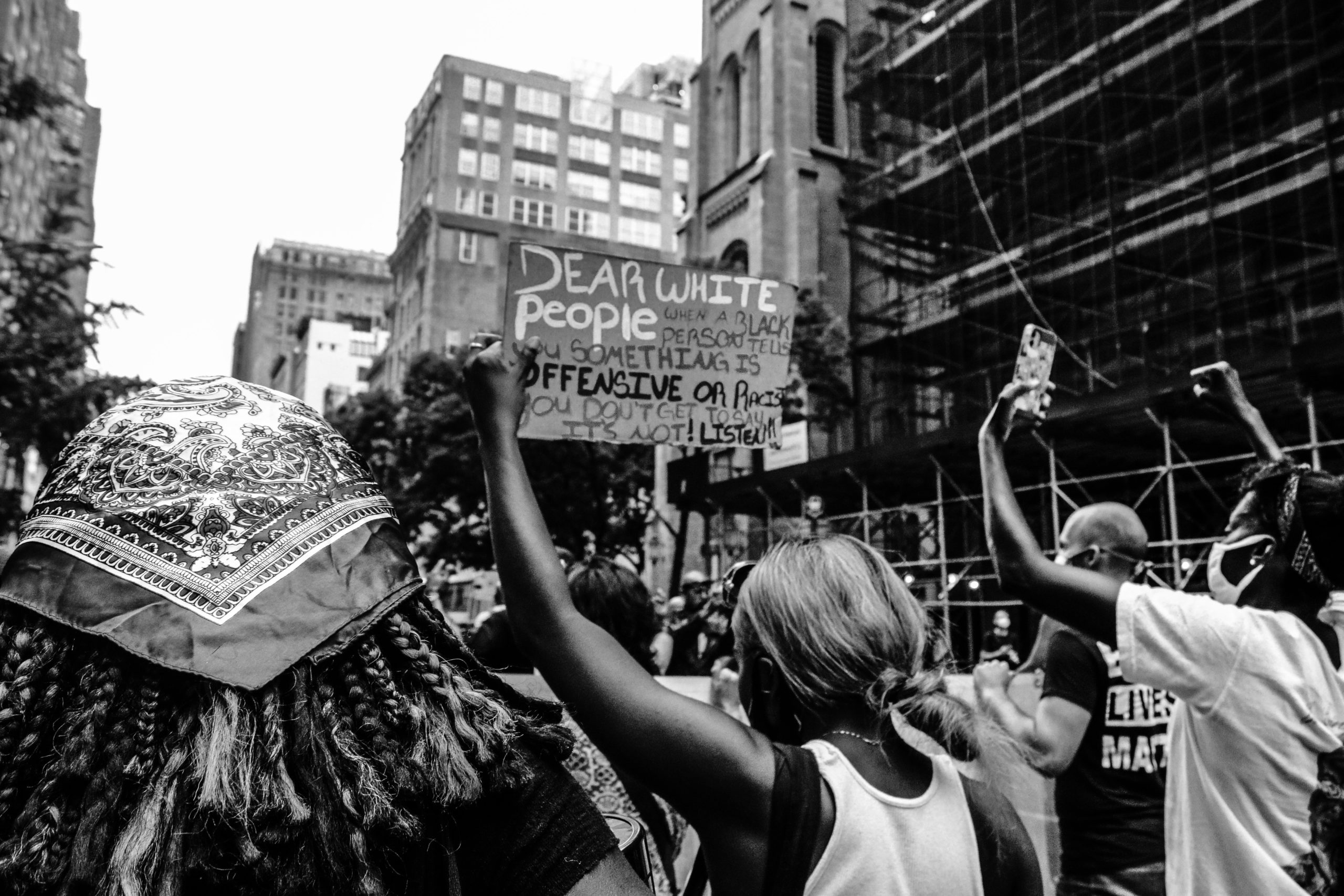
The American Margaret Sanger was the one who coined the term birth control and founded the birth control movement in the US in the early 20th century. But the interconnectedness of her message with eugenics and racism proves once again that the white woman’s feminism was anything but intersectional. In the late 1800’s, the white birthrate in the US was decreasing significantly. This meant that the future workforce would be considerably less white, and therefore considerably more non-white: other racial groups that had suffered at the hands of the white population would hold more power as this white population dwindled. Unsurprisingly, this sounded the capitalist/racist alarm, as the decreasing white birthrate was even officially dubbed “race suicide.” In an eerie alignment with the eugenics movement, Angela Davis explains in Women, Race & Class how birth control thus emerged as a way to “prevent the proliferation of the lower classes”, and thus as an “antidote to race suicide.” As such, birth control was introduced to the Black, immigrant, and poor populations: their numbers had to decrease for white supremacy to remain intact.

Davis’s sinister words have remained with me since I first read them: “What was demanded as a “right” for the privileged came to be interpreted as a “duty” for the poor.”

From its earliest beginnings, birth control was nefariously altered from a progressive right that women were advocating for to a deeply racist strategy intending to control a population. This tinges everything that came afterward with an ambiguity removing all innocence from the act of a woman having the final say over her own body and future: how could birth control be viewed as entirely positive, as care, knowing the history of the movement? Knowing the interwovenness of capitalism and racism with the control of populations?

The same scenario unfurls in Lebanon today: the state, religion, and patriarchy wield their power to control women further, with how inaccessible “black market” abortions are and the fact that the law itself criminalizes them. Thus the unsafety is twofold: medically speaking, since the abortion would be performed in relatively unsafe environments with no post-abortion care, physical or psychological, but also legally speaking, since it is against the law.

This is an important tool for the state to continue protecting its own nationalistic view—and while bearing in mind the sheer plurality of these views, a plurality resulting from the various sects and communities that constitute Lebanon’s social fabric, they all seem to converge on the supremacy of the upper class and the denigration of any other community (and race) unanimously viewed as lesser. Sanger’s connection to eugenics comes up again here, in the discussion of the “quality” of a population and, to put it rashly, who is allowed to breed. Birth control takes center stage as abortion is pushed aside, and the conversation changes from who is allowed to terminate a pregnancy to who is allowed to get pregnant in the first place.

Is there even such a thing as care in the patriarchal state?

In light of this, stories of contraceptive success take on uncomfortable dimensions when thought of in relation to the deep racism of the Lebanese state. For instance, Palestinian refugee women’s fertility rate dropped by half between 1987 and 2006, and it is even projected to become negative in the near future. This can be linked back to very high rates of UNRWA-provided contraceptive usage. The question is, why? Why is it so important for these women not to procreate? And the same goes for Syrian refugee women in Lebanon: the focus is centered on limiting their birthrates and increasing their access to contraception. This is not what is exactly happening on the ground, however, as these women have been reported to face difficulties in finding contraceptives or reproductive healthcare services, be it due to discrimination, financial reasons (the cost of healthcare or the cost of transportation to clinics) or even the lack of women’s preferred methods of contraception. Female migrant domestic workers also bear the brunt of the Lebanese state’s racism. The Kafala system, likened to modern-day slavery, ties these women up into inhumane working conditions with no protection, and cases of pregnancy are scandalous and quickly resolved: preventing the proliferation of the lower classes, of the subjugated women.

How is it, then, that birth control and access to contraceptives could be viewed as care? And is there even such a thing as care in the patriarchal state? As disaster after disaster erupts in societies all over the world, and as Lebanon descends further into utter chaos and destruction, it is abundantly clear that these systems are not working. There is something deeply wrong, as care has lost all its meaning and become a delusion. How is it, then, that we can unlearn it back to its initial significance?

Disclaimer: Abortion and birth control should be accessible for women of all classes and races with no exception. It is a fundamental right that a woman should be able to choose for herself whenever and wherever she deems it necessary.
 

Tags: Abortion and SRHR
Caline Nasrallah

Caline Nasrallah

Caline Nasrallah is a literary translator, editor, and researcher with a focus on language as a feminist tool. She has co-translated two novels and is currently working on the third, forthcoming in 2024. Her editing and translation work spans fiction and non-fiction. She endeavors to put language at the service of liberation in each of her projects.

Related posts

“Palestinian Women,” the revived history of women militants for the liberation of Palestine
In-depth

“Palestinian Women,” the revived history of women militants for the liberation of Palestine

by Nathalie Galesne
6 February 2024
863

The documentary by Lebanese director Jocelyne Saab, screened at the 27/20 Festival in Tunis, shook the public. What do these...

Croatia: Men Kneeling in Main Squares for Women’s Chastity
In-depth

Croatia: Men Kneeling in Main Squares for Women’s Chastity

by Snježana Pavić
25 September 2023
807

On the first Saturday of every month, groups of men kneel in the main squares of many cities across Croatia...

Single moms in Lebanon: We fight alone

Single moms in Lebanon: We fight alone

8 June 2021
653
Tunisia: 10 years after 14 January 2011, women are still in Revolution

Tunisia: 10 years after 14 January 2011, women are still in Revolution

10 May 2021
562

Leave a Reply Cancel reply

Your email address will not be published. Required fields are marked *

J'accepte les termes et conditions et la Politique de confidentialité .

Medfeminiswiya

Medfeminiswiya is a feminist network that brings together women journalists working in the fields of media and content production in the Mediterranean region.

Newsletter


    Follow us

    Browse topics


    • In-depth
    • Files
    • Features
    • On the move
    • Portraits
    • Opinion

    • Creations
    • Visual Arts
    • Reviews
    • Multimedia
    • Country Context
    • Blogs
    • About us
    • Our community
    • Our partners
    • Become a member
    • Editorial charter
    • Disclaimer

    © 2025 Medfeminiswiya - Mediterranean Network for Feminist Information

    • it VO
    • fr Français
    • en English
    • ar العربية
    • In-depth
    • On the move
    • Portraits
    • Creations
    • Opinion
    • Multimedia
    • Country context
    • Blogs
    No Result
    View All Result

    © 2025 Medfeminiswiya - Mediterranean Network for Feminist Information

    Welcome Back!

    Login to your account below

    Forgotten Password?

    Retrieve your password

    Please enter your username or email address to reset your password.

    Log In

    Add New Playlist

    Ce site n'utilise pas de cookies. This website does not use cookies. هذا الموقع لا يستخدم ملفات تعريف الارتباط.