Cette publication est également disponible en :
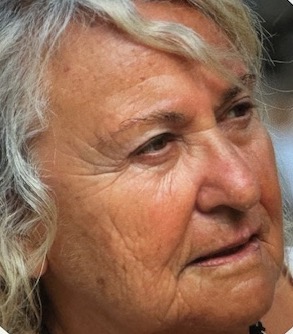
Laura Cima’s activism began in the 1980s, when she contributed to the establishment of the first Green Party lists and became involved in the anti-nuclear and environmental struggles. First elected as a Member of Parliament in 1987, she became president of the first female-majority Green parliamentary group. Today, she continues her outreach activities through her blog and the website Ecofemminismo e sostenibilità (Ecofeminism and Sustainability). In 2017, she published “Ecofeminism in Italy: the roots of a necessary revolution,” with Franca Marcomim.
The anthropocentric, mechanistic conception of nature has distant origins. What do you, as a philosopher and ecofeminist, think about it?
To understand the origins of this phenomenon, we need to go back to prehistoric times, when matrifocal social organization was based on a more egalitarian relationship between the sexes—not least because men were not yet aware of their role in procreation. As long as they believed that women were autonomous creators of children, not only bringing them into the world but also giving them life through a kind of parthenogenesis (the act of reproducing without fertilization, which some animal species can do), their power would remain fairly marginal. This changed suddenly when men became aware of their own contribution to conception: from then on, men crushed women, erasing their invaluable contribution to human history. Under male domination, patriarchy was imposed across all spheres: the social, cultural, political, scientific, sexual… Nature has been dominated and plundered in the same way. Just think of the language that has always described it as something inferior to be “conquered,” that names unexplored or uninhabited lands as “virgin.”
The 2030 Agenda, approved by the UN in 2015, calls for the achievement of 17 goals, including sustainable development and gender equality. How can we critically assess these recommendations in the current global context?
The 2030 Agenda devotes considerable space to women’s rights and ecofeminism, and this gives me great hope for the future, provided that the UN isn’t destroyed by then. Really, with Musk, Trump, and Putin, I don’t know what women can expect in the society currently taking shape. The outlook is daunting, which is why I believe it’s essential to stay focused on this agenda, which adopts a language and value system that offers some hope and recognition for what we’ve achieved so far.
Nature has been dominated and plundered in the same way. Just think of the language that has always described it as something inferior to be “conquered,” that names unexplored or uninhabited lands as “virgin.”
At a time in history when wealth, and the power that goes with it, is concentrated in the hands of a very small number of people, all male, we need to remember the extraordinary generative power of women by valuing the natural ecosystem and the empathetic relationship between living beings. This is precisely what keeps the world going by guaranteeing life on Earth, beyond all attempts at predation and all control mechanisms. We need to rediscover the complexity, richness, and relational empathy of the feminine in the face of these frightening patterns and the systematic predation of the planet’s resources. We also need to defend ourselves against those who deploy the most disparate means to start and win wars, like satellites that manage information and wealth even more than armies themselves. An Orwellian scenario. 2030 is terribly close, while the goals of the UN Agenda seem ever more distant.
In your article, you describe ecofeminism as a “necessary revolution.” Why is ecofeminism more essential today than ever before?
We urgently need to find alternative paths to those imposed by patriarchal power, and we ecofeminists have a central role to play in this indispensable transition. A few days ago, during a debate in Trento for a book presentation, I asked the young women present whether they would run in the next elections. Many of them are already organizing a number of initiatives at the community and social levels, but they very rarely enter politics. It’s a disaster, because men use their ideas and intuition for their own ends, and women don’t defend themselves in the institutional arena.
I personally began my activism in the environmental, pacifist, and anti-nuclear movements at the University of Trento, in the fledgling Faculty of Sociology, with the women of the “Cerchio spezzato” (Broken Circle), one of the first feminist collectives in 1970s Italy. We were young activists, academics, and researchers who shaped the university for some time, but today, even this place of freedom and self-determination is once again at the mercy of the logics of the academic mandarinate. We must continue to fight while also bearing in mind certain fundamental landmarks of the feminist cause, such as giving children their mother’s surname. This has a profound meaning that is not merely symbolic. The automatic use of the father’s surname refers to parental authority and the role of the man who decides for everyone in the family, thus influencing the way children are raised and educated. But many young mothers prefer to maintain the status quo. They are probably unaware of the efforts we have made to obtain this right (1).
I also hope that women will become more active and have the courage to get involved in politics—it’s the only way to change things.
What have been the main victories of the Italian ecofeminist movement? And what challenges does it face in the future?
When I founded the Greens with Alex Langer (2), shortly after the Chernobyl tragedy, I became personally involved in the anti-nuclear battle, which we won with two referendums. These made it possible to completely block the energy supply process, which in Italy too was moving dangerously toward nuclear power. Though various attempts are being made to revive nuclear power, the pressure of the referendum is too strong to be ignored. So I consider this to be one of the major victories we’ve achieved so far.
We urgently need to find alternative paths to those imposed by patriarchal power, and we ecofeminists have a central role to play in this indispensable transition.
The current climate crisis reinforces the need to understand how ecosystems are changing and how we can reverse the trend, but above all how we can adapt to these now irreversible changes. While on one hand, we must continue to reduce CO2 emissions, we must also learn to live with new environmental conditions. That’s why an international women’s movement rooted in each territory is urgently needed, beyond the great female reference figures such as Vandana Shiva or Luisa Morgantini. The time has come to pass the baton to people younger than us—we who are now well into our seventies.
We are witnessing a paradoxical situation in Italy: the more extreme the effects of global warming become, the more the environment disappears from the Meloni government’s agenda and from public debate…
Unfortunately, it’s also the result of misinformation and a total lack of interest in politics by a large part of the population. How many young people don’t vote? Do more women or men abstain from voting? Throughout her career, Meloni has used language and content specific to men, so I’m not surprised by her lack of interest in environmental issues. Shlein (3) herself, whom I strongly supported to become president of the Partito Democratico (Democratic Party) and know personally, currently seems stifled by the internal dynamics of her coalition. Finally, even in Parliament, the opposition is content to criticize the government’s work without proposing any valid alternatives. When I was in the opposition, I sometimes collaborated with the majority on a number of priority issues because I considered it essential to confront even those with ideas diametrically opposed to my own. But above all, where have the ecologists gone? The Greens are a large, cross-cutting, international movement present in many countries, yet their voices are virtually inaudible everywhere in the world: in the United States, in Europe, in the Middle East, everywhere…
NOTES:
A ruling by the Constitutional Court on April 27, 2022 declared illegitimate all rules that automatically attribute the paternal surname to children, as they are contrary to certain articles of the Constitution and the European Convention on Human Rights.
Alex Langer was an Italian politician, journalist, essayist, environmentalist, and pacifist, who was born in 1946 and died in 1995. A representative of the communist organization Lotta Continua, he was editor-in-chief of the eponymous newspaper and founded the Green Party in Italy, also becoming one of the leaders of the European ecological movement.
Elena Ethel Schlein is an Italian politician, secretary of the Partito Democratico since March 12, 2023.