Cette publication est également disponible en :
From her balcony in Menzah VI, Faïza Mejri surveys her thriving garden. She has lived in this building since the late 1970s and built her career as a presenter on RTCI, the French-language channel of Tunisian national radio, where she devoted herself to programs on health, family, and literature—her lifelong passion. For her, literature was a window to the world, a space of discovery and dialogue, reinforcing her belief that knowledge and exchange enrich life.
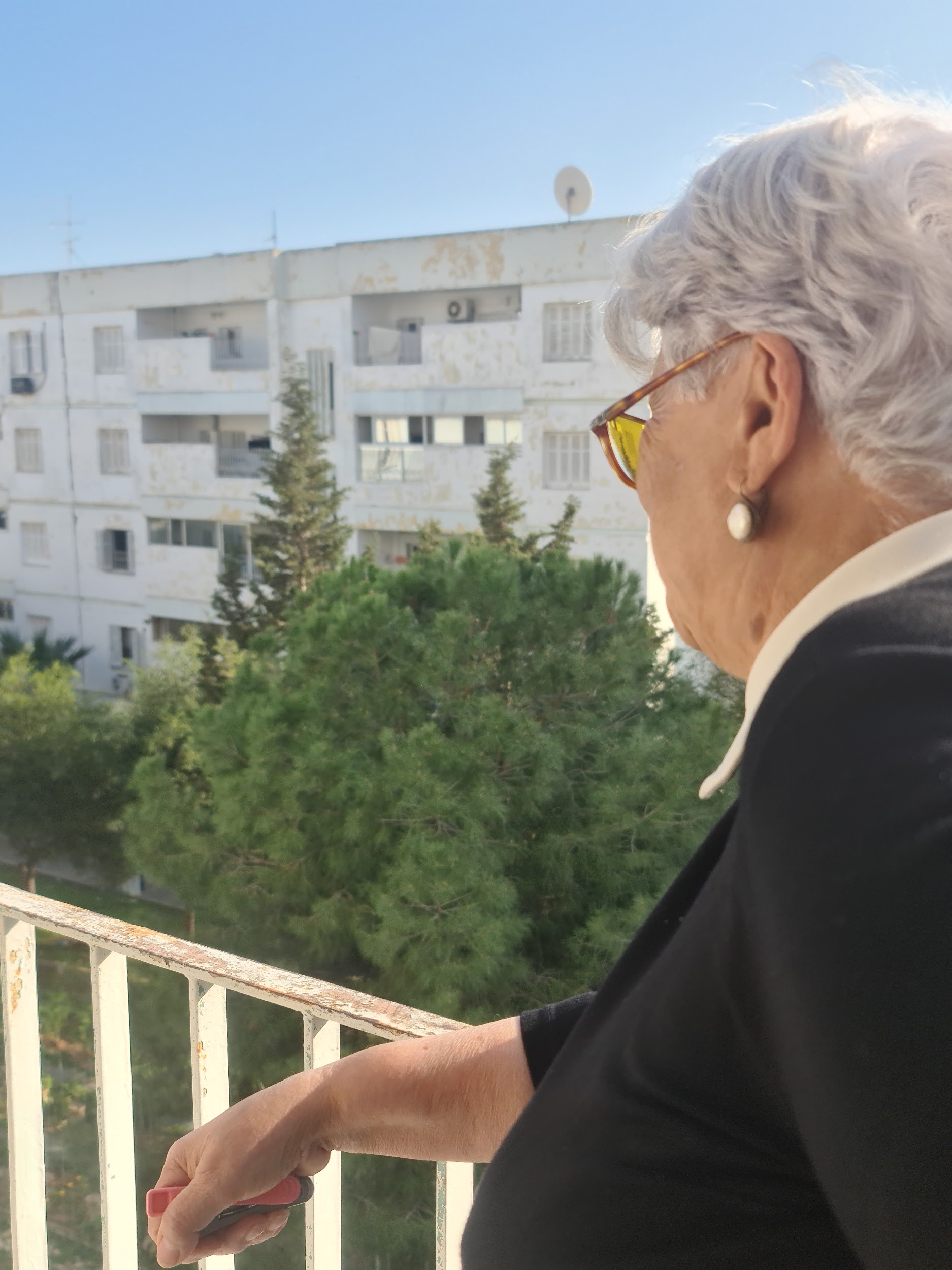
“For years,” she recalls, “I turned my eyes away from this forsaken plot at the foot of the building, a dumping ground for waste and debris. But it had the potential to be a space where people could breathe.”
The turning point came when a friend gifted her a citrus tree from Tabarka, in northwest Tunisia. She named it ‘Tina’ but was dismayed to see it withering in its plastic bag. It needed a home. With no gardening experience, she sought help from her neighbor, architect Zakia M’kadmi, and residents Faïa’qa, Abdel Fattah, and Abdel Razak Khadraoui. Thus, the first team of “Garden of Ommi Faïaza” was born. What began as a small initiative quickly transformed not only the appearance of the building but also the relationships among its residents, fostering a new spirit of mutual aid and community.
Restoring nature’s rights
With her experience in management, Faïaza took charge of orchestrating the garden’s development. “Zakia, Abdel Fattah, and I pooled our money to buy essentials: a spade, a shovel, a pickaxe, and a wheelbarrow. We also had to figure out an irrigation system suited to the soil and climate.”
“The positive impact extends beyond the garden. Improved air quality and lower temperatures have encouraged more physical activity. Some residents now exercise before joining the group to water and tend the plants”.
“I had no farming or irrigation knowledge,” she admits, “but the recent years of drought pushed me to find the most efficient watering method. After researching and consulting experts, we opted for the jar irrigation system.”
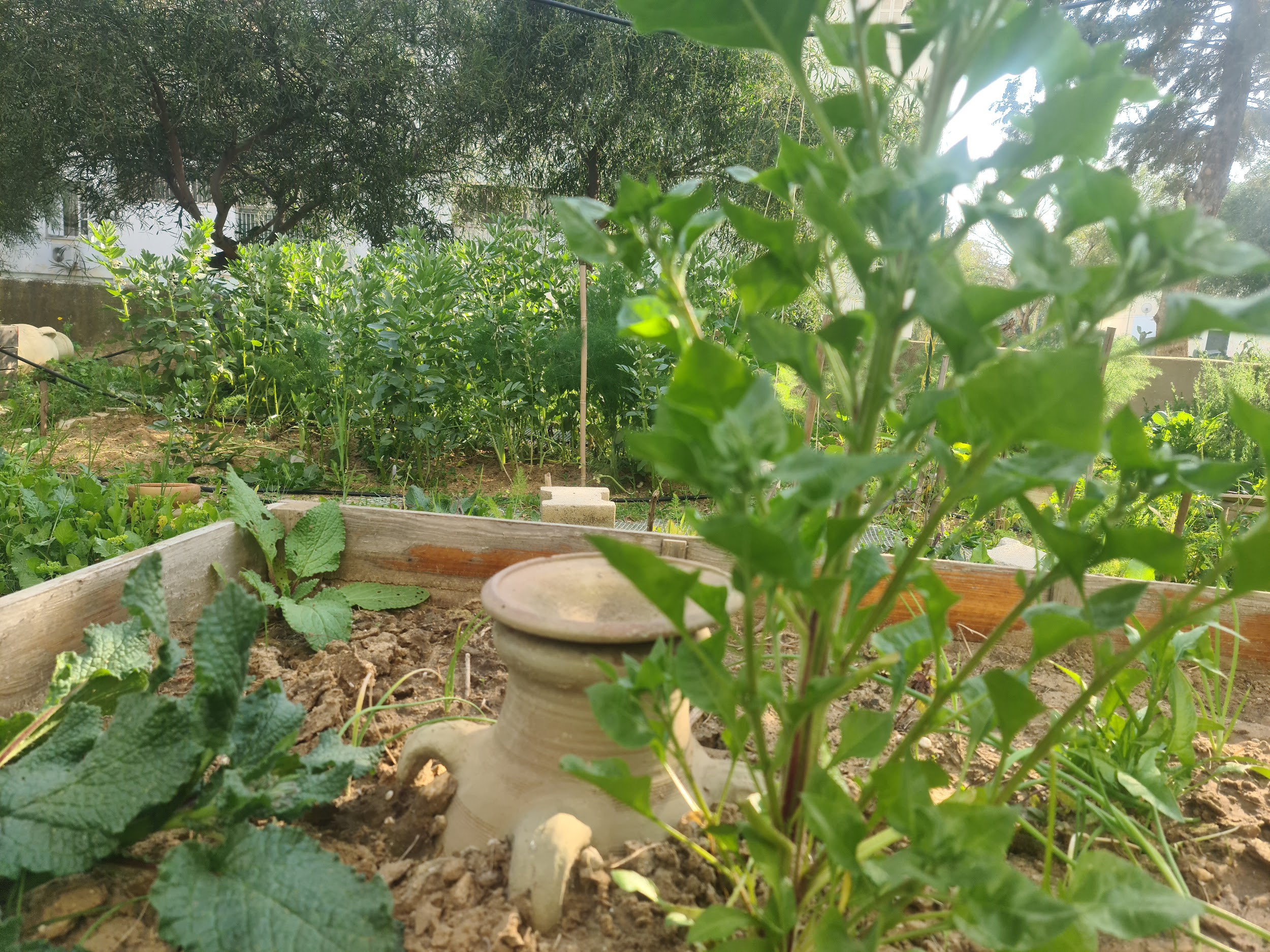
She rediscovered an ancient Mediterranean technique: terracotta jars buried near plant roots slowly release moisture, covered with lids to prevent evaporation. “The Spanish have used this method for centuries. It’s ideal for areas that are difficult to access or suffer from water shortages.”
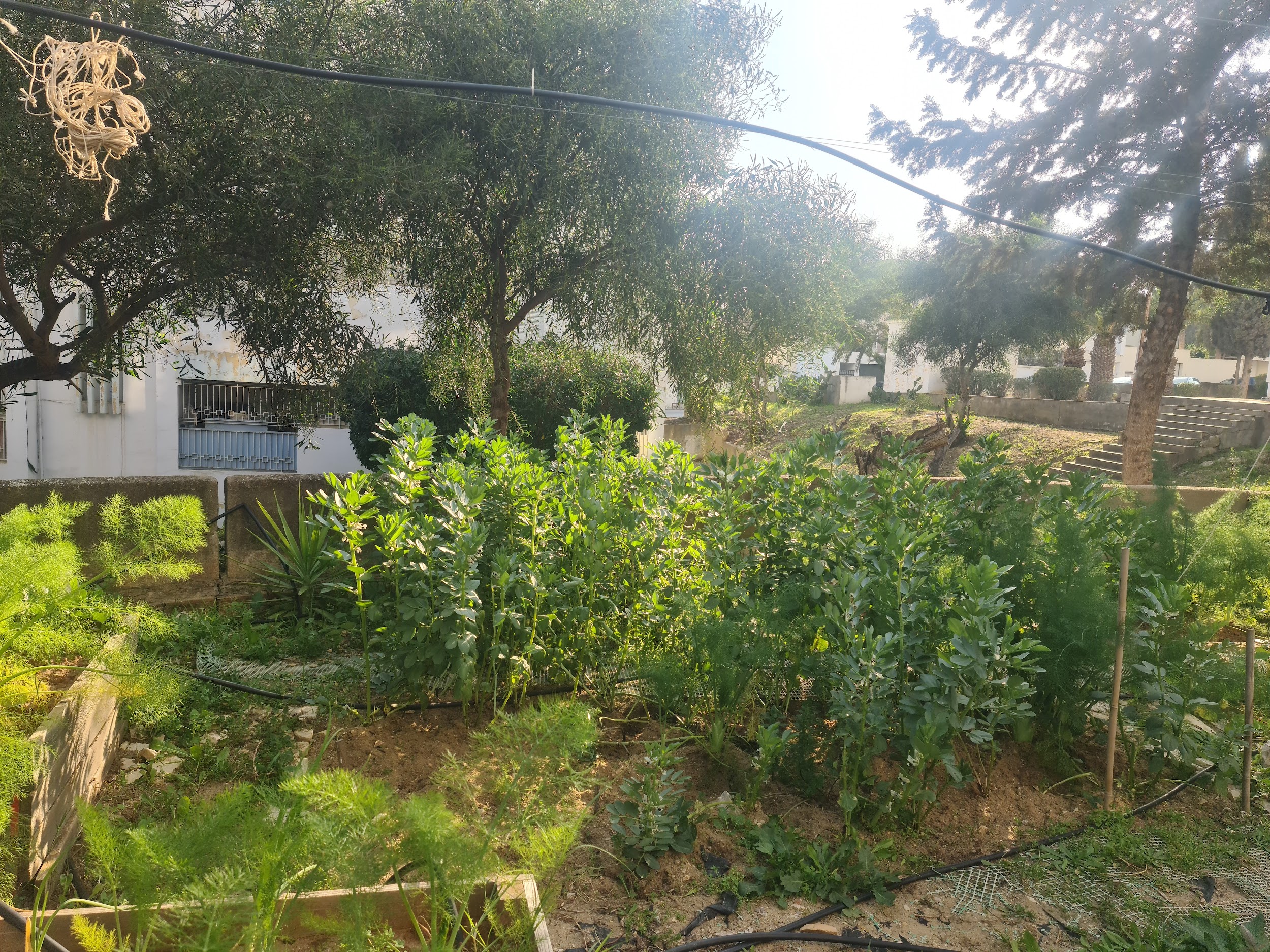
Through trial and error, Faïa’za refined her understanding of gardening, soil management, and planting schedules. Composting soon became another priority. “We decided against chemical fertilizers. Our goal was not mass production but reconnecting people with the earth. Organic compost was the answer. I began sorting my own household waste and encouraged the neighbours to do the same. Initially, they were excited, but most gave up over time. I carried on with a few dedicated residents who collected eggshells, food scraps, and vegetable peels. We placed them in a composting barrel, aerated, moistened, and turned them weekly until we obtained ‘black gold’—natural fertilizer.”
Despite limited participation, Faïa’za remains optimistic. “I am neither an optimist nor a pessimist… I’m both! One day, waste sorting will be second nature.”
A model of urban resilience
A year after the garden’s creation, the Covid-19 pandemic struck. But Faïaza, Zakia, Faïqa, Abderrazak, and Abdel Fattah had already harvested their first crops: onions, carrots, fennel, and medicinal and aromatic plants such as rosemary, thyme, and basil.
Imen Zafrane, an urban planner who followed the project, explains: “The Garden of ‘Ommi Faïaza’ embodies urban agriculture’s benefits—purifying the air, reducing heat islands, and improving rainwater absorption to prevent flooding. Such green spaces boost biodiversity, lower the city’s carbon footprint, and partially ensure self-sufficiency in some food crops.”
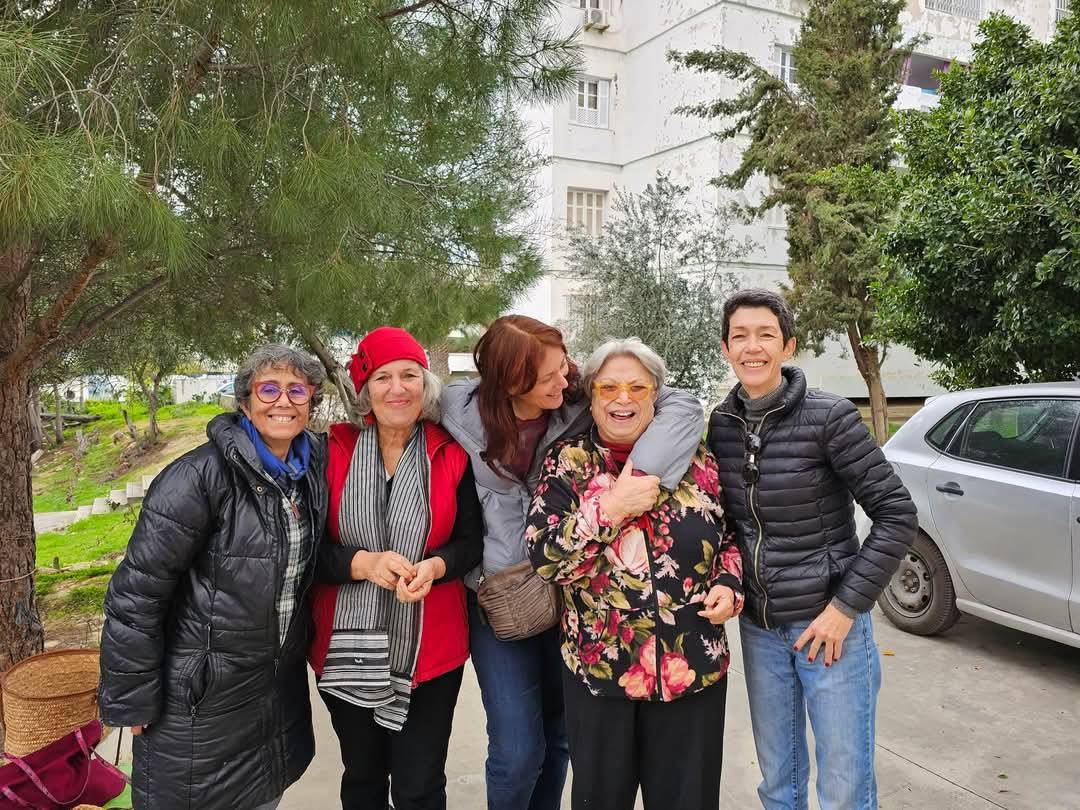
Faïaza’s energy and infectious enthusiasm were crucial to the garden’s success. She motivated residents to get involved. Sundays became not just gardening days but moments of exchange, forging connections that transcended mere cohabitation.
Reinventing social bonds
“I owe this dream-come-true to my friends. The garden helped me overcome the stress, chronic illness, and melancholy that followed my retirement.”
Over time, Faïaza has learned to listen to nature. She even speaks to her garden as though it were family, just as she chats with the ants, butterflies, and birds that visit. The garden has restored an ecological balance, attracting pollinators like bees, which play a crucial role in maintaining the ecosystem.
It took just a hundred square meters to transform not only a building’s surroundings but also the relationships within it.
With nostalgia, Faïa’za recalls the warmth of traditional neighbourhoods before the emergence of modern housing complexes in the late 1970s, which she likens to “stacked boxes—soulless and cold.” Yet, she always resisted isolation. Even before the garden, she was the building’s beating heart—playful yet firm, attentive to everyone’s lives.
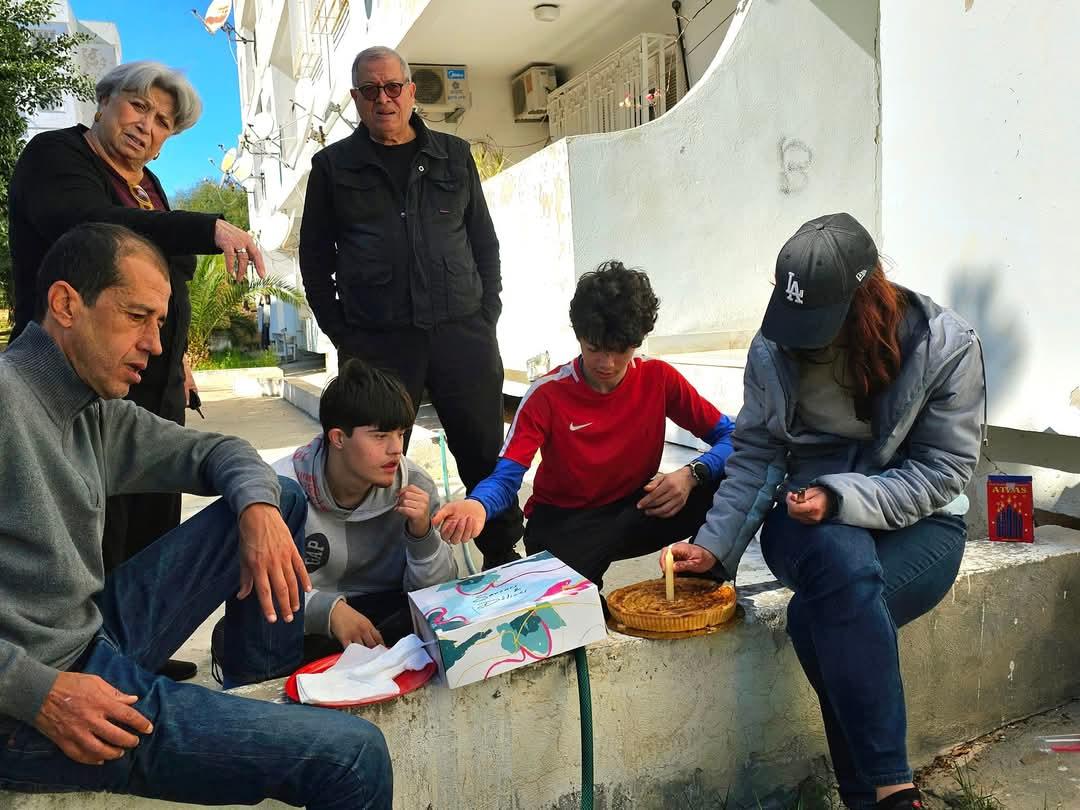
For Abderrazak Khadhraoui, one of the garden’s founding members, this little green space has strengthened bonds between residents. “Sunday mornings have become a time for sharing. Even those not directly involved appreciate the atmosphere.” He laughs before recounting a humorous anecdote: a skeptical neighbor who had always ridiculed the project was once caught at dawn sneaking into the garden… to pick vegetables for his lunch!
“The positive impact, he adds, extends beyond the garden. Improved air quality and lower temperatures have encouraged more physical activity. Some residents now exercise before joining the group to water and tend the plants”.
Mohamed Zribi, who does not live in the building but frequently visits his cousin and friend there, says: “I have noticed that a new sense of closeness and camaraderie has developed among the residents since the creation of the garden, especially among the children. My own children have started joining the other kids in the garden, who come with their parents to help take care of it.”
The Garden of Ommi Faïaza is more than just a green space. It is a symbol of resilience and hope—a testament that even the smallest act of care, like the flutter of a butterfly’s wings, can set transformative change in motion.
A model to be spread
Faïaza and her group hope to inspire the residents of Menzah VI’s twenty-seven buildings to reclaim, cultivate, and maintain vacant plots. These spaces, spanning nearly three thousand square meters, hold immense potential.
Faïaza emphasizes that for this dream to expand, institutional support is essential. “The state, particularly the Ministry of Social Affairs, which owns these buildings, must commit to more humane and responsible urban planning—one that does not sacrifice green spaces for concrete expansion.”
She concludes with conviction: “Urban development plans matter, but at its core, this dream relies on a beating heart and unwavering determination. It takes someone like Faïaza to inspire an entire community.”
The Garden of Ommi Faïaza is more than just a green space. It is a symbol of resilience and hope—a testament that even the smallest act of care, like the flutter of a butterfly’s wings, can set transformative change in motion.