
Cette publication est également disponible en :
Women’s networks help people find jobs and broaden their horizons by facilitating the exchange of knowledge and skills both online and offline. Often, the projects born within these communities allow human and professional growth, thus contributing to the fight against gender stereotypes that are still very prevalent in the world of work.
“There is a special place in heaven for women who support other women,” Shelley Zalis, online research pioneer and founder of The Female Quotient, a California-based gender equality company, tweeted in 2019. By reversing the famous quote by American diplomat Madeleine Albright, “There’s a special place in hell for women who don’t help other women,” Zalis wanted to emphasize that supporting women’s causes is an extraordinary experience on both the human and professional levels.
The Shine Theory explains why: when we help another woman shine, we too benefit from that light. Aminatou Sow and Ann Friedman, the creators of Shine Theory, invite us to cultivate increasingly empathetic, authentic, and deep relationships with the female acquaintances, friends, and colleagues we meet in our lives.
A study published by the Harvard Business Review also reveals that while successful men particularly benefit from being at the center of their respective networks, women who form intimate partnerships with other women are more likely to secure leadership positions and higher salaries.
“Because women seeking positions of executive leadership often face cultural and political hurdles that men typically do not, they benefit from an inner circle of close female contacts that can share private information about things like an organization’s attitudes toward female leaders, which helps strengthen women’s job search, interviewing, and negotiation strategies,” explains Brian Uzzi, one of the authors of the study. Women’s success is therefore greatly facilitated by the bonds between friends and colleagues, especially those who have few contacts in common, because diversifying the network increases the possibilities of growth for them all. Additionally, many of these women become mentors or sponsors to younger women and offer them important support, especially in more competitive and hierarchical settings.
An ever-expanding reality
Women’s networks have been around for a long time, but in recent years, new groups have sprung up and existing ones have seen a significant increase in their membership. The dissemination of new technologies has certainly contributed to their large-scale development, especially in the case of the #MeToo movement and throughout the restrictions imposed during the pandemic. Today, some communities help people find jobs and broaden their horizons by facilitating the exchange of knowledge and skills both online and offline. Often, the projects born within these communities contribute significantly to the fight against gender stereotypes that are still prevalent in most professional environments.

The women in these networks exchange and compare their experiences as equals. They can also discuss how complicated it is to strike a balance between work and private life, a challenge that affects all women be they spouses or partners, mothers, caregivers, or professionals. “Societal expectations to “do it all” and meet the Pinterest, Facebook and Instagram standards put significant pressure on women,” writes Robin Buckley, a cognitive-behavioral psychotherapist who helps many patients and couples facing professional and relationship challenges. “It is within the security of these specific networking groups that women can be vulnerable and authentic. Women establish their commonalities, regardless of age, race, ethnicity or sexuality, and it leads to faster, genuine connections based on shared experiences. All-women networking groups are not solely focused on business, but instead support the whole woman, personally and professionally.”
We are all socialgnock!
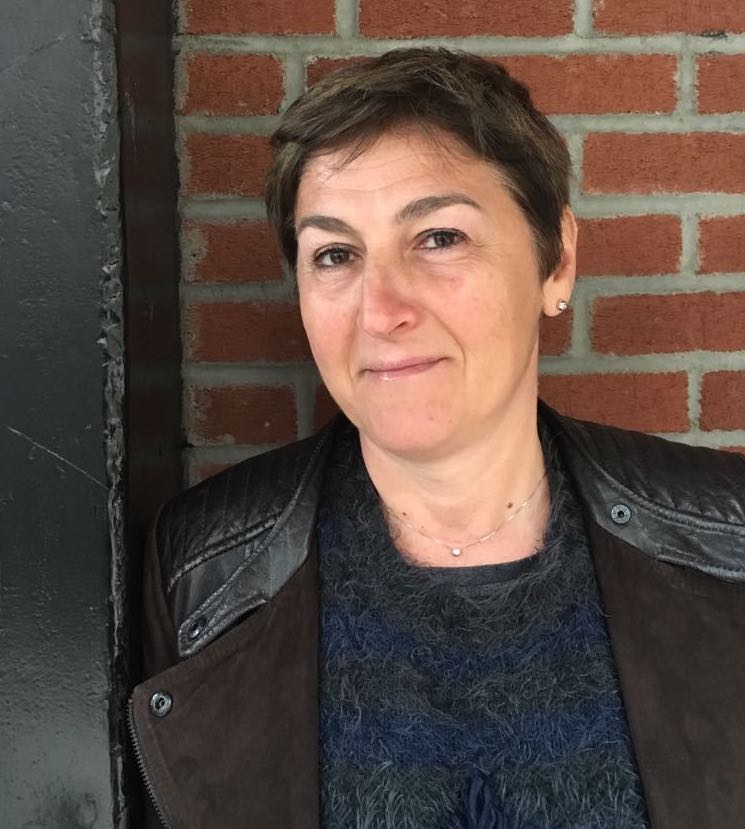
Lorena Di Stasi is an Italian digital marketing and online community expert who has studied the world of blogging and social media for years. She still remembers how shocked she was when, during the Social Case History Forum, an event she organized in 2013 that was dedicated to the first social media marketing case studies, a participant tweeted: “Look at all these beautiful #socialgnock!” and the hashtag immediately went viral.
“We saw that interesting conversations were starting, provoked by this curious, funny name, so I thought of creating a support, exchange, and sharing group on Facebook,” she tells Medfeminiswiya. “Back then, the historical context and the digital world were completely different than what they are today. In virtual spaces, we were basically spamming. We wanted to create something different, something that reflected our shared values and a vision based on respect and common interests. What we had in mind was a place where women could discuss the digital world and social media marketing—hence the word “Social.” Then we added the word “gnock,” taken from the slang word gnock (1), which we used ironically and lightly, with no intention to offend, mock, or discriminate against anyone. We liked this weird nickname—halfway between a compliment and the affirmation of some knowledge and professional aspirations.”
This is how “socialgnock – Women Ignite Relationships” was born: an online platform that received an award from Facebook at the London Community Summit in 2018 as being one of the 150 best European groups on the platform. Since then, there have been eight “spin-offs” of this project: four territorial ones in London, Rome, Bologna, and Sardinia, and four thematic ones addressing ecology, careers, sports, and holistic activities. They are all run on a voluntary basis by specially trained admins.
Today, this “virtual living room” has around 26,000 users in Italy and abroad, as well as many Italian speakers of other nationalities. Every day they exchange ideas and information in a simple and empathetic way.

“Most of these women are between 24 and 54 years old, and many are freelancers, micro-entrepreneurs, artisans, traders. But over time, they have also been joined by lawyers, consultants, teachers, plumbing or carpentry specialists, artists, magistrates, accountants, and housewives who want to broaden their knowledge or who wish to be part of a female online community,” Di Stasi explains.
We can still find a bit of the digital DNA that birthed the original idea, but now people come for all kinds of reasons—this is one of the main strengths of this project: socialgnock has become a reference site where users can ask and share whatever they want. Recently, one of its users wrote a post about a problem she was having with the INPS (National Institute for Social Security, editor’s note), and in the comments, people suggested solutions for her.
Thanking the community, she wrote: “I knew that I would be able to find a solution for my problem here. The great thing about this network is that it comes to mind whenever I need anything. This testifies to a strong sense of belonging—one of the two fundamental characteristics of any online community. The second is no less important: the fact that the content is created by the people who constitute this community, and not by an administrator who imposes an editorial plan from above. This perfectly reflects our three core values: zero barriers, 100% support, and easytude.”
The network organizes many online events during which a “socialgnock” speaks on a subject that falls within her skills and expertise. Often, small groups are created to help these women get to know each other on a more personal level. “During the lockdown, which lasted just over three months, we organized hundreds of live webinars that had incredible turnout,” Di Stasi recalls.
Finally, there is also no lack of in-person meetings: training courses, mobile visits, and networking aperitifs open to everyone, male and female, such as the event organized in Milan earlier this year to celebrate the tenth anniversary of the project.

Such platforms allow many women to come out of isolation and empower them to feel stronger and more capable of facing a world that is still deeply misogynistic and sexist, overturning the stereotype that claims that women are incapable of supporting each other because they are envious and competitive “by nature.”
“They are the ones who, by interacting freely, help themselves and each other to develop on a professional level and evolve on a personal level, thus contributing to reducing marginalization and discrimination—the gender gap included, of course. A merit that certainly is not only credited to us! I would argue that this effect is inherently coded in our DNA, embodying a true community based on cultivating relationships between people. We, those who run it, simply provide a space in which all of this can happen,” Di Stasi concludes.