This post is also available in: العربية (Arabic)
In the al-Daraj neighborhood in the heart of the Gaza Strip, in a place whose residents have gotten used to waking up to the sounds of explosions, 24-year-old Rozan Khayra used to go running as if the earth itself were clearing a path for her. It was like the air knew her name and carried it ahead of her as she chased some finish line, undeterred by restrictions or the whispers of those who think it unconventional for a girl to dream.
Running was more than a sport for her: it was a language of survival, a form of faith that the body is created to resist, not to be defeated. But when the war on Gaza erupted in October 2023 and the Strip turned into an open killing field, distances stopped being measured in meters and started being measured in losses.
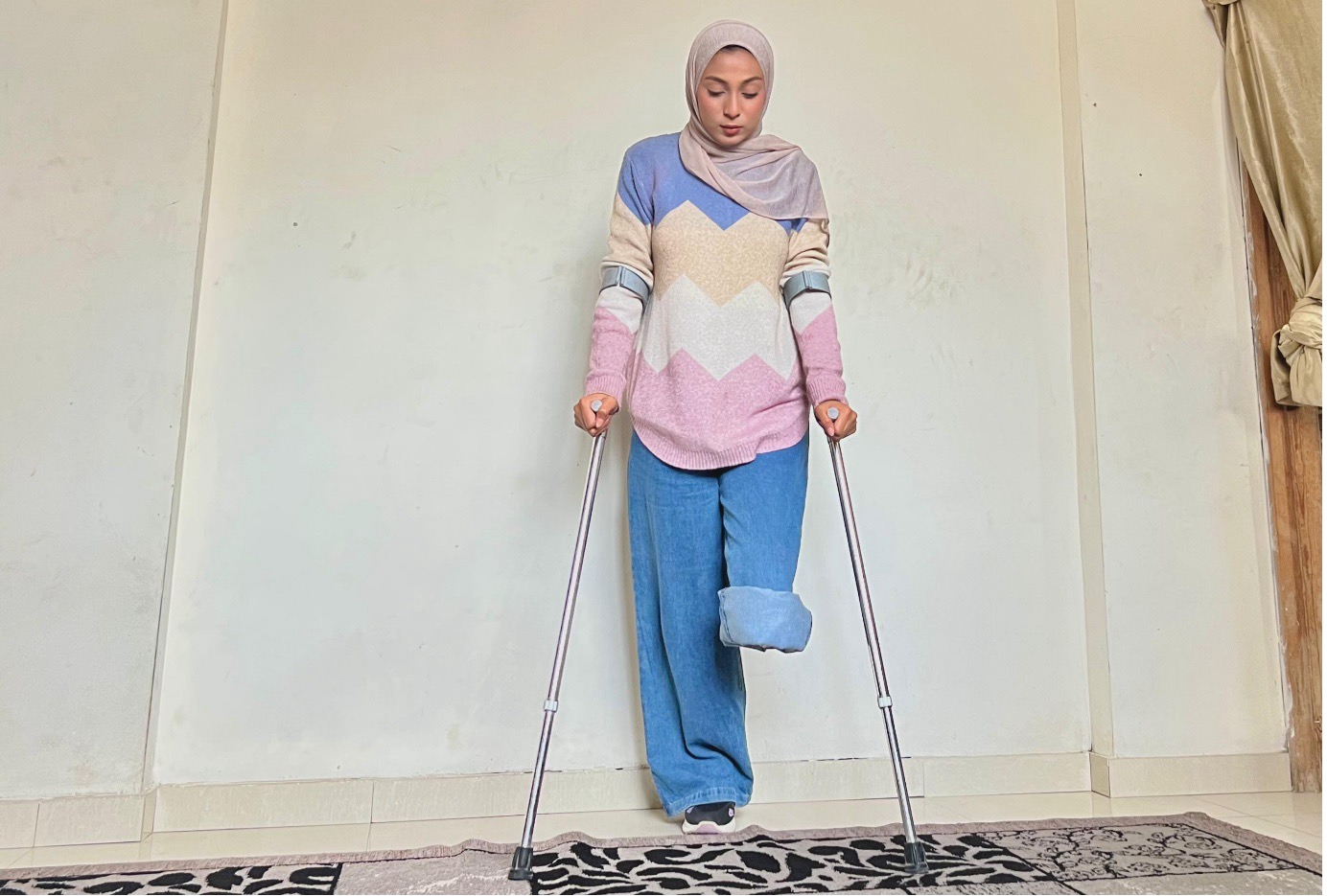
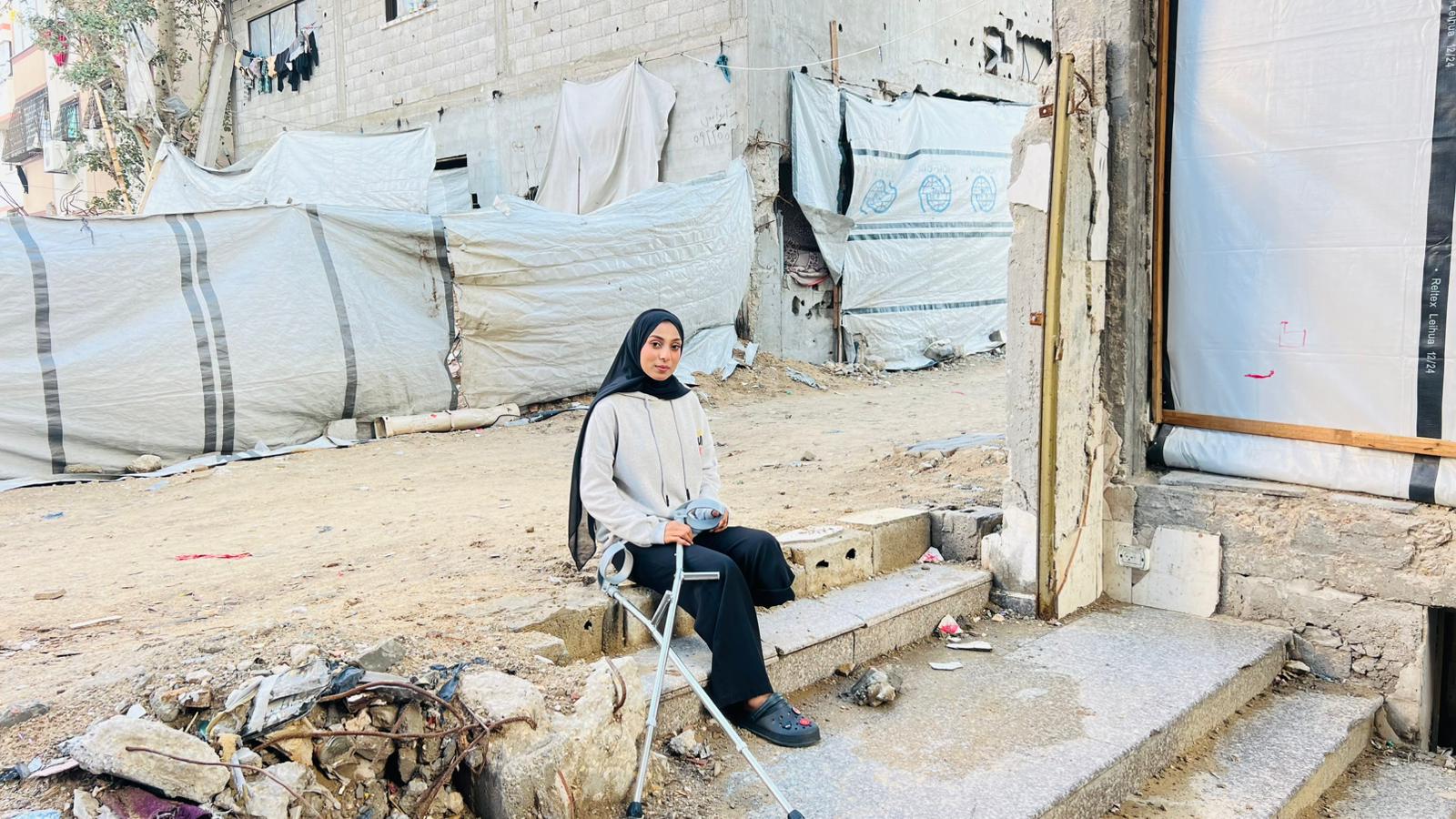
Between displacement, bombing, and an agonizing wait, Rozan lost a leg that used to help her run. After that, everything changed, everything but her spirit that had learned to run since childhood.
A father who believes in his daughter
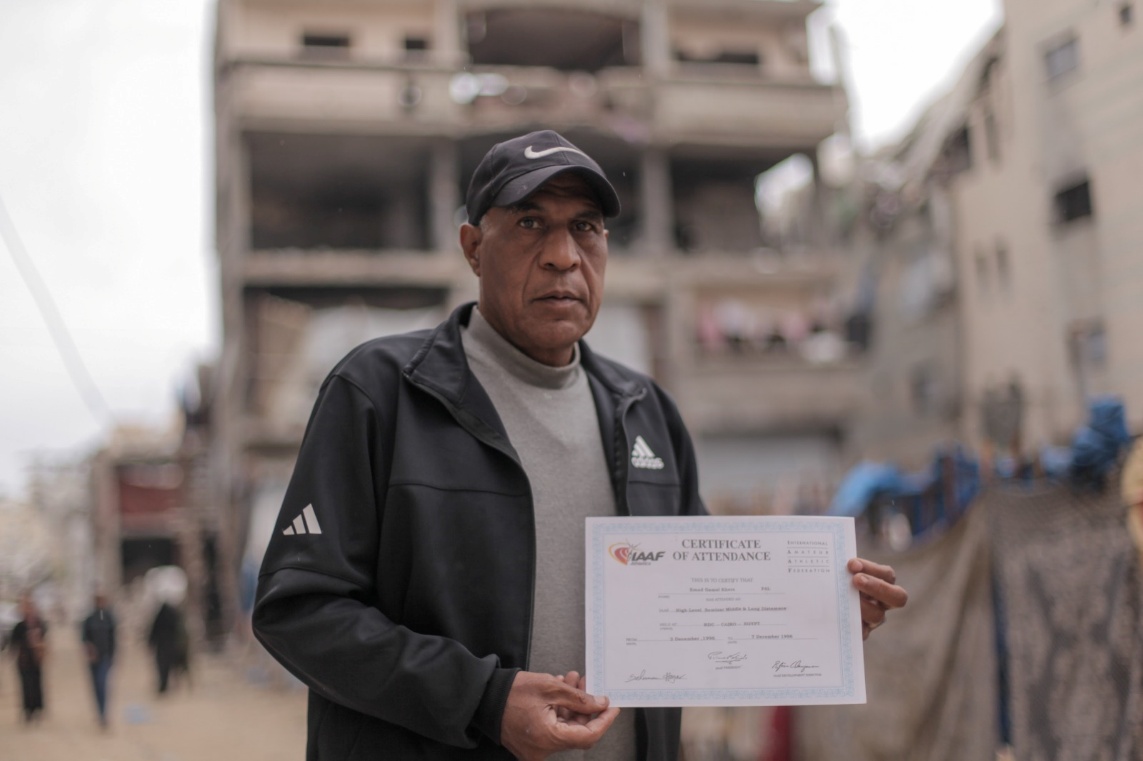
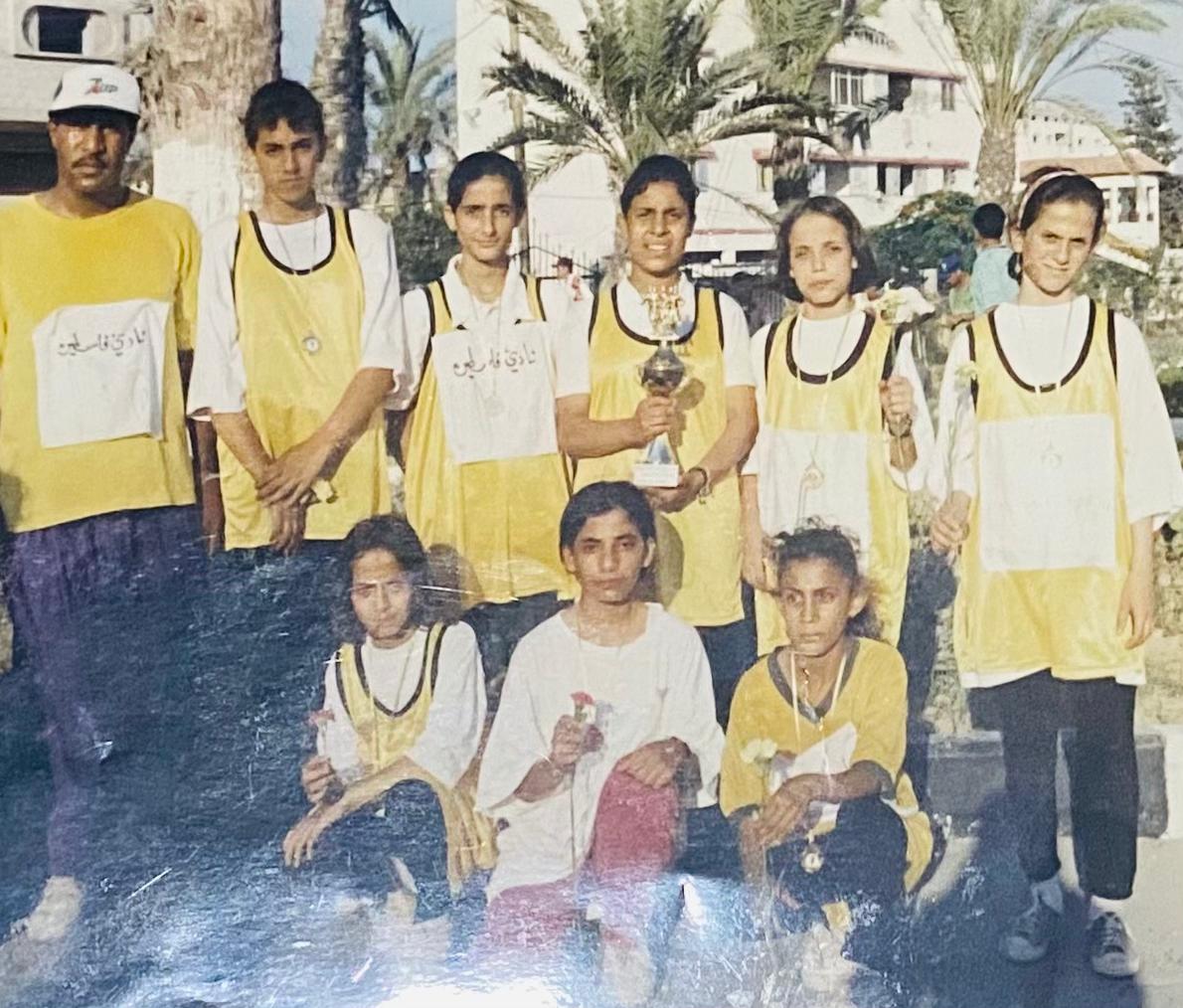
Her father, the well-known football coach Imad Khayra, instilled in Rozan a love of running, and with it her dream grew. Rozan took part in many local competitions in the al-Tuffah and al-Daraj neighborhood tracks, among others, aspiring to reach the international stage and pursue her dream under the guidance of experienced coaches, without any restrictions.
This was especially important for her given that she lives in a conservative society in which it’s unconventional, even forbidden for girls to participate in such sports. But she wanted to represent Palestine internationally, to raise its name high.
On November 19, 2023, Rozan was injured by shrapnel from an Israeli airstrike, resulting in the amputation of her leg. “I woke up and tried to get out of bed, but I couldn’t,” she recalls. “I fell to the ground. I looked at my leg and it wasn’t where it should be. It was next to me. It was terribly, painfully shocking. It was the beginning of the physical and psychological suffering that would come with amputation.”
Rozan’s father took her to the Indonesian Hospital in northern Gaza, about 12 kilometers from their home, at a time when most hospitals in the Strip had gone out of service. After the ambulance crew obtained permission from the Israeli authorities, the young woman was finally admitted to the operating room after a long ordeal.
Then the Israeli army also targeted the hospital with missile strikes. “It’s like I was running from one death to another,” Rozan says.
The Israeli war has resulted in approximately 4,800 cases of limb amputation, 18% of which were performed on children. Another 1,200 people, among them children and women, have been left paralyzed, with a similar number having lost their eyesight.
“It’s like I was running from one death to another,” Rozan says.
Depression that her father saved her from—and an amputation that brought their hearts closer together
After losing her leg and with it her dream of running, Rozan fell into despair and felt as if she’d lost her entire future, her passion, her dreams—all at once. “But my father was my greatest support,” she says. “For two weeks, he took care of me by himself, taking me to the clinic every day to disinfect the wound. He’d carry me in his arms, lift my spirits, and assure me that one day I would travel abroad for treatment, get a prosthetic limb, and move forward with my life. He always reminded me to praise God.”
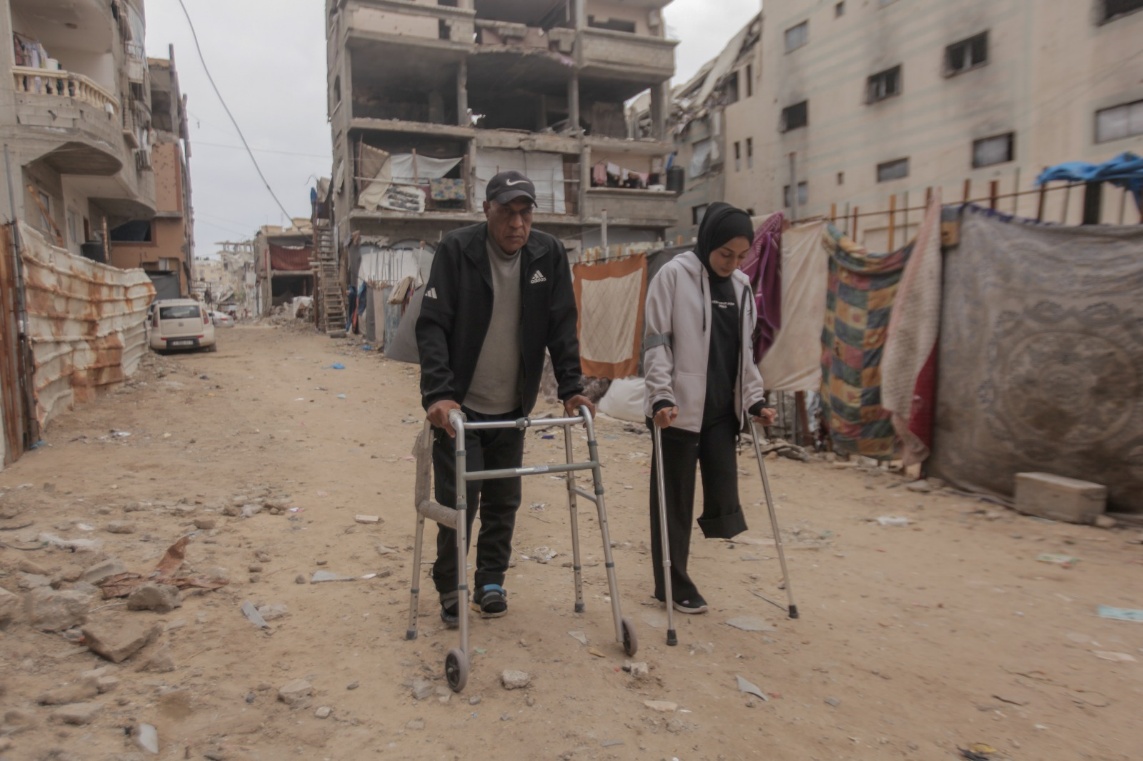
But Rozan’s story didn’t end there. Two weeks after her injury, her father was also injured, and both his legs were amputated, after intense Israeli airstrikes hit their neighborhood with a fire belt. Civil Defense rescued the family from under the rubble.
“My father’s injury affected me much more than my own,” Rozan says. “It made things even harder for our family, because he is the backbone of our home.”
In a painful yet deeply moving way, Rozan and her father grew closer after losing their limbs. They share the same pain, understand it intimately, and each encourages the other to remain patient and hopeful.
Rozan faces particular challenges due to repeated displacement. “My crutch has become my constant companion, wherever I go, despite how difficult it was for me to use it at first, after medical permission was granted a year after the injury. It takes a lot of effort and time for me to go places, and I feel like I’m tied to it at all times,” she shares.
Between closed crossings and the redefinition of the body
“Today, I see myself as special, even though people around me redefine my body as having a physical disability. I see it as an advantage though. Thanks to advancements abroad in prosthetic limb technology, my father and I could now have legs that are indistinguishable from natural ones,” Rozan says, refusing to give up on her dream.
She and her father have joined the al-Salam Center for People with Disabilities, which was a great support to them, making them feel that they were still seen.
Since the beginning of the Israeli war on the Gaza Strip on October 7, 2023, more than 72,000 people have been killed. Even after the ceasefire in January, Israel has killed approximately 700 people.
With a voice carrying an appeal that transcends borders, Rozan laments that the world has forgotten the Palestinian cause. She calls on it to look at every wounded person through a lens of humanity, to help them obtain medical visas for treatment abroad, and to assist amputees in accessing modern prosthetic limbs that would help them continue their lives as normally as possible.