Cette publication est également disponible en : Français (French)
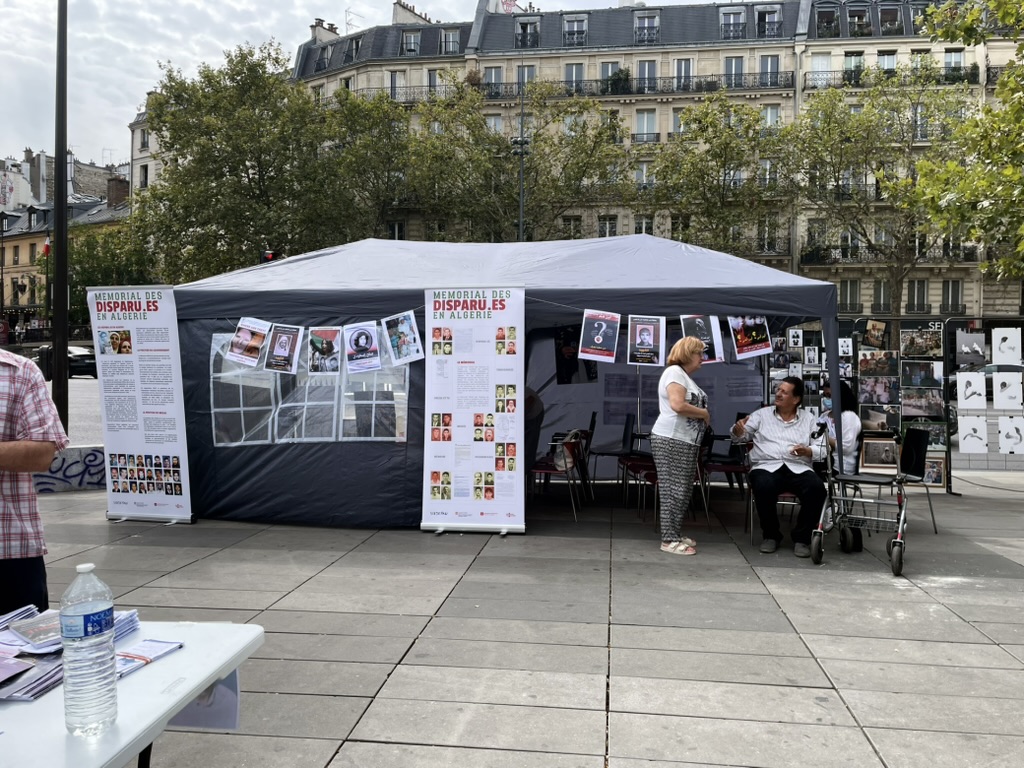
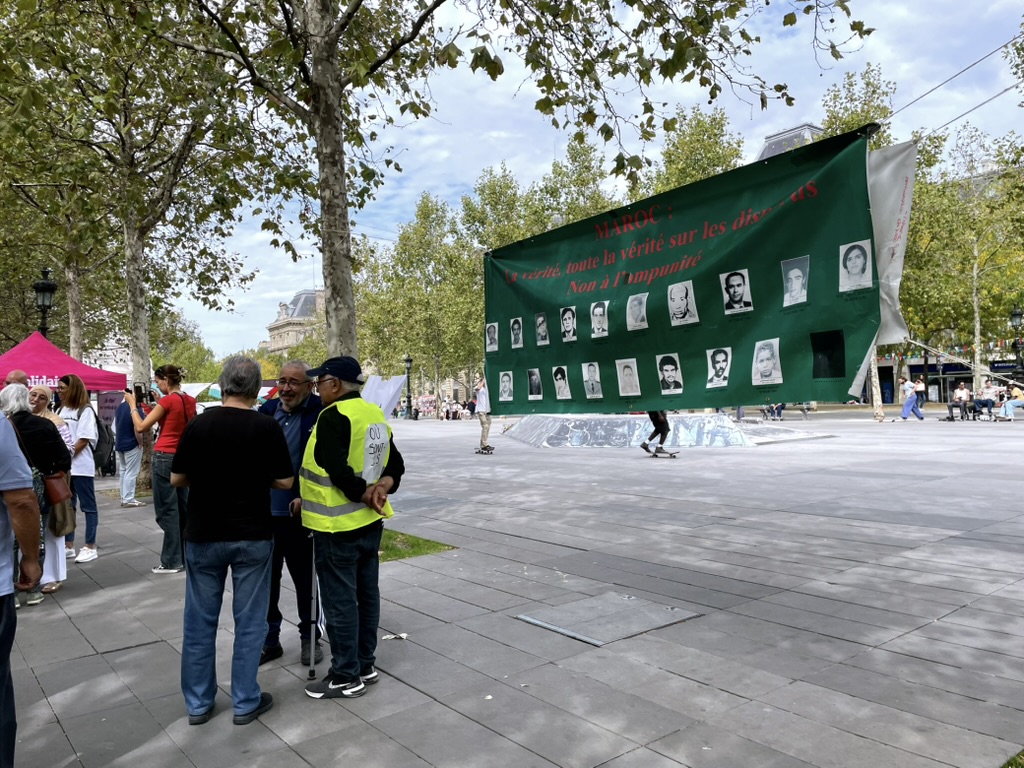
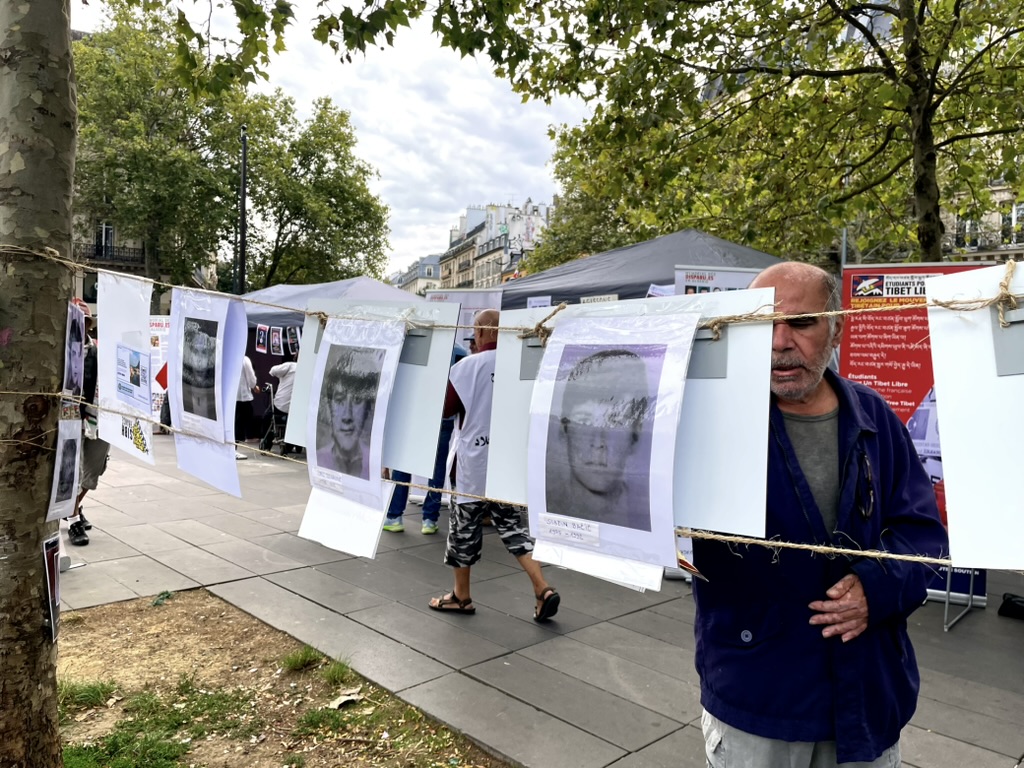
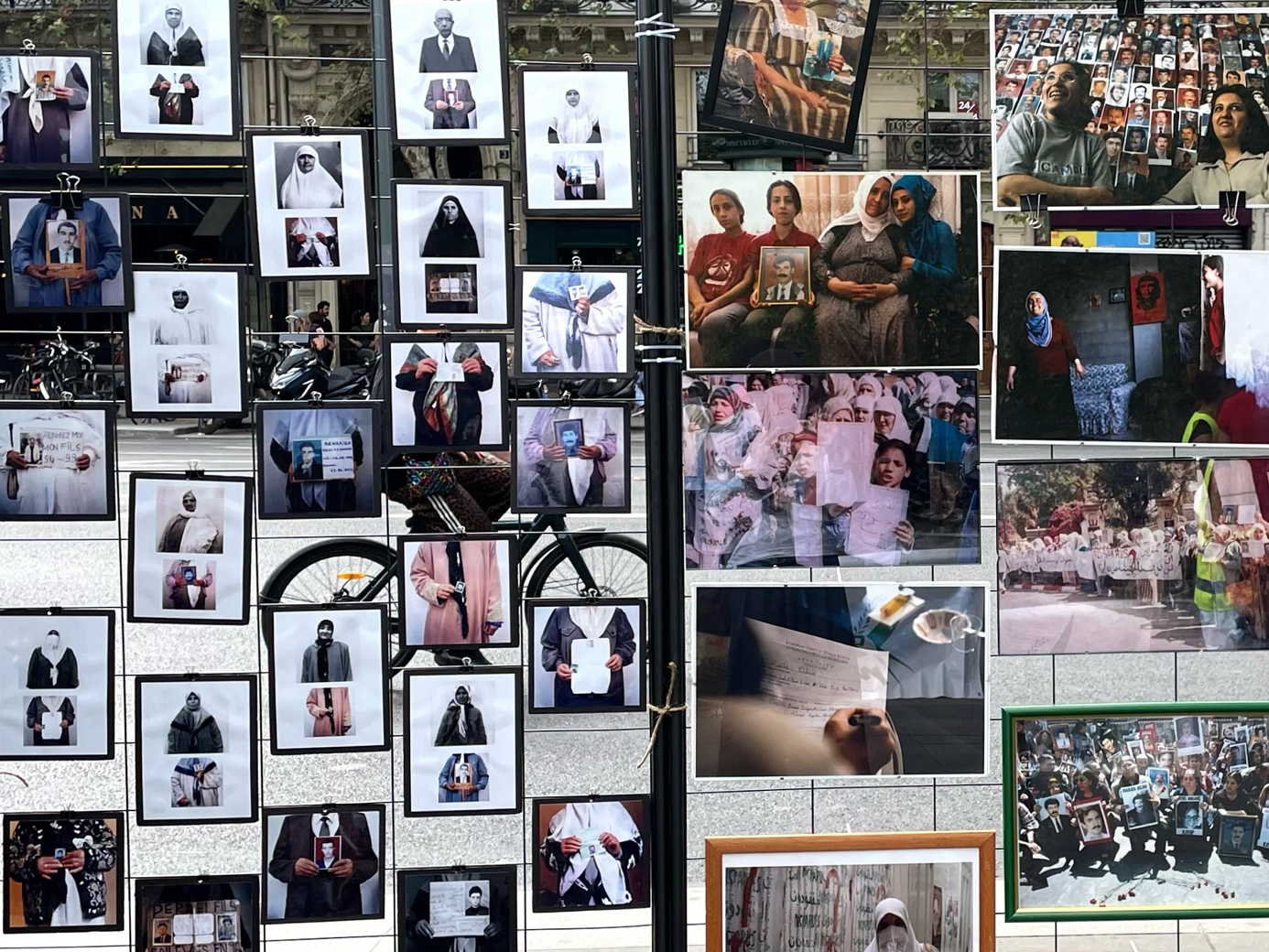
At Place de la République, a nerve center of the French capital, the faces of the missing make passersby slow down. Dozens of photographs of disappeared men are displayed on banners and at stands. Behind these portraits are families still waiting, and women who have been fighting for years for the truth.
On September 6, eleven associations came together at the “Village for the Disappeared,” organized by the Euro-Mediterranean Federation against the Forced Disappearances (FEMED), with the aim of highlighting “the geographical scale of the scourge of enforced disappearances and impunity, but also the universal nature of the quest for justice and truth.”
The event followed the International Day of the Victims of Enforced Disappearances, observed on August 30 and established by the UN in 2010, following mobilization that began in the early 1980s by mothers of the disappeared in Latin America. Today, these women remain at the heart of this struggle.
An obstructed quest for truth
“My son Amine was arrested in January 1997 [in Algeria]. I left home back then and never really went back,” says Nassera Dutour, who has served as president of FEMED since its founding in 2007.
Made up of 29 associations across 13 countries around the Mediterranean (1), the Paris-based FEMED forms part of an international movement defending the families of the disappeared, alongside FEDEFAM (the Latin American Federation of Associations for Relatives of the Detained-Disappeared) and AFAD (the Asian Federation Against Involuntary Disappearances).
“It is mostly men who are disappeared, and women who are left behind and who search for them,” adds the founder and president of the Collective of Families of the Disappeared in Algeria (CFDA).
Founded in 1998 by mothers of the disappeared following a civil war in which some ten thousand people went missing, according to NGOs, the collective regularly faces repression.
“It is mostly men who are disappeared, and women who are left behind and who search for them.”
In March 2026 in Algiers, the premises of SOS Disappeared, which is affiliated with the CFDA, were sealed off, after Nassera Dutour had been denied entry into Algeria in July 2025.
“Not only did they take our children away from us, now they are taking away this meeting place too,” Dutour says. “It is more than a place of remembrance; it is our home.”
These obstacles are compounded by the stigmatization of women who continue to search for their loved ones.
In 1999, Algerian President Abdelaziz Bouteflika referred to them as “professional mourners,” saying that their children were not “in [his] pockets.”
“You get the impression that the world is indifferent to this issue,” Dutour adds. “People don’t believe in it. As far as they are concerned, these people are dead, so there is no point in searching.”
Supporting their families
Alongside the grief experienced by women whose loved ones have been disappeared are the difficulties involved in caring for and supporting their families.
In Morocco in the 1970s, several men from the El Mazouni family were imprisoned amid King Hassan II’s political repression of his opponents.
“Women carried this struggle in their own way: by supporting their families, by being present, by going to prison to visit their husbands, by feeding and raising the children,” says Amal El Mazouni, whose uncle, Hocine El Mazouni, was abducted in 1972 and has still not been found.
With more than 10,000 people forcibly disappeared between 1956 and the 1990s, according to NGOs, Morocco is one of the few countries where victims returned after months or even years of detention.
“We were fortunate in Morocco, thanks to the struggle of families—women, above all—to achieve transitional justice,” explains Rachid El Mazouni, Amal’s father, himself a former victim of enforced disappearance and president of the Association of Relatives and Friends of the Disappeared in Morocco (APADM).
In 2006, the Equity and Reconciliation Commission recognized the role of the mothers and wives of political detainees, who had mobilized from the 1970s onward against the repression of the Years of Lead.
Families nevertheless insist on nuancing the advances made through transitional justice, particularly in the cases of victims whom the regime declared dead but whose bodies have never been found.
Making mourning possible
For all mothers and families of the disappeared, the demand is the same: if their loved ones are dead, their bodies must be returned to them.
Between 1992 and 1995, the conflict in Bosnia and Herzegovina following the breakup of the former Yugoslavia resulted in more than 31,000 enforced disappearances. More than 7,500 people are still being searched for.
“The men died, so it was women’s associations—made up of victims’ mothers, sisters, and daughters—that took on the responsibility of finding them and preserving their memory,” explains Marie Geneviève Guesdon, a member of Solidarité Bosnie-Herzégovine France (SIBH).
It was also thanks to the mobilization of associations such as Women in Black (Les Femmes en Noir) and the Mothers of Srebrenica that, in May 2024, the UN recognized July 11 as the International Day of Reflection and Commemoration of the 1995 Genocide in Srebrenica.
More than 8,300 men and adolescent boys were killed there by the Bosnian Serb army, which then concealed and dispersed their bodies in mass graves, even though the UN had declared the town a “safe area.”
Since 2005, the Peace March to Srebrenica has brought together thousands of participants each year from July 8 to 10. Around ten victims identified in mass graves are then buried, finally enabling their families to mourn with dignity and to have a grave where they can pay their respects.
Women as guardians of memory
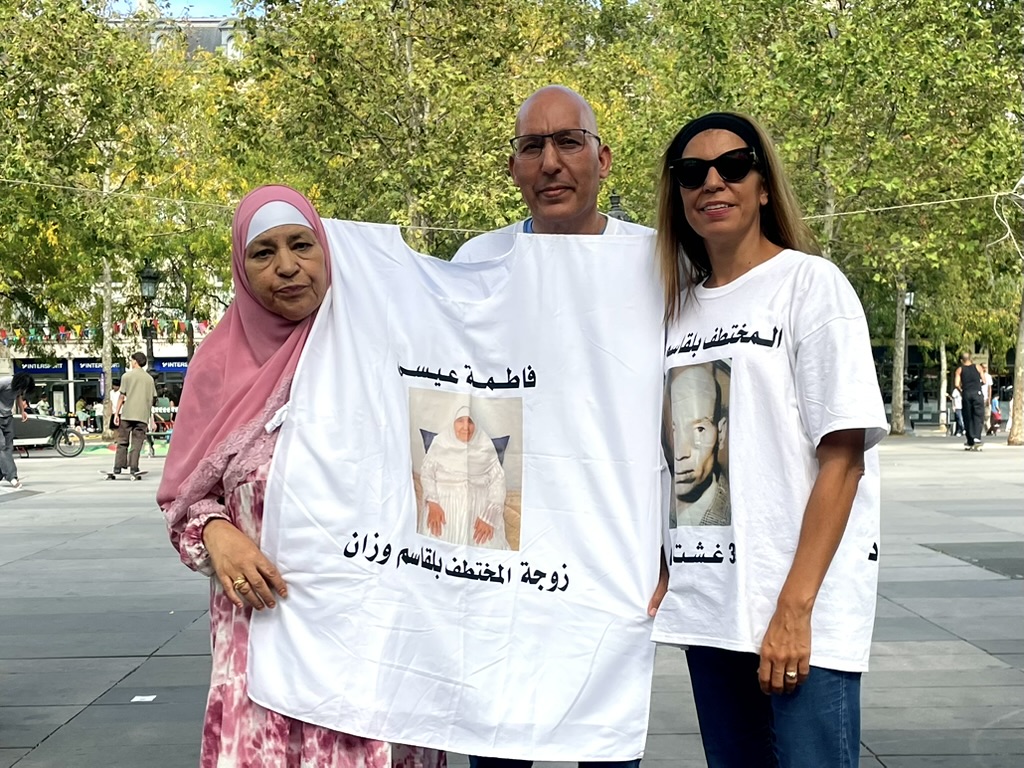
“He is away on a trip,” Aïcha Ouazzane, daughter of Belkacem Ouazzane, used to tell her children when, during visits to Morocco, they asked about their grandfather. When they reached the age of ten, she decided to tell them the truth: her father, arrested in 1973, had never returned.
Sonia Ouazzane, Aïcha’s daughter, never knew her grandfather. “I am the next generation, here to make sure we continue honoring his memory and that of my grandmother, who died in 2020 without ever learning the truth,” she says.
“Women were the first to break through the wall of silence,” says Omar Ouazzane, Aïcha’s brother, who has been involved alongside her since their father’s arrest.
This transmission of memory and refusal to accept absence sometimes become embedded in everyday habits and symbols.
“My daughter still sets a place at the table for her father, and if I forget, she gets angry. […] And if someone tells her that her father is dead, she gets angry,” says Saliha (2), whose husband was arrested in Algeria in the 1990s.
Since its adoption by the UN in 2006, the International Convention for the Protection of All Persons from Enforced Disappearance has defined a victim as “any individual who has suffered harm as the direct result of an enforced disappearance.” Mothers of the disappeared actively participated in drafting the Convention, in order to secure recognition of the trauma endured by families confronted with an absence that leaves them unable to mourn.