• it VO
  • fr Français
  • en English
  • ar العربية
About us
  • In-depth
    • All
    • Features
    • Files
    • World
    In Mediterranean Region: Sexual and Reproductive Rights Under Pressure

    In Mediterranean Region: Sexual and Reproductive Rights Under Pressure

    Morocco: 600 abortions a day—Alarming figures and tragic stories

    Morocco: 600 abortions a day—Alarming figures and tragic stories

    In Spain, the right to abortion is not guaranteed for all

    In Spain, the right to abortion is not guaranteed for all

    Invisible and vulnerable: Migrant women at the frontlines of Spain’s prostitution debate

    Invisible and vulnerable: Migrant women at the frontlines of Spain’s prostitution debate

    Serbia: Is contraception a luxury or a basic human right?

    Serbia: Is contraception a luxury or a basic human right?

    Trending Tags

    • Women artists
    • Ecofeminism
    • Women living from and on the streets
    • Women and bodies
    • Women and sports
    • Women and cinema
    • Ramadan series
    • Women and war
    • Women Living at the Margins
    • Press Freedom from the Perspective of Women Journalists
    • Period poverty
    • Gynecological violence
    • Women and prison
    • Safe spaces
    • Abortion and SRHR
    • Transgenderism
    • Women in rural areas
  • On the move
    Spain: CEAR and the fight against human trafficking

    Spain: CEAR and the fight against human trafficking

    Gaza: How many journalists must be killed for the world to react?

    Gaza: How many journalists must be killed for the world to react?

    Moroccan activist Ibtissam Lachgar held in solitary confinement, health in crisis

    Moroccan activist Ibtissam Lachgar held in solitary confinement, health in crisis

    Three women for one man’s pay: The plight of female agricultural workers in Egypt

    Three women for one man’s pay: The plight of female agricultural workers in Egypt

  • Portraits
    Sophie Bessis: “The battle for the intimate will be long, especially in the Global South!”

    Sophie Bessis: “The battle for the intimate will be long, especially in the Global South!”

    “Mom, Dad, Can We Talk About Privacy?”—A Tunisian children’s book on protecting kids from sexual violence

    “Mom, Dad, Can We Talk About Privacy?”—A Tunisian children’s book on protecting kids from sexual violence

    Kurdish journalist killed in Turkish drone strike in northeastern Syria

    Kurdish journalist killed in Turkish drone strike in northeastern Syria

    A Filmmaker’s Journey: Inside the Creative World of Margarita Bareikyte

    A Filmmaker’s Journey: Inside the Creative World of Margarita Bareikyte

  • Creations
    • All
    • Reviews
    • Visual Arts
    “La Malédiction (1)”, a theatrical adaptation of King Kong Theory bursting with Tunisian rage

    “La Malédiction (1)”, a theatrical adaptation of King Kong Theory bursting with Tunisian rage

    “Mom, Dad, Can We Talk About Privacy?”—A Tunisian children’s book on protecting kids from sexual violence

    “Mom, Dad, Can We Talk About Privacy?”—A Tunisian children’s book on protecting kids from sexual violence

    The El’Sardines series, a delicate feminist manifesto centered around an ecological mystery

    The El’Sardines series, a delicate feminist manifesto centered around an ecological mystery

    Atlantics, a film by Mati Diop: Filming the embodied resistance of spirits

    Atlantics, a film by Mati Diop: Filming the embodied resistance of spirits

  • Opinion
    Women in Gaza are living their worst nightmares - “ I want to go back to my life before the war, to my privacy, my home ”

    Women in Gaza are living their worst nightmares - “ I want to go back to my life before the war, to my privacy, my home ”

    Messages from life under bombardment—Can a mother cope with losing her six children at once? (10)

    Messages from life under bombardment—Can a mother cope with losing her six children at once? (10)

    Messages from life under bombardment—No cake for my children on their birthdays (9)

    Messages from life under bombardment—No cake for my children on their birthdays (9)

    Messages from life under bombardment – No food or water in Gaza (8)

    Messages from life under bombardment – No food or water in Gaza (8)

  • Multimedia
    "I hope it doesn’t go viral: Journalism and sexist attacks in digital age". A video investigation by Çiçek Tahaoğlu

    "I hope it doesn’t go viral: Journalism and sexist attacks in digital age". A video investigation by Çiçek Tahaoğlu

    Period poverty in Montenegro

    Period poverty in Montenegro

    Period poverty in France (1)

    Period poverty in France (1)

    Period Poverty in Italy

    Period Poverty in Italy

  • Country context
No Result
View All Result
BLOGS
Medfeminiswiya
  • In-depth
    • All
    • Features
    • Files
    • World
    In Mediterranean Region: Sexual and Reproductive Rights Under Pressure

    In Mediterranean Region: Sexual and Reproductive Rights Under Pressure

    Morocco: 600 abortions a day—Alarming figures and tragic stories

    Morocco: 600 abortions a day—Alarming figures and tragic stories

    In Spain, the right to abortion is not guaranteed for all

    In Spain, the right to abortion is not guaranteed for all

    Invisible and vulnerable: Migrant women at the frontlines of Spain’s prostitution debate

    Invisible and vulnerable: Migrant women at the frontlines of Spain’s prostitution debate

    Serbia: Is contraception a luxury or a basic human right?

    Serbia: Is contraception a luxury or a basic human right?

    Trending Tags

    • Women artists
    • Ecofeminism
    • Women living from and on the streets
    • Women and bodies
    • Women and sports
    • Women and cinema
    • Ramadan series
    • Women and war
    • Women Living at the Margins
    • Press Freedom from the Perspective of Women Journalists
    • Period poverty
    • Gynecological violence
    • Women and prison
    • Safe spaces
    • Abortion and SRHR
    • Transgenderism
    • Women in rural areas
  • On the move
    Spain: CEAR and the fight against human trafficking

    Spain: CEAR and the fight against human trafficking

    Gaza: How many journalists must be killed for the world to react?

    Gaza: How many journalists must be killed for the world to react?

    Moroccan activist Ibtissam Lachgar held in solitary confinement, health in crisis

    Moroccan activist Ibtissam Lachgar held in solitary confinement, health in crisis

    Three women for one man’s pay: The plight of female agricultural workers in Egypt

    Three women for one man’s pay: The plight of female agricultural workers in Egypt

  • Portraits
    Sophie Bessis: “The battle for the intimate will be long, especially in the Global South!”

    Sophie Bessis: “The battle for the intimate will be long, especially in the Global South!”

    “Mom, Dad, Can We Talk About Privacy?”—A Tunisian children’s book on protecting kids from sexual violence

    “Mom, Dad, Can We Talk About Privacy?”—A Tunisian children’s book on protecting kids from sexual violence

    Kurdish journalist killed in Turkish drone strike in northeastern Syria

    Kurdish journalist killed in Turkish drone strike in northeastern Syria

    A Filmmaker’s Journey: Inside the Creative World of Margarita Bareikyte

    A Filmmaker’s Journey: Inside the Creative World of Margarita Bareikyte

  • Creations
    • All
    • Reviews
    • Visual Arts
    “La Malédiction (1)”, a theatrical adaptation of King Kong Theory bursting with Tunisian rage

    “La Malédiction (1)”, a theatrical adaptation of King Kong Theory bursting with Tunisian rage

    “Mom, Dad, Can We Talk About Privacy?”—A Tunisian children’s book on protecting kids from sexual violence

    “Mom, Dad, Can We Talk About Privacy?”—A Tunisian children’s book on protecting kids from sexual violence

    The El’Sardines series, a delicate feminist manifesto centered around an ecological mystery

    The El’Sardines series, a delicate feminist manifesto centered around an ecological mystery

    Atlantics, a film by Mati Diop: Filming the embodied resistance of spirits

    Atlantics, a film by Mati Diop: Filming the embodied resistance of spirits

  • Opinion
    Women in Gaza are living their worst nightmares - “ I want to go back to my life before the war, to my privacy, my home ”

    Women in Gaza are living their worst nightmares - “ I want to go back to my life before the war, to my privacy, my home ”

    Messages from life under bombardment—Can a mother cope with losing her six children at once? (10)

    Messages from life under bombardment—Can a mother cope with losing her six children at once? (10)

    Messages from life under bombardment—No cake for my children on their birthdays (9)

    Messages from life under bombardment—No cake for my children on their birthdays (9)

    Messages from life under bombardment – No food or water in Gaza (8)

    Messages from life under bombardment – No food or water in Gaza (8)

  • Multimedia
    "I hope it doesn’t go viral: Journalism and sexist attacks in digital age". A video investigation by Çiçek Tahaoğlu

    "I hope it doesn’t go viral: Journalism and sexist attacks in digital age". A video investigation by Çiçek Tahaoğlu

    Period poverty in Montenegro

    Period poverty in Montenegro

    Period poverty in France (1)

    Period poverty in France (1)

    Period Poverty in Italy

    Period Poverty in Italy

  • Country context
About us
Medfeminiswiya
About us

Ecofeminism faced with its contradictions: Who pays the price of ecological transition?

Ecofeminism, as defined in intellectual and activist circles in the Global North, is presented as an inclusive, progressive alternative to solve ecological crises. But what does it mean, concretely, for women in the Global South? Why does this vision, imported by international NGOs, often feel synonymous with guilt and injunctions rather than justice and reparation?

Amel Hadjaj by Amel Hadjaj
8 March 2025
in Files, Opinion
38 2
0
Share on FacebookShare on Twitter

This post is also available in: Français (French) العربية (Arabic)

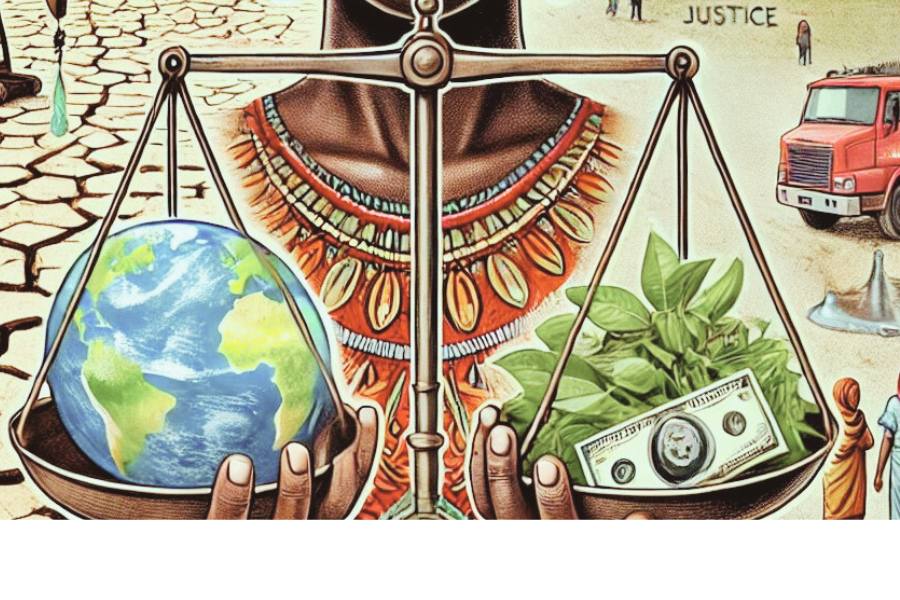
The cover image was generated by artificial intelligence.

A sense of responsibility that ignores the real culprits

As an African woman, I have often felt an implicit pressure in ecofeminist discourse. As if we were responsible for bearing the burden of the ecological transition, when we are among the first victims of an extractivist system we did not create. Why are we being asked to give up a minimum of comfort while the multinationals of the Global North continue their predation with complete impunity?

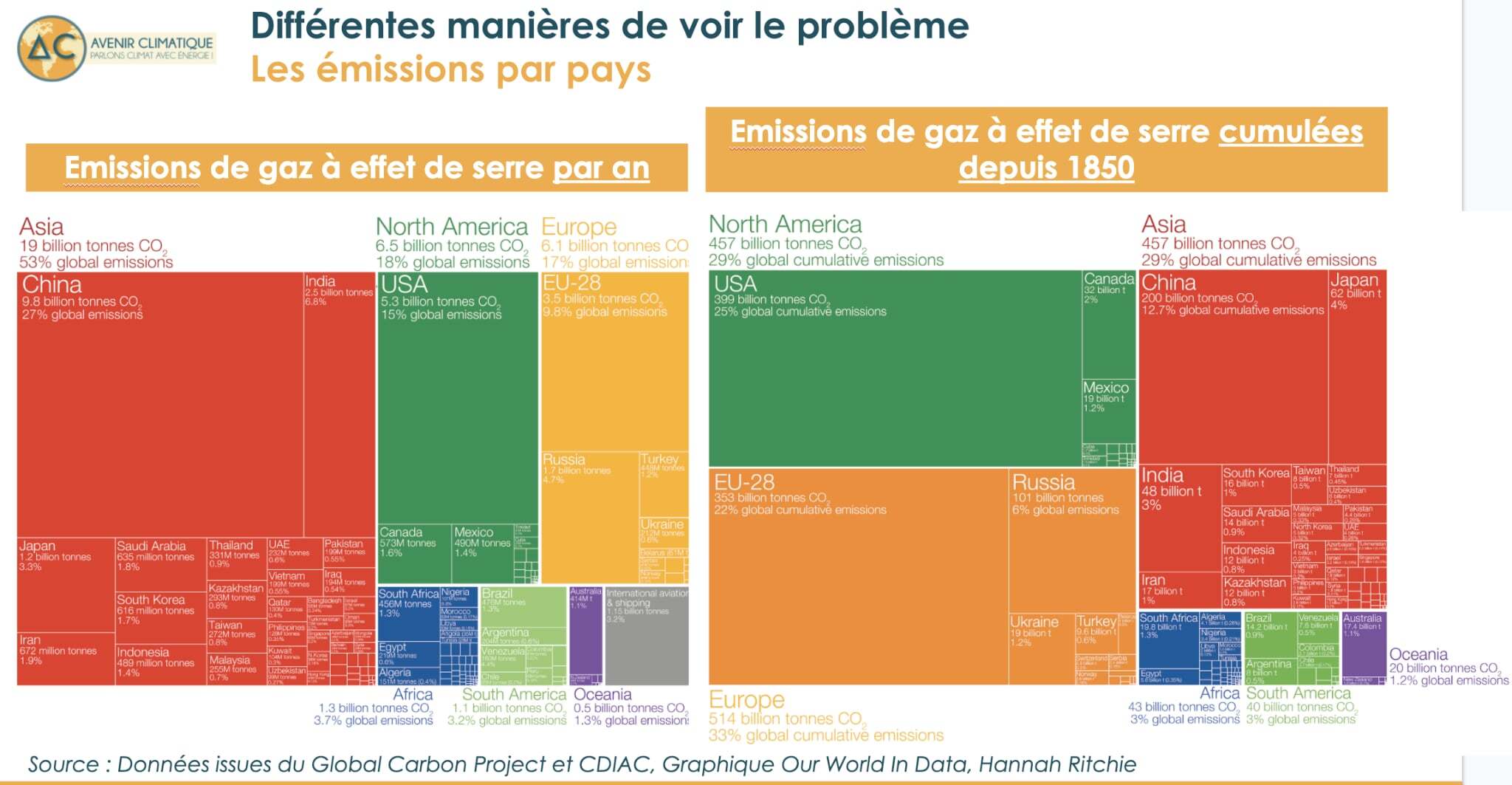
Africa emits just 3.8% of the world’s CO2 (Global Carbon Atlas, 2023), yet it is already bearing the full brunt of the consequences of climate change: droughts, land grabbing, forced migrations. Meanwhile, 100 multinationals are responsible for 71% of greenhouse gas emissions since 1988 (Carbon Majors Database, CDP, 2017). We know who is destroying the planet. We know who is paying the price. So why is it still the women of the Global South who have to answer for it?
Absurd, out-of-touch solutions

Yet many organizations in the Global North present us with “green” alternatives that take no account of our realities.

In 2021, in Algiers, I attended an ecology workshop for sub-Saharan migrant women, organized by an international NGO. The main topic was washable diapers. Not only does this approach still exclusively target women, but it completely ignores the living conditions of those for whom it is intended: violence, poverty, lack of access to water, and the absence of infrastructure.

Yes, around 12% of Algeria’s waste consists of disposable diapers (AND). But who should take responsibility for this pollution? Should women, already crushed by mental burdens and unpaid domestic labor, still have to compensate for an economic model they didn’t choose? Why not ban northern multinationals from producing this waste in the first place? Who really benefits from this cycle of production and over-consumption?


The trap of green capitalism and institutional feminism

Far from being a step forward, the integration of ecofeminism into the policies of international NGOs operating in Algeria has stripped their demands of any political weight. Doing nothing to challenge capitalism and neo-colonialism, these policies shift responsibility onto individuals—women in particular.

Green microfinance programs, presented as opportunities for “women’s eco-entrepreneurship,” are a blatant example of this: indeed, 90% of the women involved in these programs remain vulnerable in precarious sectors such as informal agriculture and crafts, among others.

We know who is destroying the planet. We know who is paying the price. So why is it still the women of the Global South who have to answer for it?

In Algeria, even though women constitute most of the student body in university programs specializing in green professions, they are gradually disappearing from the job market and positions of responsibility: they only form 11% of these, according to the Ministry of Labor. Why is women’s expertise still made invisible? Why do so-called “inclusive” policies simply move women around, without ever giving them decision-making power? And why aren't these issues a priority in a country where feminism remains more taboo than environmental struggles?

North-South: a persistent colonial divide

The climate crisis hits unequally: 75% of the climate-displaced live in low-income countries (UNHCR), while the wealthy nations, the main culprits, are closing their borders. By 2050, 1.2 billion people could be displaced (Oxfam France), 80% of them women and girls (UNHCR) exposed to violence and insecurity. Meanwhile, multinationals exploit the resources of the Global South with impunity.

Rather than penalizing major polluters, agreements such as the Paris Agreement remain non-binding. Armed conflicts are recognized as grounds for asylum, but desertification is not, even though millions of people are already being forced to flee.

The history of extractivism shows how the destruction of nature and the exploitation of people in the Global South are linked. In the Niger Delta, Shell and ExxonMobil contaminated land and rivers, depriving Ogoni women of their livelihoods (Amnesty International). Today, these same companies benefit from carbon-offset mechanisms, which allow them to continue polluting while appropriating land in the Global South.

Women—particularly indigenous and rural women—are on the front lines of environmental defense. In 2023, over 40% of murdered defenders were women (Front Line Defenders). How can we justify the silence surrounding their struggle? Why is the ecofeminism that reaches us not interested in these struggles? Are we too far removed from our anti-capitalist ecofeminist sisters, or has institutional co-optation limited our spaces for exchange?

Climate change: Africa on the front line.

The example of Algeria

Though it is the most polluting country in North Africa, Algeria is still a very low emitter of CO2 on a global scale. Yet it bears the full brunt of desertification and resource depletion. In several regions, drought is forcing farmers and herders to sell their livestock and abandon their land. In el-Naama, located in western Algeria on the border with Morocco, the drying up of wells and the disappearance of pastures have made livestock farming impossible, forcing families to migrate north or to retrain. This precarity primarily affects women, the main victims of ecological disasters.

By 2050, 1.2 billion people could be displaced, 80% of them women and girls exposed to violence and insecurity.

Added to this is the toxic legacy of colonialism: the French nuclear tests carried out in the Algerian Sahara have left deep environmental and health scars, while Algeria remains trapped today between neo-colonial pressures on its natural resources—particularly gas and shale gas—and the extractivist logic of multinationals like Total, which want to impose their vision at the expense of sustainable energy sovereignty. In this war for control over resources, women find themselves doubly trapped: not only are they victims of the ecological and social impacts, but they are also prevented, by the economic choices and finance laws of recent years, from accessing structuring and job-creating projects that are essential to their emancipation.

 A feminist and decolonial ecology against liberal greenwashing

Far from the guilt-inducing rhetoric of NGOs, we urgently need to rethink a political ecology that does not serve as a screen for liberal interests. Women in the Global South should not bear sole responsibility for a crisis from which they are disproportionately suffering. The urgent need is not to encourage inappropriate individual gestures but to demand structural transformations: sanctioning multinationals, cancelling ecological debts, and recognizing climate migration as a humanitarian emergency.

Africa, now in search of an industrial revolution to emerge from Western dependence and imperialism, cannot be sacrificed in the name of an ecological transition model that protects the privileges of the Global North above all else. Real climate justice cannot exist without social justice free of paternalistic logic that perpetuates inequalities rather than combat them.

Real climate justice cannot exist without social justice free of paternalistic logic that perpetuates inequalities rather than combat them.

The feminist fight for climate justice cannot be reduced to superficial reforms or individual accountability that obscures the real power relations at play. Ecological inequalities are above all inequalities of power.

Change will not come from international summits. It will come from local struggles waged by the women in the Global South themselves. Ecofeminism is not a mere tool for raising awareness—it must regain its primary function: that of being a weapon of resistance and transformation for women.
Tags: Ecofeminism
Amel Hadjaj

Amel Hadjaj

Amel Hadjaj is a feminist activist born in 1986, in Constantine, Algeria, the city where she lived and grew until she completed her university studies in medicine. She describes herself as an intersectional feminist and human rights activist. She is the founder and national representative of the “Journal Féministe Algérien”, a foundation created with the objective of informing the public about feminist related news and initiatives in Algeria. Amel also oversees multimedia content creation and the awareness-raising program of the journal. After working for seven years as a market researcher and business consultant, she decided in 2017 to start using her experience as a consultant in several non-profit organizations active in the fields of gender and feminism. Amel is also a blogger and a feminist content creator currently contributing with various online platforms and national and Mediterranean outlets.

Related posts

مصر: مسيحيات يُعاملن كمسلمات في قوانين الميراث
Opinion

مصر: مسيحيات يُعاملن كمسلمات في قوانين الميراث

by Shaimaa El Youssef
30 December 2024
915

ينصُّ القانون الكنسي المسيحي على المساواة بين الجنسين في توزيع الإرث بين الورثة، سواء كانوا ذكوراً أم إناثاً. ومع ذلك،...

“Palestinian Women,” the revived history of women militants for the liberation of Palestine
In-depth

“Palestinian Women,” the revived history of women militants for the liberation of Palestine

by Nathalie Galesne
6 February 2024
863

The documentary by Lebanese director Jocelyne Saab, screened at the 27/20 Festival in Tunis, shook the public. What do these...

Palestine: With “liberated” sperm, the impossible becomes possible

Palestine: With “liberated” sperm, the impossible becomes possible

9 January 2023
516

Pair the word hijab with compulsory so we can have a proper discussion about it

5 October 2022
425

Leave a Reply Cancel reply

Your email address will not be published. Required fields are marked *

J'accepte les termes et conditions et la Politique de confidentialité .

Medfeminiswiya

Medfeminiswiya is a feminist network that brings together women journalists working in the fields of media and content production in the Mediterranean region.

Newsletter


    Follow us

    Browse topics


    • In-depth
    • Files
    • Features
    • On the move
    • Portraits
    • Opinion

    • Creations
    • Visual Arts
    • Reviews
    • Multimedia
    • Country Context
    • Blogs
    • About us
    • Our community
    • Our partners
    • Become a member
    • Editorial charter
    • Disclaimer

    © 2025 Medfeminiswiya - Mediterranean Network for Feminist Information

    • it VO
    • fr Français
    • en English
    • ar العربية
    • In-depth
    • On the move
    • Portraits
    • Creations
    • Opinion
    • Multimedia
    • Country context
    • Blogs
    No Result
    View All Result

    © 2025 Medfeminiswiya - Mediterranean Network for Feminist Information

    Welcome Back!

    Login to your account below

    Forgotten Password?

    Retrieve your password

    Please enter your username or email address to reset your password.

    Log In

    Add New Playlist

    Ce site n'utilise pas de cookies. This website does not use cookies. هذا الموقع لا يستخدم ملفات تعريف الارتباط.