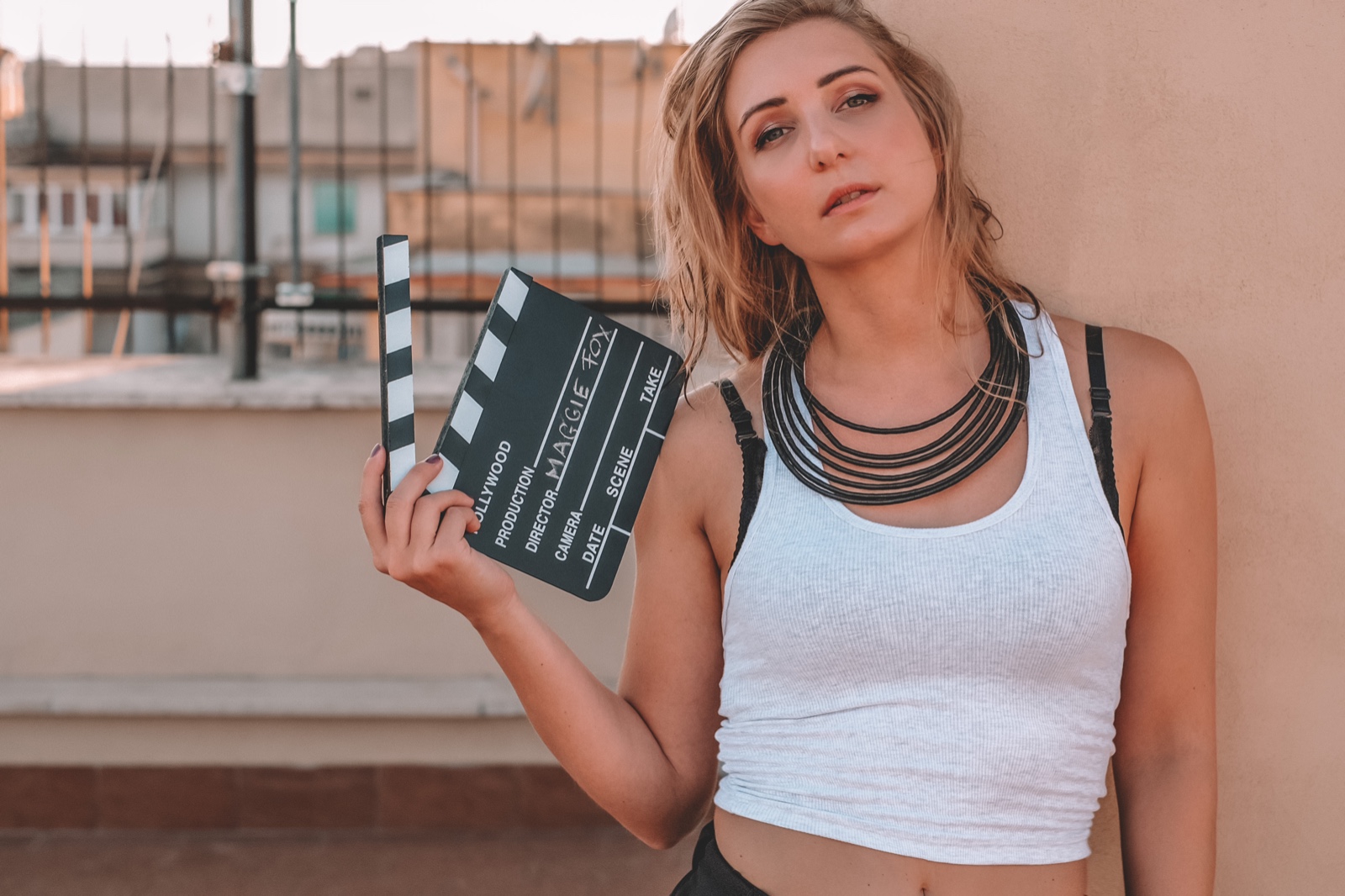
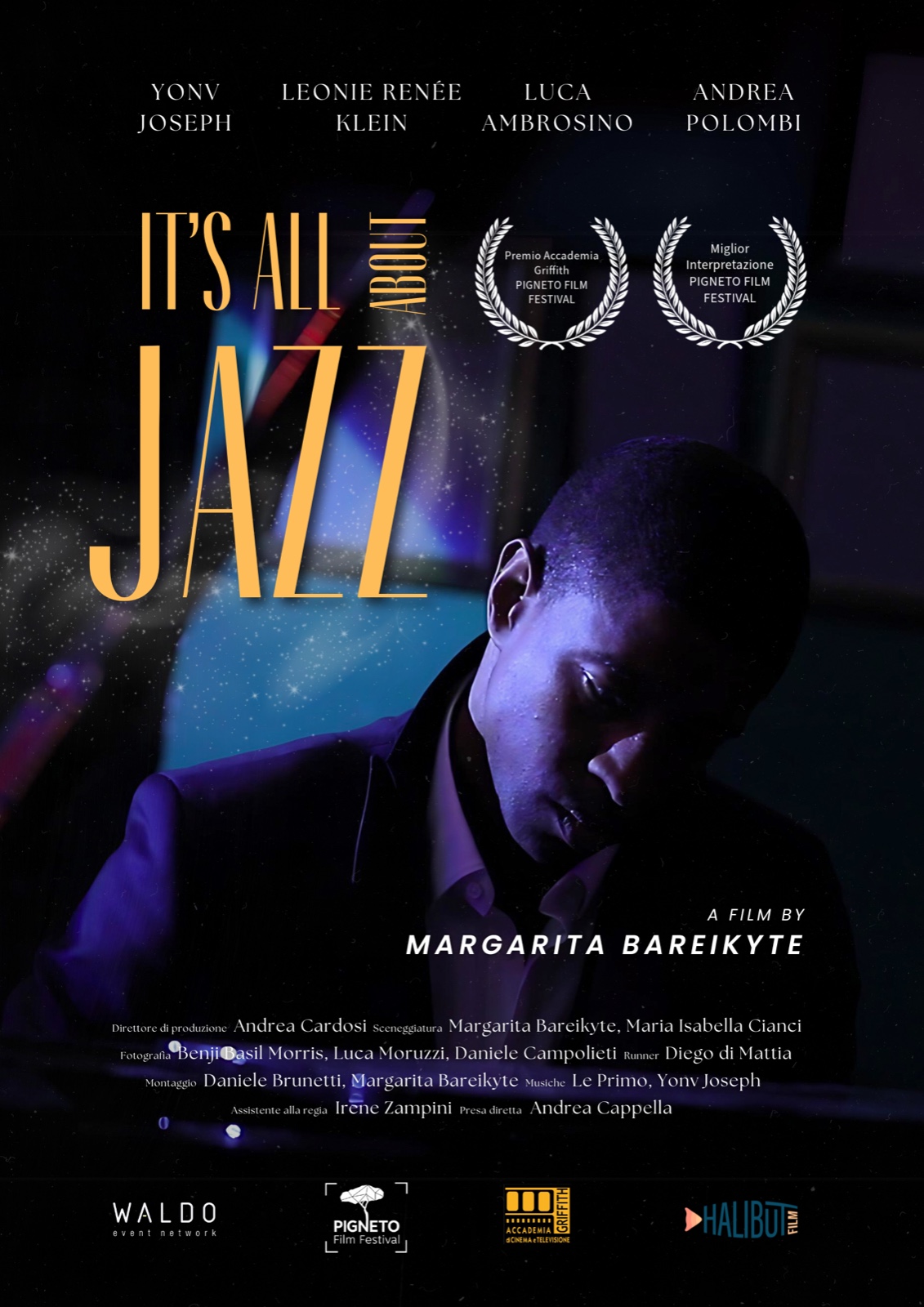
Margarita and I were casually chatting about a job we had both worked on when she mentioned she was a filmmaker. Before I knew it, I was sitting in the third row of a small, welcoming screening room at Casale dei Cedrati during the Pigneto Film Festival, watching her latest work, It’s All About Jazz. The short film is a light-hearted story about an American musician who needs to find a job in Rome to regularize his situation in Italy. Its comedic touches, driven by the awkward encounters the protagonist faces, make for a fun and engaging watch. But its premise is a struggle all too familiar to foreigners like Maggie and me, which made me curious to learn more about the inspiration behind the story and her experiences in the industry.
Can you tell me a bit about your early life in Lithuania?
 I have a degree in Cultural Management, and back then, I managed a gallery in Vilnius. It was a very successful job, but my first degree was in Performing Arts, and I missed working as an actress. I missed the theater and wanted to get back into it. I graduated with a master’s in Theater and Film Direction and became a successful theater director in Lithuania. I enjoyed what the field had to offer there—it’s a fast-growing country, economically speaking, with lots of opportunities for young people. But when it comes to filmmaking, it’s tough to break into the industry there.
What first drew you to the world of film?
I took a film course and fell in love with cinema. So even though I had a great job, I wanted to pursue filmmaking. It didn’t matter how hard it would be. I managed to make a few short films, but then I went travelling on my own and decided I wanted to live somewhere else to try something new. I think it’s always good to move—it helps you grow.
What motivated your move from Lithuania to Rome?
I met Andrea [my current partner]. I wanted to put on a theater show in Lithuania. It was a big project, but we never got the budget, so I had a few months off in my career. Andrea suggested I come to Rome, so I decided to try my luck in the theater world here. I attended a few castings just out of curiosity, and I ended up getting roles in two of them. That’s when I thought I might stay, “just for a while…” And then, that “just for a while” turned into many years.
Did you experience any culture shock or challenges upon arriving?
I originally moved to a small city outside of Rome. That was before COVID. I felt excited at first, because everything was new. But then reality hit, and I experienced a cultural shock, especially with how inefficient some things can be here. After COVID, we moved to Rome.
What was your initial impression of Rome as a city and a creative workplace? Have you faced any specific challenges or opportunities?
It was challenging because nobody seemed to care about my qualifications or experience. Although I learned some Italian, I couldn’t figure out how the job market works here. It felt like if they saw a foreign name on your CV, they wouldn’t consider you as seriously.
I also noticed a big difference in job stability. In Lithuania, it’s relatively easy to find a stable job in the theater world with a fixed salary, so you can work on art full-time. The roles are also clearly defined. You don’t get that level of professionalism in Rome. Actors here often do a bit of everything, especially in small productions. There are big productions, but those are reserved for TV stars and are hard to get into. People and companies come and go, so there’s no guarantee that you’ll be able to see a show or project through to the end. So I gave up on theater.
In what ways has living in Rome changed you, both as a filmmaker and as a person?
When you move to a new country, you start from scratch. This made me feel braver and more confident as a creator. In Lithuania, everyone knows you—the good and the bad. But here, I could start fresh and present myself however I wanted. I realized I could be who I wanted to be and, after winning my first prize, that feeling truly solidified.
There’s also the survival aspect. You need to get through here, so you become more active and savvier. I’ve become a fighter, and I think that shows in my film projects.
As a woman in the film industry in Rome, have you encountered any obstacles or unique experiences?
As a woman in the film industry, I’ve never felt discriminated against here. In the past five years, I feel like women in filmmaking are really supported. There are many women’s associations and movements that organize festivals, and there is an equal number of women participants, or even more in competitions. I guess that, at least in the art world, this country is very progressive. I did have one experience with another woman who questioned my abilities once, though.
Do you believe being a female filmmaker influences your artistic choices? If so, how?
I don’t think the gender perspective applies to me personally. I’ve often been told that my films have a “female touch,” but I don’t think it fundamentally influences my work.
Do you feel that the intersection of being both a woman and a foreigner has shaped your experiences in the film world? How does this dual identity reflect in your work?
My films, including the one I’m writing now, tell stories about immigrants like me and their struggles. I’m not sure if being a woman and a foreigner affects how people perceive my work, but I feel that being both a woman and a foreigner is a plus.
Can you tell me about your latest film project? What inspired it, and what themes or ideas were you exploring?
 My latest work, the short film It’s All About Jazz, was scripted, shot, and edited in five days and screened at the Pigneto Film Festival. It was a bit rushed, but we still won a few awards. The film is about migration and what it’s like being a foreigner in another country. I guess it reflects who I am and my personal story.
How would you describe your style as a filmmaker?
I don’t believe I have a fixed style. All my films are quite different. I enjoy working with visual metaphors and symbolism, which are very present in theater in Lithuania. I like using an imaginative world in my work. I also appreciate when a story is told through images rather than dialogue, even though that’s not the case in It’s All About Jazz.
What are your hopes for the future of your filmmaking career?
I’m exploring possible ways to film a feature movie. It’s quite challenging because I need to find a producer, which isn’t easy here. Not compared to Lithuania, at least, where the industry is more dynamic, and there are many young producers open to new ideas. But we’re making progress, networking, and things are starting to happen. My main goal is to keep working in filmmaking and video production—commercials, music videos—and continue with my own TV show, which is part of a Lithuanian portal and something I’m very proud of. Maybe theater production too, who knows!
This investigation was carried out with the support of the AGEE – Alliance for Gender Equality in Europe.