About us
  • it VO
  • fr Français
  • en English
  • ar العربية
No Result
View All Result
Medfeminiswiya - Mediterranean feminist media
  • On the move
  • In-depth
  • Files
  • Artistic Creations
  • Interviews
  • Opinions
  • World
Medfeminiswiya - Mediterranean feminist media
  • On the move
  • In-depth
  • Files
  • Artistic Creations
  • Interviews
  • Opinions
  • World
No Result
View All Result
Medfeminiswiya - Mediterranean feminist media
Home Interviews

A century of voices: Mapping the history of Tunisian feminism—an interview with historian Dalenda Larguèche

Olfa Belhassineby Olfa Belhassine
25 May 2026
A century of voices: Mapping the history of Tunisian feminism—an interview with historian Dalenda Larguèche

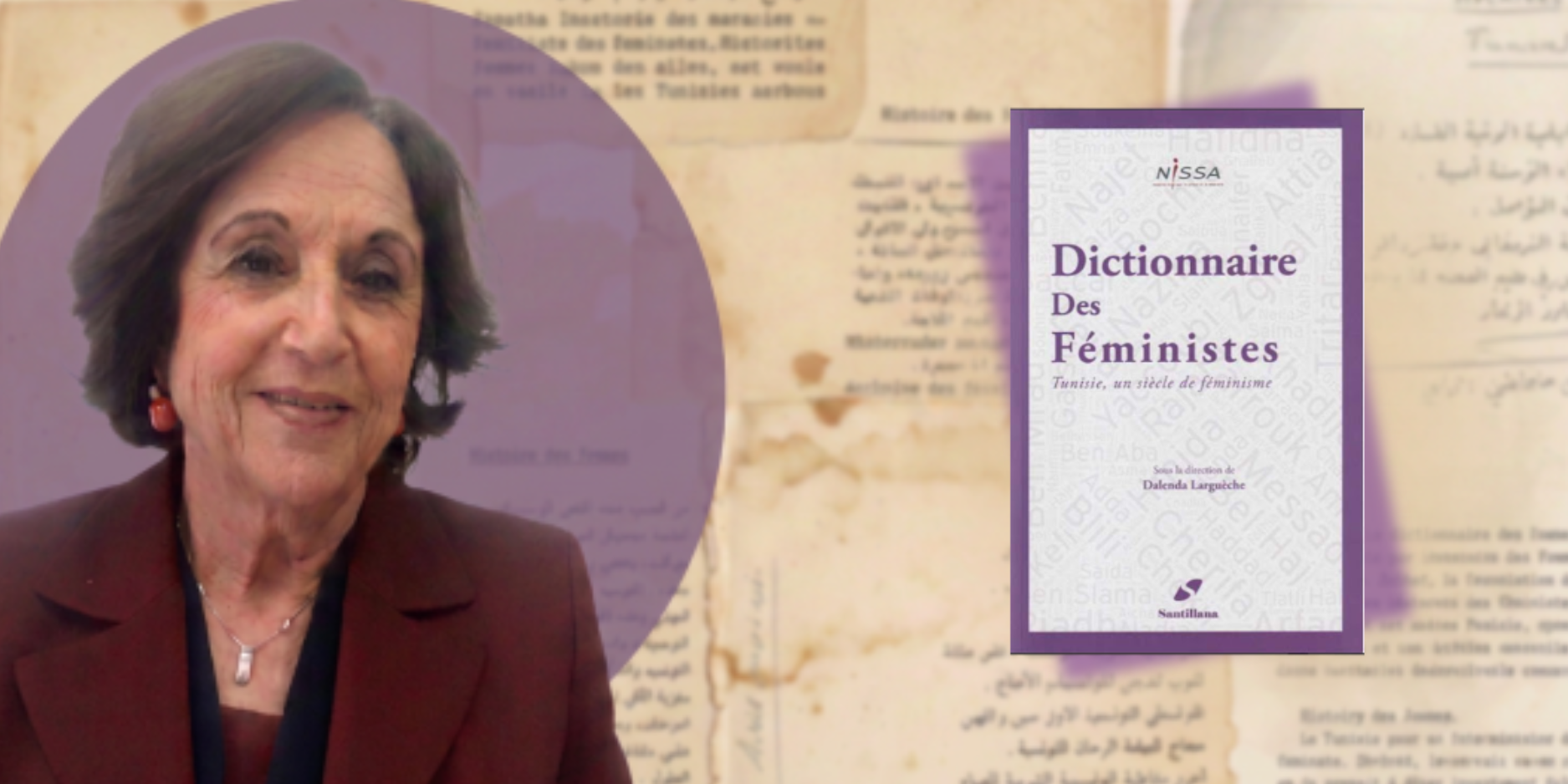
The first publication of its kind, the Dictionary of Feminists: A Century of Feminism in Tunisia traces the lives, struggles, and works of women who challenged patriarchy and carved out a place for women’s voices in Tunisia’s public sphere. Bringing to light figures still absent from many history books, the volume recovers stories from the struggle for independence, labor activism, and campaigns for gender equality. Historian of women and gender Dalenda Larguèche led this ambitious project to preserve and transmit the diverse histories of Tunisian women. Since the 1990s, Larguèche—author of Monogamy in Islam: The Kairouan Exception (2011), among other works—has been instrumental in establishing the teaching and study of women’s history in Tunisian universities, including the histories of the marginalized, the excluded, the rebels. An interview.

This post is also available in: Français (French)

How did the idea for this dictionary* come about, and why undertake such a publishing project dedicated to a century of Tunisian feminism?

The idea for this dictionary stemmed from a long-standing feminist commitment and a decades-long research trajectory devoted to the history of Tunisian women. As a historian, I very early on observed the absence of women from dominant historical narratives, whether academic, institutional, or memorial. Their presence is often fragmented, marginalized, even rendered invisible or instrumentalized.

After 2011, I had the honor of serving twice as director-general of the Center for Research, Studies, Documentation, and Information on Women (CREDIF). It was during my second term, between 2015 and 2018, that the project for the Dictionary of Feminists: A Century of Feminism in Tunisia was born, later published in 2021. Our undertaking of this project responded to a necessity: to restore Tunisian feminists to their rightful place in history and to transmit the memory of women’s struggles that have marked the century. For although Tunisian feminism has profoundly transformed society and contributed to the evolution of women’s rights, its actors remain often little known or absent from official narratives. To carry out this project, I brought together a multidisciplinary team of 20 women and one male researcher, all engaged in feminist reflection.

We adopted a broad and contextualized approach to feminism. The aim was not to limit feminism to a single militant or theoretical definition, but to account for the diversity of forms of engagement in favor of women: public speech, associative activism, intellectual production, political engagement, artistic creation, or journalistic work.

Alongside the biographical entries, thematic entries illuminate the multiplicity of fields in which feminism has been invested—political, trade union, associative, intellectual, artistic—and further explore the related activist practices, thus providing an essential context for understanding individual trajectories. The dictionary thus highlights a plurality of feminisms in contemporary Tunisia. Some figures were active within structured organizations, while others expressed a feminist sensibility through their work or personal trajectories. All have contributed, each in their own way, to transforming Tunisian society.

Although Tunisian feminism has profoundly transformed society and contributed to the evolution of women’s rights, its actors remain often little known or absent from official narratives.

Why do you think classical history long remained indifferent to women’s voices and actions?

First, it should be emphasized that for many centuries, history was essentially written by men who held both the power of knowledge, writing, and narrative transmission. Within this framework, women’s experiences, actions, and achievements were considered secondary, peripheral, or even historically insignificant. Their actions, confined to the private sphere or seen as unrelated to major political and social events, were rarely considered worthy of being recorded, archived, or transmitted to collective memory. Hence their invisibility in official narratives and archives.

This hierarchy of knowledge and human experience contributed to making women largely invisible in official histories, archives, and historiographical production. Women’s presence thus appears fragmented, silenced, or erased, not because of an actual absence, but because the very criteria for selecting and legitimizing historical facts long excluded or minimized their contributions.

The dictionary covers the period from the 1920s to the eve of the 2011 revolution. What is the rationale behind this timeframe?

This temporality responds to a precise historical logic. The starting point imposed itself naturally on us: the years 1924 and 1929, which correspond to the public interventions of Mannoubiya El Ouertani and Habiba Menchari. For the first time, unveiled Tunisian women publicly denounced the condition of women, their social confinement, exclusion, and the weight of patriarchy legitimized by certain religious interpretations.

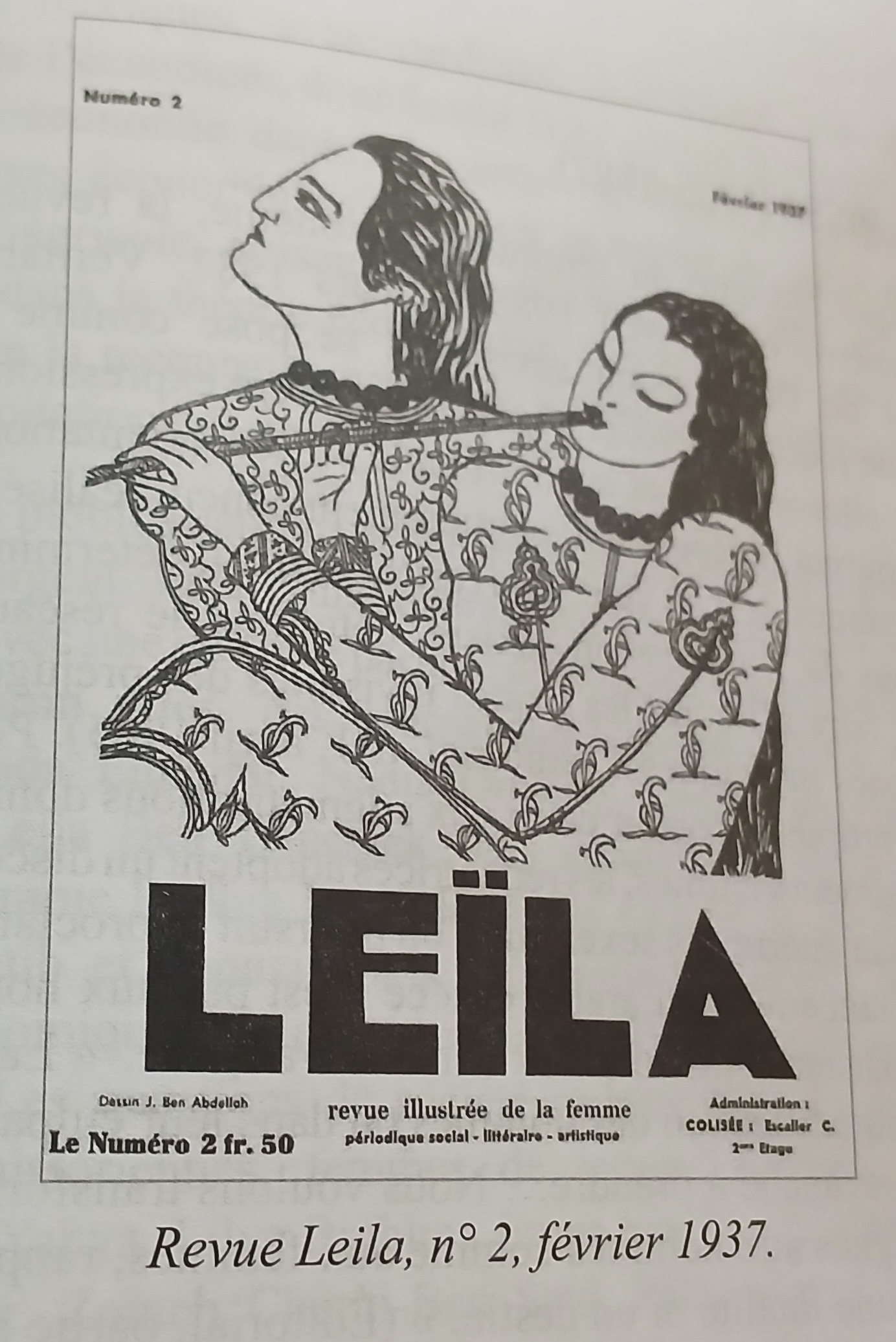
In my view, these events constitute a founding moment of Tunisian feminist consciousness. They set in motion a dynamic in which each step built upon and fueled the next. We witnessed the creation of the first women’s associations, and then the Leyla journal. Then came demands for girls’ education, for the right to work and later the right to vote.

With independence, reformist feminism evolved into state feminism under President Habib Bourguiba. The promulgation of the Personal Status Code in 1956 marked a major milestone in the history of women’s rights in Tunisia, despite the limits of this institutional and paternalistic model. From the late 1970s onward, independent feminists emerged, often from left-wing intellectual and university circles. They developed a critical approach to political, religious, and patriarchal power, while asserting the autonomy of the women’s movement. I myself carry part of this history within me. Born in 1953, I benefited from independence-era schooling, coeducation, access to university, and the social transformations of that period. But that same school also taught me critical thinking, notably through philosophy and Marxism.

As for 2010, it is a deliberate choice. After the 2011 revolution, the Tunisian feminist movement underwent profound transformations: new actors, new issues, new forms of mobilization. This historical sequence deserves a separate study and a different analytical framework.
What criteria did you adopt to select the 114 feminist figures who make up the corpus of this book?

The selected figures first and foremost had to demonstrate commitment to the women’s cause through their actions, writings, works, or trajectories. We prioritized women who left tangible traces of their engagement: associative and political activism, intellectual, artistic, scientific, or journalistic production.

Even some institutional figures appointed by political authorities were included when they contributed to advancing women’s status in the exercise of their responsibilities. For deceased figures, we worked from archives, writings, and existing interviews. For those still alive, we conducted direct interviews using a shared methodological framework: childhood, family environment, education, professional trajectory, activism, private life, and intellectual production. Through these trajectories, we sought to show that Tunisian feminism constitutes a living memory, deeply rooted in the country’s social and political history.

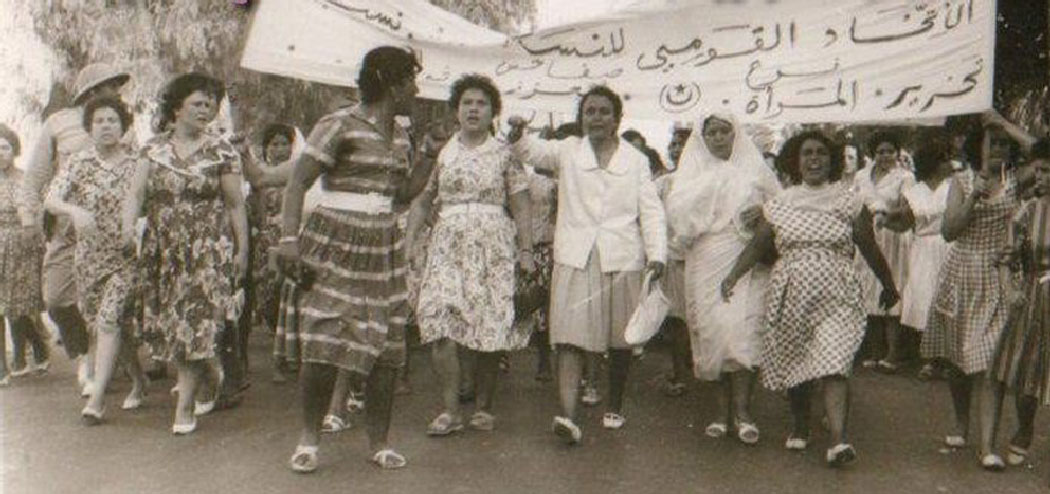
Tunisian women’s demonstration, 1960 © D.R.

Could some omissions be held against you?

Of course. This work never claimed to be exhaustive. Some important figures are indeed missing, and I am aware of that. In some cases, we did not obtain the desired interviews; in others, individuals indefinitely postponed their participation. It must be noted that this is the first undertaking of this scale in the field of Tunisian feminisms. This is the first publication of its kind, and pulling off such an endeavor was not easy. Whatever was not included in this book could be added to a second edition or during the book’s translation into Arabic.

Did the diversity of disciplines among the contributors influence your approach?

Absolutely. Today, I define myself less as a classical historian and more as a social scientist. And the history of women and feminisms necessarily requires a multidisciplinary approach.

This field lies at the intersection of history, sociology, psychology, psychoanalysis, literature, political science, art history, and life narratives. All these dimensions are essential to understanding women’s historical experience. If we were to limit ourselves to a strictly historical perspective, we would be faced with a lack of archival resources. Fortunately, we have moved beyond the era when oral history was not taken seriously or considered a reliable source.

My approach is therefore as follows: when I develop a research idea related to women’s history, I sharpen my tools by relying on oral sources and material traces, such as artisanal production. We must therefore invent other tools: oral history, testimonies, material objects, crafts, family memory. This diversity of sources greatly enriches our understanding of women’s lived experience.

Tunisian feminism constitutes a living memory, deeply rooted in the country’s social and political history.

According to the trajectories presented in the dictionary, what sparked feminist consciousness among Tunisian women?

There is no single trigger. In many trajectories, awareness arises early from lived experiences of inequality: injustice suffered by the mother, discrimination between sons and daughters, prohibition from studying, or social control over the female body. The role of the family is important, sometimes negatively so, but some maternal or paternal figures also encourage emancipation.

The school also plays a decisive role. For many feminists of the 1970s, philosophy, history, and literature classes constituted a genuine intellectual and political awakening. University and student movements then became spaces of ideological and activist socialization.

Some women engaged in left-wing political parties also discovered, within those organizations, persistent forms of male domination, which led them toward independent feminism.

Are you thinking about a sequel? Have post-revolutionary freedoms given rise to new types of feminism?

Yes, because this new historical sequence is extremely rich. After 2011, Tunisian feminism has become more diverse: new associations, new activist perspectives, new political languages, and new forms of action. However, this period requires a specific approach. As a researcher, I cannot apply the same paradigms to profoundly different historical contexts. It is also necessary to allow time for events to settle before producing a solid scientific analysis. Moreover, the experience of this dictionary has opened new avenues of reflection that I consider essential for strengthening and preserving women’s memory and restoring their place in Tunisia’s social, cultural, and political history—a place that is still too fragmented, insufficiently archived, or insufficiently recognized. Ideas are still abundant.

* Dictionary of Feminists: A Century of Feminism in Tunisia, edited by Dalenda Larguèche. Santillana Editions, Tunis, March 2026, 796 pages.
Interview with Dalenda Larguèche — video produced by Nawaat.
Olfa Belhassine

Olfa Belhassine

Olfa Belhassine is a Tunisian journalist who worked with the Tunisian daily “La Presse” since 1990. After the 2011 protests, her articles started appearing in “Libération”, “Le Monde” and “Courrier International”, a testament to her extensive experience as a journalist reporting from Tunisia during President Ben Ali's rule and after his fall. In 2013, Olfa was awarded the first journalism prize of the “Center of Arab Women” for her investigative work on customary marriage in Tunisia, published in “La Presse.” Olfa has also been corresponding since 2015 for the JusticeInfo.net, a website specializing in transitional justice around the world. Olfa Belhassone and Hedia Barkat have published a book titled 'Ces nouveaux mots qui font la Tunisie' (These new words that make Tunisia), providing an in-depth exploration of the political transition in Tunisia after the revolution.

Leave a Reply Cancel reply

Your email address will not be published. Required fields are marked *

J'accepte les termes et conditions et la Politique de confidentialité .

Related articles

Related posts

Society’s view of aging women and the stereotypes women are trying to break—An interview with Özgün Biçer
Files

Society’s view of aging women and the stereotypes women are trying to break—An interview with Özgün Biçer

by Arjin Dilek Öncel
16 March 2026

Related posts

A Filmmaker’s Journey: Inside the Creative World of Margarita Bareikyte
Interviews

A Filmmaker’s Journey: Inside the Creative World of Margarita Bareikyte

by Tábata Martín Olea
17 February 2025

JOIN OUR NEWSLETTER

Original content. Feminist journalism. Straight to your inbox.

    Related posts

    An interview with Tesh Sidi: Migrants in Parliament and inclusion by identity
    Interviews

    An interview with Tesh Sidi: Migrants in Parliament and inclusion by identity

    by Contributor with Medfeminiswiya
    22 January 2025

    Related posts

    And what if women managed money?  An interview with Giovanna Badalassi.
    On the move

    And what if women managed money? An interview with Giovanna Badalassi.

    by Cristiana Scoppa
    2 May 2022

    Popular articles

    Thirty and single… so what?
    On the move

    Thirty and single… so what?

    by Pascale Sawma
    1 March 2022
    Israel to Palestinian journalists: Be silent… or else!
    In-depth

    Israel to Palestinian journalists: Be silent… or else!

    by Alaa Murrar
    29 November 2023
    Giving birth with an open womb or when Caesarean section becomes the norm in Egypt
    Abortion and SRHR

    Giving birth with an open womb or when Caesarean section becomes the norm in Egypt

    by Contributor with Medfeminiswiya
    27 September 2021
    On the move
    In-depth
    Files
    Artistic Creations
    Interviews
    Opinions
    World
    On the move
    In-depth
    Files
    Artistic Creations
    Interviews
    Opinions
    World

    Medfeminiswiya is a feminist network that brings together women journalists working in the fields of media and content production in the Mediterranean region.

    • About us
    • Country Context
    • Our community
    • Become a member
    • Our partners
    • Editorial charter
    • Disclaimer

    Follow us :

    JOIN OUR NEWSLETTER

    Original content. Feminist journalism. Straight to your inbox.

      © 2026 Medfeminiswiya – Mediterranean Network for Feminist Information

      Back to top

      Welcome Back!

      Login to your account below

      Forgotten Password?

      Retrieve your password

      Please enter your username or email address to reset your password.

      Log In

      Add New Playlist

      No Result
      View All Result
      • On the move
      • In-depth
      • Files
      • Artistic Creations
      • Interviews
      • Opinions
      • World
      • it VO
      • fr Français
      • en English
      • ar العربية

      © 2026 Medfeminiswiya - Mediterranean Network for Feminist Information

      Ce site n'utilise pas de cookies. This website does not use cookies. هذا الموقع لا يستخدم ملفات تعريف الارتباط.