• it VO
  • fr Français
  • en English
  • ar العربية
About us
  • In-depth
    • All
    • Features
    • Files
    • World
    In Mediterranean Region: Sexual and Reproductive Rights Under Pressure

    In Mediterranean Region: Sexual and Reproductive Rights Under Pressure

    Morocco: 600 abortions a day—Alarming figures and tragic stories

    Morocco: 600 abortions a day—Alarming figures and tragic stories

    In Spain, the right to abortion is not guaranteed for all

    In Spain, the right to abortion is not guaranteed for all

    Invisible and vulnerable: Migrant women at the frontlines of Spain’s prostitution debate

    Invisible and vulnerable: Migrant women at the frontlines of Spain’s prostitution debate

    Serbia: Is contraception a luxury or a basic human right?

    Serbia: Is contraception a luxury or a basic human right?

    Trending Tags

    • Women artists
    • Ecofeminism
    • Women living from and on the streets
    • Women and bodies
    • Women and sports
    • Women and cinema
    • Ramadan series
    • Women and war
    • Women Living at the Margins
    • Press Freedom from the Perspective of Women Journalists
    • Period poverty
    • Gynecological violence
    • Women and prison
    • Safe spaces
    • Abortion and SRHR
    • Transgenderism
    • Women in rural areas
  • On the move
    Spain: CEAR and the fight against human trafficking

    Spain: CEAR and the fight against human trafficking

    Gaza: How many journalists must be killed for the world to react?

    Gaza: How many journalists must be killed for the world to react?

    Moroccan activist Ibtissam Lachgar held in solitary confinement, health in crisis

    Moroccan activist Ibtissam Lachgar held in solitary confinement, health in crisis

    Three women for one man’s pay: The plight of female agricultural workers in Egypt

    Three women for one man’s pay: The plight of female agricultural workers in Egypt

  • Portraits
    Sophie Bessis: “The battle for the intimate will be long, especially in the Global South!”

    Sophie Bessis: “The battle for the intimate will be long, especially in the Global South!”

    “Mom, Dad, Can We Talk About Privacy?”—A Tunisian children’s book on protecting kids from sexual violence

    “Mom, Dad, Can We Talk About Privacy?”—A Tunisian children’s book on protecting kids from sexual violence

    Kurdish journalist killed in Turkish drone strike in northeastern Syria

    Kurdish journalist killed in Turkish drone strike in northeastern Syria

    A Filmmaker’s Journey: Inside the Creative World of Margarita Bareikyte

    A Filmmaker’s Journey: Inside the Creative World of Margarita Bareikyte

  • Creations
    • All
    • Reviews
    • Visual Arts
    “La Malédiction (1)”, a theatrical adaptation of King Kong Theory bursting with Tunisian rage

    “La Malédiction (1)”, a theatrical adaptation of King Kong Theory bursting with Tunisian rage

    “Mom, Dad, Can We Talk About Privacy?”—A Tunisian children’s book on protecting kids from sexual violence

    “Mom, Dad, Can We Talk About Privacy?”—A Tunisian children’s book on protecting kids from sexual violence

    The El’Sardines series, a delicate feminist manifesto centered around an ecological mystery

    The El’Sardines series, a delicate feminist manifesto centered around an ecological mystery

    Atlantics, a film by Mati Diop: Filming the embodied resistance of spirits

    Atlantics, a film by Mati Diop: Filming the embodied resistance of spirits

  • Opinion
    Women in Gaza are living their worst nightmares - “ I want to go back to my life before the war, to my privacy, my home ”

    Women in Gaza are living their worst nightmares - “ I want to go back to my life before the war, to my privacy, my home ”

    Messages from life under bombardment—Can a mother cope with losing her six children at once? (10)

    Messages from life under bombardment—Can a mother cope with losing her six children at once? (10)

    Messages from life under bombardment—No cake for my children on their birthdays (9)

    Messages from life under bombardment—No cake for my children on their birthdays (9)

    Messages from life under bombardment – No food or water in Gaza (8)

    Messages from life under bombardment – No food or water in Gaza (8)

  • Multimedia
    "I hope it doesn’t go viral: Journalism and sexist attacks in digital age". A video investigation by Çiçek Tahaoğlu

    "I hope it doesn’t go viral: Journalism and sexist attacks in digital age". A video investigation by Çiçek Tahaoğlu

    Period poverty in Montenegro

    Period poverty in Montenegro

    Period poverty in France (1)

    Period poverty in France (1)

    Period Poverty in Italy

    Period Poverty in Italy

  • Country context
No Result
View All Result
BLOGS
Medfeminiswiya
  • In-depth
    • All
    • Features
    • Files
    • World
    In Mediterranean Region: Sexual and Reproductive Rights Under Pressure

    In Mediterranean Region: Sexual and Reproductive Rights Under Pressure

    Morocco: 600 abortions a day—Alarming figures and tragic stories

    Morocco: 600 abortions a day—Alarming figures and tragic stories

    In Spain, the right to abortion is not guaranteed for all

    In Spain, the right to abortion is not guaranteed for all

    Invisible and vulnerable: Migrant women at the frontlines of Spain’s prostitution debate

    Invisible and vulnerable: Migrant women at the frontlines of Spain’s prostitution debate

    Serbia: Is contraception a luxury or a basic human right?

    Serbia: Is contraception a luxury or a basic human right?

    Trending Tags

    • Women artists
    • Ecofeminism
    • Women living from and on the streets
    • Women and bodies
    • Women and sports
    • Women and cinema
    • Ramadan series
    • Women and war
    • Women Living at the Margins
    • Press Freedom from the Perspective of Women Journalists
    • Period poverty
    • Gynecological violence
    • Women and prison
    • Safe spaces
    • Abortion and SRHR
    • Transgenderism
    • Women in rural areas
  • On the move
    Spain: CEAR and the fight against human trafficking

    Spain: CEAR and the fight against human trafficking

    Gaza: How many journalists must be killed for the world to react?

    Gaza: How many journalists must be killed for the world to react?

    Moroccan activist Ibtissam Lachgar held in solitary confinement, health in crisis

    Moroccan activist Ibtissam Lachgar held in solitary confinement, health in crisis

    Three women for one man’s pay: The plight of female agricultural workers in Egypt

    Three women for one man’s pay: The plight of female agricultural workers in Egypt

  • Portraits
    Sophie Bessis: “The battle for the intimate will be long, especially in the Global South!”

    Sophie Bessis: “The battle for the intimate will be long, especially in the Global South!”

    “Mom, Dad, Can We Talk About Privacy?”—A Tunisian children’s book on protecting kids from sexual violence

    “Mom, Dad, Can We Talk About Privacy?”—A Tunisian children’s book on protecting kids from sexual violence

    Kurdish journalist killed in Turkish drone strike in northeastern Syria

    Kurdish journalist killed in Turkish drone strike in northeastern Syria

    A Filmmaker’s Journey: Inside the Creative World of Margarita Bareikyte

    A Filmmaker’s Journey: Inside the Creative World of Margarita Bareikyte

  • Creations
    • All
    • Reviews
    • Visual Arts
    “La Malédiction (1)”, a theatrical adaptation of King Kong Theory bursting with Tunisian rage

    “La Malédiction (1)”, a theatrical adaptation of King Kong Theory bursting with Tunisian rage

    “Mom, Dad, Can We Talk About Privacy?”—A Tunisian children’s book on protecting kids from sexual violence

    “Mom, Dad, Can We Talk About Privacy?”—A Tunisian children’s book on protecting kids from sexual violence

    The El’Sardines series, a delicate feminist manifesto centered around an ecological mystery

    The El’Sardines series, a delicate feminist manifesto centered around an ecological mystery

    Atlantics, a film by Mati Diop: Filming the embodied resistance of spirits

    Atlantics, a film by Mati Diop: Filming the embodied resistance of spirits

  • Opinion
    Women in Gaza are living their worst nightmares - “ I want to go back to my life before the war, to my privacy, my home ”

    Women in Gaza are living their worst nightmares - “ I want to go back to my life before the war, to my privacy, my home ”

    Messages from life under bombardment—Can a mother cope with losing her six children at once? (10)

    Messages from life under bombardment—Can a mother cope with losing her six children at once? (10)

    Messages from life under bombardment—No cake for my children on their birthdays (9)

    Messages from life under bombardment—No cake for my children on their birthdays (9)

    Messages from life under bombardment – No food or water in Gaza (8)

    Messages from life under bombardment – No food or water in Gaza (8)

  • Multimedia
    "I hope it doesn’t go viral: Journalism and sexist attacks in digital age". A video investigation by Çiçek Tahaoğlu

    "I hope it doesn’t go viral: Journalism and sexist attacks in digital age". A video investigation by Çiçek Tahaoğlu

    Period poverty in Montenegro

    Period poverty in Montenegro

    Period poverty in France (1)

    Period poverty in France (1)

    Period Poverty in Italy

    Period Poverty in Italy

  • Country context
About us
Medfeminiswiya
About us

How the European Union risks sabotaging the Istanbul Convention

The European Directive on violence against women and domestic violence was announced as the instrument that would guarantee the effective implementation of the Istanbul Convention in all EU countries. Conversely, EU member states have sabotaged it, gutting it of its essential measures. But the final word has yet to be spoken.

Contributor with Medfeminiswiya by Contributor with Medfeminiswiya
26 February 2024
in In-depth
31 0
0
Share on FacebookShare on Twitter

This post is also available in: Français (French) VO

Laura Onofri, Feminist activist and President of SeNonOraQuando? – Turin

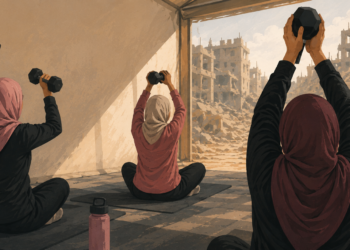
The proposed European directive on violence against women and domestic violence, which resulted from the trilogue held on February 6, has sparked strong criticism from women’s and feminist organizations that combat gender-based violence and work on prevention. This trilogue was an informal tripartite negotiation between representatives of the European Parliament, the European Commission (EC), and the Council of the European Union (the latter composed of the ministers of the member states).

The EC has been working on this directive since March 2022, with the aim of identifying the tools necessary to prevent and combat rape, femicide, forced marriage, female genital mutilation, sexual harassment—including in the workplace—and online violence.

The objective of the directive proposed by the European Commission, which is led by a woman, Ursula von der Leyen, was to provide the European Union (EU) with legislation aimed at preventing and combating these serious forms of discrimination against women, drawing inspiration from the principles of the Istanbul Convention, which entered into force in the EU on October 1, 2023. Despite the fact that many countries have not yet ratified it and that some, such as Turkey, have withdrawn from the Convention.

Women workers and activists, anti-violence centers, unions, and all those who care about protecting women and fighting against all forms of violence have been disappointed, and their expectations have not been met.

Indeed, the proposed directive that resulted from the trilogue—the informal interinstitutional negotiation between the European Parliament, the EC, and the Council of the EU which results in a provisional agreement that must then be adopted through formal procedures—ended up being very impoverished in comparison to that voted by the European Parliament’s Committee on Women's Rights and Gender Equality (FEMM) with 71 votes in favor out of 83.

To start, Article 5 of the initial draft of the directive—the one that was to define rape as sexual intercourse without consent, was removed.

The reason this fundamental principle was eliminated is that the EU would have no competence to legislate in this matter. But many jurists believe that rape is attributable to sexual exploitation, which is a crime for which the EU can devise policy, as explained by judge Maria Grazia Giammarinaro who was—from 2010 until 2014—the OSCE (Organization for Security and Co-operation in Europe) Special Representative and Coordinator for Combating Trafficking in Human Beings.

In an article published in the Italian newspaper Domani, Giammarinaro writes, “Exploitation is no longer understood only as an unfair advantage (of an economic nature, etc.) deriving from the performance of others, be it sexual, work-related, or of any other type, and which ends up including the instrumental use of the person, for the pursuit of the objective desired by the person who instrumentalizes the victim despite the will of the latter.”

The text of the directive originally proposed by the European Commission stated, “In many Member States, the condition of rape remains the use of force, threat, or coercion. In others, however, the simple condition that the victim has not consented to the sexual act is sufficient. This approach is the only one that guarantees complete protection of the sexual integrity of the victim. It is therefore necessary to ensure an equal level of protection throughout the Union by specifying the defining elements of the crime of the rape of a woman.” After this interinstitutional agreement, it is no longer the case.

Article 4, which provided for the inclusion of the definition of sexual harassment in the world of work, was also removed.

 This is a very serious decision because we know that violence and harassment in the workplace constitute a human rights violation and that violence and harassment are a threat to equal opportunities and are incompatible with work based on the dignity of the human being, as stipulated in the 2019 ILO Convention.

Another major step backwards is that the onus of proof now devolves on the victim when it comes to different forms of online violence, such as online sexual harassment, cyberbullying, or the non-consensual distribution of audiovisual material with sexually explicit content. These changes were introduced by the Council of the EU during the last phase of the negotiations.

The stands taken against certain fundamental articles of the directive by countries such as Poland, Hungary, and the Czech Republic, but also France and Germany, conditioned the agreement and thus profoundly devalued the directive.

Many women activists demonstrated and protested across Europe in an attempt to convince their countries’ governments to adopt clearer positions that are more protective of women, but they failed to make any change in the governments’ positions, and these were in fact able to remove certain key passages from the proposal.

In Italy, the NGO Differenza Donna launched a petition demanding that the text approved by the European Parliament’s FEMM Committee be kept. The petition obtained more than 90,000 signatures in just a few days.

Pina Picierno, Vice President of the European Parliament and Italian rapporteur for the directive, worked hard to defend the original text. According to her, “Certain national interests rooted in a reactionary, retrograde culture have prevailed. It is regrettable that Italy, led by Giorgia Meloni, head of government, was not able to effectively exercise its negotiation abilities as it has often boasted of doing for other issues.” 

In protest, Picierno did not participate in the FEMM Committee’s vote on the finalized text on February 6 and declared that “this directive is little more than a title.”

Once adopted, European directives must be transposed by member states within three years by adapting national legislation to the European text. The goal of the directive was that violence against women would be treated in a consistent manner in the laws and policies of the member states, transposing the main principles of the Istanbul Convention.

To this end, the directive had introduced measures aimed at standardizing the definition of crimes and offenses punishable by law, the protection of victims and access to justice, assistance to victims and their compensation, the improvement of data collection, and prevention, coordination, and cooperation within the EU.

But with the many articles removed from the initial proposal, achieving this goal has been pushed farther into the future. Once again, women’s bodies have been shamefully compromised.

There is no doubt that national interests and electoral alliances in view of the upcoming European elections influenced and served the negotiation process. Now that this decision has been made, it seems clear that violence against women is not a priority issue of which states and governments have understood the scale or origins, let alone the effective instruments needed to combat it.

Even in Europe, patriarchy has profoundly impacted the choices governments make, and what could have been a major turning point in the fight against violence against women is now just a weak measure with no real effectiveness to speak of.

The European Parliament will have to approve the agreement reached during the negotiations next April. The margins for improving the directive are limited, but European women’s organizations will continue to exert pressure, seek alliances, and make more information available regarding this issue which may only seem “technical,” far removed from our daily concerns, but which will potentially have a very negative impact on the lives of millions of women and girls.

Contributor with Medfeminiswiya

Contributor with Medfeminiswiya

Share your content with us- Partagez vos contenus avec nous- ِشاركونا المواد الخاصة بكم/ن. راسلونا: info@medfeminiswiya.net

Related posts

“Palestinian Women,” the revived history of women militants for the liberation of Palestine
In-depth

“Palestinian Women,” the revived history of women militants for the liberation of Palestine

by Nathalie Galesne
6 February 2024
863

The documentary by Lebanese director Jocelyne Saab, screened at the 27/20 Festival in Tunis, shook the public. What do these...

Croatia: Men Kneeling in Main Squares for Women’s Chastity
In-depth

Croatia: Men Kneeling in Main Squares for Women’s Chastity

by Snježana Pavić
25 September 2023
807

On the first Saturday of every month, groups of men kneel in the main squares of many cities across Croatia...

Single moms in Lebanon: We fight alone

Single moms in Lebanon: We fight alone

8 June 2021
653
Tunisia: 10 years after 14 January 2011, women are still in Revolution

Tunisia: 10 years after 14 January 2011, women are still in Revolution

10 May 2021
562

Leave a Reply Cancel reply

Your email address will not be published. Required fields are marked *

J'accepte les termes et conditions et la Politique de confidentialité .

Medfeminiswiya

Medfeminiswiya is a feminist network that brings together women journalists working in the fields of media and content production in the Mediterranean region.

Newsletter


    Follow us

    Browse topics


    • In-depth
    • Files
    • Features
    • On the move
    • Portraits
    • Opinion

    • Creations
    • Visual Arts
    • Reviews
    • Multimedia
    • Country Context
    • Blogs
    • About us
    • Our community
    • Our partners
    • Become a member
    • Editorial charter
    • Disclaimer

    © 2025 Medfeminiswiya - Mediterranean Network for Feminist Information

    • it VO
    • fr Français
    • en English
    • ar العربية
    • In-depth
    • On the move
    • Portraits
    • Creations
    • Opinion
    • Multimedia
    • Country context
    • Blogs
    No Result
    View All Result

    © 2025 Medfeminiswiya - Mediterranean Network for Feminist Information

    Welcome Back!

    Login to your account below

    Forgotten Password?

    Retrieve your password

    Please enter your username or email address to reset your password.

    Log In

    Add New Playlist

    Ce site n'utilise pas de cookies. This website does not use cookies. هذا الموقع لا يستخدم ملفات تعريف الارتباط.