About us
  • it VO
  • fr Français
  • en English
  • ar العربية
No Result
View All Result
Medfeminiswiya - Mediterranean feminist media
  • On the move
  • In-depth
  • Files
  • Artistic Creations
  • Interviews
  • Opinions
  • World
Medfeminiswiya - Mediterranean feminist media
  • On the move
  • In-depth
  • Files
  • Artistic Creations
  • Interviews
  • Opinions
  • World
No Result
View All Result
Medfeminiswiya - Mediterranean feminist media
Home Artistic Creations

Literary journeys through the new female mythology… Portrait III: Penelope

Federica Aracoby Federica Araco
26 January 2023
Literary journeys through the new female mythology… Portrait III: Penelope

The women depicted in the great Latin and Greek classics are secondary characters who evolve silently in the background of the heroic deeds of valiant warriors and powerful and capricious gods. Both marginal and submissive, their beauty can nonetheless trigger bloody wars and they are constantly victims of kidnappings and male violence.

This post is also available in: Français (French) العربية (Arabic)

The women depicted in the great Latin and Greek classics are secondary characters who evolve silently in the background of the heroic deeds of valiant warriors and powerful and capricious gods. Both marginal and submissive, their beauty can nonetheless trigger bloody wars and they are constantly victims of kidnappings and male violence.

Some contemporary authors now rewrite these stories from the point of view of Dido, Circe, Penelope, Calypso, Medea, Cassandra, finally promoted to the rank of protagonists. Irreverent, ironic and profoundly daring, their novels reverse the patriarchal perspective, providing us with a “new antiquity”.

The Clever Lady of Ithaca

In 2005, Canadian Margaret Atwood published The Penelopiad, described by the New York Times as “wholly unconvincing” and “determinedly irreverent”.

Faithful and hopeful, the beautiful queen waits for twenty years for the return of her husband Odysseus, who is under siege by the Pretenders who aspire to his throne.

She cries and prays, educates her rebellious son who has grown up without a father, administers the kingdom and weaves the famous “tapestry” for her father-in-law Laertes, deceiving her suitors with the help of her servants.

With a dry ton and an ironic account, Atwood evokes the attractive and determined personality of Penelope, recounting her childhood in the sumptuous Spartan palace and the moment when, at barely 15 years old, she meets her future husband.

Already recounted by Homer, their first meeting is based on local oral traditions and is enriched by the emotions of the young woman who immediately falls in love with this fascinating but imperfect man, known throughout Greece for his cunning inventiveness.

Once in Hell, Penelope no longer fears the judgment of the gods and finally reveals the truth. Her recollections alternate with the songs of the twelve servants in an entirely feminine narrative that mixes prose and poetry in homage to the tragic tradition.

The novel invites us to reflect on the subordinate role of women in Mycenaean times and highlights the profound humanity of a complex, tormented and often self-doubting figure, decidedly different from the stereotype of the devoted and understanding wife sung by Homer.
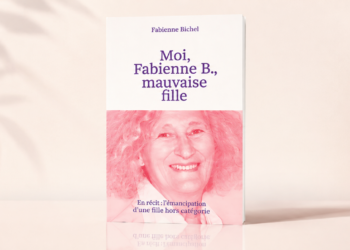
[1] Margaret Atwood, The Penelopiad, Canongate Myth Series, 2005
Tags: Literary journeysPériples littéraires
Federica Araco

Federica Araco

Federica Araco is an Italian journalist who has worked as an editor and translator for the Italian version of the online magazine Babelmed for 9 years. She was editor-in-chief of the quarterly "The Trip Magazine" dedicated to travel and photography. Federica has contributions in several other Italian magazines as well, such as: LiMes, Internazionale, and Left. The stories and topics she covers are often related to gender, feminism, multiculturalism, social exclusion, migration issues, the environment and sustainable development. Since 2016, she has started publishing travel photo essays on her personal blog.

Leave a Reply Cancel reply

Your email address will not be published. Required fields are marked *

J'accepte les termes et conditions et la Politique de confidentialité .

Related articles

Related posts

“La Malédiction (1)”, a theatrical adaptation of King Kong Theory bursting with Tunisian rage
Artistic Creations

“La Malédiction (1)”, a theatrical adaptation of King Kong Theory bursting with Tunisian rage

by Olfa Belhassine
3 October 2025

Related posts

Ramadan series – Sukkar and Yassar: The unforgivable mistakes women make – Syria
Artistic Creations

Ramadan series – Soap operas: A late introduction to addressing women’s issues – Lebanon

by Nourhanne Sharaf Eddiene
7 April 2024

JOIN OUR NEWSLETTER

Original content. Feminist journalism. Straight to your inbox.

    Related posts

    The “Qardoun”: an ode to the resilience of women and sisterhood
    Artistic Creations

    The “Qardoun”: an ode to the resilience of women and sisterhood

    by Lina M.
    28 April 2021

    Related posts

    The “Qardoun”: an ode to the resilience of women and sisterhood
    Artistic Creations

    The “Qardoun”: an ode to the resilience of women and sisterhood

    by Lina M.
    28 April 2021

    Popular articles

    Thirty and single… so what?
    On the move

    Thirty and single… so what?

    by Pascale Sawma
    1 March 2022
    Israel to Palestinian journalists: Be silent… or else!
    In-depth

    Israel to Palestinian journalists: Be silent… or else!

    by Alaa Murrar
    29 November 2023
    Giving birth with an open womb or when Caesarean section becomes the norm in Egypt
    Abortion and SRHR

    Giving birth with an open womb or when Caesarean section becomes the norm in Egypt

    by Contributor with Medfeminiswiya
    27 September 2021
    On the move
    In-depth
    Files
    Artistic Creations
    Interviews
    Opinions
    World
    On the move
    In-depth
    Files
    Artistic Creations
    Interviews
    Opinions
    World

    Medfeminiswiya is a feminist network that brings together women journalists working in the fields of media and content production in the Mediterranean region.

    • About us
    • Country Context
    • Our community
    • Become a member
    • Our partners
    • Editorial charter
    • Disclaimer

    Follow us :

    JOIN OUR NEWSLETTER

    Original content. Feminist journalism. Straight to your inbox.

      © 2026 Medfeminiswiya – Mediterranean Network for Feminist Information

      Back to top

      Welcome Back!

      Login to your account below

      Forgotten Password?

      Retrieve your password

      Please enter your username or email address to reset your password.

      Log In

      Add New Playlist

      No Result
      View All Result
      • On the move
      • In-depth
      • Files
      • Artistic Creations
      • Interviews
      • Opinions
      • World
      • it VO
      • fr Français
      • en English
      • ar العربية

      © 2026 Medfeminiswiya - Mediterranean Network for Feminist Information

      Ce site n'utilise pas de cookies. This website does not use cookies. هذا الموقع لا يستخدم ملفات تعريف الارتباط.