
Cette publication est également disponible en :
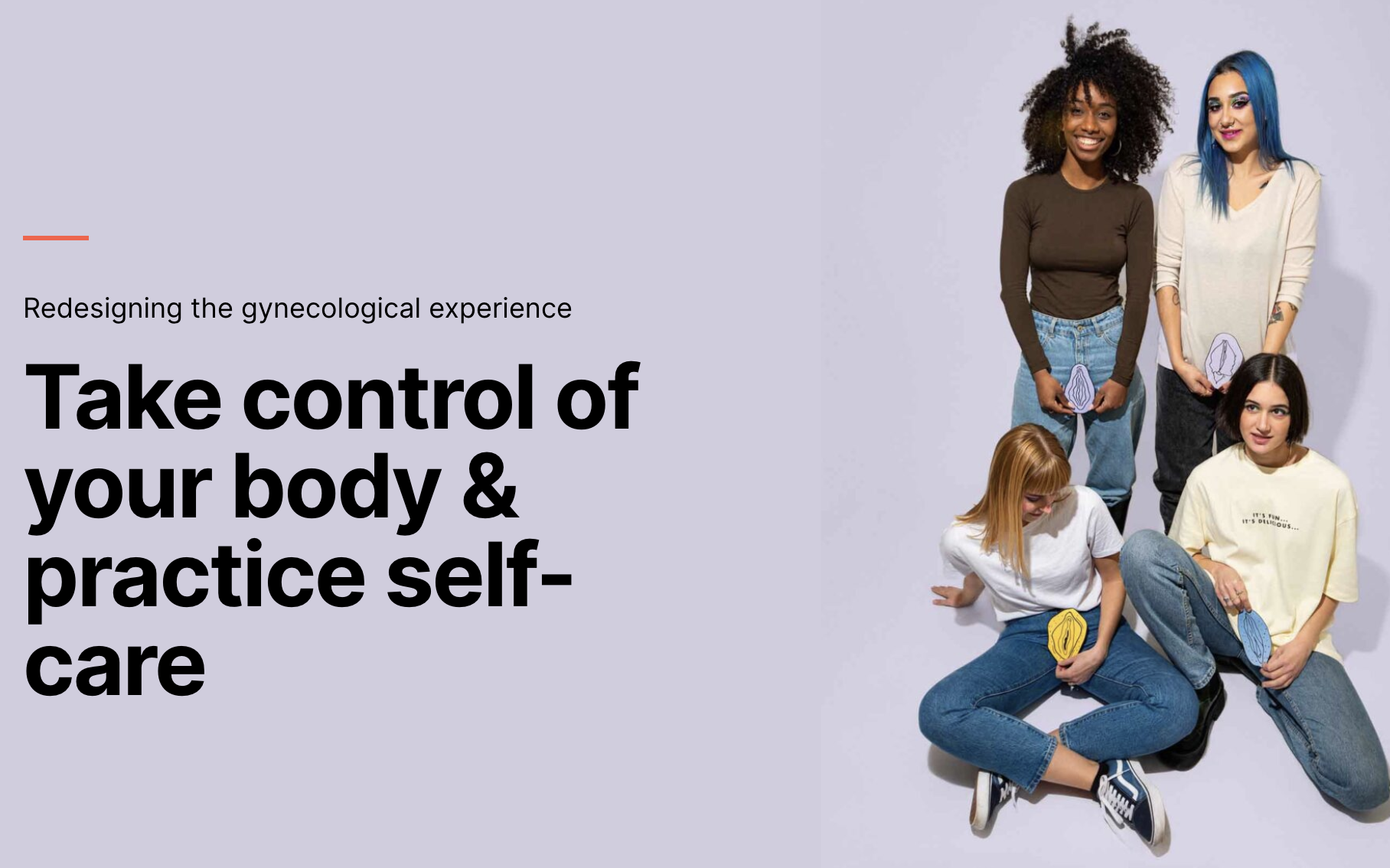
A female-led initiative in Greece is the living proof that visits to the gynecologist don’t have to be uncomfortable or traumatic, and that there are many more things to learn about our menstrual and sexual health than we have ever thought.
According to the Xenofeminist Manifesto, technology isn’t inherently progressive and technoscientific innovation must be linked to a collective theoretical and political thinking in which women, queer and gender non-conforming individuals are accounted for and play an unparalleled role.
Speaking of technologies and gendered experiences, I can’t help but think of the vaginal speculum, the medical instrument commonly used by gynecologists to examine women. Usually, if not always, these techniques cause uncomfortable feelings and at times traumatic experiences for people who simply want to examine their vaginal health. I know that for me and many other women, it was often the reason behind postponing our first -and perhaps every- visit to the gynecologist. And we are talking about a procedure that has to be followed once every year, so you can imagine the panic.
But are specula and phallic shapes the only tools that can help us preserve our sexual health? The female-only team of Omgyno, based in Athens, Greece, says no.

The group’s main axes of work are self-care, privacy and control and its values are inclusivity, a feminist approach and ecological consciousness. The main brain behind Omgyno is Doreen Toutikian, originally from Beirut.
Doreen is a user-centered designer who works on empowering communities around issues that have a social impact. She also teaches design theory, runs festivals, and works as a consultant for various non-profit organizations. Together with Elizabeth Milisi, they founded the company.
Their fun and pleasant mood is also reflected in the name Omgyno, which was created from the combination of the exclamation “OMG” (oh my God) and the word “gyno”, an abbreviation for gynecology in English.
“It’s a way to show the fun side of sexual and menstrual care by putting an international prefix that shows excitement. We pronounce it like ‘oh my guy-no,” Doreen explained with a big smile framed by her pink hair.
“As a feminist, I have more progressive ideas and open mind than the society I grew up in. I realized that seeking medical care, especially gynecological, is a very big problem”
“We are a project that balances between activism and health. Unlike most platforms, Omgyno is not created by doctors for doctors; it is rather a project that sees things from the user’s point of view, taking into account their perspectives and their needs. We really want to create the right context so that whatever gender identity or sexual orientation you have, we’re here for you. And we know how important this is when you’re looking for medical care,” Doreen explained.
She continued, “As a feminist, I have more progressive ideas and open mind than the society I grew up in. I realized that seeking medical care, especially gynecological, is a very big problem in Lebanon,” she added, saying she later understood how much could be done better systemically, “because we’re not talking about a simple individual matter.”
“Then, I thought, why not come up with a solution, a platform that includes doctors who have been recommended by the community, so that we become a safe place for all. This can be very useful for people who experience strange and annoying situations with doctors or move and change cities often… How can we rethink the whole experience? Since most of the time, when I go to the gynecologist to get examined, I think to myself that I can actually do it alone and promote the idea of self-care and the capacity to understand what exactly is going on with my body. Because when you go to the doctor, he or she doesn’t necessarily explain what’s going on, he or she might just tell you if you’re okay or not,” Doreen said. “And that’s how the idea for this project started,” she stated.
“When you bring such an innovative service for the first time to Greece, where people are not so used to innovative health services, such as doing a home test by yourself or using a menstrual cup, are you faced with doubtful or hesitant attitudes?” I asked the women behind the initiative.
“We believe that what is important to do first, is educating,” said Katerina, who has undertaken the task to inform, raise awareness and educate the public through apt and colorful posts on the omgyno Instagram page.
“In addition to the lack of training in most agencies, it is not easy to communicate with the public because of the taboo that surrounds the topic of sexual health. You won’t easily see a gynecologist website or health site talking about periods or about what happens when you experience pain while having sex, or about having sex during your period. All these issues should be available for you to read as much as fungi,” Katerina added.
“We shouldn’t be afraid to talk about these things. It’s our life. It’s something we experience every day. That’s why we’re trying to build holistically, both in terms of the products we offer and the information we give to women, non-binary and trans people,” Katerina said.
Transgender people do not know which doctor to go to… should they go to a urologist, a gynecologist, how to get tested?
Home-testing: How and why?
Many individuals don’t get themselves tested, mostly because they fear doctors, or don’t trust them. At times, they are ashamed of their own habits, and the doctor could be someone very close to them. This can partly explain why home-testing is slowly becoming more popular in different parts of the world.

“We wanted to bring home-testing to Greece as well, as it already exists in the US, England and Germany for example. There has been a lot of research on the topic, especially the HPV test. The idea is to collect your own sample and trust that the whole process will be safe and private for you. When you get your results, if there is a specific issue you want to discuss, you can directly book a telehealth or video session with your doctor to talk about next steps. This can be done very quickly and eliminates many of the excuses people use for not taking tests,” Doreen explained.
“For example, if you do a vaginal culture, you will be able to see the different phases the sample goes through and what exactly is being examined in order to understand what is going on and how you can deal with the specific microorganisms, how to treat them, and how to prevent them from appearing again,” she added.
“In most Middle Eastern countries, cervical cancer is on the rise because a lot of the region’s women avoid screening, and this is a disease you can prevent if you screen regularly, but then it is progressing, unlike countries that promote screening, where we see very low percentages of it. Moreover, the problem now is that many doctors don’t take enough time to help you understand why you get repeated infections. It is easier to tell a woman to take antibiotics, which over the years could create much worse problems. That’s why at Omgyno we try to give you the tools and information to decide for yourself,” Doreen commented.
In addition, as Katerina confirmed too, “there are several people we know who have faced very bad gynecologist behavior. There are also individuals who are in pain purely because of the dilator. It is a very painful process, especially for those who have been abused or have gone through traumatic experiences. Moreover, many lesbian women cannot believe that such practices are still happening, and transgender people do not know which doctor to go to… should they go to a urologist, a gynecologist, how to get tested? Most doctors in Greece do not have enough knowledge to deal with such situations and guide their clients correctly.”
Eventually, will people trust this self-managed process?
“We need to build trust. How did we suddenly learn to self-test for Covid-19 during the pandemic, for example? Can’t we do the same for our vaginal health? There are challenges of course, but because this has been proven to be possible worldwide, we see it like a life-saving opportunity,” Katerina affirmed.
“The fear that exists is mostly cultural fear. Self-testing methods for the vagina have been around for 20 years, there is even a debate in the medical community as to why it is not common practice everywhere, even though there is a lot of research on their effectiveness,” Doreen concluded.