About us
  • it VO
  • fr Français
  • en English
  • ar العربية
No Result
View All Result
Medfeminiswiya - Mediterranean feminist media
  • On the move
  • In-depth
  • Files
  • Artistic Creations
  • Interviews
  • Opinions
  • World
Medfeminiswiya - Mediterranean feminist media
  • On the move
  • In-depth
  • Files
  • Artistic Creations
  • Interviews
  • Opinions
  • World
No Result
View All Result
Medfeminiswiya - Mediterranean feminist media
Home On the move

Interview with queer activist Marianne Chbat: “Our presence in academic settings is a militant act”

Olfa Belhassineby Olfa Belhassine
7 October 2022

Marianne Chbat, Canadian of Lebanese-Egyptian origin, has a PhD in applied human sciences from the University of Montreal. Her field of expertise is LGBTQ migrants, mainly from the Middle East. The young woman was one of the speakers at the “Transnational Solidarities and Global Queer Policies” conference recently held in Tunis. Below is an interview we did with her during the event.

This post is also available in: Français (French)

You made a point of introducing yourself as a lesbian researcher at the beginning of your speech. Why is it important for you to reveal your sexual identity, including in a scientific context?

In fact, as researchers we have been socialized to detach or disengage ourselves from the research objects we work on. Personally, I am in favor of a much more committed science, where we position ourselves by taking note of who we are. Not to give legitimacy to what we do, because I think that even a person not directly concerned with the issues of sexuality can very well address LGBTQ communities and present a very respectable work.

Yet, I believe that positioning oneself in relation to this subject is important, especially since my research focuses on queer people like me and this sharing of identification is not trivial. I also do it because on the one hand I am in a safe context that allows it, and also because historically, gender minorities have been excluded from academic meetings. This is therefore a militant act and a way of reclaiming demands in a universe where we were, at a certain time, ejected.

What can a lesbian researcher working in the field of queer solidarity do to advance this cause?

It is a demand for transparency towards our communities that we owe to our communities. It is important to ask ourselves several questions at this level. What do we do with our research? Who does it serve? What dissemination can we guarantee? Does it speak an accessible language? Does it give voice to those concerned? It is the answers to these questions that can mark our contribution to greater solidarity with our communities.

One of my objectives is to break down the boundaries between LGBTQ activists, community stakeholders and the academic world…

Doesn’t the academic world remain elitist despite all the goodwill of its committed researchers?
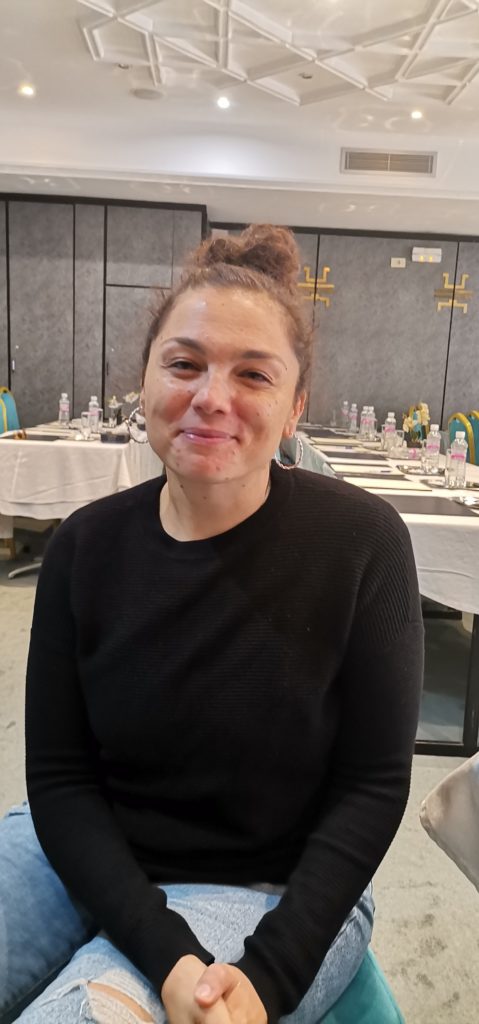
Mariannes Chbat

It is true that this environment remains a privileged one. It would be hypocritical to say that my activism is embodied only in the articles that I will publish and which will ultimately serve my own career. But I don’t want to make value judgments either: it is up to each person to develop their own capacities to get involved or not in the queer cause.

Security issues are crucial here, as are the imperatives and living conditions. To speak about my case: I have a seven-year-old daughter, who will be a priority in the organization of my time. Hence the fact that at times I will be less involved in community movements than others. However, I do agree that we must think beyond the academic world to disseminate our results.

I believe that the organization of conferences where we can open up dialogue, involve community groups and bring activists and researchers together seems to be a good strategy. Moreover, one of my objectives in relation to my academic career consists, in all humility, in breaking down the boundaries between activists, community stakeholders, who are socially disadvantaged, and the academic world, which is always praised from a symbolic and economic point of view. There is no consensus on this objective.

During this conference, the myth of transnational queer solidarities was widely discussed with examples of the discrimination encountered by LGBTQ communities in the West. Do you share this position?

Yes, I do. We also talked about the paternalism of the northern countries on this issue, their hypocrisy as well as their double talk. My colleague from the University of Montreal, Ahmed Hamila, explained how the West seeks to invest in the LGBTQ rights of the southern countries, but when there is a movement of the community actors towards their countries, barriers are erected.

I personally experienced this issue through the choices of my parents who emigrated to Canada at the end of the 1960s in a context that was very close to assimilationism. The good migrant at the time was the one who whitened himself and quickly adopted the culture of the land where he had settled. I felt the repercussions on my identity. Moreover, my French first name is a very good example of the pressures that my parents had to endure. The process of alteration that I experienced says a lot about the violence of a system that does not really make room for difference.
Olfa Belhassine

Olfa Belhassine

Olfa Belhassine is a Tunisian journalist who worked with the Tunisian daily “La Presse” since 1990. After the 2011 protests, her articles started appearing in “Libération”, “Le Monde” and “Courrier International”, a testament to her extensive experience as a journalist reporting from Tunisia during President Ben Ali's rule and after his fall. In 2013, Olfa was awarded the first journalism prize of the “Center of Arab Women” for her investigative work on customary marriage in Tunisia, published in “La Presse.” Olfa has also been corresponding since 2015 for the JusticeInfo.net, a website specializing in transitional justice around the world. Olfa Belhassone and Hedia Barkat have published a book titled 'Ces nouveaux mots qui font la Tunisie' (These new words that make Tunisia), providing an in-depth exploration of the political transition in Tunisia after the revolution.

Leave a Reply Cancel reply

Your email address will not be published. Required fields are marked *

J'accepte les termes et conditions et la Politique de confidentialité .

Related articles

Related posts

Spain: CEAR and the fight against human trafficking
On the move

Spain: CEAR and the fight against human trafficking

by Contributor with Medfeminiswiya
20 October 2025

Related posts

A personal testimony by Shireen Abu Aqleh
On the move

A personal testimony by Shireen Abu Aqleh

by Medfeminiswiya
27 March 2026

JOIN OUR NEWSLETTER

Original content. Feminist journalism. Straight to your inbox.

    Related posts

    Art as a Tool in the Fight Against Patriarchal Values
    On the move

    Art as a Tool in the Fight Against Patriarchal Values

    by Katarina Vujović
    5 October 2023

    Related posts

    RAWSA: Network for Women’s Rights and Access to Safe Abortion in North Africa and the Middle East
    On the move

    RAWSA: Network for Women’s Rights and Access to Safe Abortion in North Africa and the Middle East

    by Nathalie Galesne
    25 March 2026

    Popular articles

    Thirty and single… so what?
    On the move

    Thirty and single… so what?

    by Pascale Sawma
    17 February 2026
    Israel to Palestinian journalists: Be silent… or else!
    In-depth

    Israel to Palestinian journalists: Be silent… or else!

    by Alaa Murrar
    29 November 2023
    Giving birth with an open womb or when Caesarean section becomes the norm in Egypt
    Abortion and SRHR

    Giving birth with an open womb or when Caesarean section becomes the norm in Egypt

    by Contributor with Medfeminiswiya
    25 March 2026
    On the move
    In-depth
    Files
    Artistic Creations
    Interviews
    Opinions
    World
    On the move
    In-depth
    Files
    Artistic Creations
    Interviews
    Opinions
    World

    Medfeminiswiya is a feminist network that brings together women journalists working in the fields of media and content production in the Mediterranean region.

    • About us
    • Country Context
    • Our community
    • Become a member
    • Our partners
    • Editorial charter
    • Disclaimer

    Follow us :

    JOIN OUR NEWSLETTER

    Original content. Feminist journalism. Straight to your inbox.

      © 2026 Medfeminiswiya – Mediterranean Network for Feminist Information

      Back to top

      Welcome Back!

      Login to your account below

      Forgotten Password?

      Retrieve your password

      Please enter your username or email address to reset your password.

      Log In

      Add New Playlist

      No Result
      View All Result
      • On the move
      • In-depth
      • Files
      • Artistic Creations
      • Interviews
      • Opinions
      • World
      • it VO
      • fr Français
      • en English
      • ar العربية

      © 2026 Medfeminiswiya - Mediterranean Network for Feminist Information

      Ce site n'utilise pas de cookies. This website does not use cookies. هذا الموقع لا يستخدم ملفات تعريف الارتباط.