About us
  • it VO
  • fr Français
  • en English
  • ar العربية
No Result
View All Result
Medfeminiswiya - Mediterranean feminist media
  • On the move
  • In-depth
  • Files
  • Artistic Creations
  • Interviews
  • Opinions
  • World
Medfeminiswiya - Mediterranean feminist media
  • On the move
  • In-depth
  • Files
  • Artistic Creations
  • Interviews
  • Opinions
  • World
No Result
View All Result
Medfeminiswiya - Mediterranean feminist media
Home On the move

Hela Ouardi: “The female body perceived as an avatar of enemy territory”

Olfa Belhassineby Olfa Belhassine
25 July 2022
Hela Ouardi « Le corps féminin était perçu comme un avatar du territoire ennemi »

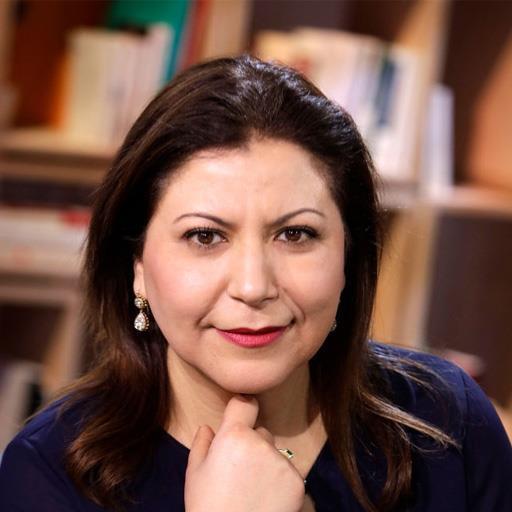
Hela Ouardi, Professor of French literature and civilization at the University of Tunis, and associate researcher of the CNRS Laboratory for Studies on Monotheisms, continues a process of reflection initiated over the course of her works in which she deconstructs a myriad of myths related to the first period of Islam.

This post is also available in: Français (French) العربية (Arabic)

We met Hela Ouardi on May 10, 2022, at the doctoral school in Tunis organised by the University of La Manouba (Tunis) and the Université libre de Bruxelles on the theme “Women, body and religion”. The previous day, she had given a lecture entitled “Sex and Sacred War: Women as Spoils of War Here and Even in the Afterlife” in which she demonstrated her great erudition. She namely presented the fruit of research gathered in four books* dedicated to the deconstruction and analysis of a myriad of myths from the first period of Islam. Here’s an interview with Hela.

In the early days of Islam, when Prophet Mohamed went to war to Islamize distant lands, what role did the bodies of women play in motivating the warriors?

When sending men to battles or conquests, women in Islam were used as bait at a very early stage. They embodied both sexual and economic motivation. Since the captives were subsequently sold as slaves, the virgins among them were the most costly on the market. The symbolic motivation is not the least. The appropriation of the woman’s body, a humiliation measure for the vanquished, will also become a producer of Muslim children. As I mentioned in my presentation, it is “the Islamization of the womb”.

Then, during war when men left for countries far from their native lands thus suffering sexual deprivation, emerges this very contested notion within Muslim theology itself of “marriage of pleasure”. The prophet had exceptionally authorized the marriage of pleasure to then prohibit it at the end of his life. It is a “quick consumption” to guarantee the mental balance of warriors. Then comes the third phase when the loot is collected. Very often, big fights broke out between the companions of the prophet themselves around the captives. The prophet was also concerned with this part of the loot. These practices were not specific to Islam. As in earlier and later times, at the time, the female body was perceived as a variant or an avatar of enemy territory. Especially since among these populations of Arab Gulf tribes, there was no stable territory. Inevitably, the only fixed element of sedentary life becomes the female body, which is also the seat of male honor and the guarantor of the purity of his genealogy and his descent. This representation dates from the pre-Islamic period.

In your presentation you demonstrated that imams and jihad recruiters, who draw their sermons from exegesis, continue to promise believers a paradise filled with houris. Are women destined to be offered to men, also in the afterlife?

This particular data is specific to Islam. The promise of the great orgy in the afterlife is neither found in Christianity nor in Judaism. We also note that this tradition is perpetuated to the present day. It is a highly effective strategy, especially for jihadist recruiters. Except in one or two countries, certain practices clearly attested to in the Koran, such as the amputation of the thief’s hand, have disappeared from legislation. These corporal punishments have become obsolete and anachronistic over time. However, this discourse on the great cosmic orgy that awaits the good believer, especially the martyr, has been widely maintained and transmitted by contemporary preachers considered serious, such as Mohamed Chankiti, a senior member of the High Council of Scholars of Saudi Arabia, who evokes a paradise-brother in one of the videos that I showed during my lecture.

How do you explain the continuation of this ideology of the “paradise-brothel”, as you yourself call this phenomenon?

Sexual frustrations are very often behind the murderous impulse. This is what the criminologist Alain Bauer says in general, although he is not interested in the issue of jihadism itself but rather in the phenomenon of serial killers. You know, candidates for jihad are not stamp collectors: they are individuals who are sent to their deaths. Such a sacrifice demonstrates the potential for efficiency and mobilization carried by the female body and all this pornographic literature published on Daesh websites. In my presentation, I have quoted the articles by Sayyid Kotb* in his book: “The America I have seen”, written in English, where he explains his disgust at the sight of women’s bodies on display in America in the 1950s. The absolutely fascinating bodies of Hollywood stars aroused in him as much repulsion as attraction. All the subsequent developments in his jihadist literature probably stem from this feeling of great complexity. This inaccessible body becomes available in paradise. An idyllic availability since the woman is obedient, offered for unlimited consumption and in addition she is a virgin. Therefore, the honor of a man is not threatened by this body since the virginity of the houris, the equivalent of the nymphs is regenerated eternally. It is both a pure body and a consumed body! This sexual paradigm has been extremely assertive as an avatar of the conquering energy of the Muslim who will establish the kingdom of God on earth.
*The works of Hela Ouardi published, for the most part, by Albin Michel Editions: Les derniers jours de Muhammad (2016), Les Califes maudits and La déchirure (2019), Les Califes maudits and A l’Ombre des sabres (2019), Meurtre à la Mosquée (2021).
*Sayyid Kotb: Born in 1906, Kotb, Muslim Brotherhood theorist considered as “the father of Salafist jihadism.” He was executed under the Nasser regime in 1966 for plotting to assassinate the president.
Olfa Belhassine

Olfa Belhassine

Olfa Belhassine is a Tunisian journalist who worked with the Tunisian daily “La Presse” since 1990. After the 2011 protests, her articles started appearing in “Libération”, “Le Monde” and “Courrier International”, a testament to her extensive experience as a journalist reporting from Tunisia during President Ben Ali's rule and after his fall. In 2013, Olfa was awarded the first journalism prize of the “Center of Arab Women” for her investigative work on customary marriage in Tunisia, published in “La Presse.” Olfa has also been corresponding since 2015 for the JusticeInfo.net, a website specializing in transitional justice around the world. Olfa Belhassone and Hedia Barkat have published a book titled 'Ces nouveaux mots qui font la Tunisie' (These new words that make Tunisia), providing an in-depth exploration of the political transition in Tunisia after the revolution.

Leave a Reply Cancel reply

Your email address will not be published. Required fields are marked *

J'accepte les termes et conditions et la Politique de confidentialité .

Related articles

Related posts

Between bombardment and childbirth: The suffering of displaced pregnant women in Lebanon
On the move

Between bombardment and childbirth: The suffering of displaced pregnant women in Lebanon

by Nourhanne Sharaf Eddiene
13 April 2026

Related posts

Unequal belonging: Migration, identity, and the politics of citizenship in Italy
On the move

Unequal belonging: Migration, identity, and the politics of citizenship in Italy

by Tábata Martín Olea
14 April 2026

JOIN OUR NEWSLETTER

Original content. Feminist journalism. Straight to your inbox.

    Related posts

    On the move

    Khul’ is the corollary of repudiation

    by Ghania Khelifi
    8 April 2026

    Related posts

    RAWSA: Network for Women’s Rights and Access to Safe Abortion in North Africa and the Middle East
    On the move

    RAWSA: Network for Women’s Rights and Access to Safe Abortion in North Africa and the Middle East

    by Nathalie Galesne
    25 March 2026

    Popular articles

    Thirty and single… so what?
    On the move

    Thirty and single… so what?

    by Pascale Sawma
    17 February 2026
    Giving birth with an open womb or when Caesarean section becomes the norm in Egypt
    Abortion and SRHR

    Giving birth with an open womb or when Caesarean section becomes the norm in Egypt

    by Contributor with Medfeminiswiya
    25 March 2026
    All We Imagine as Light : three intertwined female stories
    Artistic Creations

    All We Imagine as Light : three intertwined female stories

    by Rabab El Mouadden
    9 May 2025
    On the move
    In-depth
    Files
    Artistic Creations
    Interviews
    Opinions
    World
    On the move
    In-depth
    Files
    Artistic Creations
    Interviews
    Opinions
    World

    Medfeminiswiya is a feminist network that brings together women journalists working in the fields of media and content production in the Mediterranean region.

    • About us
    • Country Context
    • Our community
    • Become a member
    • Our partners
    • Editorial charter
    • Disclaimer

    Follow us :

    JOIN OUR NEWSLETTER

    Original content. Feminist journalism. Straight to your inbox.

      © 2026 Medfeminiswiya – Mediterranean Network for Feminist Information

      Back to top

      Welcome Back!

      Login to your account below

      Forgotten Password?

      Retrieve your password

      Please enter your username or email address to reset your password.

      Log In

      Add New Playlist

      No Result
      View All Result
      • On the move
      • In-depth
      • Files
      • Artistic Creations
      • Interviews
      • Opinions
      • World
      • it VO
      • fr Français
      • en English
      • ar العربية

      © 2026 Medfeminiswiya - Mediterranean Network for Feminist Information

      Ce site n'utilise pas de cookies. This website does not use cookies. هذا الموقع لا يستخدم ملفات تعريف الارتباط.