This post is also available in: Français (French)
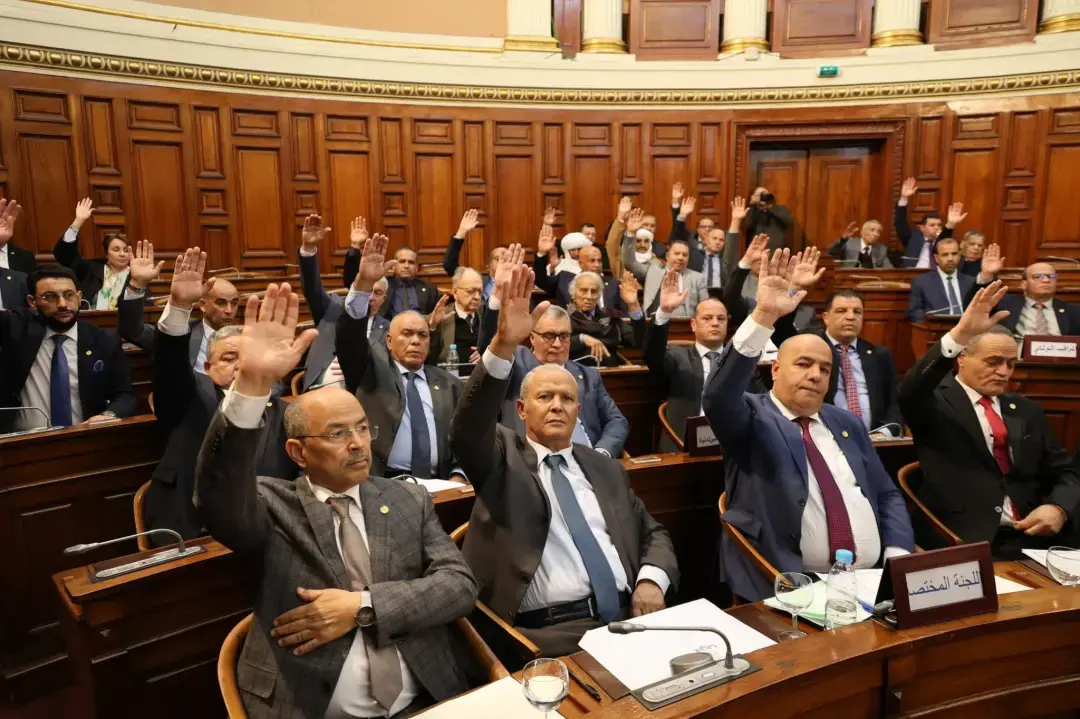
As expected, on April 2, 2026, the Council of the Nation approved the amendment of the electoral law put forward by the Algerian authorities. Although it received little media attention, the vote marks a turning point: the new version of the legislative text replaces the gender parity requirement with a quota capped at one-third of women candidates on the lists.
In the chamber, several female parliamentarians expressed their reservations. But the reform was adopted nonetheless.
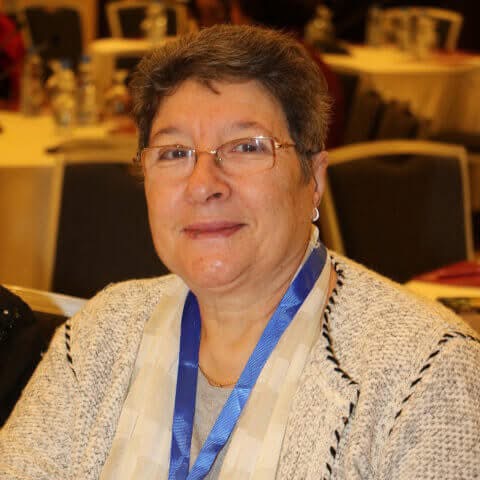
There were few public reactions after the session. For many feminist activists, this vote confirms a regression that has been underway for several years. Among them is Nadia Aït Zaï, a historic figure in the fight for women’s rights in Algeria. A lawyer, doctor of law, and founder of the Fondation pour l’Égalité (Foundation for Equality–CIDDEF), she has long warned of the fragility of the political gains achieved by women.
For her, the equation is simple: “Weakening the legal guarantees of representation automatically leads to less women present in decision-making bodies.”
Before 2012: A marginal presence
For decades, women’s representation in elected institutions remained low. In the Algerian Parliament, women held around 7 to 8% of the seats—they were present, but in limited numbers, and they lacked structural influence in national political life.
This underrepresentation was often wrongly attributed to a lack of competence. But this did not reflect the social reality: women were present in large numbers, often constituting the majority, be it in higher education or in skilled professions and the civil service.
The barrier lay elsewhere: in restricted access to political parties, controlled nominations, male-dominated power networks, and unequal resources for campaigning.
Without drawing an automatic link between the number of elected women and reforms, several observers note that greater representation shifts political priorities, brings certain issues to the forefront, and changes perceptions of women’s legitimacy in the public sphere.
2012: The introduction of quotas
It was in this context that the 2012 organic law was enacted. After more than a decade of advocacy by civil society organizations and legal action, several civil society leaders succeeded in securing the introduction of mandatory quotas on electoral lists. Nadia Aït Zaï played a central role in this advocacy effort.
The legislation mandates, depending on the constituency, between 20% and 50% women candidates, with binding rules governing the composition of electoral lists. The effects were immediate: in the 2012 legislative elections, the proportion of women elected jumped to approximately 31%.
A historic turning point. Algeria thus joined the ranks of the most progressive African countries in terms of women’s representation in parliament.
2012-2019: More women, more leverage
This progress is more than just a statistic. The increased presence of women in institutions coincides with several significant developments. In 2015, the Penal Code was amended to explicitly criminalize certain forms of violence against women, including domestic violence.
At the same time, female representation in government neared 20%.
Without drawing an automatic link between the number of elected women and reforms, several observers note that greater representation shifts political priorities, brings certain issues to the forefront, and changes perceptions of women’s legitimacy in the public sphere.
2021: The rupture
The turning point came with the 2021 electoral reform.
Mandatory quotas were abolished in favor of a more flexible requirement for formal gender parity on candidate lists. In theory, the measure appears balanced. In practice, though, it no longer guaranteed results.
Parties then retained considerable freedom in the placement and actual number of women candidates, and the constituencies assigned to them. The immediate consequence was that in subsequent elections, female representation plummeted to approximately 8%. Nadia Aït Zaï summarizes it as such: “I call this the ‘natural’ rate – it’s no coincidence that it’s close to the rate observed before 2012. It serves as a reminder of what happens when there are no binding legal mechanisms.”
In less than ten years, Algeria has thus gone from a high level back to one close to that of the pre-quota era.
“Without enforcement, the numbers plummet”
This sequence was also analyzed by Soror Labiod, known for her stances on citizenship, democratic participation, and the role of women in institutions. Long skeptical of quotas, she says her perspective changed after seeing the reality on the ground. “Any reduction in the mechanisms that encourage women’s representation has a direct impact on their presence,” she confirms. “We’ve seen it: as soon as the constraints disappear, the numbers plummet.”
“People used to say that quotas brought in weaker candidates. I believed it,” she continues. Then came the questioning. “Yet there were already many women in universities, in skilled professions, and in the civil service. Access to politics isn’t equal. There are networks, power dynamics, power struggles. When you start from scratch, you’re not playing by the same rules.”
“It’s not always society that changes the laws,” she adds. “Sometimes, it’s the laws that create change.”
2026: Confirmation of the regression
The reform adopted on April 2nd hasn’t created this regression. It simply confirms it.
The shift from guaranteed quotas to flexible gender parity, and then from flexible parity to a reduced quota of one-third, follows the same logic: progressively reducing the obligations imposed on political parties.
The arguments invoked—lack of female candidates, local realities, the need for flexibility—are recurring themes. But for advocates of political equality, they primarily mask a deeper reality: without enforcement, party structures perpetuate existing exclusions.
Political silence
This step backward has elicited few reactions commensurate with the stakes. There has been neither a major national debate nor strong mobilization from political parties, including those claiming to be progressive.
Several activists interviewed believe that initiatives launched in recent years to reinstate the former system have been blocked or abandoned. Given the current balance of power, many consider a swift reversal unlikely.
They believe it is more realistic to resume advocacy from the ground up: rebuilding long-term advocacy efforts and bringing the issue of women’s political representation back into the public debate.
They also point out that this battle cannot rest solely on feminist associations, which are often fragile and have limited resources. In their view, elected officials and political leaders must now champion this cause themselves over the long term.
Without enforcement, party structures perpetuate existing exclusions.
What is not defended disappears
Recent developments in Algeria’s electoral landscape underscore a fundamental truth: women’s rights are never definitively secured; they depend on power dynamics and concrete legal guarantees. When these mechanisms disappear, the consequences are immediate.
In Algeria, it took a decade to go from 31% to 8%. And sometimes, just a few votes are enough to undo years of progress.