Cette publication est également disponible en :
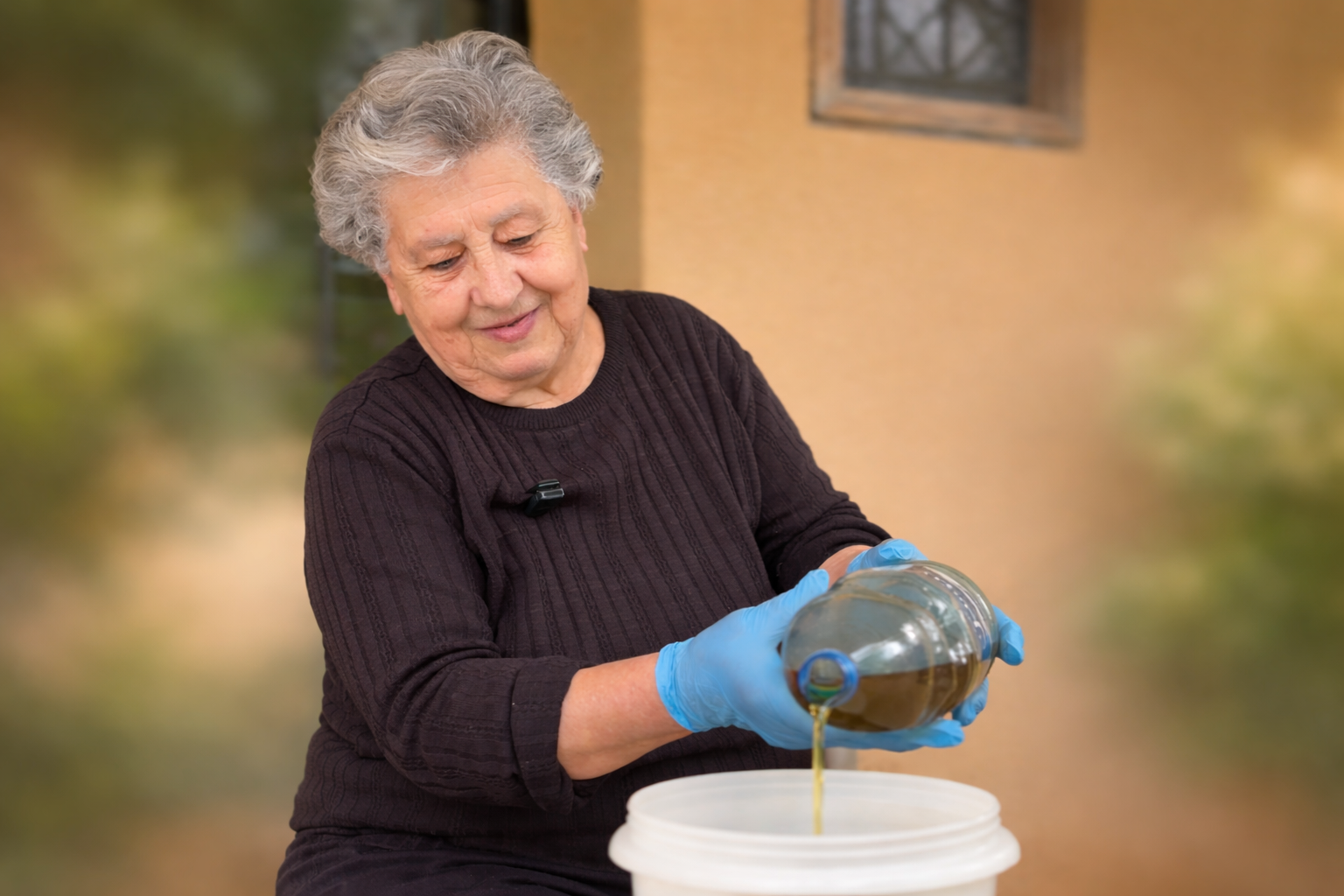
In 1985, Therese Hammoura was forced to begin what would be an exhausting struggle with work. She gathered her tools and embarked on a long fight with strong hands, a sharp mind, and an unwavering spirit. “I learned several trades after my husband lost his job without getting any compensation. I had to help him so we could raise our children and enroll them in school,” Hammoura says.
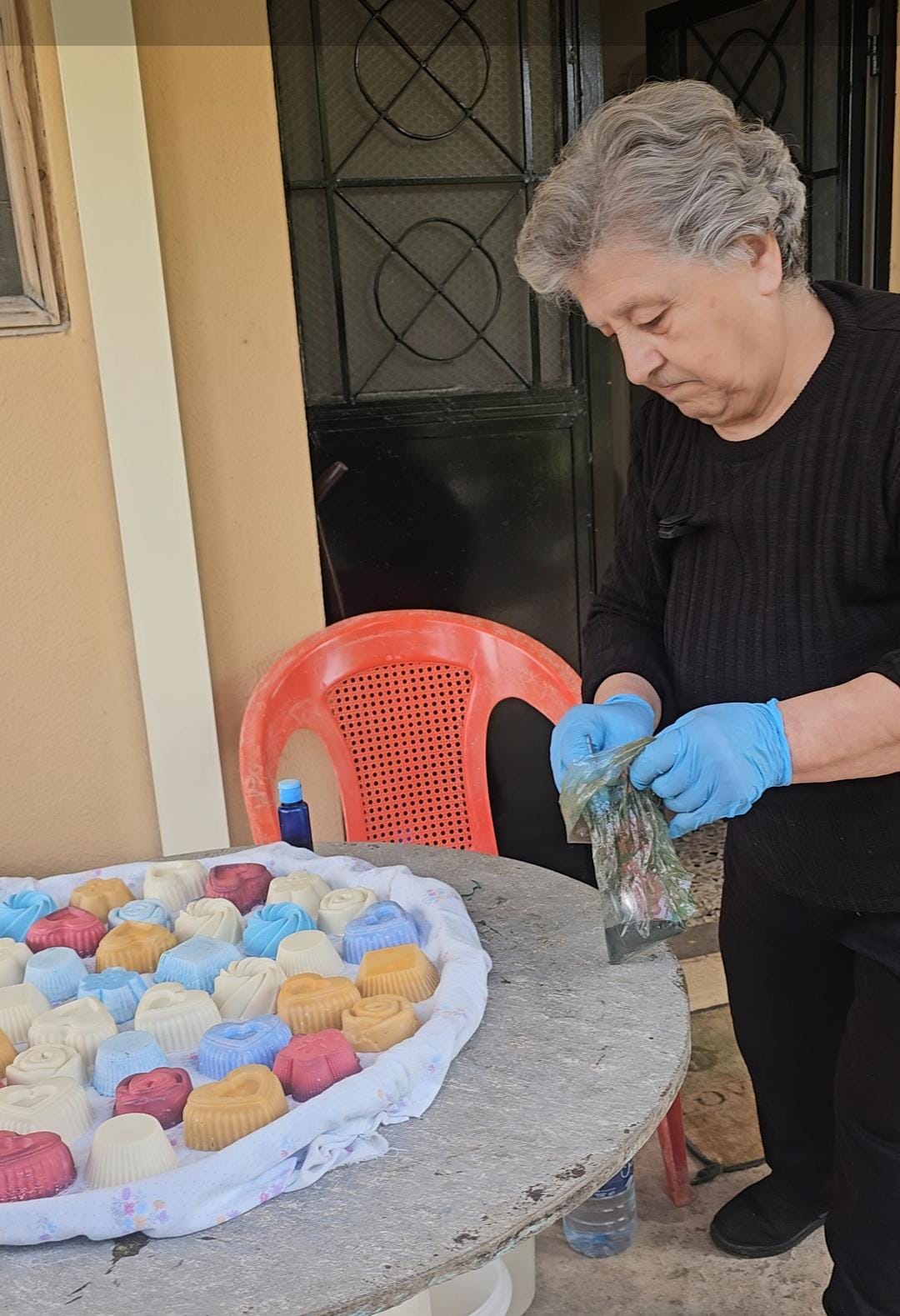
Since then, Therese became a woman of many roles: a farmer tending to her olive trees, a soap-making craftswoman, and a cook preparing feasts, meals, and homemade preserves for customers. “Later in life, I signed up for a soap-making course. I was the oldest among my classmates, but I challenged myself and decided to learn something new again. It was difficult at first, but I stayed in touch with my instructor until I mastered the technique. There are even some foreigners and expatriates who, every season, reserve whatever amount of traditional soap they need from me,” she says.
Therese sits on the balcony of her home in northern Lebanon, where she keeps her soap- and oil-making tools and works without pause. “Even when I had knee surgery,” she continues, “I didn’t stop working. This is how my life is, what I need to do to stay independent.”
Older women are the most vulnerable group
According to the International Labour Organizaton (ILO), older people are the most exposed to harsh working conditions: 77% of workers over the age of 65 are employed in the informal sector, meaning they lack legal or social protection. This figure is significantly higher than the global average for informal employment, which stands at 61% of the world’s workforce, or approximately two billion workers.
Within this reality, elderly women stand out as the most vulnerable group. While around 73.6% of workers in the informal economy worldwide lack any form of social protection, older women face a particularly harsh confrontation with old-age poverty. Globally, women receive pensions that are 25% to 40% lower than men’s, or are denied any pensions at all.
This demographic imbalance forces women to continue working in informal sectors such as agriculture and domestic services. Reports indicate that nine out of ten women in developing countries work in informal jobs, forcing many to labor until the age of 70 or 75 to cover basic living expenses, with no health insurance or professional guarantees appropriate to their age.
She entered university with her children
Maryam Lahoud was married at 14. She had to leave school and give up an education she wanted to devote herself to raising her five children. But she never gave up on her dream. She decided to study with her daughter and sit for the official secondary school exams. “My daughter and I both passed,” she recalls. “We graduated together, celebrated, and decided to go to university. She studied business administration, and I enrolled in a vocational school to study nursing. Then, once again, we graduated together and started looking for work.”
“I’m proud of everything I’ve done. I think I’ve set an example for my daughters to defy circumstances, no matter how difficult, and to defend their rights even when life is unfair to them or society confines them to stereotypical roles.”
Maryam Lahoud recounts her story with great pride, though her pride is tinged with weariness and sorrow. She moved between several hospitals and continued her education, earning additional qualifications that enabled her to become an instructor for generations of nurses. By then, her daughter had also become a mother.
“I’m proud of everything I’ve done,” she says. “I think I’ve set an example for my daughters to defy circumstances, no matter how difficult, and to defend their rights even when life is unfair to them or society confines them to stereotypical roles. Today, I am 68 years old, and my granddaughter got married last summer. Who knows, I may even become a great-grandmother. And yet, I still have to work, as long as my health allows it. I need to work to live and maintain my independence.”
Between independence and a harsh reality
In Lebanon’s weary streets, it is no longer an exception to see women over 70 behind market stalls or in tailoring workshops. It has become a social phenomenon, one that embodies the bitter struggle between the desire for independence and the harshness of an unforgiving economic reality.
The women we met with refuse, with a deeply rooted dignity, to become a “burden” on their sons and daughters, or to give up their independence.
But this insistence on financial independence collides with the wall of financial vulnerability resulting from the lack of health and social support which sometimes forces elderly women to work even when their health does not permit it.
Compounding this is Lebanon’s banking collapse, which led to the freezing of deposits and the evaporation of “life savings,” as Samia puts it. Thousands of elderly women lost the savings they had relied on as a safety net for their later years, and they have consequently found themselves forced to return to the informal labor market, engaging in physically demanding jobs such as preparing preserves and providing domestic services, in a desperate attempt to keep up with rampant inflation that has made the basic cost of living unaffordable for many. Samia, for example, a woman in her 70s from Akkar, northern Lebanon, still works cleaning homes and offices in order to survive, despite suffering from numerous health problems such as high blood pressure and diabetes.
The major obstacle lies in the absence of comprehensive healthcare. The cost of medication for chronic illnesses like hypertension, diabetes, and heart disease has become the primary driver for elderly women to return to work. With the collapse of the purchasing power of end-of-service benefits from the National Social Security Fund, pensions no longer cover the cost of even a single box of medication. This forces elderly women to toil, often in physical pain, simply to secure the cost of staying alive.
This suffering clearly reflects the specificity of women’s struggles when it comes to facing poverty in old age in Lebanon. A Lebanese woman who has spent decades in unpaid domestic labor or in the informal sector reaches the age of 70 without any health insurance or a meaningful pension. She finds herself alone, facing a state that is incapable, even in 2026, of passing a retirement and social protection law that guarantees dignity for the elderly. What should be an “age of rest” thus becomes a final journey of depletion, lacking the most basic elements of security. While this reality affects many, it is particularly harsh for women, who endure lifelong discrimination in education, wages, and opportunities—and who now still have to continue their struggle and bear social and economic violence with white hair and weary hands.