About us
  • it VO
  • fr Français
  • en English
  • ar العربية
No Result
View All Result
Medfeminiswiya - Mediterranean feminist media
  • On the move
  • In-depth
  • Files
  • Artistic Creations
  • Interviews
  • Opinions
  • World
Medfeminiswiya - Mediterranean feminist media
  • On the move
  • In-depth
  • Files
  • Artistic Creations
  • Interviews
  • Opinions
  • World
No Result
View All Result
Medfeminiswiya - Mediterranean feminist media
Home Opinions

Palestine, the country with the highest media sources per capita

Maysoun Odeh Gangatby Maysoun Odeh Gangat
25 March 2026
Palestine, the country with the highest media sources per capita

While the Palestinian media sector may have filled gaps that existed before and created new sources of information, separate from the Israeli occupation’s media environment, it remains beset with huge challenges that Palestinians have yet to overcome.

This post is also available in: Français (French) العربية (Arabic)

During high school, I was very passionate about journalism and thought of pursuing studies to fulfil my ambition, inspired by the fact that in the 1980’s there were very few Palestinian women journalists working with the only two media outlets that existed at the time. However, family advice and school counselling pointed to media and journalism being terrain with no guarantees to a sustainable career, which then led me to complete my bachelor’s degree in Washington D.C. at the American University in Economics and Business.

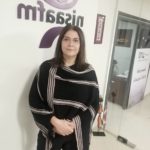
Destiny had designed media for me – returning from America, and after working in the Palestinian private and diplomatic sector, I was propelled into where I was meant to be –firstly as the founder and manager of the pioneering English radio station in Palestine, “93.6 RAM FM” in 2005 and thereafter as the Co-founder and Managing Director of the first and currently only women radio station in the Arab world, Radio Nissa FM in 2010.

Consequently, my views and assessment of the media sector in Palestine, mainly broadcasting, is borne by my institutional experience and subsequent knowledge.

Even though the Palestinian media sector may have filled gaps that existed before, as a source of information, separate from the Israeli occupation’s media outlets, it remains beset with huge challenges. According to a survey conducted by the Central Bureau of Statistics, PCBS in 2019, there were 70 radio stations broadcasting in Palestine, and 11 TV stations. Palestine also has three newspapers that are distributed in print format; and many social media outlets have sprung up, providing Palestinians with news, information, and entertainment.

Palestine is therefore unique in that it has more media sources per capita than any country in the world. Although this new abundance may have solved a gap, it has also created issues and complications. For example, while the number of media graduates from Palestinian universities is high, job opportunities remain very limited for most of them, especially female graduates.

With media outlets unable to absorb new graduates, they have sadly exacerbated the unemployment crisis. Those who are fortunate enough to find a job and become employed generally do not earn a salary that is in keeping with their education and work effort.

Women journalists continue to face societal and work challenges: their access to jobs is limited, as well as their ability to move and work freely.

Aggravated by the Covid 19 pandemic, media outlets have suffered financial losses which resulted in laying off journalists and employees or a reduction in salaries and working hours.

Moreover, as citizen journalism has presented itself as another increasingly popular source of information in Palestine, it has taken attention away from traditional media and obtained a substantial share in the news and information market.

In addition to these structural factors, women journalists continue to face societal and work challenges: their access to jobs is limited, as well as their ability to move and work freely. Senior positions in media are still monopolized by men, despite slight improvements we have been witnessing over the past recent years.

Generally, freedom and access to information continue to be restricted in Palestine. The occupation remains a major factor behind the prevailing lack of mobility, exacerbated by the Palestinian media laws that must be reformed and changed to better align with modern media standards and criteria. Unethical competition between media outlets and technical challenges also remain a major concern that should be seriously addressed by the formal sector and regulators.

But all is not lost. Having experience in this challenging sector, I have learned that obstacles can be overcome if planning is done well. Media is no different from any other sector: strategic planning and analysis is regularly needed. Surveys and questionnaires are important. The number of listeners does not indicate the success of the media. Sustainability and media’s social impact become paramount instead of numbers.

It is a moral and societal duty to have responsible media capable of initiating change and of diversifying the contents they offer to the public. Media institutions are obliged to prioritize contributing to change instead of increasing numbers and profits at the expense of quality and integrity. Most importantly, they have to be dynamic, vocal and credible, and must certainly invest more in building rather than destroying.

Finally, Palestinian media and journalism everywhere should always remember to adjust and evolve to keep up with all the fast-evolving technological and media trends of today.


Tags: Press Freedom from the Perspective of Women Journalists
Maysoun Odeh Gangat

Maysoun Odeh Gangat

Maysoun is a Palestinian entrepreneur who schooled in Jerusalem, and then went on to attend University in Grenoble in France, completing her qualifications in Economics at the American University in Washington D.C. On her return to Palestine, she worked in the private sector and then joined the newly established South African Embassy as the Advisor on Media & Trade. There, she established a valuable network of contacts and enhanced bilateral relations between the two countries. In 2004, she worked as a Media Consultant to the South African group PRIMEDIA and then set-up and managed in 2005 the first-ever English Radio Station in the Region, 93.6 RAM FM with studios in Jerusalem and Ramallah. In August 2009, Maysoun set up NISAA FM, the pioneering All-Women Radio Station in the Region, and today she heads the operation. Nisaa FM obtained few awards and fellowships since its inception. 
Maysoun is also the recipient of the Schwab Fellowship, the first Palestinian entrepreneur to obtain such an award. NISAA FM has been a finalist in the Thomson Reuters Award in 2013 and NAWF in 2012 as well as the One World Media Award in 2012. She is the recipient of President Mahmoud Abbas Award in 2016 (the Cavalier of Palestine).

Leave a Reply Cancel reply

Your email address will not be published. Required fields are marked *

J'accepte les termes et conditions et la Politique de confidentialité .

Related articles

Related posts

Women in Gaza are living their worst nightmares – “ I want to go back to my life before the war, to my privacy, my home ”
Opinions

Women in Gaza are living their worst nightmares – “ I want to go back to my life before the war, to my privacy, my home ”

by Razan Malash
13 March 2026

Related posts

On the trappings of ‘solidarity’ and ‘representation’, or: is there any escape from the capitalist structure?
Opinions

On the trappings of ‘solidarity’ and ‘representation’, or: is there any escape from the capitalist structure?

by Caline Nasrallah
25 March 2026

JOIN OUR NEWSLETTER

Original content. Feminist journalism. Straight to your inbox.

    Related posts

    مصر: مسيحيات يُعاملن كمسلمات في قوانين الميراث
    Opinions

    مصر: مسيحيات يُعاملن كمسلمات في قوانين الميراث

    by Shaimaa El Youssef
    11 July 2025

    Related posts

    Women in Gaza are living their worst nightmares – “ I want to go back to my life before the war, to my privacy, my home ”
    Opinions

    Women in Gaza are living their worst nightmares – “ I want to go back to my life before the war, to my privacy, my home ”

    by Razan Malash
    13 March 2026

    Popular articles

    Thirty and single… so what?
    On the move

    Thirty and single… so what?

    by Pascale Sawma
    17 February 2026
    All We Imagine as Light : three intertwined female stories
    Artistic Creations

    All We Imagine as Light : three intertwined female stories

    by Rabab El Mouadden
    9 May 2025
    Israel to Palestinian journalists: Be silent… or else!
    In-depth

    Israel to Palestinian journalists: Be silent… or else!

    by Alaa Murrar
    29 November 2023
    On the move
    In-depth
    Files
    Artistic Creations
    Interviews
    Opinions
    World
    On the move
    In-depth
    Files
    Artistic Creations
    Interviews
    Opinions
    World

    Medfeminiswiya is a feminist network that brings together women journalists working in the fields of media and content production in the Mediterranean region.

    • About us
    • Country Context
    • Our community
    • Become a member
    • Our partners
    • Editorial charter
    • Disclaimer

    Follow us :

    JOIN OUR NEWSLETTER

    Original content. Feminist journalism. Straight to your inbox.

      © 2026 Medfeminiswiya – Mediterranean Network for Feminist Information

      Back to top

      Welcome Back!

      Login to your account below

      Forgotten Password?

      Retrieve your password

      Please enter your username or email address to reset your password.

      Log In

      Add New Playlist

      No Result
      View All Result
      • On the move
      • In-depth
      • Files
      • Artistic Creations
      • Interviews
      • Opinions
      • World
      • it VO
      • fr Français
      • en English
      • ar العربية

      © 2026 Medfeminiswiya - Mediterranean Network for Feminist Information

      Ce site n'utilise pas de cookies. This website does not use cookies. هذا الموقع لا يستخدم ملفات تعريف الارتباط.