Cette publication est également disponible en :
Turn on the TV, open a newspaper, tune in to a radio station and get a glimpse at what sexism looks like in times of a pandemic. Watch them or listen to them: there are 8 of them on sets, in studios. Only 2 women out of 10 people interviewed, filmed or recorded were considered skilled enough to talk about the virus and its repercussions. In times of a pandemic, as in times of war -and definitely more than in ordinary times- the word of authority remains largely masculine, including in the health sector where women are the large majority and at the forefront of the fight against the virus.
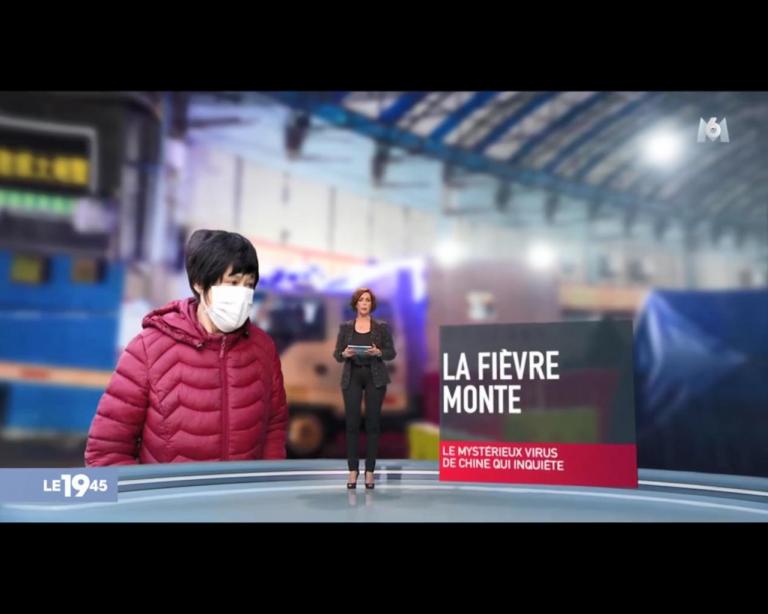
During March and April 2020, the Revue française des médias of the Institut national de l’audiovisuel (INA) (National Audio-visual Institute) analysed the news bulletins of three major French public channels and two private ones.
The results were appalling: the health crisis has worsened the gaps already observed in normal times. More than ever, we have seen women invited to express their discomfort, to talk about their life as a locked down mother, as a more or less committed witness, etc. But when it comes to clarifying and explaining scientific issues, the floor was mostly open to men.

This is not news. Previous studies conducted on gender and gender representations confirm it. The same goes for journalists, particularly in France and in Latin countries: the gaps are real, and at times they are huge at different levels of the profession. However, there had been some progress since the beginning of the years 2000s.
More than ever, we have seen women invited to express their discomfort, to talk about their life as a locked down mother, as a more or less committed witness, etc. But when it comes to clarifying and explaining scientific issues, the floor was mostly open to men.
In 2019, women represented 38% of the experts who expressed themselves on television sets. Since we began the fight for our voices to be heard -from nothing or almost nothing- there were less than 10% of women experts before the 2000s. So it is fair to say that we were progressing in the right direction which was leading us little by little to an enhanced professional parity in terms of participation in media shows and debates.
But then something happened. The best intentions in the world (I mean: the real world, the male-dominated one) were wiped out when Covid-19 showed up. Was our exclusion from floors really caused by the pandemic?
To answer this question, we must raise a series of other questions.
For example, have you noticed how, in any assembly, men are the first ones to speak, how they speak easily, and for longer periods of time? Have you noticed how they often allow themselves generalities in a calm, serious and even imperious tone? Have you noticed how women often express themselves with reserve, with nuances, in a tone that is sometimes so soft that it can be inaudible? Since when do women allow themselves to talk about politics, sex, sports and to venture out alone in the streets, in public spaces?
The voices of women in public spaces are quite a recent phenomenon. Until the beginning of the 20th century, patriarchal society imposed silence on women, so much that they themselves integrated it and at times subjected other women to the same silence they were subjected to, unconsciously or not. Thus, the “good manners” of the bourgeois society rejected the idea that a woman could put herself forward and some mothers nurtured the idea that rebellion was already in the air.
Until the beginning of the 20th century, patriarchal society imposed silence on women, so much that they themselves integrated it and at times subjected other women to the same silence they were subjected to, unconsciously or not.
However, the influence of men has shaped our world and our behaviour to such an extent that in French schools, teachers have continued to value boys above all. In the 1980s and 1090s, sociologists who carefully studied the behaviour of teachers were themselves surprised at the results they obtained while comparing the expectations of their students based on their sex.
Both female and male socialisation begins in kindergarten. Even today, during recreation, it is not uncommon to see schoolyards with hordes of boys while girls watch them play with balls. This asymmetry is fading, fortunately but surely, with each individual and collective protest advancing equality between girls and boys whether in schoolyards, on TV or in newspaper columns.
While in France women are now more likely to have graduated than men at the baccalaureate and higher education levels (52%), rare are those who are admitted into the world of media and TV shows.
Why aren’t there more women at the top of the media hierarchy? Why do they disappear when it comes to climbing the ladder in the worlds of research, hospitals, academia and media? Why aren’t they allowed to add their perspectives to the debates, and bring in their feminist analysis to today’s problems?
Le Monde, a major French daily, questioned itself on what was going on inside its own columns. It took quite a long while for them to start a corrective process because, like in all major dailies across the world, it is normal for the best-regarded sections to remain the prerogatives and domains of men.
Le Monde set up a statistical monitoring program in the year 2018 when more modest newsrooms had already addressed the issue in the 2000s. At the time, I was working in one of these editorial offices composed of about 50 female journalists. Of course, convincing the management to adopt a gendered salary scale was not easy at the time, but we did it. And just like we did it for salaries, we’ll do it for our voices!
Sources (in French):
INA, Covid-19 in the News: unprecedented media coverage for a pandemic;
CSA, The representation of women in audio-visual media during the Covid-19 pandemic.