This post is also available in: Français (French) VO
In June 2025, Coop Alleanza 3.0, the leading consumer cooperative managing the purchase and distribution of food products in Italy, announced the withdrawal of certain Israeli products from approximately 350 stores. The statement described this decision as “consistent with its values of peace and support for human rights,” which have been violated by the ongoing war on Gaza since October 2023. But beyond removing tahini sauce, certain peanut-based products, and items from the SodaStream brand, the cooperative also began selling on its online platform a drink that had previously been unavailable in the country: Gaza Cola.
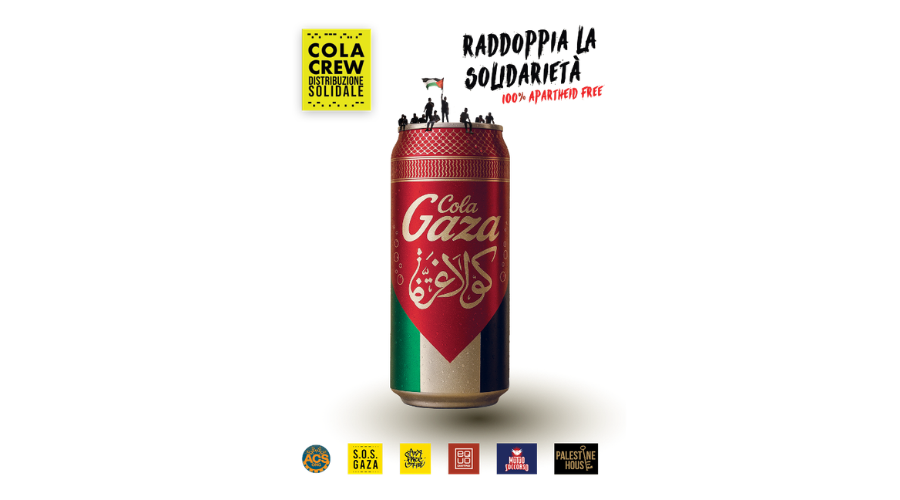
Created in 2023 by Nablus-born filmmaker and activist Osama Qashoo, a refugee in London since 2003, this soft drink, available with or without sugar, resembles the famous American beverage but is “100% apartheid-free.”
Its iconic red can, decorated with a pattern reminiscent of the traditional keffiyeh, features the colors of the Palestinian flag and an inscription in Arabic calligraphy—graphic elements that evoke the ideals of resistance and the struggle against large multinationals that “invest in the arms trade,” favoring instead an ethical and solidarity-based approach. A portion of the proceeds is indeed earmarked for the reconstruction of Al-Karama Hospital, a major healthcare center for the populations of northern Gaza that was severely damaged by Israeli bombardment.
“Foodpolitik” and brand activism
The distribution of this drink is part of a broader boycott movement targeting companies considered to support the government of Prime Minister Benjamin Netanyahu, such as Coca-Cola, which has been heavily criticized for its factories located in the Atarot industrial zone in occupied East Jerusalem (1).
The activist branding model behind Gaza Cola effectively combines ethical consumption and political activism. Produced in Poland using exclusively Palestinian ingredients, the drink is imported to the United Kingdom and distributed from there by independent retailers in various countries, including Spain, Australia, South Africa, and Kuwait.
A system of “double solidarity”
“In Italy, Gaza Cola is mainly distributed in Milan and Rome, thanks to the Forte Prenestino and La Strada social centers. It’s also distributed at the many Resistance festivals that take place in the summer across the country, from Carrara to Varese, but also in the south and in Sardinia,” explains Violetta Tonolli, communications manager for the Gaza Freestyle Festival and coordinator of the S.O.S. Gaza campaign, two solidarity and mutual aid projects that handle the distribution of this drink in the country (2).
“So far, sales have allowed us to raise around 80,000 euros. Part of these proceeds was used for the reconstruction of the hospital, which Osama (Qashoo, editor’s note) is directly in charge of. The rest went to our fundraising efforts to support various initiatives in the Gaza Strip, in a system of double solidarity.”
This soft drink resembles the famous American beverage but is “100% apartheid-free.”
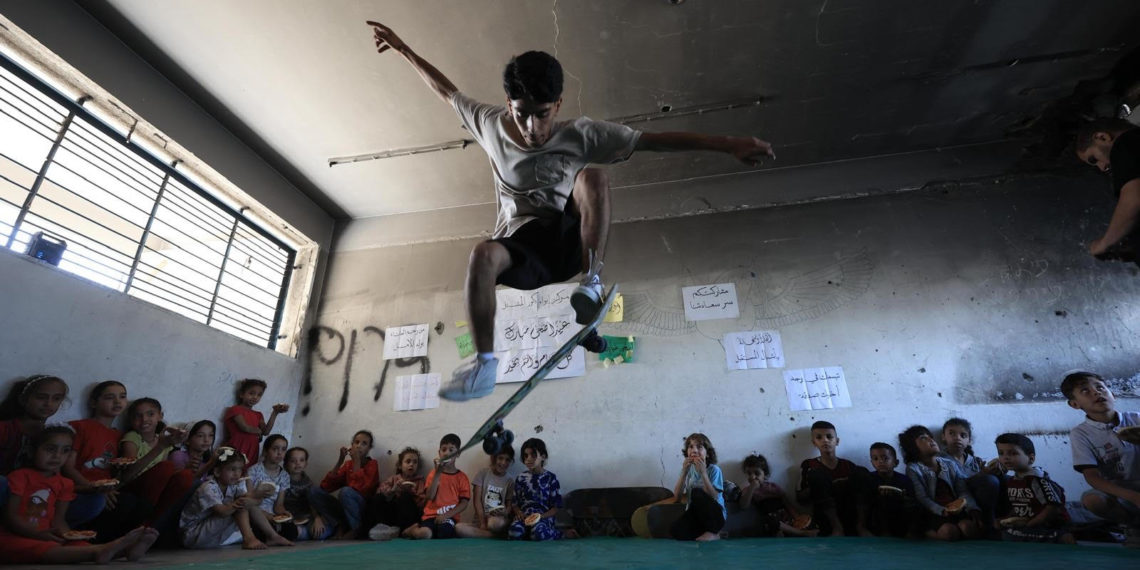
Over the years, activists from Gaza Freestyle have built strong bonds of friendship, fraternity, and sisterhood with many Palestinians who, since the beginning of the genocide, have put their skills and capacities at the service of the population, bringing to life projects made possible through their financial support.
“In the first phase, in what was a context of total emergency, we addressed the severe shortage of basic necessities by setting up a community kitchen and regularly distributing drinking water,” Violetta recalls. “We are now able to develop longer-term projects focused on education, psychosocial support, and health.”
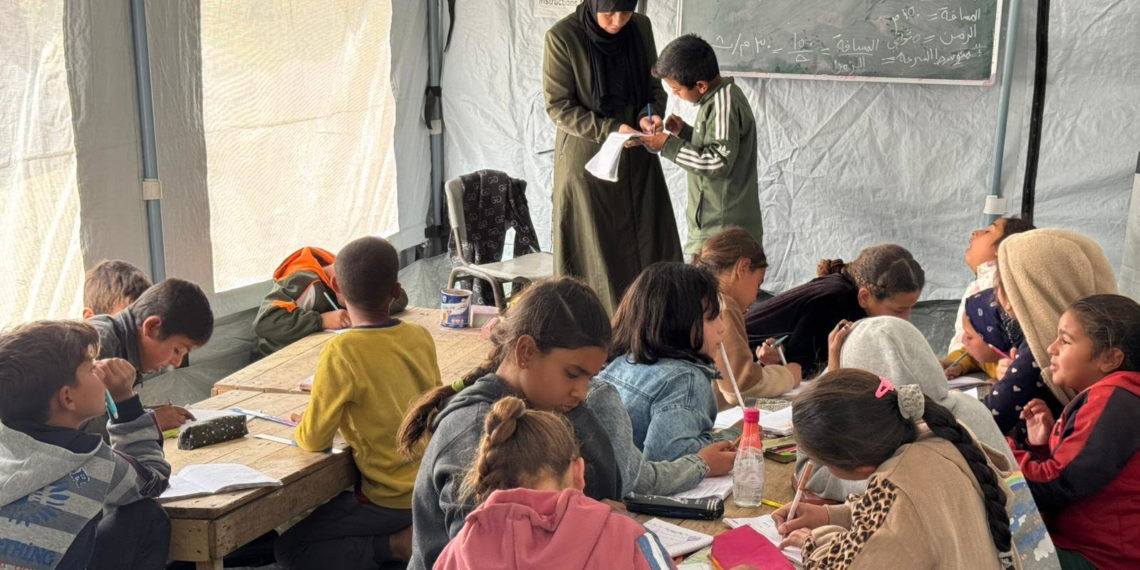
In Deir al-Balah, a multi-purpose center consisting of a clinic tent and a school tent has been established. The clinic is run by two brothers, Abdelhady and Karim, both nurses, who provide basic daily care to people who would otherwise have no access to healthcare services. It also hosts a pediatrician, a midwife, and other medical specialists.
“The second tent, meanwhile, is coordinated by their mother, a teacher who lost her job when the war broke out and who now enables dozens of children to continue their studies while also sharing moments of social connection,” Violetta explains.
Indeed, many displaced families are living in the area, and it is very important for them to have a resource center. “Between Khan Younis, Deir al-Balah, and Gaza City, we have seven school tents of varying levels, each managed by different coordinators,” the activist specifies.
In Khan Younis, Palestinian chef and pizza maker Mohamed Alamarin coordinates a community kitchen that prepares about 300 meals a day, distributed on site and in the most remote areas of the territory thanks to a special “food track.”
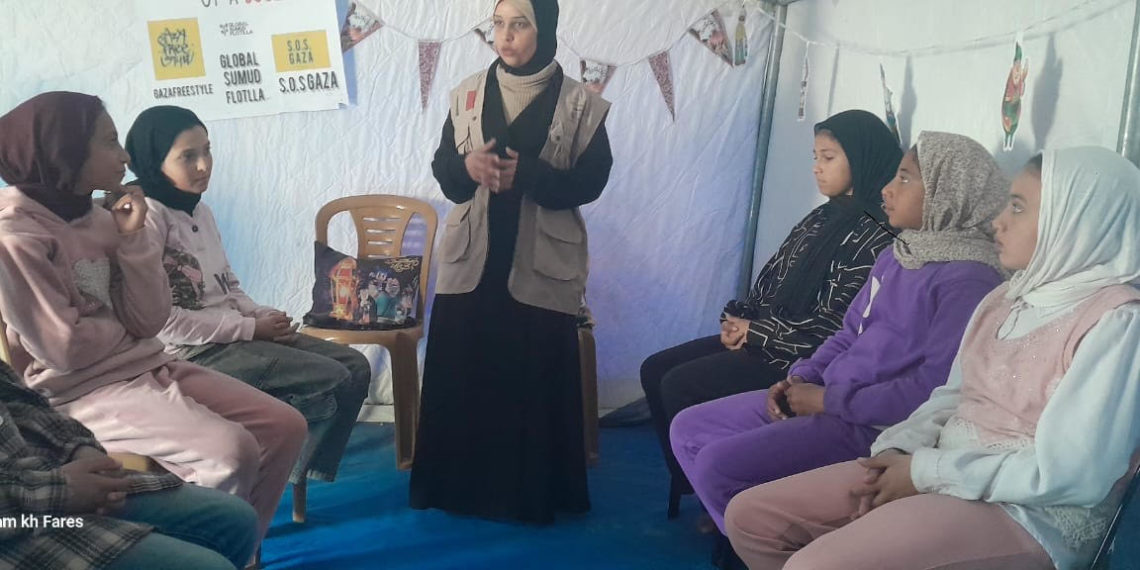
“For a few months now, there has also been a psychological support tent,” Violetta adds. “It’s run by a very young psychologist, Islam, who helps people both through group listening sessions, primarily for women and children, and through individual consultations.”
Women’s solidarity
During the latest edition of the Gaza Freestyle Festival in 2023, the idea emerged to create a forum for women that would organize mutual aid activities and women’s support groups, thanks to collaboration with feminist organizations present in the territory, such as the Union of Palestinian Women’s Committees (UPWC).
“After the war broke out, many of these women mobilized to support the women of Gaza,” Violetta recalls. “We asked them what their main needs were, and they told us they were most lacking hygiene products, especially sanitary pads. So we coordinated a large collection drive and then shipped everything in a huge container which, however, remained stuck in Rafah for months before it was able to enter Gaza.”
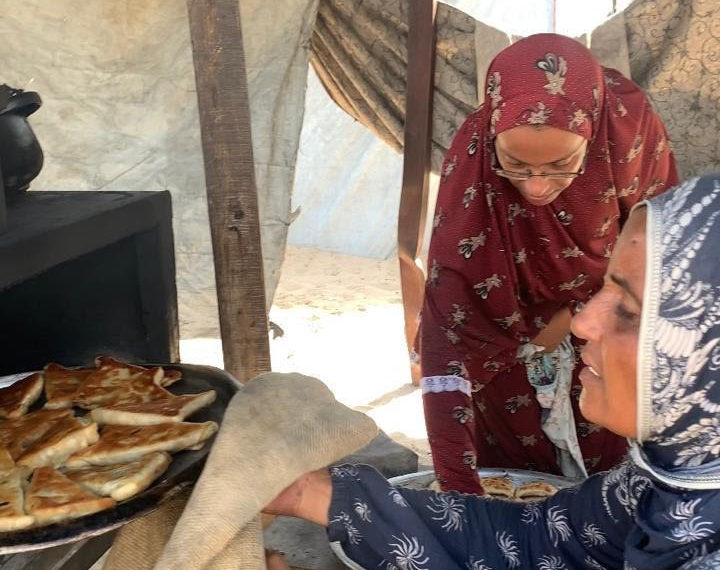
“Subsequently,” Violetta adds, “we created @women_withgaza, a campaign that supports women’s groups involved in food distribution in their community. A few months ago, a bakery run by a woman, Soad, and four other Gazan women also opened its doors. In addition to feeding around 50 families, they have achieved a degree of economic independence by renting out the bakery from time to time.”