Cette publication est également disponible en : Français (French) العربية (Arabic)
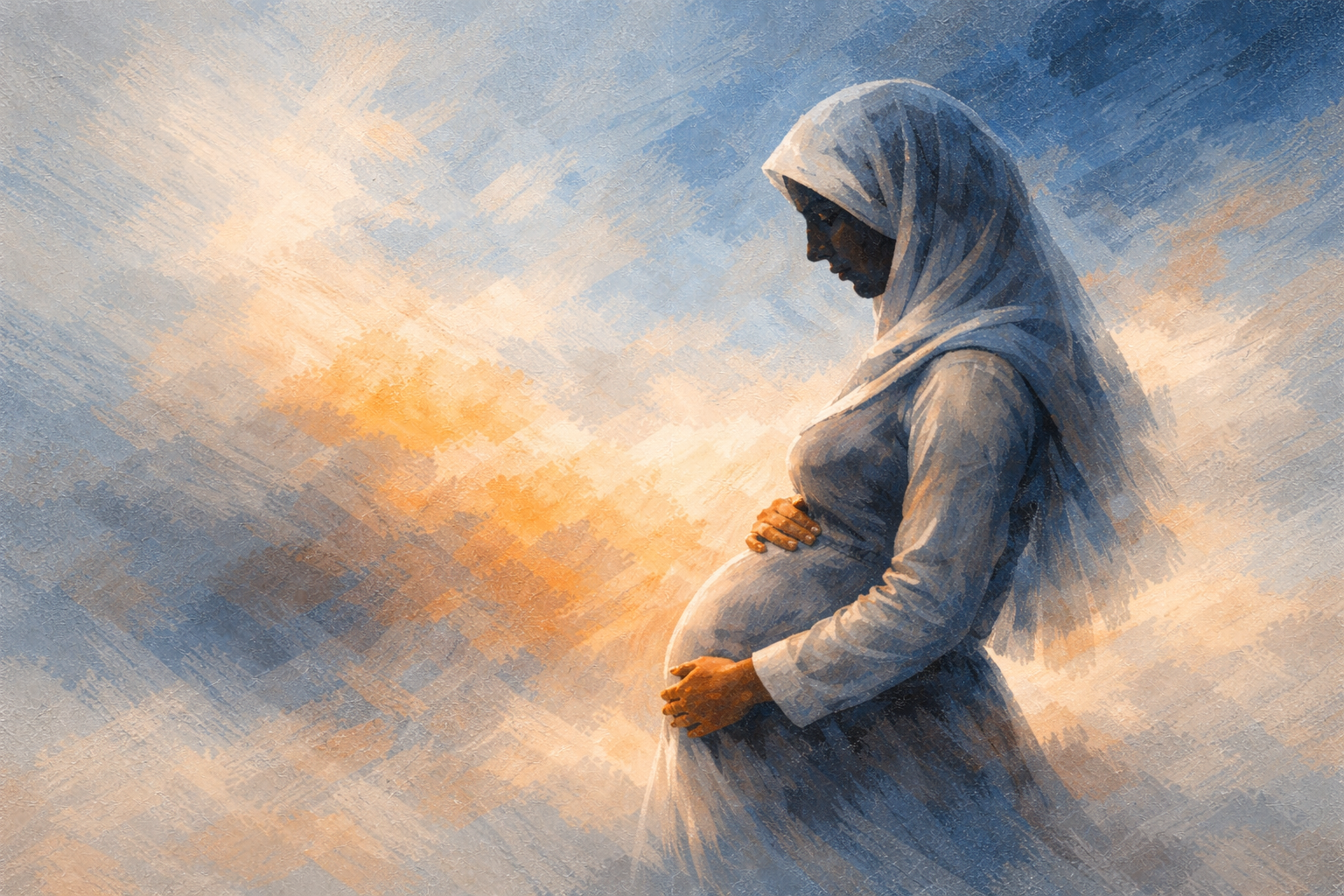
Rim (a pseudonym), 38, had no idea that her visit to the gynecologist would end before it had the chance to begin: having prepared herself for a routine medical checkup, like the one she underwent during two previous pregnancies, she headed to Mount Lebanon Hospital in Hazmieh and waited her turn at the clinic, only to be forced to leave in a hurry without ever seeing her doctor.
What made her leave was the Israeli threat of an impending strike on Beirut’s southern suburbs. She hadn’t included that in her plans when booking her appointment.
Rim’s story is no different from those of other displaced women in Lebanon. According to a UN report, over one million people are now displaced, including 12,200 pregnant women, 1,350 of whom are expected to give birth within the next 30 days, as reported by Sifr on March 20, 2026. The report adds that 565 of these women are living in official shelters housing 133,492 displaced people, 54% of whom are women.
The war began on February 28th with a US-Israeli attack on Iran that prompted Tehran to retaliate by striking Israel and US bases in the Gulf states. Hezbollah, Iran’s ally in Lebanon, quickly joined the conflict, launching missiles toward Israel. In response, the Israeli army ordered civilians out of more than 150 villages and towns in southern Lebanon.
She left with her mother and two children and drove for 12 hours straight—while four months pregnant.
She drove for 12 hours while pregnant
Rim was displaced on the first day of the war, March 2nd, from Nabatieh to the Hamra district of Beirut. She couldn’t take any of her belongings with her, so she left with her mother and two children and drove for 12 hours straight—while four months pregnant. Her husband joined her two days later.
Rim is living in an apartment with several of her relatives who have also been displaced. “I wear the hijab and can’t take it off at all during the day because there are strange men in the house, like my relatives’ husbands,” she says. “Because there are so many of us, I can’t have a room to myself. I share it with other women.”
In addition to the lack of privacy, Rim has been struggling to access personal hygiene supplies. “We can’t shower every day due to shortages of water and electricity. We wait for each other at the bathroom door; we take turns using it.”
Amid these conditions that violate women’s privacy and dignity, the presence of Rim’s mother and cousin remains a source of support. They help her with household chores and provide some relief that she wouldn’t have had during her pregnancy if she’d been alone with her two children at home. “I don’t have to do much because there are women helping me and making things easier for me,” she says.
The ongoing Israeli war on Lebanon, which began on March 2, has resulted in 1,345 casualties, including women and children.
The burden of displacement in Beirut
The hardship of displacement is about more than losing one’s home, land, and privacy—it is a complete transformation in women’s daily lives, especially those who have been displaced from southern villages to Beirut.
“We’re living in a state of war,” Rim says. “We’re trying to save as much as we can, but the cost of living in Beirut is incredibly high, especially health care. Medicine costs the same, but the doctor’s consultation fee is a lot more expensive.”
She adds that a visit to her gynecologist in the South costs her $30, while in Beirut the fee rises to $50 in some hospitals and $100 in others.
“All this, with no health insurance or any kind of coverage, and I’m having a C-section. I could save money on medication and buy much cheaper drugs from a clinic, but I’m afraid I might buy counterfeit medication and harm the baby’s health. I don’t want to cut corners on that,” she continues.
Dr. Amal Nasser el-Din, a specialist in obstetrics and gynecology, explains that pregnant women should visit their doctor once during the first trimester, then again at weeks 11 and 12, once at week 22, again at week 28, and then at least once a month thereafter.
That would make the cost of doctor’s visits alone range between $200 and $400 in Beirut for the whole pregnancy, compared to $120 in the South, not including the cost of medication, postnatal care, and the delivery itself.
After speaking with Rim, we contacted the Ministry of Health, which confirmed that healthcare services covered during the war include doctor’s visits and delivery costs, provided that women submit a request to the Ministry through their physician.
While this is an important step, many hospitals refuse to admit patients covered by the Ministry due to delays in payment of treatment costs.
While this is an important step, many hospitals refuse to admit patients covered by the Ministry due to delays in payment of treatment costs. This is a chronic problem in the Lebanese healthcare system that worsened with the 2019 economic crisis, which has repeatedly forced the Ministry to threaten sanctions. This can be a significant obstacle for patients, especially pregnant women, in accessing these services.
But the economic barrier isn’t the only challenge. Changing doctors is a turning point for displaced women, especially since it is often a forced change.
“I was used to my doctor. She was the one who delivered my two children. Now I have to see a different doctor. I’m going wherever people recommend. It’s not easy at all, changing gynecologists like this,” Rim explains.
The economic hardship caused by war not only affects women’s access to healthcare but also their preparations for welcoming their newborns. “I haven’t bought anything yet,” Rim tells us. “I’m in my fourth month and haven’t prepared anything. Even the celebrations we used to have, like gender reveal parties, have been denied us.”
“The biggest challenge for displaced pregnant women is maintaining the pregnancy and not losing the fetus,” says Amy, a displaced woman. “I was struggling to get pregnant. And it’s a good thing I didn’t get pregnant in this situation. I’m not young anymore; I’m 35 years old.”
Amy’s suffering
Amy’s suffering, which began in the previous war, continues in the current one. “During the 2024 Israeli war on Lebanon, I discovered I was pregnant with my first child. I was determined to keep my pregnancy, even though I was displaced four times trying to escape the strikes. The building next to mine was bombed, and I lost half my home.”
Amy managed to maintain her pregnancy throughout the war, but she later suffered a miscarriage due to post-war stress. “I survived the war with my baby,” she says, “but I miscarried on the day of the funeral of the former Secretary-General of Hezbollah, Sayyed Hassan Nasrallah, due to the psychological pressure I was under. My husband, a photographer, was covering the funeral. Since then, I’ve been trying to get pregnant again, without success,” Amy concludes.
Dr. Nasser el-Din explains, “During war, women are more prone to bleeding and miscarriage in the first trimester. This is because extreme psychological stress causes the body to produce cortisol at the expense of progesterone, the hormone essential for supporting the fetus at this stage.”
But psychological stress isn’t the only threat to pregnancy during wartime. “Physical injury and malnutrition can also cause miscarriage,” adds Dr. Nasser el-Din.
She concludes, “To protect the pregnancy, women can take progesterone supplements, but this may have some side effects such as fluid retention, bloating, breast pain, and headaches.”
Thus, between a missed medical appointment and the dream of a child not yet born, pregnant women in Lebanon bear the cost of a war they did not choose.