Cette publication est également disponible en :
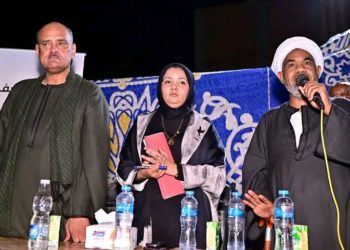
“This is me, and these are my children: Samar, Jojo (George), and Najib, whom we named after his grandfather,” says Maryam Khoury, a woman from southern Lebanon who is still living with her family in her village of Marjayoun, despite the shelling and the danger.
When asked why the women of the village didn’t leave their homes to seek refuge elsewhere with the rest of the displaced population, Maryam tells Medfeminiswiya, “If we leave our homes, where do we go? And who can guarantee that we’d return to find them still here, standing, waiting for us?”
A different kind of women live here, in Deir Mimas and Burj al-Muluk, passing through Rmeish and Qlay’aa, and in many border areas of South Lebanon in the districts of Marjayoun and Bint Jbeil (1): women who stand firm in the face of bombardment, against attempts to alter the region’s identity, and against attempts by some armed groups to use safe areas for military purposes.
In those border villages, which are outside the control of Hezbollah, one of the warring parties, most families have decided to stay and not flee despite warnings, threats, and shelling that targeted the outskirts of the villages and their surroundings—and despite some of these villages suffering their share of Israeli bombing. I want to tell you about the remarkable women in these villages.
“If we leave our homes, where do we go? And who can guarantee that we’d return to find them still here, standing, waiting for us?”
On March 2, 2026, following the outbreak of the war against Iran waged by Israel and the United States, Hezbollah launched rockets towards Israel in retaliation for the assassination of Iranian Supreme Leader Ali Khamenei. Israel responded with airstrikes on the Lebanese capital, Beirut, before the attacks spread throughout Lebanon.
The strikes have affected large areas of Lebanon, including the heart of Beirut, in addition to ground operations in the South, which have led to the displacement of more than one million people.
The challenges of staying
“We face immense challenges because of the war we are living through today, a war that has nothing to do with us. We are trying our best to stay resilient, for the sake of our children, and for our own survival, until this war—which was imposed on us against our will—ends,” says Hala Najm, a social activist from the town of Jdeidet Marjayoun.
“We are under psychological pressure and suffer daily because of this war,” she adds. “We’ve also lost our jobs, which provided us with our daily sustenance. We don’t have stable employment that earns us a monthly income. As the war expands day after day, and with it its repercussions, we’re getting increasingly worried about being unable to meet our basic needs. Not to mention the psychological exhaustion, lack of sleep, and fear.”
“Things are also difficult when it comes to our children. But we have to support them, to try to bring some comfort, some joy to their little hearts,” she continues.
Hala believes that war disproportionately affects women because of the responsibilities placed on them—from preparing food and caring for children during conflict to managing daily tasks and studies, all while internet access remains limited.
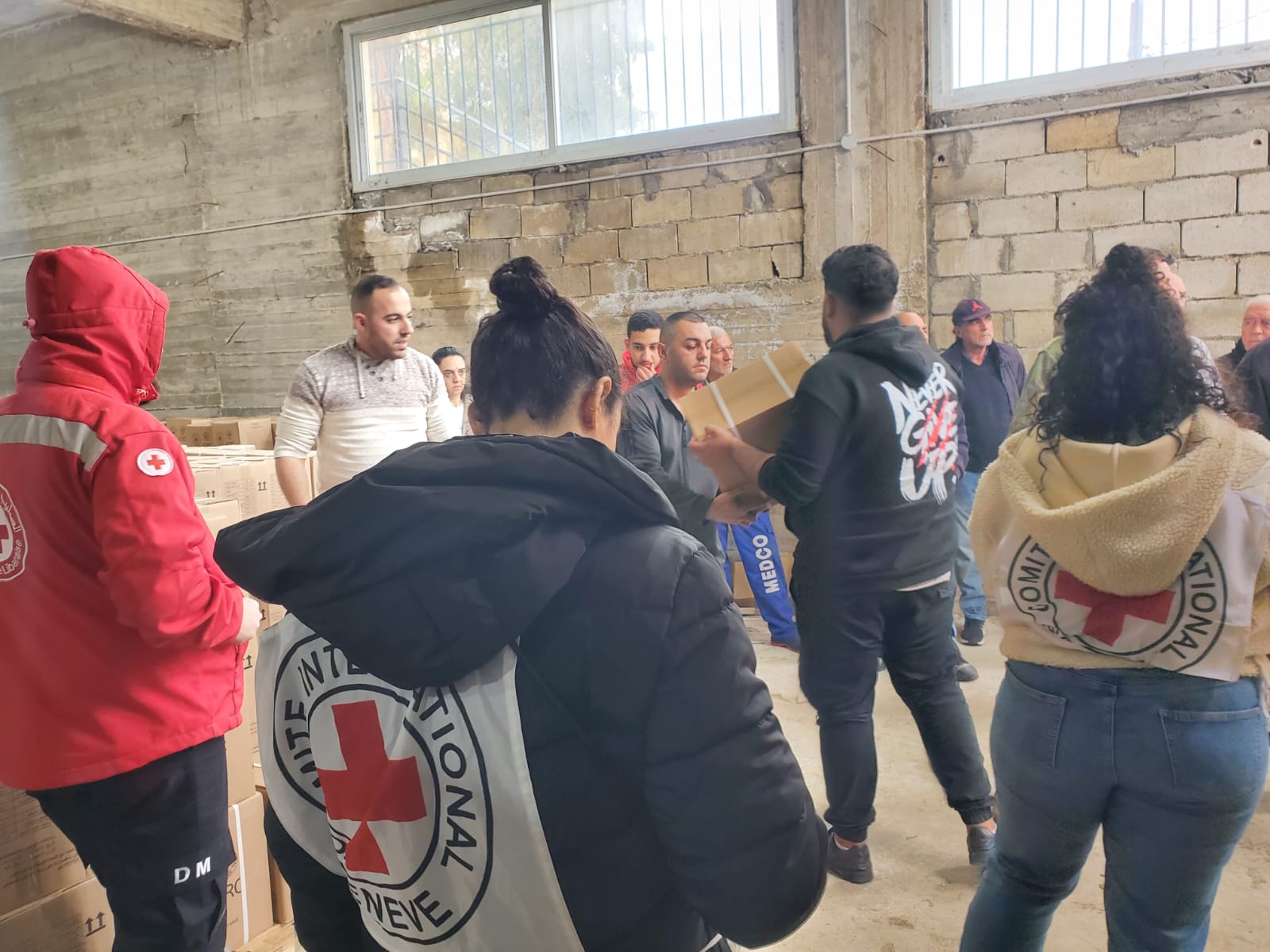
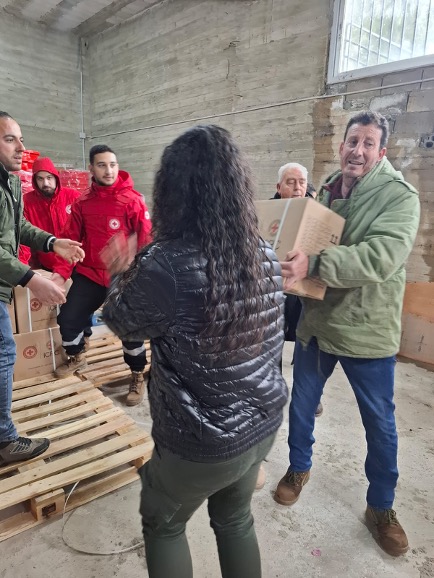
Hala works with other activists to secure aid and basic necessities for these areas, which are suffering from near-isolation due to the absence of the state and the ongoing bombardment, terror, and Israeli threats demanding the evacuation of several southern villages and towns.
She says that her eagerness to help residents has created a sense of trust between them. Whenever they need anything, they contact her. “They feel like they have someone standing by their side,” she explains, “and I’ve become a source of comfort for many people. I can’t abandon them, especially the elderly.”
Regarding the difficulty of securing the daily needs of the displaced, Hala says the problem lies in the delayed arrival of aid due to the challenges of delivering it under the current circumstances.
Israel targeted the roads leading to most of these areas with airstrikes over the past two weeks, making access difficult and unsafe. Reports claim that much of the aid and movement is now being facilitated via the Hasbaya-Beqaa road, despite the long distance. This route is practically the only option left for residents at the moment, as they struggle through this siege-like situation to secure their basic needs and manage their daily lives.
According to Hala, work is rapidly proceeding, in coordination with the municipality, to secure and distribute food rations and cleaning supplies.
“In war, every choice is difficult.”
Mass displacement continues
“Which is harder, staying, or being displaced?” we asked Maryam. She paused for a moment, then said, “Many of my friends and neighbors have left. When we wake up to the sound of shelling and airstrikes, I think of them, and sometimes it’s hard to contact them because of the poor internet service.”
“In war, every choice is difficult,” she continues. “I used to own an online clothing store, and now I can’t sell a single shirt. Those who were displaced have also lost their jobs and livelihoods. This is a catastrophe. My husband works as a day laborer in construction, and he’s lost his livelihood too because of the war. Everything is difficult.”
“I can take it all,” Maryam concludes, “but how do I explain the war to my children? How do I answer their questions? They want to know when it will end, why we are being bombed, who is responsible… where do mothers find the answers?”
The Lebanese Ministry of Health announced that the death toll from Israeli airstrikes on Lebanon since the outbreak of the war in the Middle East has exceeded 1,000, including children and women, since Hezbollah entered the conflict on March 2.
Like the resilient and peaceful women of these Lebanese border villages, the world today is witnessing the highest number of active conflicts since 1946, creating unprecedented risks and suffering for women and girls. Currently, some 676 million women live within 50 kilometers of deadly conflict zones, the highest level recorded since the 1990s, according to the UN Secretary-General’s 2025 report on “Women, Peace, and Security.”