Cette publication est également disponible en :
During the international conference “THE FOREST FACTOR: More nature to fight climate change,” Fiore Longo spoke about green colonialism and the commodification of nature, accusing the dominant model of “fortress conservation” of violating indigenous peoples’ human rights. “Territories that are taken away from them by force,” she explains, “become actual war zones, and it is mainly women who pay the price.”
Protecting and restoring ecosystems are essential steps in the fight against ongoing climate change: droughts and floods are, in fact, the direct repercussions of greenhouse gas emissions and the uncontrolled consumption of the planet’s resources. The violent floods which recently devastated Emilia-Romagna (1) have proven that Italy, surrounded by a boiling Mediterranean Sea, is dramatically exposed to extreme phenomena that mainly affect areas at high hydrogeological risk. Intervening is therefore essential in order to prevent and mitigate the disastrous effects of global warming, but above all to radically change our way of life, which is unsustainable (2).
Another urgent measure that must be taken is abandoning the traditional models of environmental conservation that have been imposed by this “green colonialism” that commodifies ecosystems and violates the human rights of indigenous communities by expropriating their lands, which are then transformed into consumer goods with the support of major multinationals. A practice that has transformed these territories into veritable war zones where mainly women have to pay the price, Longo denounces. The anthropologist has fought for the rights of indigenous peoples for years and is leading Survival International’s campaign to decolonize conservation (3). “The environmental struggle must above all be a struggle to change our view of the world and our economic model, but it must also be a feminist struggle—otherwise it’s just gardening,” she explains.
According to the Women’s Forum for the Economy and Society (WF), women suffer from the effects of climate change more than men, especially in subsistence economy societies where women make up a significant part of the labor force all while being excluded from traditional financial systems.
“Our images of nature and the words we use to describe it have enormous power that is constantly influencing our actions and political choices. We think these things are neutral, scientific, and objective, but they are the opposite of that: they are rooted in colonial imagery, white supremacy, social injustice, and violence. The whole idea of wild nature—meaning nature devoid of human presence—has enabled European societies, for example, to conquer territories that were thought to be uninhabited. But these places were actually home to thousands of people, the resource that allowed them to survive, the sacred ground of ancestral rituals, the home of their ancestors. It is from this distorted imaginary notion that the concept of a protected area was born. The first natural parks were created in the United States in the 19th century and quickly spread to Africa and Asia. The basic idea is very simple: according to a racist view of society, indigenous peoples are destroying the environment and only we, the white colonizers, with our science and our expertise, can stop them from doing so,” Longo elaborates.
Our conception of otherness dates back to the first Spanish conquistadors who put natives into two categories: either primitive people who destroyed the environment, or pure and innocent souls, noble savages as described by Rousseau, who only fit into our conception of them when they smile and have feathers on their heads. “We always expect the other to be what we think they should be, and this violence of thought is reinforced by the language that permeates school texts, news reports, wildlife documentaries, and NGO advertisements. This all needs to be decolonized,” she reaffirms.
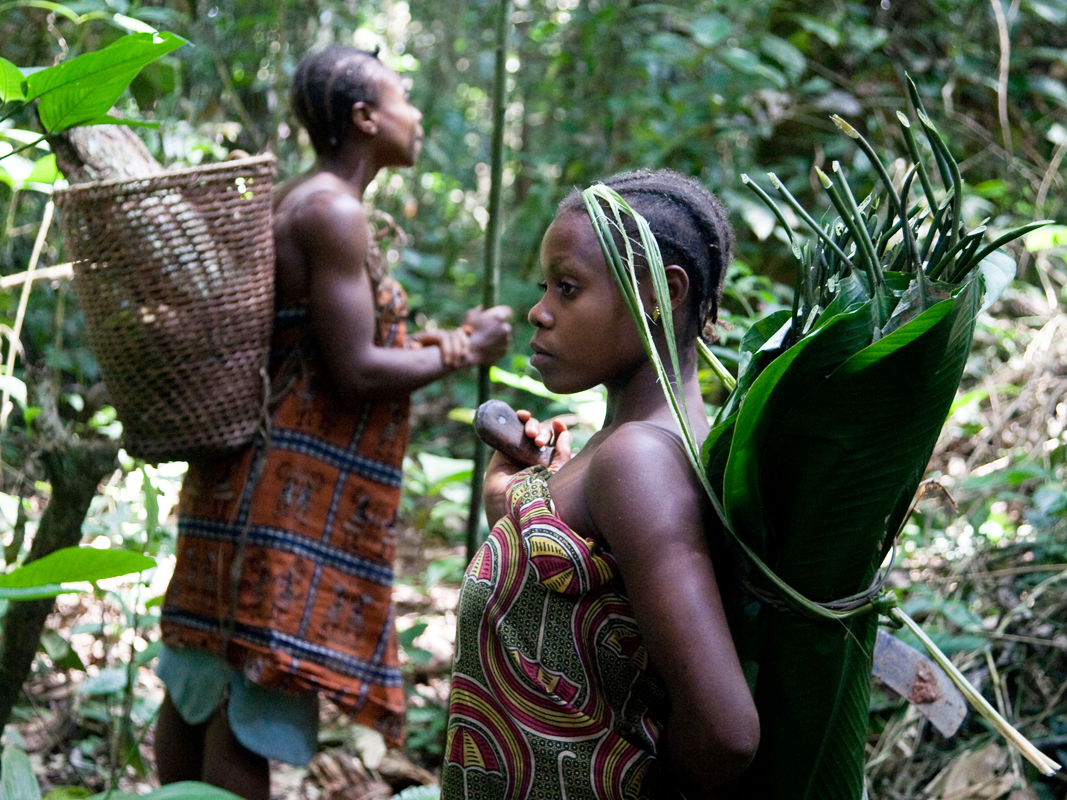
Longo fiercely criticizes the dominant model of “fortress conservation” that prevents indigenous communities from carrying out the activities they need to sustain their livelihoods, such ass hunting, herding, gathering, and agriculture. “We are witnessing a dangerous acceleration of the militarization of protected areas by armed rangers, often in collaboration with the police and the army who are trained in warfare techniques to prevent these populations from entering what once was their land, while Westerners are allowed to access it and even hunt there for sport,” the researcher continues. “Those who dare stand against them are killed, mistreated, or tortured, thanks to funds allocated to major international organizations like the WWF.”
Unfortunately, it’s not just human rights that are losing this battle—it’s nature, too: scientific studies show that 80% of biodiversity is found on the territories of indigenous peoples. “They are the best guardians of the environment, but what is important to us above all else is that their rights be defended. Nothing can justify violating these rights,” she concludes.
The double vulnerability of indigenous women
According to the Women’s Forum for the Economy and Society (WF), women suffer from the effects of climate change more than men, especially in subsistence economy societies where women make up a significant part of the labor force all while being excluded from traditional financial systems. Women are also 14 times more likely to die in a natural disaster, and they represent 80% of climate refugees. Indigenous women around the world play key roles in their communities: they retain age-old knowledge that is essential for protecting the environment, provide food and shelter, care for children, and procure water, which is becoming less and less available and getting more and more distant from their habitats. “In conservation areas, these women are most at risk because they are doubly vulnerable,” says Longo, who has collected hundreds of testimonies of human rights violations in the course of her work.
“The environmental struggle must above all be a struggle to change our view of the world and our economic model, but it must also be a feminist struggle—otherwise it’s just gardening”
“There is a deep connection between racism, colonialism, patriarchy, and misogyny, and also between the many instruments of prevarication, control, and exploitation of human diversity. This human diversity is the greatest wealth we have,” Longo explains.
“There are many cases of rape committed by forest rangers, and the victims are almost exclusively indigenous women who rarely report the rape so as not to be abandoned by their husbands or marginalized by their communities. What’s more, almost all the translators who work with international organizations are men, because they are the only ones who have studied both English and French—but it’s very difficult for victims of sexual abuse to speak openly about their abuse in front of men, either out of fear or shame. When we break this silence, we discover a deeply shocking truth. As an activist, I often wonder how to advocate for these women’s rights, because drawing attention to them can sometimes put them at additional risk.”
The battles of ecofeminists
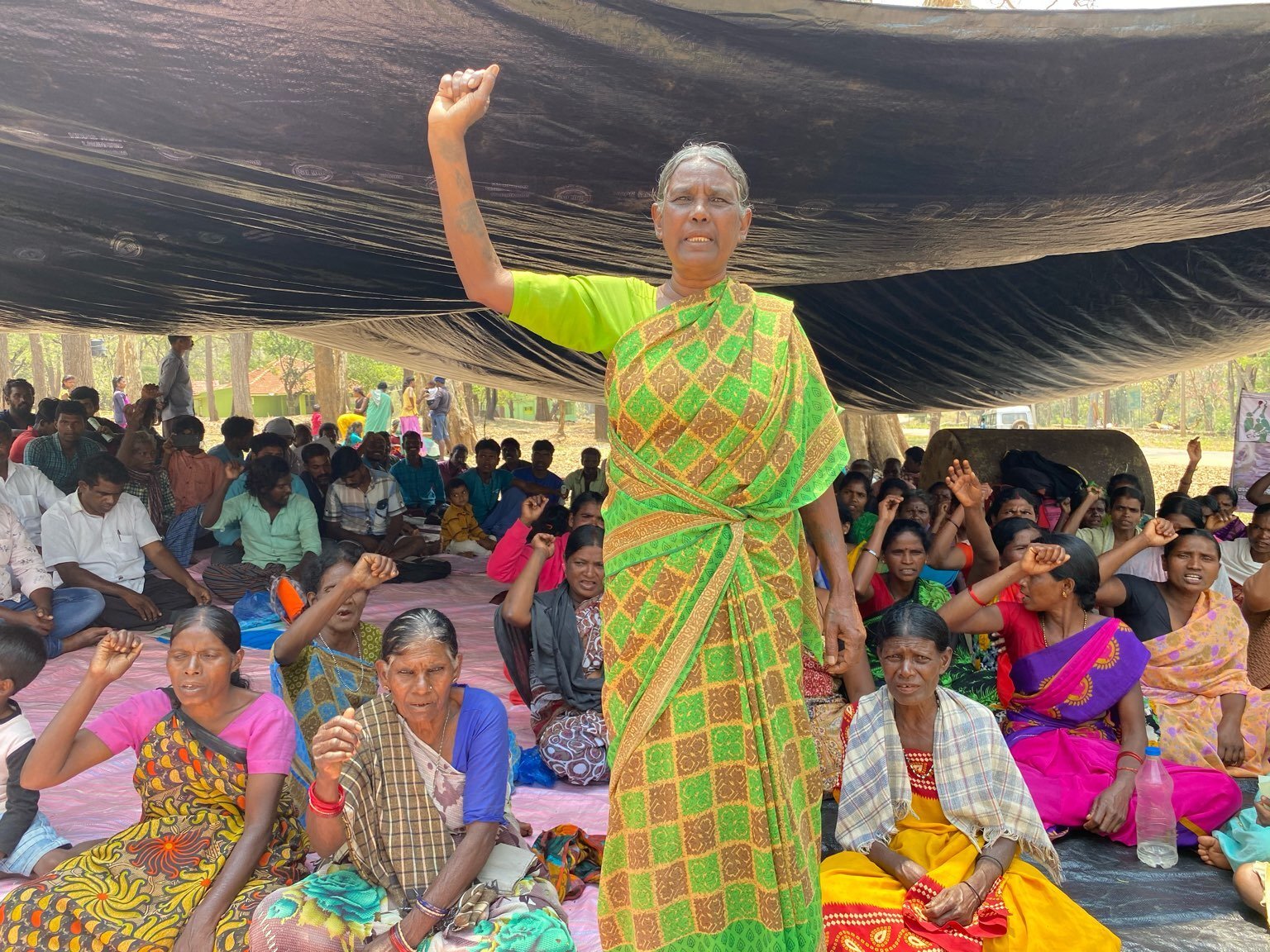
A survey conducted by the WF in 2021 revealed that women are more engaged than men in the fight against climate change, since they are changing their ways of life through concrete actions. However, the gender disparity in ministries responsible for energy, transport, and the environment remains very high: in Italy, in 78% of cases, senior civil servants are male representatives.
Still, more and more female activists are fighting to save the planet and the rights of indigenous peoples—from the “tree defenders” of the Indian Chipko Movement to internationally renowned ecofeminists such as Vandana Shiva and Greta Thunberg. Many others are also fighting with the same courage and determination, away from the spotlight. Among these women is Paulette, an elder from the Baka tribe, whom Longo met in a Congolese forest that the WWF wanted to turn into a reserve without their consent. “The rangers had settled in the field and were already very violent,” the anthropologist recalls. “After spending some time with her trying to figure out what was going on, I suggested a video interview, but I made it clear that I couldn’t promise her protection from potential retaliation because I had to leave there soon. She replied firmly: Let them come!”
“When I finally managed to come back after the pandemic, I met her in the forest, and she told me that no one had bothered her again.”
Like Paulette, Suzanne, Odette, and many other Baka women have chosen to denounce the abuse and violence they are subjected to, even though they live in conditions of extreme danger. They have nothing more to lose.